How Air Source Heat Pumps Work: What They Are and How They Heat Your Home
August 13, 2026
Check Your Eligibility for Boiler Upgrade Scheme (BUS)
Complete your details below to check your eligibility.
Thank you
We've received your details and will be in touch shortly.
Quick Answer: How Does an Air Source Heat Pump Work?
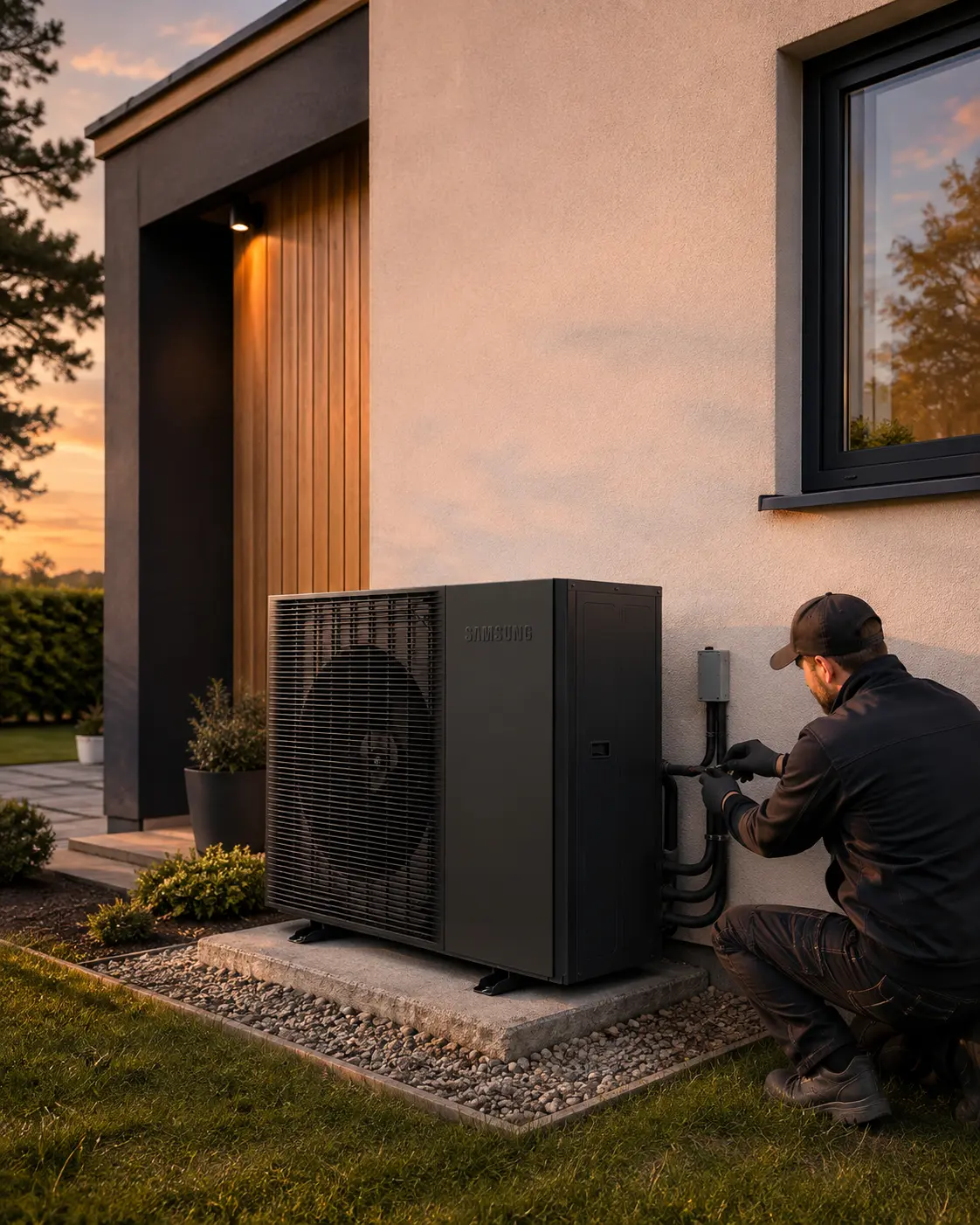
An air source heat pump uses a fan to draw outside air across a heat exchanger containing refrigerant. The refrigerant absorbs heat and evaporates. A compressor then raises its pressure and temperature. That higher-temperature heat is transferred into your home — usually into water for radiators, underfloor heating and a hot-water cylinder. The refrigerant then passes through an expansion valve, cools down and repeats the cycle. Because the system moves existing heat rather than creating all its heat from electricity, a well-designed heat pump can deliver several units of heat for each unit of electricity it uses.
Source: https://energysavingtrust.org.uk/advice/air-source-heat-pumps/
How Air Source Heat Pumps Work: What They Are and How They Heat Your Home
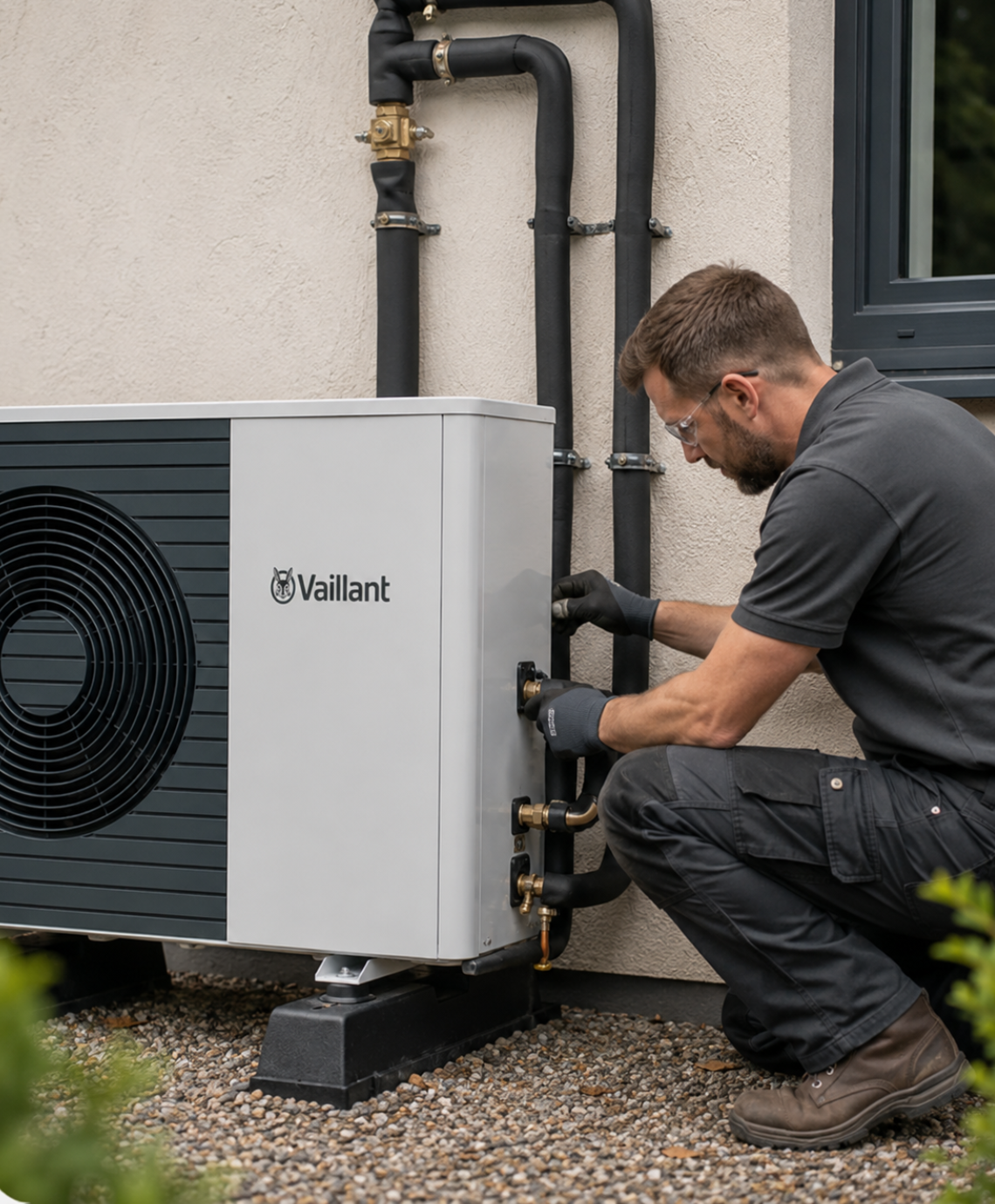
An air source heat pump (ASHP) is an electric heating system that takes heat from the outdoor air and moves it into your home. Unlike a gas or oil boiler, it does not need to burn fuel to create most of the heat it delivers. Instead, it uses a refrigeration cycle — similar to the technology in a fridge, but operating in the opposite direction — to capture low-temperature heat outside, raise its temperature and transfer it indoors.
For most UK homes, the relevant option is an air-to-water system connected to radiators or underfloor heating and a hot-water cylinder. This guide explains how air source heat pumps work, winter performance, costs and the factors that determine real-world efficiency.
Get a free quote: If you are considering replacing a boiler or electric heating, compare properly surveyed heat-pump options before choosing a system.
Air-to-Water vs Air-to-Air Heat Pumps: Quick Comparison
| Type | How it heats your home | Hot water | Best for |
|---|---|---|---|
| Air-to-water | Heats water for radiators or underfloor heating | Usually yes, via a cylinder | Most UK homes replacing a boiler |
| Air-to-air | Blows heated air into rooms through indoor units | Usually no | Flats, smaller homes and properties without wet central heating |
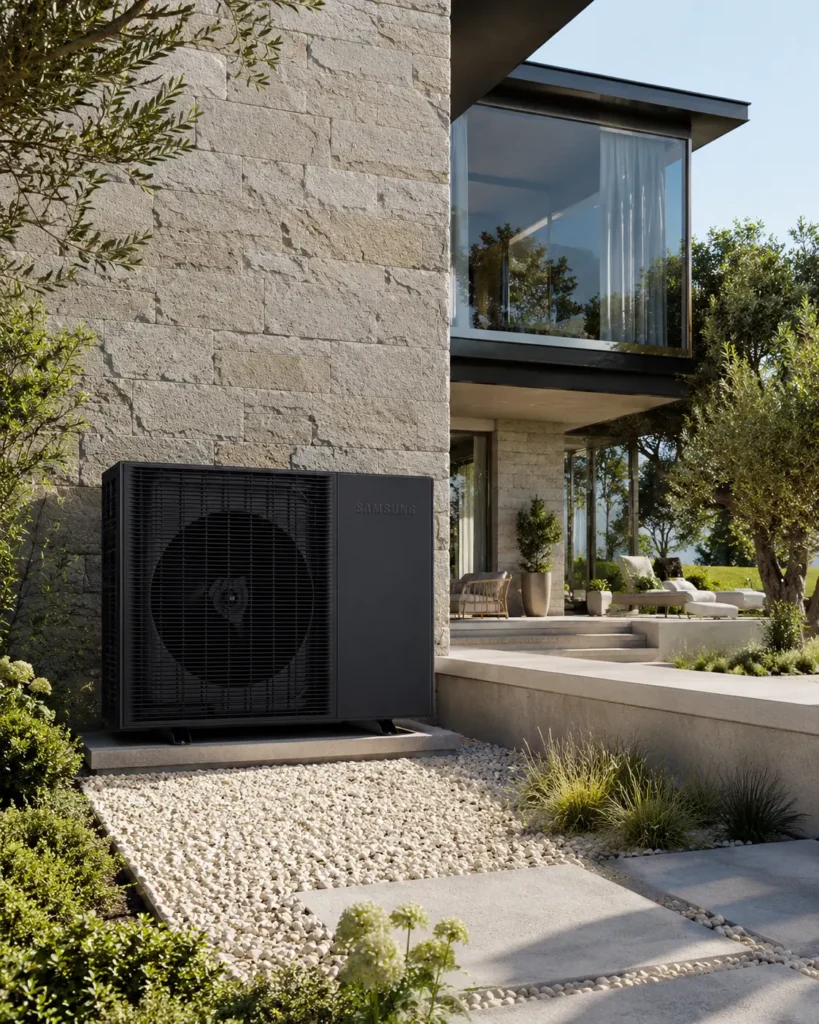
Air-to-water systems are the more conventional whole-home heating option, while air-to-air systems can suit properties where installing a wet central-heating system would be impractical.
What Is an Air Source Heat Pump?
An air source heat pump is a device that transfers heat from the outside air into a building. The outdoor unit contains a fan, heat exchanger, refrigerant circuit and compressor. In an air-to-water system, captured heat is transferred to water for central heating and stored hot water. The key point is that a heat pump moves heat rather than creating all of it directly from electricity.
That principle explains why a heat pump can provide considerably more usable heating energy than the electrical energy it consumes.
How Does an Air Source Heat Pump Work?
The process is a closed refrigeration cycle with four main stages. Manufacturer technical guidance identifies the evaporator, compressor, condenser and expansion valve as the critical parts of this cycle.
1. The Evaporator Absorbs Heat From Outside Air
A fan draws outdoor air across the evaporator coil. Inside the coil is refrigerant at a low temperature.
Heat naturally moves from the outside air into the colder refrigerant, causing the refrigerant to evaporate. Even below freezing, outdoor air still contains thermal energy that a suitable heat pump can collect.
2. The Compressor Raises the Temperature
The refrigerant vapour enters an electrically powered compressor.
Compressing the vapour increases both its pressure and temperature. This is where electricity is used to upgrade low-temperature environmental heat into heat that can be useful inside the property.
3. The Condenser Transfers Heat Into Your Home
The hot refrigerant reaches a second heat exchanger called the condenser.
In an air-to-water heat pump, its heat transfers into the water flowing through the heating circuit. That water can supply radiators or underfloor heating and, when required, heat water stored in a cylinder.
As the refrigerant releases its heat, it condenses back towards a liquid.
4. The Expansion Valve Resets the Cycle
Finally, the refrigerant passes through an expansion valve.
Its pressure and temperature fall, preparing it to absorb heat from outside again. The process then repeats automatically whenever heating or hot water is required.
Why Can a Heat Pump Be More Than 100% Efficient?
Heat pumps are sometimes described as being 300% or 400% efficient, but Coefficient of Performance (CoP) is the clearer measurement.
If a heat pump has a CoP of 3, it provides three units of useful heat for every unit of electricity it consumes. The additional energy is heat collected from outside.
For homeowners, Seasonal Coefficient of Performance (SCoP) can be more useful because it considers changing temperatures across a season rather than performance at one laboratory test condition.
Lower heating-water temperatures, suitable radiators or underfloor heating, good controls and accurate heat-loss calculations can all improve real-world performance.
Do Air Source Heat Pumps Work in Winter?
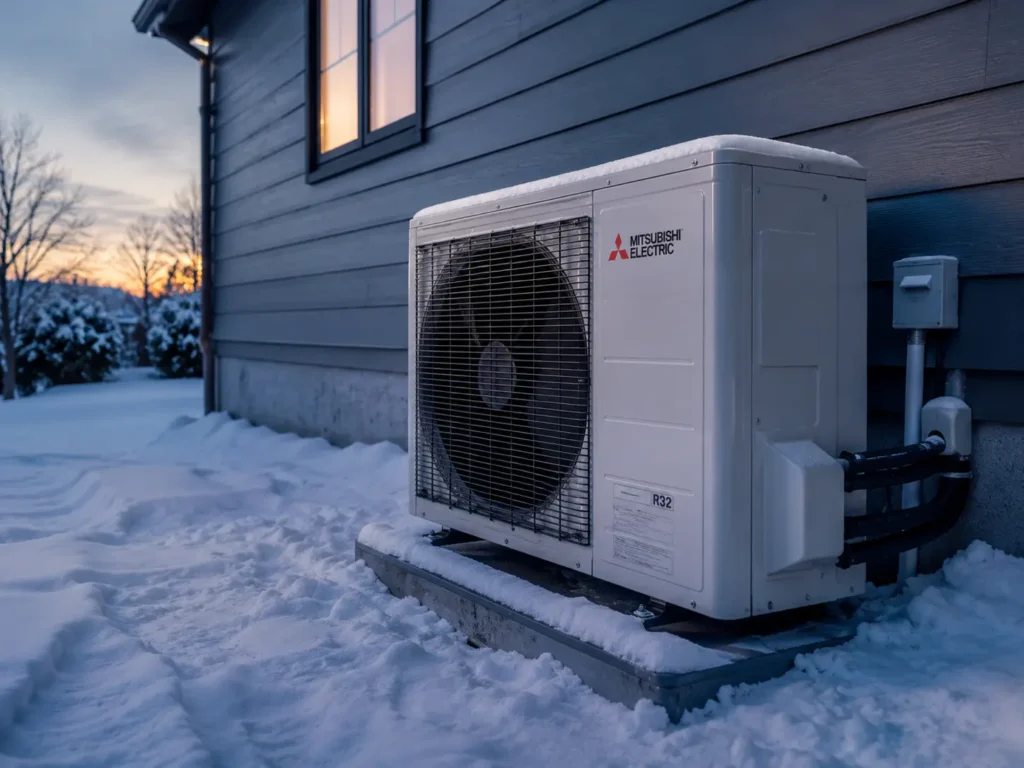
Yes. Air source heat pumps continue extracting heat from outside air in sub-zero weather. However, efficiency generally reduces as the outdoor temperature falls because the system has to work harder to raise the temperature of the available heat.
Frost can form on the outdoor coil during cold, damp weather. That is normal rather than automatically being a fault. Modern systems use an automatic defrost cycle to clear the coil and then resume heating.
This is why buyers should look at manufacturer output data at realistic winter temperatures rather than judging a system solely by the headline kW rating.
Do You Need New Radiators or a Hot-Water Cylinder?
Not necessarily, but both need checking.
Heat pumps commonly operate radiators at lower water temperatures than traditional boiler systems. If an existing radiator cannot provide enough heat at the proposed flow temperature, it may need replacing with a larger or higher-output model. Underfloor heating can be an excellent match because its large surface area allows useful heat output at relatively low water temperatures.
Most air-to-water systems also require a hot-water cylinder because they do not normally produce instantaneous hot water in the same way as a combi boiler. Energy Saving Trust recommends considering cylinder space and household hot-water demand as part of system design.
A proper survey should assess room-by-room heat loss, radiator outputs, pipework, cylinder space, outdoor-unit positioning and electrical requirements.
Will an Air Source Heat Pump Save Money?
It can, but there is no responsible universal saving or payback figure.
Running costs depend on the property’s heat demand, the heat pump’s seasonal efficiency, electricity tariff, controls and the heating system being replaced.
Energy Saving Trust’s current guidance says that on standard electricity tariffs, heat-pump running costs can be around the same as — or in some circumstances slightly higher than — those of a new gas boiler. Heat-pump time-of-use tariffs can substantially improve the economics.
Economics can also improve where the home operates efficiently at lower flow temperatures or combines the heat pump with suitable smart tariffs, solar PV or battery storage. Poor system design, however, can make any brand expensive to run.
Air Source Heat Pump Cost in the UK
Energy Saving Trust currently estimates a typical air source heat pump installation at around £12,000, although property size, heat-pump capacity, radiator upgrades, hot-water cylinders, electrical work and installation complexity can materially change the price.
| Item | Typical position in 2026 | What changes the figure |
|---|---|---|
| Air-to-water installation | Around £12,000 before grants | Property size, emitters, cylinder, electrics and access |
| Standard Boiler Upgrade Scheme support | £7,500 for eligible air-to-water systems | Eligibility and scheme rules |
| Temporary off-gas uplift | Up to £9,000 for qualifying oil/LPG homes without mains gas until March 2027 | Existing heating fuel and gas-grid status |
| Air-to-air BUS support | £2,500 for eligible residential systems | Eligibility and qualifying installation |
Those are indicative figures rather than quotations. GOV.UK confirms the current £7,500 standard air-source grant, £2,500 air-to-air grant and temporary additional £1,500 support for qualifying off-gas oil/LPG properties.
For the full eligibility rules rather than duplicating them here, read GetFreeQuote’s dedicated Boiler Upgrade Scheme 2026 updates guide.
A property survey is essential before relying on any installation-cost figure.
How to Choose the Right Air Source Heat Pump
- Start with heat loss, not brand. The system needs to match the property’s calculated heating requirement.
- Check the proposed flow temperature. Lower temperatures can support higher efficiency if the emitters can still heat every room.
- Confirm radiator and pipework suitability. Ask which radiators need changing and why.
- Plan hot water properly. Check cylinder size and expected household demand.
- Review cold-weather output. Compare performance at realistic winter design temperatures.
- Check noise and siting. Outdoor units need sufficient airflow and sensible positioning; installers must also consider applicable acoustic requirements.
- Compare seasonal performance, warranties and running-cost assumptions. Do not rely on one headline CoP figure or guaranteed-saving claim.
- Check grant and certification requirements. If using BUS, confirm the proposed installation satisfies current rules.
- Compare complete quotations. Commissioning and aftercare matter as much as the heat-pump badge.
Get Your Free Air Source Heat Pump Quote
Find the right air source heat pump solution for your home. Tell us a few details and our team will help you explore suitable options at a competitive price.
Quick to complete. No obligation.
Get your quote
Enter your details below and one of our team will get back to you.
Why the Installer Matters
A heat pump is part of an entire heating system rather than a standalone box.
Correct sizing, emitter selection, hydraulic design, weather compensation, commissioning and controls all influence how efficiently the equipment performs in the real home. MCS maintains specific heat-pump design and installation standards, reflecting the importance of both stages.
A premium heat pump can still disappoint when connected to unsuitable emitters or poorly configured controls. The system should be designed around the building and its required winter heat output.
Conclusion
Air source heat pumps work by collecting low-temperature heat from outside air, raising its temperature through a refrigerant and compressor cycle, and transferring that heat into your home.
For most UK households, an air-to-water system will use radiators or underfloor heating alongside a hot-water cylinder.
The technology works in winter and can deliver several units of heat for each unit of electricity consumed, but performance depends on system design, flow temperature, emitters, controls, tariffs and installation quality.
Before choosing a system, get a property-specific heat-loss assessment and compare fully specified quotations.
Get a free, no-obligation quote: Compare suitable heating options through GetFreeQuote.co.uk before deciding.
Frequently asked questions
Find clear answers to common questions about air source heat pumps, including cold-weather performance, defrosting, radiators, underfloor heating, hot water, noise, efficiency and typical installation costs.
Outside air still contains thermal energy when the weather feels cold. Refrigerant inside the evaporator is colder still, allowing it to absorb that energy.
Yes. Suitable modern systems operate in sub-zero conditions, although output and efficiency vary by model and temperature. Always check manufacturer performance data for the proposed unit.
It may be running its automatic defrost cycle. Frost is melted from the outdoor coil and can create visible water vapour or steam.
Not automatically. Your installer should calculate whether each existing radiator can supply enough heat at the proposed flow temperature. Some may need upgrading.
Yes. Underfloor heating can work particularly well with heat pumps because its large surface area allows effective heating at relatively low water temperatures.
An air-to-water system can heat domestic hot water stored in a cylinder. Air-to-air systems generally do not provide domestic hot water.
Yes, but the system normally operates differently. A typical air-to-water heat pump stores hot water in a cylinder rather than heating unlimited hot water instantaneously like a combi boiler.
They produce sound from the fan and compressor, but correct product selection and siting are important. Installers should assess noise against applicable MCS requirements.
Efficiency varies with conditions. A CoP of 3 means three units of heat are delivered for every unit of electricity consumed. Seasonal performance is better judged using SCoP.
Energy Saving Trust currently estimates a typical UK installation at around £12,000 before grants, although property-specific work can move the price significantly.