Boiler Upgrade Scheme (BUS) 2026 Updates: What UK Homeowners Need to Know
August 12, 2026
Check Your Eligibility for Boiler Upgrade Scheme (BUS)
Complete your details below to check your eligibility.
Thank you
We've received your details and will be in touch shortly.
Quick Answer
As of August 2026, BUS provides £7,500 towards eligible air-to-water and ground source heat pumps, £2,500 towards residential air-to-air heat pumps and £5,000 towards biomass boilers. From 21 July 2026 until 31 March 2027, qualifying properties without a mains gas connection that are replacing oil or LPG heating can receive £9,000 towards an eligible air-to-water or ground source heat pump.
For applications properly made from 28 April 2026, a valid EPC is no longer a standing BUS eligibility requirement. The scheme has also been extended to 2030. A £2,500 heat-battery grant has been announced, but it is not yet a live BUS grant and depends on legislation and suitable standards being put in place.
Source: https://www.ofgem.gov.uk/environmental-and-social-schemes/boiler-upgrade-scheme-bus
Boiler Upgrade Scheme (BUS) 2026 Updates
The Boiler Upgrade Scheme (BUS) changed significantly in 2026, making low-carbon heating grants available to more households in England and Wales.
The biggest changes include a temporary £9,000 grant for qualifying off-gas-grid homes replacing oil or LPG heating, a new £2,500 grant for air-to-air heat pumps, removal of the EPC as a standing eligibility requirement, and confirmation that the scheme will continue to 2030.
For homeowners, landlords and eligible businesses considering a heat pump, these changes could materially reduce the upfront cost. However, the £9,000 headline figure does not apply to every household, and choosing the right technology matters just as much as securing the grant.
This guide explains the Boiler Upgrade Scheme 2026 updates, current grant amounts, eligibility, installation costs, application process and the questions to ask before committing.
Looking at replacing your heating system? Compare suitable systems and installation quotations through Getfreequote.co.uk before deciding.

Boiler Upgrade Scheme 2026: Current Grants
| Technology | BUS Grant in 2026 | Best Suited To |
|---|---|---|
| Air-to-water heat pump | £7,500, or £9,000 for qualifying off-gas oil/LPG properties | Most homes with radiators or underfloor heating |
| Ground/water source heat pump | £7,500, or £9,000 for qualifying off-gas oil/LPG properties | Properties with sufficient land or borehole potential |
| Air-to-air heat pump | £2,500 | Residential properties without a wet central-heating system |
| Biomass boiler | £5,000 | Certain rural, off-gas properties |
The temporary £9,000 rate runs from 21 July 2026 to 31 March 2027 and is specifically aimed at eligible properties without mains gas that replace oil or LPG with an air-to-water or ground source heat pump.
What Changed to BUS in 2026?
1. Some off-gas homes can now receive £9,000
The most commercially significant change is the temporary increase from £7,500 to £9,000 for qualifying oil- and LPG-heated properties without a mains gas connection.
This matters because rural households can face particularly high costs when replacing traditional heating systems.
It does not mean every heat-pump customer can claim £9,000. Homes switching from mains gas, for example, normally remain within the standard £7,500 grant category.
2. Air-to-air heat pumps now qualify
From 28 April 2026, eligible residential air-to-air heat pumps became eligible for £2,500 BUS funding.
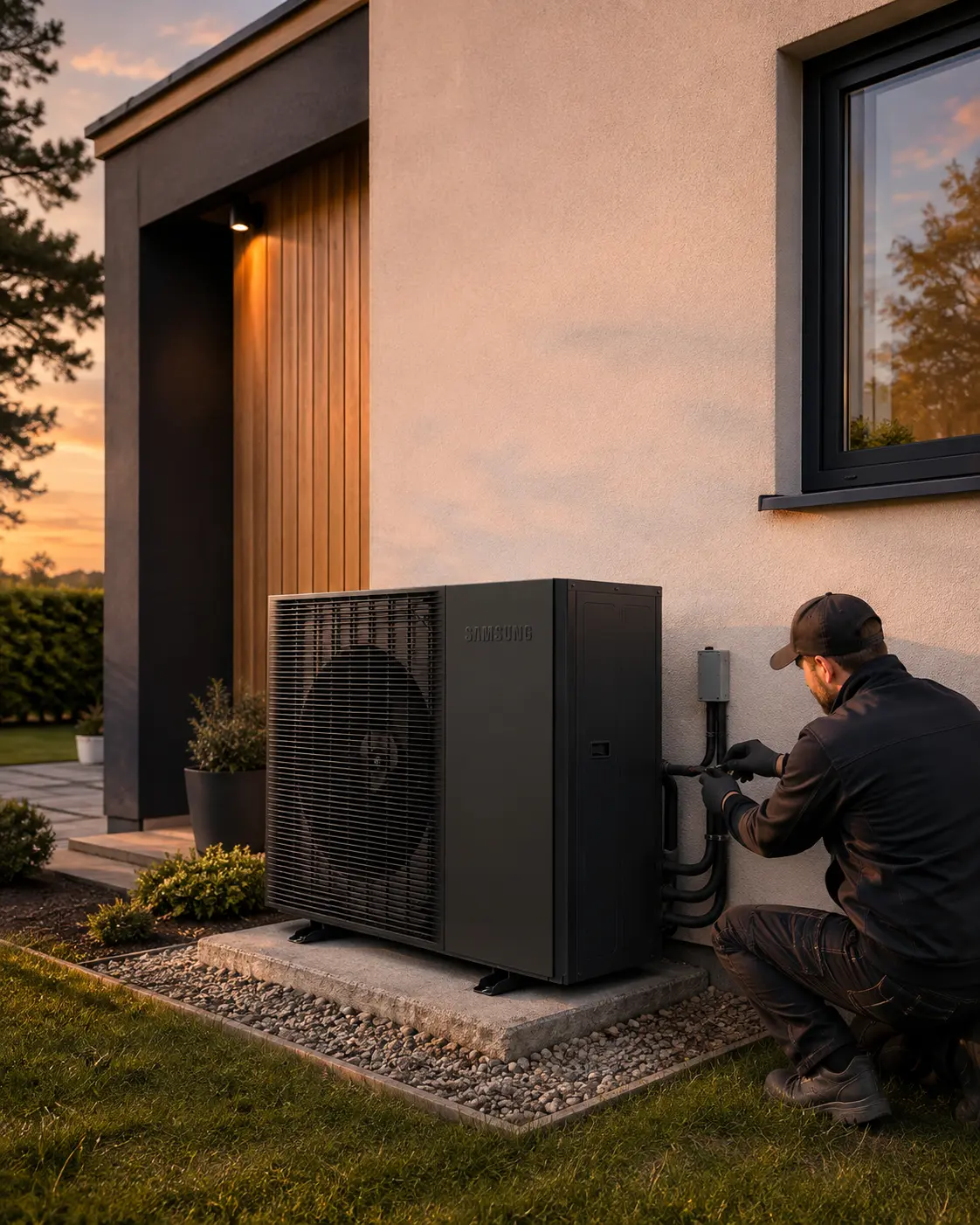
Air-to-air systems transfer heat into rooms using indoor fan units rather than radiators. They can therefore suit smaller properties, flats and homes where installing an entirely new wet heating system would be impractical.
3. A valid EPC is no longer mandatory
One of the most useful administrative changes is the removal of the EPC as a standing eligibility criterion for applications properly made from 28 April 2026.
Where no valid EPC exists, Ofgem guidance allows alternative evidence to verify relevant property details.
That removes a potential obstacle, although an EPC can still be useful when assessing a property’s wider energy efficiency.
4. BUS has been extended to 2030
The scheme has been extended to 2030, providing greater certainty for households and the heating industry.
Ofgem’s latest statistics show that by 31 July 2026, 90,115 BUS vouchers had been redeemed, with more than £635 million in grants paid.
What about the £2,500 heat-battery grant?
Government plans also include £2,500 BUS support for heat batteries, but homeowners should not mistake this for a currently available grant.
Official government material states that heat-battery support will become available once the necessary legislation and appropriate product, design and installation standards are in place.
Which BUS Heating Option Is Best?
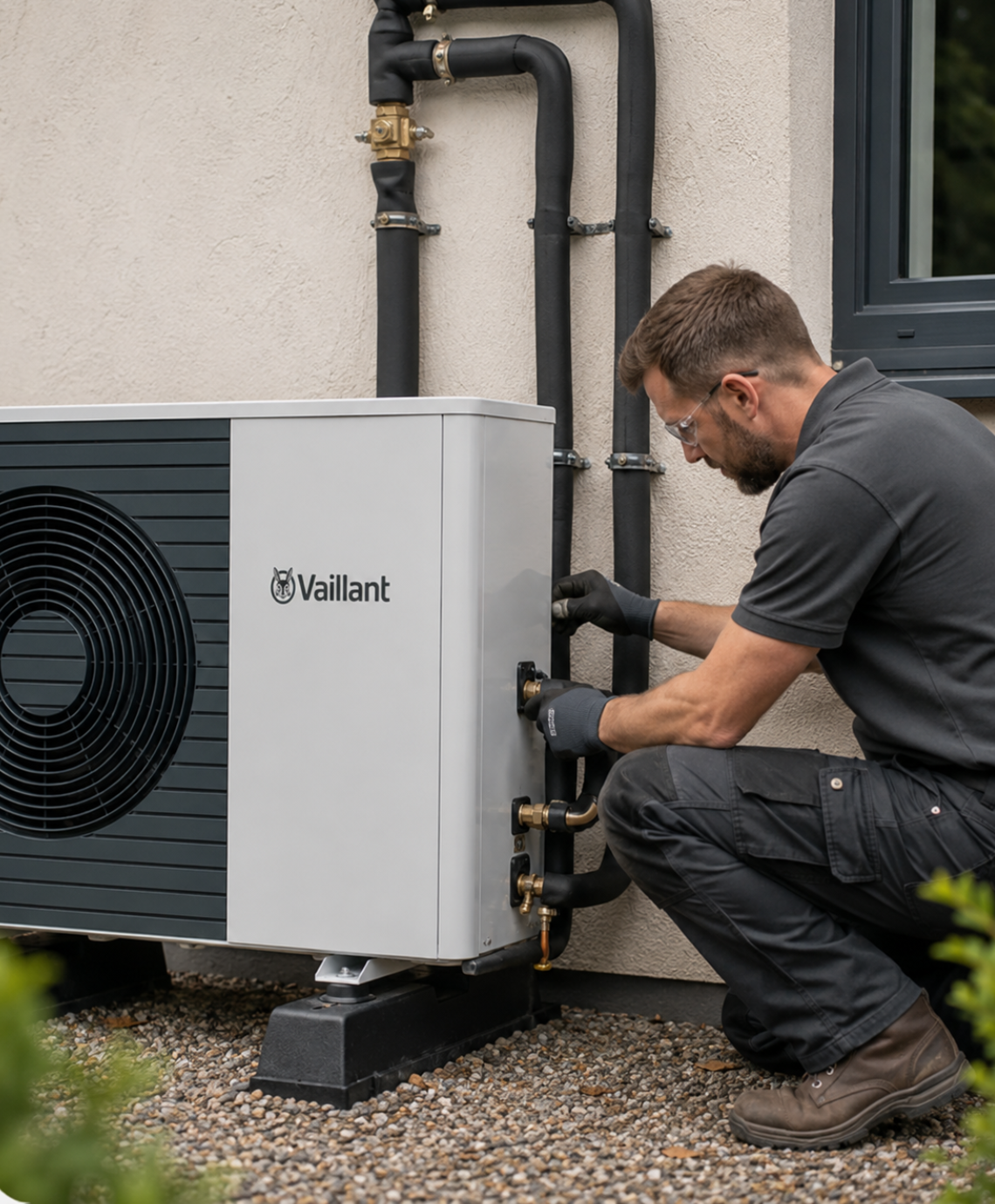
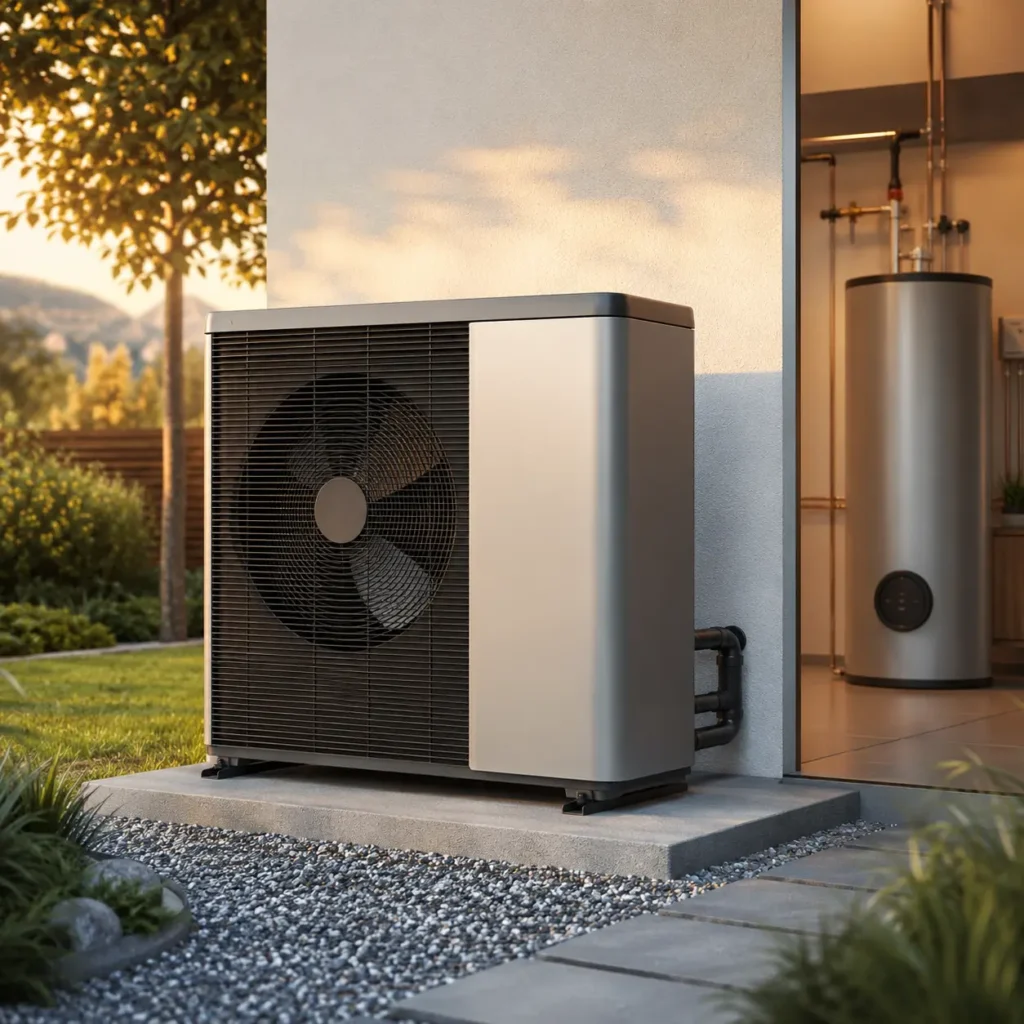
Air-to-Water Heat Pump
Overview: The mainstream BUS option. It extracts heat from outside air and supplies a wet central-heating system.
Best for: Most houses currently using radiators or underfloor heating.
Key features: Highly efficient low-temperature heating, smart-control compatibility and no on-site fossil-fuel combustion.
Pros: £7,500 standard grant; comparatively straightforward installation.
Things to consider: Radiator upgrades, cylinder space, heat loss and outdoor-unit positioning.
Suitable properties: Well-designed installations can work in anything from modern homes to older properties.
Example: A three-bedroom semi replacing an ageing gas boiler.
Expert recommendation: Prioritise accurate heat-loss calculations and system design rather than choosing solely by heat-pump brand.
Ground Source Heat Pump
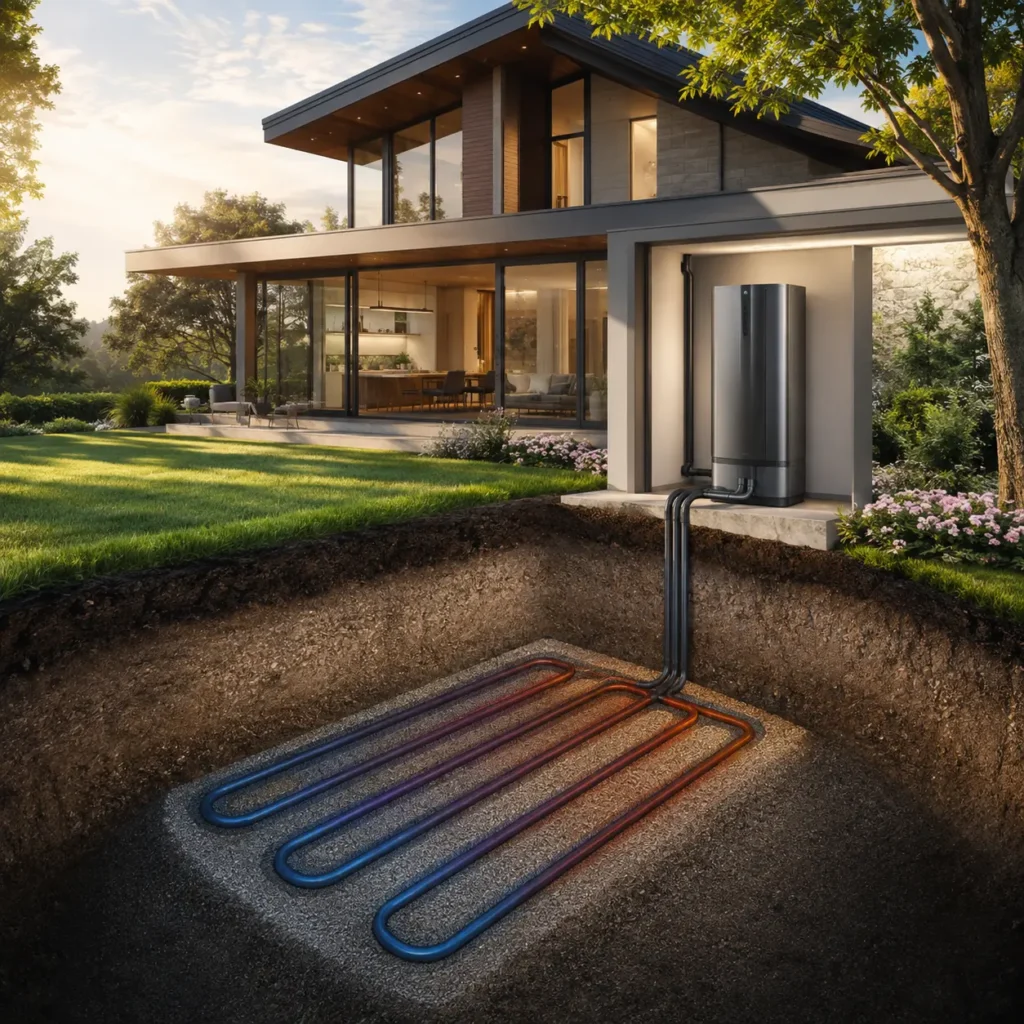
Overview: Extracts stored heat from the ground using buried pipework or boreholes.
Best for: Properties with suitable land and owners prioritising long-term performance.
Key features: Stable ground temperatures and potentially excellent seasonal efficiency.
Pros: Long-lived ground infrastructure and consistent source temperatures.
Things to consider: Considerably greater installation complexity and excavation cost.
Suitable properties: Larger detached and rural homes are often the strongest candidates.
Example: An off-gas rural property replacing oil heating could potentially qualify for the temporary £9,000 grant.
Air-to-Air Heat Pump
Overview: Heats rooms directly through indoor air units instead of radiators.
Best for: Flats, smaller homes and properties without wet central heating.
Key features: Fast heating and, where system design and regulations allow, some systems may also provide cooling.
Pros: Lower installation cost than many wet heat-pump systems.
Things to consider: Domestic hot water normally requires a separate solution.
Suitable properties: Smaller or open-plan homes can be particularly suitable.
Expert recommendation: The new £2,500 BUS grant makes air-to-air worth considering where a wet heating retrofit would be unnecessarily complicated.

Biomass Boiler
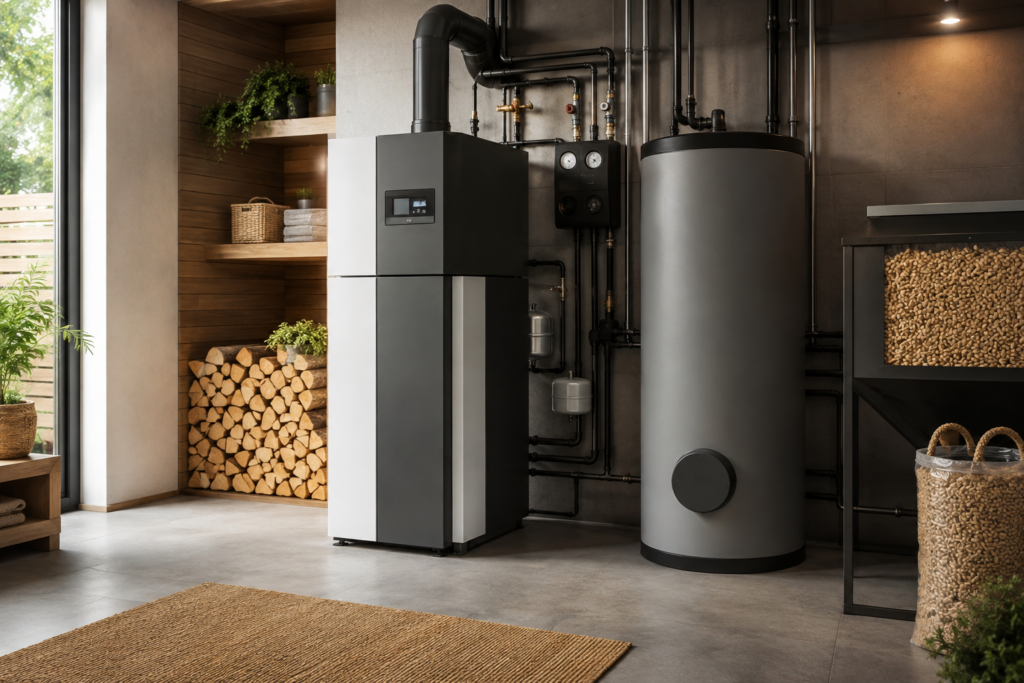
Overview: Burns eligible biomass fuel to provide heating and hot water.
Best for: Specific rural properties where a heat pump is unsuitable.
Pros: £5,000 BUS support.
Things to consider: Fuel storage, deliveries, servicing, emissions requirements and local suitability.
Expert recommendation: Assess heat pumps first for most properties and use biomass where site-specific factors genuinely justify it.
How to Compare BUS Heating Systems
Do not choose a system simply because it attracts the largest grant. A good survey should consider:
- The property’s calculated heat loss.
- Existing radiator or underfloor-heating capacity.
- Required flow temperatures.
- Available outdoor and indoor space.
- Seasonal efficiency rather than headline efficiency alone.
- Noise and equipment positioning.
- Electricity tariffs and controls.
- Manufacturer and workmanship warranties.
- Servicing and spare-parts support.
- Expected occupancy and hot-water demand.
- Total installation cost after BUS funding.
BUS 2026 Cost Guide
Heat-pump costs vary substantially by property. Energy Saving Trust estimates a typical air source installation at around £12,000, while a ground source installation can start around £15,000 and become much more expensive where boreholes are required.
| System | Indicative installation cost | BUS support | Illustrative balance before property-specific extras |
|---|---|---|---|
| Air-to-water heat pump | Around £12,000 | £7,500 | Around £4,500 |
| Eligible off-gas air-to-water system | Around £12,000 | £9,000 | Around £3,000 |
| Ground source heat pump | Around £15,000+ | £7,500–£9,000 | Around £6,000–£7,500+ |
| Air-to-air heat pump | Around £3,700 for typical three-bed example | £2,500 | Around £1,200 |
These are illustrations, not quotations. Groundworks, electrical work, radiator changes, cylinders, controls, access, property size and system specification can all change the final price. A site survey is necessary before relying on any figure.
Best option by buyer type
For most households wanting whole-home heating, air-to-water is likely to remain the first system to assess.
For eligible oil or LPG households off the gas grid, investigate the £9,000 grant while it is available.
For a flat or smaller property without radiators, air-to-air may provide the more practical solution.
For a large rural property with land, ground source can justify investigation despite the higher upfront cost.
Will a Heat Pump Actually Save Money?
There is no responsible universal payback figure.
Running costs depend on the efficiency of the installed system, electricity price, tariff, heat demand and the heating system being replaced. Energy Saving Trust notes that replacing a newer gas or oil boiler does not automatically guarantee lower running costs.
That makes correct design and tariff choice critical. A larger grant improves upfront economics, but it cannot compensate for an incorrectly sized or poorly commissioned system.
How to Apply for the Boiler Upgrade Scheme in 2026
- Find MCS-certified installers. BUS installations must meet the scheme’s certification requirements.
- Get multiple quotations. Compare equipment, design assumptions, warranties and included building work.
- Complete a proper property survey. The installer should determine heat loss and system requirements.
- Choose your installer and system.
- The installer applies for BUS on your behalf. The customer does not normally submit the grant application personally.
- Confirm your consent when contacted by Ofgem.
- The grant is deducted upfront. The full BUS value must be shown as a discount on the quote and invoice.
Get Your Free Air Source Heat Pump Quote
Find the right air source heat pump solution for your home. Tell us a few details and our team will help you explore suitable options at a competitive price.
Quick to complete. No obligation.
Get your quote
Enter your details below and one of our team will get back to you.
Why the Installer Matters More Than the Heat-Pump Logo
A premium heat pump can still perform poorly if the heating system around it is badly designed.
Installation quality affects:
- efficiency and electricity consumption;
- room temperatures and comfort;
- radiator sizing;
- hot-water performance;
- operating noise;
- controls and weather compensation;
- equipment lifespan;
- manufacturer warranty compliance;
- commissioning and aftercare.
MCS certification is necessary for BUS, but homeowners should still examine design quality, experience, warranty terms and aftercare before choosing between quotes.
Is the Boiler Upgrade Scheme Worth It in 2026?
For households already considering low-carbon heating, BUS can substantially change the economics.
The strongest 2026 opportunity may be for eligible off-gas-grid oil and LPG households, where £9,000 can cover a large proportion of a typical air source heat-pump installation.
But the best decision is not necessarily the system with the biggest grant. Property suitability, installation design, running costs and long-term ownership matter more.
Before committing, compare properly surveyed quotations on a like-for-like basis. Getfreequote.co.uk can help homeowners compare suitable options without relying on a single installer recommendation.
Conclusion
BUS is considerably broader in 2026 than it was previously.
Homeowners can now access £7,500 for eligible air-to-water and ground source heat pumps, £2,500 for residential air-to-air systems and £5,000 for biomass, while qualifying off-gas oil and LPG properties can receive £9,000 until 31 March 2027. The EPC requirement has also been relaxed and the scheme is continuing to 2030.
The next step should be a property-specific assessment—not simply choosing a product online.
Get a free quote and compare suitable heating options before deciding which BUS-funded system offers the best long-term value for your property.
Frequently asked questions
Find clear answers to common questions about the Boiler Upgrade Scheme 2026, including heat pump grant amounts, the temporary £9,000 uplift, EPC rules, landlords, businesses and eligible heating technologies.
The standard grant is £7,500 for eligible air-to-water and ground source heat pumps, £2,500 for air-to-air heat pumps and £5,000 for biomass boilers.
Yes, if your property meets the temporary uplift conditions, including being off the mains gas grid and replacing eligible oil or LPG heating with an air-to-water or ground source heat pump.
The temporary uplift applies from 21 July 2026 until 31 March 2027 under the current rules.
No. A conventional mains-gas household does not qualify for the temporary oil/LPG off-gas-grid uplift and would normally fall under the standard grant amount.
Eligible LPG-heated properties can qualify provided the property also meets the scheme's off-gas-grid and technology requirements.
Yes. Eligible residential air-to-air heat pumps receive £2,500 under the 2026 BUS rules.
Not yet. Government has announced support, but implementation depends on legislation and appropriate product, design and installation standards.
A valid EPC is no longer a standing eligibility criterion for applications properly made from 28 April 2026. Alternative property evidence may be used where necessary.
Private landlords who own qualifying properties can potentially apply through an eligible installer, subject to the scheme requirements.
Property owners including some businesses can qualify where the building and installation satisfy BUS eligibility requirements.