
Best Solar Panels UK 2026: Top Brands, Efficiency & Costs
Check Your Eligibility for Boiler Upgrade Scheme (BUS)
Complete your details below to check your eligibility.
Thank you
We've received your details and will be in touch shortly.

Quick answer: what are the best solar panels in the UK?
The best solar panel depends on your roof and priorities. AIKO Neostar 3P54 reaches up to 25.0% module efficiency, making it attractive where space is limited. LONGi’s Hi-MO X10 range also offers very high efficiency, with residential-sized models around 24%. REC Alpha Pure-RX reaches 22.6% efficiency and guarantees at least 92% of rated power at year 25. Trina Vertex S+ combines up to 22.8% efficiency with a 25-year product warranty and 30-year power warranty. Maxeon’s current residential range is backed by a 40-year panel warranty. For value-led installations, JA Solar’s DeepBlue 4.0 Pro is a credible n-type option.
Best Solar Panels UK 2026: Top Panels, Efficiency, Warranties and How to Choose
Choosing the best solar panels in the UK is not simply about buying the panel with the highest laboratory efficiency. The right choice depends on your usable roof area, shading, budget, warranty and the overall system design.
For a small roof, a high-efficiency back-contact panel such as the AIKO Neostar 3P54 or a suitable LONGi Hi-MO X10 can help maximise installed capacity. REC Alpha Pure-RX is attractive where long-term output retention matters, while Trina and JA Solar offer strong n-type alternatives. Maxeon remains notable for its 40-year panel warranty.
This guide compares leading options for UK homeowners in 2026 and explains which specifications are genuinely worth paying for.
Considering solar? Start with the Get Free Quote homepage or compare solar panel installation quotes. Compare the exact panel, inverter, system size, generation estimate and warranty side by side rather than choosing on brand name alone.
Best solar panels UK: quick comparison
| Panel / range | Headline efficiency | Warranty position | Best suited to |
|---|---|---|---|
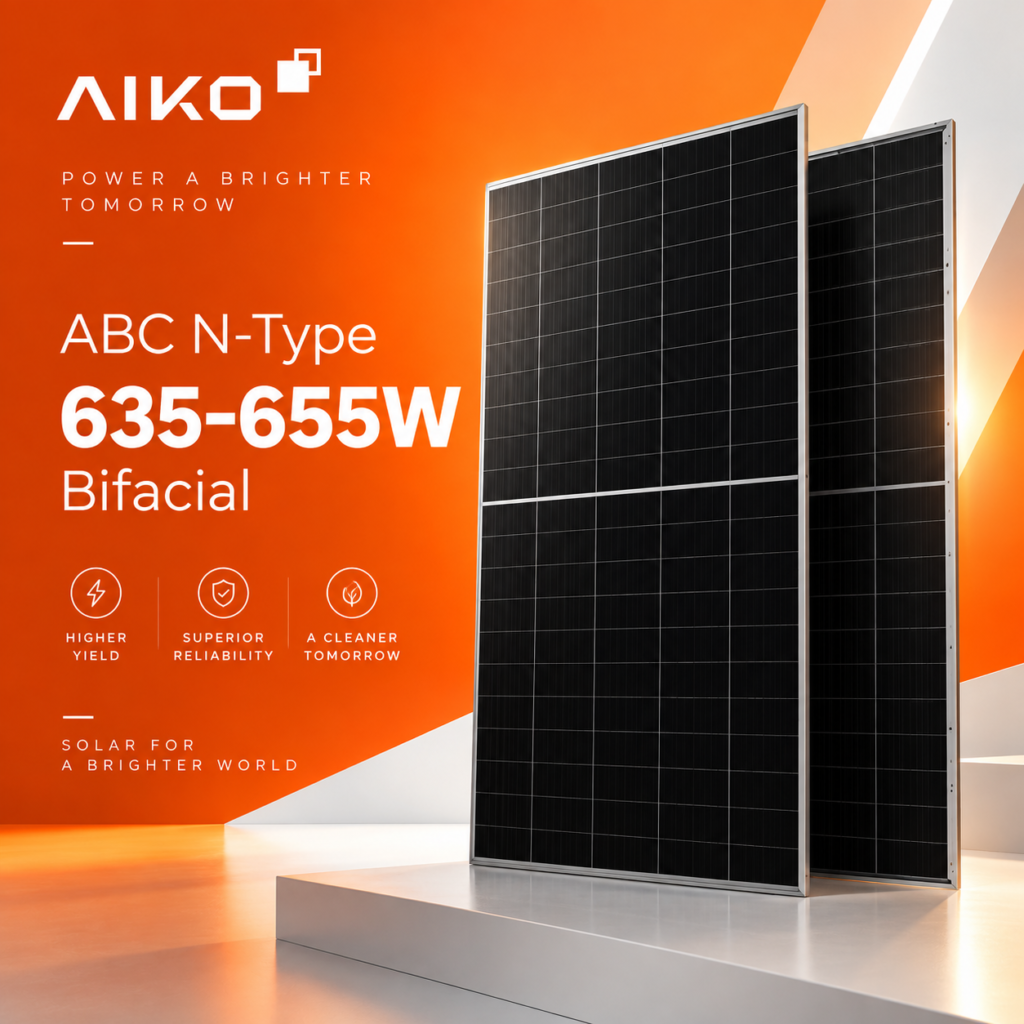
| AIKO Neostar 3P54 | Up to 25.0% | 15-year product warranty, extendable to 25; 30-year performance warranty | Small or space-constrained roofs |
| LONGi Hi-MO X10 | Around 24% on residential-size models | 15-year product and 30-year power warranty on published X10 specifications | High power density |
| REC Alpha Pure-RX | Up to 22.6% | 20-year product; 25-year performance; 92% minimum power at year 25 | Long-term output retention |
| Trina Vertex S+ | Up to 22.8% | 25-year product; 30-year power warranty | Strong all-round specification |
| JA Solar DeepBlue 4.0 Pro | Up to 22.8% on 455W JAM54D40 | 12-year product; 30-year linear power warranty | Value-led n-type systems |
| Maxeon residential panels | Model-dependent | 40-year product and performance warranty under current Maxeon terms | Buyers prioritising long warranty cover |
Specifications vary by exact model, country and distributor. Always check the complete model number on your quotation and confirm the current manufacturer datasheet and warranty before ordering.
Which solar panel is best for your home?
Best for a small roof: AIKO Neostar 3P54
AIKO’s Neostar 3P54 reaches 500W and up to 25.0% module efficiency. Its back-contact ABC design removes conventional front-side busbars and helps make efficient use of available roof area.
High efficiency matters most when you cannot simply add another panel. A terraced house, roof with dormers or property with several skylights may therefore benefit more from premium efficiency than a large, unobstructed roof would.
Best for high power density: LONGi Hi-MO X10
LONGi’s Hi-MO X10 family uses HPBC 2.0 back-contact cells. Published residential-size specifications reach around 24% efficiency. LONGi also quotes first-year degradation below 1%, followed by 0.35% annual degradation, with a 30-year power warranty.
The practical appeal is simple: high installed capacity from a limited roof area.
Best for long-term output retention: REC Alpha Pure-RX
REC’s Alpha Pure-RX ranges from 450W to 470W and reaches 22.6% efficiency. REC guarantees at least 92% of rated power at year 25.
It will not necessarily produce the cheapest installation per watt. However, it may suit homeowners who expect to keep their property for many years and place extra value on end-of-warranty output.
Best all-round specification: Trina Vertex S+
The residential Vertex S+ Full Black reaches 455W and 22.8% efficiency. Trina specifies a 25-year product warranty and 30-year power warranty for the current model.
Its dual-glass construction and residential dimensions make it a useful benchmark against competing n-type panels.
Best value-led comparison: JA Solar DeepBlue 4.0 Pro
JA Solar’s 455W JAM54D40 DeepBlue 4.0 Pro reaches 22.8% efficiency and uses n-type cells with double-glass construction. The published specification includes a 12-year product warranty and 30-year linear power warranty.
If a JA Solar quotation is materially cheaper than a premium alternative while providing similar total array capacity, it may deliver stronger financial value.
Best for warranty length: Maxeon
Maxeon currently advertises a 40-year warranty covering its Maxeon panel range and performance. Its technical library also lists Maxeon 6 residential panels among its current documentation.
A long warranty only has value if you understand the conditions. Check who handles claims, whether labour or transport is covered, whether registration is required and what happens if the original installer stops trading.
What solar panel specifications actually matter?
Efficiency shows how much incoming sunlight becomes electricity under standard test conditions. It matters most when roof space is limited.
Power output, measured in watts, is the panel’s rated peak output. Compare the whole array in kilowatts peak, or kWp, rather than focusing on one module.
Product warranty covers manufacturing defects. Performance warranty covers how much output the manufacturer guarantees after a stated period. They are separate protections.
Degradation describes the gradual reduction in panel output over time. Small differences can matter across 25 to 30 years, but they should be weighed against the purchase price.
Temperature coefficient indicates how output changes as panels become hotter. A lower negative figure is preferable, although roof orientation, shading, location and system losses usually have a much larger influence on annual generation.
How much do good solar panels cost in the UK?
The Energy Saving Trust solar-panel guide currently estimates around £7,600 for an average 4.5kWp domestic solar PV system. Panel choice is only one part of that price.
Scaffolding, roof access, mounting equipment, inverter choice, electrical work, DNO requirements and battery storage can all change the final quotation. Premium panels make most sense when their additional specification solves a genuine constraint.
Solar panels and qualifying installations currently benefit from 0% VAT in Great Britain under the temporary energy-saving materials relief. Current HMRC guidance says the temporary zero rate runs until 31 March 2027. GOV.UK VAT guidance for energy-saving materials
Prices should always be treated as indicative until an installer has surveyed the property and supplied a written specification.
How many solar panels do you need?
Energy Saving Trust says a typical 4.5kWp system may use around 12 panels and occupy roughly 20 to 30 square metres, although today’s higher-wattage panels can reduce the number required.
Your installer should model generation using your location, roof direction, pitch and shading. South-facing roofs normally generate the most electricity, but east- and west-facing roofs can still work well. Energy Saving Trust estimates those orientations may generate roughly 15% to 20% less energy than a directly south-facing array.
Do not judge a quotation by panel count alone. Ten 500W panels form a 5kWp array. Ten 400W panels form a 4kWp array.
Are premium solar panels worth it?
Premium panels are easiest to justify when roof space is scarce, appearance matters or their warranty and degradation terms are materially stronger.
On a large, unshaded roof, adding another good mainstream panel may sometimes create more generation for less money than paying a large premium for a small efficiency increase. Compare the complete system price per installed kWp.
Energy Saving Trust’s August 2026 figures put typical solar payback with export payments at around nine years in London, 10 to 11 years in Manchester and 11 to 12 years in Stirling, depending on occupancy. These are modelled figures rather than guaranteed returns.
How to choose the right solar panel system
- Start with the roof. Account for usable area, chimneys, dormers, skylights and shading.
- Compare installed kWp. Look at total array capacity rather than individual panel wattage.
- Check the exact model. Ask for the model code, manufacturer datasheet and warranty document.
- Review generation assumptions. Compare orientation, pitch, shading and system-loss assumptions.
- Check MCS status. MCS-certified installers must follow relevant installation and pre-sale performance-estimate standards. MCS or equivalent certification is also normally required for Smart Export Guarantee eligibility. MCS installer requirements
- Compare the whole system. The inverter, optional battery, monitoring and electrical design matter too.
- Model self-use and export. The Ofgem Smart Export Guarantee guidance explains how qualifying households can receive payment for exported electricity. Rates vary between suppliers.
- Compare like for like. Include scaffolding, DNO work, warranties and electrical upgrades.
If you also drive an electric vehicle, some chargers can adjust charging to make better use of solar generation. You can compare the options in Get Free Quote’s EV charger installation guide and quote page.
Ready to compare solar quotations?
A useful quotation should identify the exact panel and inverter models, total system capacity, estimated annual generation, warranty terms and every significant installation cost.
You can read more about how Get Free Quote operates or contact Get Free Quote if you want help comparing solar options before deciding.
Get Your Free Air Source Heat Pump Quote
Find the right air source heat pump solution for your home. Tell us a few details and our team will help you explore suitable options at a competitive price.
Quick to complete. No obligation.
Get your quote
Enter your details below and one of our team will get back to you.
Frequently asked questions
Find clear answers to common questions comparing air source and ground source heat pumps, including efficiency, installation and running costs, winter performance, noise, land requirements and borehole depth.
There is no single best brand for every property. AIKO and LONGi are particularly strong where maximum efficiency is important, REC offers strong long-term output retention, Trina provides a balanced residential specification, and Maxeon offers unusually long warranty coverage.
Among the residential products reviewed here, AIKO currently publishes up to 25.0% module efficiency for its Neostar 3P54. Availability should be checked with UK distributors and installers.
Yes. Around 22% is a strong efficiency level for a modern residential solar panel. Several current n-type residential panels sit between roughly 22% and 25%.
Not automatically. Higher efficiency allows more power to fit into a given roof area. Your bill savings ultimately depend on total generation, electricity use, export payments and the complete system design.
Energy Saving Trust currently uses around £7,600 for a typical 4.5kWp domestic installation. Your actual price can be higher or lower depending on roof access, system size, equipment and electrical work.
There is no fixed number. Energy Saving Trust gives an example of roughly 12 panels for a typical 4.5kWp installation, but high-wattage modern panels can reduce the number required.
Yes. Solar PV panels still generate electricity in cloudy conditions, although output is lower than under strong direct sunlight.
They can be. Energy Saving Trust's August 2026 modelling gives payback periods of roughly nine to 12 years in several Great Britain locations when export payments are included. Actual results depend on the property, system and tariff.
TOPCon improves the structure of the solar cell to reduce electrical losses. Back-contact technologies move electrical contacts away from the front surface, increasing usable light-collecting area. Both can achieve high efficiency.
Neither should be viewed alone. Wattage tells you the rated output of one panel, while efficiency tells you how effectively the panel uses its physical area. Total array capacity in kWp is usually the more useful figure when comparing quotations.
Good-quality panels are designed to generate electricity for decades. Performance warranties commonly run for 25 to 30 years, while Maxeon currently offers 40-year coverage on its Maxeon range.
Among the products reviewed here, Maxeon's current warranty terms stand out at 40 years for its Maxeon panels. Warranty conditions should still be checked carefully before purchase.
For most homeowners, yes. MCS sets installation and pre-sale performance-estimate requirements, and MCS or equivalent certification is normally needed to qualify for Smart Export Guarantee payments.
Solar panels on houses will often fall under permitted-development rights, but exceptions and conditions apply. Listed buildings, conservation areas and unusual installations require extra care. Rules also differ across UK nations, so check the requirements applying to your property.
No. South-facing roofs normally generate the most electricity, but east- and west-facing roofs can still perform well. Energy Saving Trust estimates they may generate roughly 15% to 20% less than directly south-facing systems.
Yes. Solar electricity can contribute to EV charging, and some smart chargers can vary charging according to available solar generation.
Yes, if you meet the relevant requirements and join a suitable export tariff. The Smart Export Guarantee requires larger licensed electricity suppliers to offer qualifying small-scale generators an export tariff.
Energy Saving Trust currently says there is no general dedicated UK Government solar-panel grant, although support may be available through wider schemes, local programmes or emerging Warm Homes Plan measures. Eligibility changes, so check current official guidance before relying on funding.
Final verdict
For a roof where every square metre matters, AIKO Neostar 3P54 and suitable LONGi Hi-MO X10 models stand out for very high efficiency. REC Alpha Pure-RX is compelling where long-term output retention is a priority. Trina Vertex S+ offers a strong balance of efficiency and warranty, while JA Solar DeepBlue 4.0 Pro deserves consideration where installed price is competitive. Maxeon remains distinctive for its 40-year warranty.
The best solar panels for your UK home are therefore the panels that deliver the right installed capacity, warranty and lifetime value for your particular roof — not simply the model with the biggest efficiency number.


