
Solar Panels Birmingham: Costs & Savings Guide 2026
Check Your Eligibility for Boiler Upgrade Scheme (BUS)
Complete your details below to check your eligibility.
Thank you
We've received your details and will be in touch shortly.

Quick answer: are solar panels worth it in Birmingham?
Solar panels can work well in Birmingham because PV systems do not need constant direct sunshine. A suitable, largely unshaded roof can generate useful electricity throughout the year, although output is much higher in spring and summer than in winter.
The strongest financial case usually comes from matching system size to your electricity use, using as much solar power as possible in the home and receiving payment for surplus exports. A battery can increase self-consumption, but it adds cost and should be assessed separately rather than assumed to improve payback automatically.
Use a property-specific generation estimate and compare several itemised quotes before deciding.
Solar Panels Birmingham: Costs, Savings and Installation Guide for 2026
If you are considering solar panels in Birmingham, the key question is not whether the city is “sunny enough”. Solar PV generates electricity from daylight and still works on cloudy days. What matters more is your roof: its direction, pitch, usable area, shading and condition, plus how much electricity your household uses during the day.
For a typical UK home, Energy Saving Trust currently puts the cost of a domestic solar PV system at around £7,600 for roughly 4.5kWp. Birmingham homeowners may pay less or more depending on system size, scaffolding, roof complexity, electrical work and whether battery storage is included.
This guide explains what affects the cost of solar panels in Birmingham, what determines your savings, whether a battery is worth considering, how planning rules work and what to compare before choosing an installer.
Considering solar? You can compare solar panel installation quotes through Get Free Quote or visit the Get Free Quote home page to explore your options.
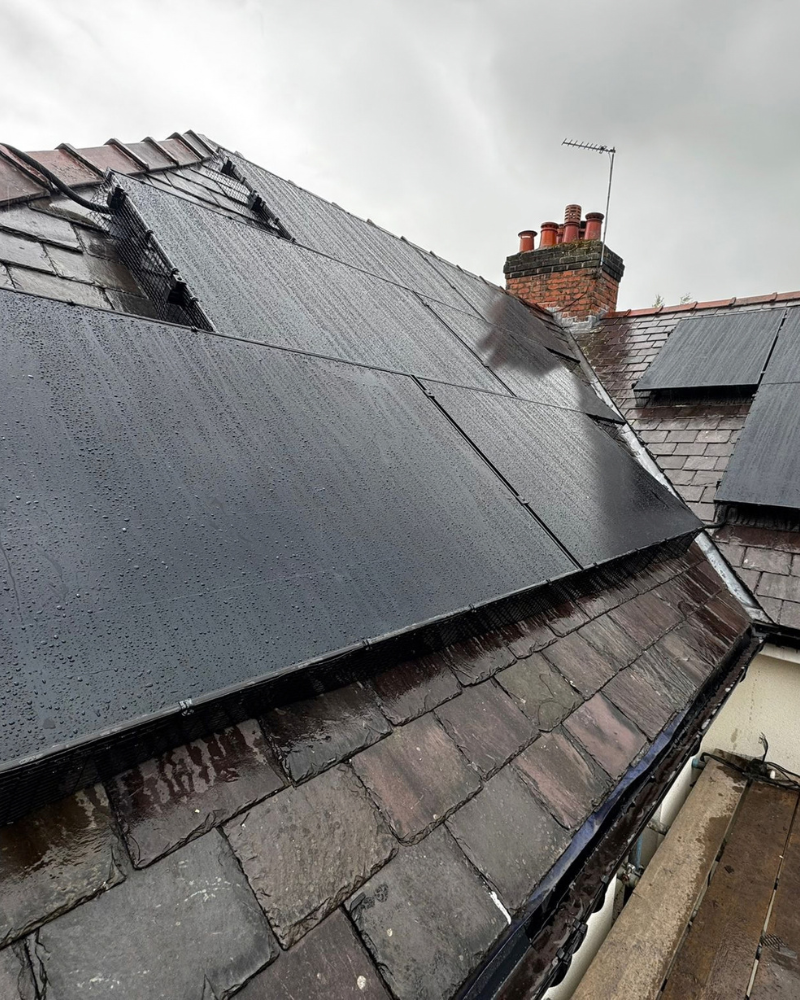
Solar panels in Birmingham at a glance
| Question | Current position |
|---|---|
| Typical system cost | Around £7,600 for a typical 4.5kWp UK home system; Birmingham quotations vary |
| VAT | Qualifying installed solar is currently subject to 0% VAT until 31 March 2027 |
| Export payments | Surplus solar electricity can qualify for the Smart Export Guarantee |
| Planning | Most domestic rooftop systems are permitted development, subject to conditions |
| Installer standard | MCS is the main UK quality-assurance scheme for small-scale solar |
| Battery | Optional; useful for some homes, but not automatically the best-value upgrade |
The cost benchmark comes from Energy Saving Trust, while HMRC confirms the temporary zero rate for qualifying energy-saving materials.
Is Birmingham suitable for solar panels?
Yes. Birmingham’s climate does not prevent solar PV from being effective. Panels generate electricity from daylight, including on overcast days. Direct sunshine increases output, but cloud does not stop generation.
Your roof usually matters more than a city-wide sunshine figure. A south-facing roof is often ideal, but east- and west-facing roofs can still produce useful electricity. They may also spread generation across the morning and afternoon.
Shading from mature trees, neighbouring buildings, chimneys or dormers can reduce output. Your installer should model those losses rather than simply quote the maximum laboratory output of the panels.
Ask every installer for an annual generation estimate showing the assumptions used. A larger number is not necessarily a better proposal if it ignores shading or uses unrealistic system-loss assumptions.
How much do solar panels cost in Birmingham?
Energy Saving Trust’s current national benchmark is around £7,600 for a typical 4.5kWp domestic system. Treat that as a reference point rather than a guaranteed Birmingham price. See Energy Saving Trust’s current solar-panel cost guidance
The final quotation can change significantly because of system size, panel specification, roof access, scaffolding, inverter choice, electrical work and battery storage. Using several roof elevations or dealing with substantial shading can also increase design complexity.
Roof condition matters too. If tiles, felt or other roof components are approaching replacement age, consider dealing with that work before fitting panels. You can compare the likely scope through Get Free Quote’s roofing quote service rather than paying to remove and reinstall an array later.
Qualifying domestic solar installations are currently zero-rated for VAT until 31 March 2027. HMRC says the reduced 5% rate is scheduled to apply from 1 April 2027 unless policy changes. Check HMRC’s energy-saving materials VAT guidance
How much could solar panels save in Birmingham?
There is no trustworthy single annual saving for every Birmingham home. Your financial benefit normally comes from two sources: electricity generated and used in your property instead of bought from the grid, plus payments for eligible electricity exported.
Ofgem’s Smart Export Guarantee (SEG) requires participating electricity suppliers to offer export tariffs for qualifying small-scale renewable generation. The supplier paying your export tariff does not have to be your normal electricity supplier. Read Ofgem’s Smart Export Guarantee guidance
A useful financial estimate should show your predicted annual generation, the proportion you are expected to use directly, the quantity exported, the electricity and export prices assumed and the resulting annual benefit.
You can also use the Energy Saving Trust solar calculator as an independent sense-check before relying on an installer’s payback calculation.
Solar panels only or solar panels with a battery?
A battery stores electricity that might otherwise be exported, allowing you to use more solar power later. It can be useful for households that are away during sunny hours or use significant electricity during the evening.
However, battery storage increases the upfront investment. It has usable-capacity limits, conversion losses, warranty terms and eventual degradation. Therefore, a battery should earn its place in the design rather than being added automatically.
| Option | Main advantage | Main consideration | Often suits |
|---|---|---|---|
| Solar only | Lower upfront cost | More daytime surplus may be exported | Homes with strong daytime electricity use |
| Solar + battery | Higher self-consumption | Higher capital cost | Homes with substantial evening use |
| Solar + EV charging | Daytime generation can charge the car | Vehicle needs to be available at suitable times | EV owners who charge at home |
| Solar + battery + EV | Maximum flexibility | Highest cost and system complexity | High-electricity-use households |
Ask installers for both solar-only and solar-plus-battery figures using the same panel array. You can then see exactly what the battery adds to cost, estimated savings and payback.
Which Birmingham roofs are best for solar?
A proper survey should look beyond orientation. It should check structural condition, usable area, shading throughout the year, cable routes, inverter position and safe access.
Older terraces, semis and period homes may need closer inspection before mounting equipment is fitted. The panels may last for decades, so installing them over a roof that needs major work soon afterwards rarely makes sense.
Flat roofs can also support solar panels. However, mounting angles, spacing, wind loading and the condition of the roof covering need careful design.
Do you need planning permission for solar panels in Birmingham?
Most domestic rooftop solar installations in England can fall within permitted development rights when the relevant conditions are met. Among the rules, rooftop equipment generally must not project more than 0.2 metres beyond the roof plane, and the installation should minimise its effect on the property’s appearance and surrounding area.
Different considerations can apply to listed buildings, scheduled monuments and certain conservation-area properties.
Birmingham City Council specifically advises people carrying out work within conservation areas to check what permissions are necessary. It also notes that some properties can be subject to separate estate controls. Check Birmingham City Council’s conservation-area guidance
Therefore, do not rely on the blanket claim that “solar never needs planning permission”. Check before ordering if your home has heritage or estate restrictions.
How to choose a solar installer in Birmingham
Energy Saving Trust recommends obtaining at least three quotations and looking for MCS-certified installers. MCS sets installation and operating requirements for certified renewable-energy contractors.
A useful quotation should identify the exact panels and inverter, system capacity in kWp, estimated annual generation, proposed roof layout, scaffolding, electrical work, warranties and responsibility for distribution-network paperwork.
For smaller solar PV systems applying for SEG payments, Ofgem says suitable certification can commonly be demonstrated with an MCS certificate or an equivalent recognised scheme.
Do not compare quotations only by total price. Check what equipment, warranties, assumptions and installation work each price actually includes.
What about solar with an EV charger or heat pump?
Solar becomes more useful when your household can consume more of the electricity it generates.
An EV can be a strong match when the car is regularly at home during daylight hours. Some chargers can adjust charging around available solar generation. If an electric car is part of your plans, compare solar-compatible EV charger installation options while designing the system.
A heat pump also increases household electricity demand. However, heating demand peaks during colder months, when solar generation is generally lower. The technologies can work together, but do not assume solar will supply most winter heating demand. Get Free Quote’s air source heat pump guide explains the heating side separately.
Planning future electrical demand early can help you choose suitable panel capacity, inverter design, battery compatibility and electrical infrastructure.
Get Your Free Air Source Heat Pump Quote
Find the right air source heat pump solution for your home. Tell us a few details and our team will help you explore suitable options at a competitive price.
Quick to complete. No obligation.
Get your quote
Enter your details below and one of our team will get back to you.
Frequently asked questions
Find clear answers to common questions comparing air source and ground source heat pumps, including efficiency, installation and running costs, winter performance, noise, land requirements and borehole depth.
Yes. Solar PV generates electricity from daylight rather than requiring uninterrupted direct sunshine. Output falls in dull conditions, but generation does not stop simply because it is cloudy.
Energy Saving Trust currently gives around £7,600 as the typical cost of a 4.5kWp UK domestic system. Birmingham prices vary with roof access, system size, equipment and installation complexity.
There is no reliable Birmingham-wide figure. Payback depends on installation cost, generation, self-consumption, electricity prices and export income. Energy Saving Trust's current examples vary by location and usage pattern.
No. South-facing roofs are often favourable, but east- and west-facing roofs can still generate useful electricity. A property-specific estimate is more useful than roof direction alone.
Sometimes. Batteries can increase the proportion of solar electricity you use yourself, but the additional purchase cost means they do not automatically improve financial returns.
Often yes, although compatibility depends on the inverter, electrical design and battery system. Tell the installer if you may add storage later.
Many conventional domestic installations fall under permitted development, subject to conditions. Heritage properties and certain conservation-area situations require additional checks.
Extra controls normally apply. Check with Birmingham City Council and the relevant planning authority before proceeding.
MCS is the principal UK certification scheme for small-scale renewable installations. It is also the usual route for demonstrating suitable certification when applying for SEG export payments.
The SEG is the scheme under which participating electricity suppliers pay eligible small-scale generators for electricity exported to the grid.
Yes, but substantially less than during the brighter months. Your annual forecast should account for the seasonal variation.
Yes if significant roof work is likely soon. Removing and reinstalling panels later creates avoidable cost and disruption.
Generally they require relatively little routine maintenance. Your installer should provide maintenance guidance and explain inverter fault indicators and monitoring.
Yes. Solar electricity can contribute to EV charging, particularly when the vehicle is connected during daylight hours and the charger supports suitable smart controls.
Yes, solar can provide some of a heat pump's electricity. However, winter heating demand and peak solar generation occur at different times of year, so the contribution should be modelled realistically.
Energy Saving Trust says there is currently no universal UK Government grant dedicated solely to buying solar panels, although solar may receive support through wider schemes for eligible households. Funding changes, so check current council, supplier and government programmes before relying on it.
Qualifying installed solar PV is currently zero-rated for VAT until 31 March 2027. The reduced 5% rate is scheduled to apply from 1 April 2027 under current rules.
Permission from the landlord or freeholder may be necessary. Since August 2026, compliant plug-in solar systems have also become available in Great Britain, although suitability and permissions still need checking.
Final checklist before getting solar panels in Birmingham
Before signing a contract, confirm that your roof is in sound condition, shading has been modelled realistically, annual generation is property-specific and the quotation is fully itemised.
Check who handles scaffolding, electrical upgrades, network paperwork, certification and aftercare. Compare at least three quotations on the same basis rather than choosing the lowest headline number.
For a Birmingham homeowner with a suitable roof, solar can reduce grid electricity purchases and provide an income for qualifying exported electricity. The quality of the financial case depends on the design, installation price and how closely generation matches your household’s electricity use.
Next step: compare properly specified solar quotes and ask every installer to show the assumptions behind its generation and savings figures.


