
Solar Panel Installation Bristol: Costs & Quotes 2026
Check Your Eligibility for Boiler Upgrade Scheme (BUS)
Complete your details below to check your eligibility.
Thank you
We've received your details and will be in touch shortly.

Quick answer: what should you expect from solar panel installation in Bristol?
Solar panel installation in Bristol usually starts with a property survey, system design and estimated annual generation. The installation then covers roof mounting, panels, electrical work, an inverter, commissioning and grid-connection paperwork.
The Energy Saving Trust currently gives around £7,600 as the average installed cost of a typical 4.5 kWp UK home solar system. Bristol quotes can be higher or lower depending on roof access, system size, scaffolding, equipment and electrical work. Most houses do not need planning permission, although Bristol has important exceptions involving listed buildings, conservation areas and certain installation designs.
Solar Panel Installation Bristol: Costs, Process, Planning and Quotes in 2026
If you are considering solar panel installation in Bristol, the key questions are practical: what will it cost, will your roof suit solar, do you need planning permission, and what should a good quote include?
For many Bristol homes, a well-designed solar PV system can reduce the electricity bought from the grid and earn payments for surplus electricity exported. Results depend on roof orientation, shading, system size, electricity use and whether you add battery storage. Bristol’s mix of Victorian terraces, Edwardian semis, modern homes and conservation areas also means that survey and planning checks matter.
This guide focuses specifically on the installation decision. It covers 2026 costs, surveys, installation, Bristol planning rules, MCS certification, grid paperwork, batteries, grants and the details worth comparing before choosing an installer.
Once you understand what your property needs, you can compare options through Get Free Quote. Get Free Quote is a comparison and introduction service rather than the company carrying out the installation, so you can review price, specification and credentials before deciding whether to proceed.
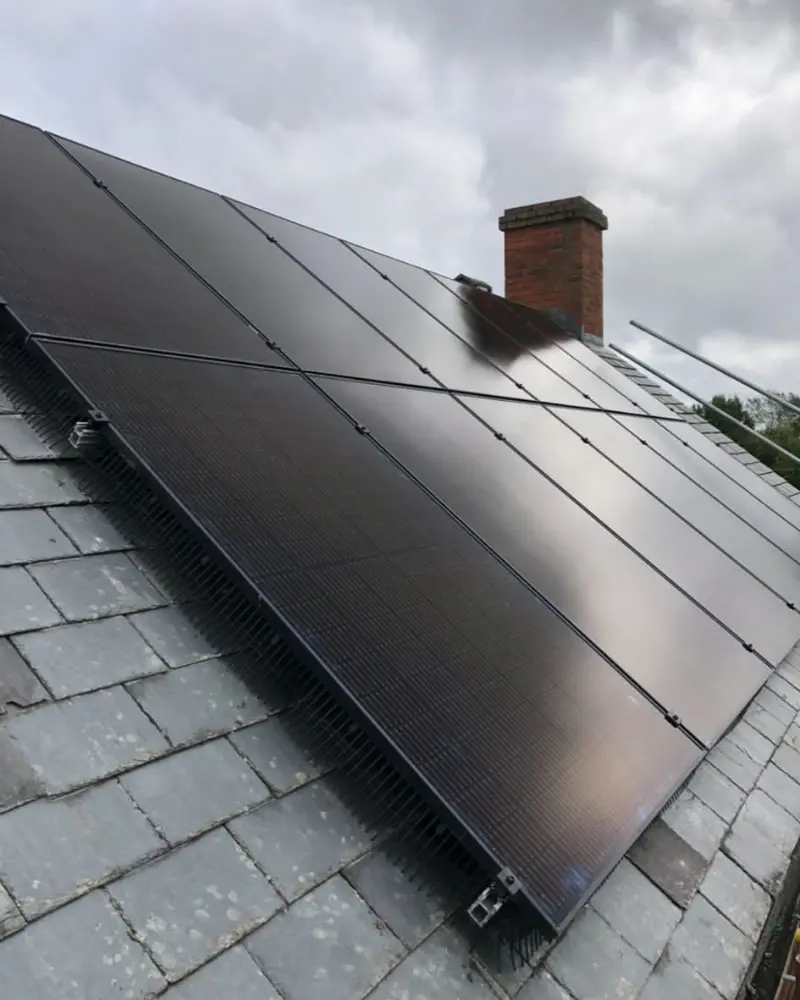
How much does solar panel installation cost in Bristol?
There is no single Bristol price because the roof and system specification matter. The Energy Saving Trust solar panel guide currently uses around £7,600 for a typical 4.5 kWp domestic installation. Battery storage typically adds around £5,000 to £8,000. These are useful benchmarks rather than guaranteed Bristol quotations. Energy Saving Trust
Current Bristol-focused search results show why comparing like-for-like quotes matters. Published estimates vary from roughly the mid-£5,000s for relatively straightforward smaller systems to considerably more for larger arrays, batteries, difficult roofs and heritage properties. One Bristol analysis using MCS-derived installation data reported an average of £8,374 for a 4.95 kWp system based on March 2024 to March 2025 installations.
| Cost factor | What it can change |
|---|---|
| System size | More panels and higher inverter capacity increase equipment and installation costs. |
| Roof access | Tall, steep or awkward roofs can require additional scaffolding. |
| Roof condition | Repairs or structural work may be needed before panels go up. |
| Equipment | Higher-spec panels, inverters and batteries can increase the initial price. |
| Electrical work | Consumer-unit, earthing or cabling upgrades may be required. |
| Planning constraints | Heritage or consent requirements can add design work and time. |
Qualifying domestic energy-saving installations in Great Britain currently receive 0% VAT, including eligible professionally installed solar panels. Check the current GOV.UK VAT guidance. GOV.UK
Is Bristol suitable for solar panels?
Many Bristol properties are suitable for solar. Solar PV panels generate electricity from daylight rather than needing uninterrupted direct sunshine, so they still produce electricity on cloudy days. Energy Saving Trust
A south-facing, largely unshaded roof normally gives a straightforward design. However, east- and west-facing arrays can also be effective. They can spread generation across the morning and afternoon, which may suit households whose electricity use follows the same pattern.
The important questions are specific to your property: usable roof area, orientation, pitch, shading and roof condition. A reputable design should model those factors rather than promising every Bristol property the same annual output.
For broader information on local suitability and ownership considerations, see the existing guide to solar panels in Bristol.
What happens during a solar panel installation?
A typical project starts with an initial design based on your address, roof and electricity consumption. A site survey then checks roof dimensions, condition, shading, access, cable routes, meter position and the existing electrical installation.
Once the final design is agreed, installers fit the roof mounting system and solar panels. DC cables connect the array to an inverter, which converts the panels’ direct current into alternating current that household appliances can use. Battery storage can be fitted at the same time where included in the design.
The installer then tests and commissions the system, sets up monitoring and completes the required handover documentation.
For the detailed sequence rather than repeating it here, see the dedicated solar panel installation process guide.
Many straightforward domestic systems can be physically installed within roughly one to three days. However, the overall project takes longer because surveys, scaffolding, equipment scheduling and grid-connection work happen around the installation itself. getfreequote.co.uk
What should a Bristol solar survey check?
A good survey establishes whether the proposed system works for your particular house, rather than simply checking whether panels physically fit.
The survey should examine roof condition and structure, available dimensions, orientation, pitch, shading, safe access, inverter position, cable routes, the consumer unit and grid-connection requirements.
Your electricity consumption matters too. Daytime occupancy, an electric vehicle, a heat pump or plans to electrify more of the home can affect sensible solar and battery sizing.
Ask for the estimated annual generation in kWh and the assumptions behind it. The calculation should allow for location, roof direction, pitch, shading and normal system losses.
See the dedicated solar panel installation survey guide for the checks worth making before signing a contract.
Do solar panels need planning permission in Bristol?
Most solar installations on houses in Bristol do not require a planning application where they comply with permitted-development conditions.
However, Bristol City Council says permission can be required if equipment projects more than 20 cm from the wall or roof slope, extends above the highest part of the roof, or falls within certain conservation and protected-building circumstances. Check Bristol City Council’s solar planning guidance. Bristol City Council
Listed buildings need particular care. The council advises that renewable-energy additions such as solar panels may require listed-building and/or planning consent. Bristol has also introduced a Local Listed Building Consent Order for certain solar installations in the Clifton Conservation Area, subject to the order’s conditions. Bristol City Council
Flats, maisonettes, listed properties, conservation-area homes and properties with restricted permitted-development rights therefore deserve an address-specific check before work begins.
MCS, G98/G99 and connecting solar to the grid
MCS is a certification framework covering the design, installation, commissioning and handover of small-scale renewable-energy systems. MCS-certified contractors must work to applicable installation standards and statutory requirements. Read the MCS installer requirements. MCS Certified
MCS or equivalent certification also matters when applying for Smart Export Guarantee payments. Ofgem says solar PV installations up to 50 kW need to demonstrate suitable certification, normally through an MCS certificate or equivalent. Ofgem
Bristol sits within National Grid Electricity Distribution’s South West licence area. Distribution System Operator (DSO) Smaller installations that meet G98 requirements can use that connection route. Generation above 16A per phase — commonly 3.68 kW per phase — or systems that do not meet G98 conditions use G99 procedures. See National Grid’s G99 connection guidance. Connections
Your quote should therefore make clear who handles the DNO application or notification and whether an export limit affects the inverter or battery design.
Should you add battery storage?
A battery stores electricity that might otherwise be exported so you can use it later. This can be particularly useful when the property is empty during sunny hours but electricity consumption rises during the evening.
However, a battery does not automatically produce a better financial return. Its value depends on usable capacity, charging and discharging power, efficiency, warranty, electricity tariff, solar generation and when you consume energy.
Ask the installer to provide solar-only and solar-plus-battery scenarios. That makes the additional cost and expected benefit much easier to compare.
How does the Smart Export Guarantee work?
The Smart Export Guarantee, or SEG, provides a route for eligible households to receive payment for electricity exported to the grid. Suppliers set their own tariff rates, contract periods and other conditions. Ofgem maintains the current list of SEG suppliers. Ofgem
Export rates can change, so avoid a solar proposal whose financial case depends on one tariff remaining unchanged for decades.
How to compare solar panel installation quotes in Bristol
Two quotations offering the same number of panels can describe quite different systems. Compare the specification and assumptions, not simply the headline price.
| Check | What a useful quote should show |
|---|---|
| System size | Total kWp, panel count and individual panel wattage |
| Generation | Estimated annual kWh and the assumptions used |
| Equipment | Exact panel, inverter and battery models |
| Scope | Scaffolding, mounting, cabling and electrical upgrades |
| Certification | MCS status and relevant electrical certification |
| Grid connection | Responsibility for G98/G99 and export restrictions |
| Warranties | Product, performance, battery and workmanship cover |
| Handover | Monitoring, manuals, certificates and commissioning documents |
If roof space is limited, panel efficiency and watts generated per square metre can become particularly important. The separate guide to the best solar panels for UK homes covers product selection in more detail.
Are there solar panel grants in Bristol?
There is no universal cash grant available to every homeowner buying solar panels. However, qualifying Bristol households may currently receive funded improvements through Bright Green Homes.
The current scheme can fund solar PV and battery storage alongside other energy-efficiency measures. Eligibility includes factors such as living within the participating council area, an EPC rating of D to G and household-income criteria; funding is limited and subject to the current scheme rules. Check the current Bright Green Homes funding criteria. Bristol City Leap
The national Warm Homes: Local Grant also lists Bristol, City of as receiving funding through a consortium with Bath and North East Somerset and North Somerset. GOV.UK
Get Your Free Air Source Heat Pump Quote
Find the right air source heat pump solution for your home. Tell us a few details and our team will help you explore suitable options at a competitive price.
Quick to complete. No obligation.
Get your quote
Enter your details below and one of our team will get back to you.
Frequently asked questions
Find clear answers to common questions comparing air source and ground source heat pumps, including efficiency, installation and running costs, winter performance, noise, land requirements and borehole depth.
Energy Saving Trust currently uses about £7,600 as the typical UK price for a 4.5 kWp domestic solar system. Bristol prices vary according to system size, roof access, equipment, scaffolding and any electrical or structural work required. Energy Saving Trust
There is no standard number. The correct array depends on annual electricity consumption, available roof area and individual panel wattage. Modern domestic systems often use fewer, higher-powered panels than older systems.
Yes. Solar panels generate electricity from daylight and continue working in overcast conditions, although output falls compared with bright sunshine. Energy Saving Trust
Usually not for a house where the installation satisfies permitted-development conditions. Bristol City Council lists exceptions involving dimensions, listed buildings and certain conservation-area situations. Bristol City Council
Potentially, but you should check the consent requirements first. Bristol City Council says renewable technologies on listed buildings may require listed-building and/or planning consent. Bristol City Council
Often yes, but additional restrictions may apply depending on the property and where the panels will be placed. Check the specific address with Bristol City Council before installation. Bristol City Council
Physical installation on a straightforward domestic roof often takes around one to three days. Surveying, scaffolding and grid paperwork mean the overall project normally spans a longer period. getfreequote.co.uk
MCS certification demonstrates that the contractor operates under recognised technical and consumer requirements. An MCS certificate or equivalent is also normally required to demonstrate suitable certification for SEG eligibility on domestic-scale solar. MCS Certified
Yes, eligible installations can receive payments through a Smart Export Guarantee tariff. Suppliers determine their individual rates and contract conditions. Ofgem
It depends on when you use electricity, battery cost, tariff, usable capacity and expected solar surplus. Compare a solar-only proposal with an equivalent battery proposal before deciding.
Energy Saving Trust currently indicates roughly £5,000 to £8,000 for typical battery storage, although capacity, power rating and brand can change the price significantly. Energy Saving Trust
Yes. Output generally differs from an equivalent optimally oriented array, but east-west installations can still generate useful electricity and may spread production more evenly across the day.
Yes. Flat roofs commonly use angled mounting systems or low-profile designs. The installer must consider loading, wind exposure, drainage, spacing and shading between rows.
Not necessarily. However, the survey should confirm that the roof and structure can safely support the proposed system. Bristol City Council notes that Building Regulations normally apply and roof strength needs consideration. Bristol City Council
Yes. Solar electricity can supply an EV charger when generation and charging coincide. A battery or smart charging schedule can change how much solar electricity ultimately reaches the vehicle.
Yes. A heat pump increases household electricity consumption, so planned heat-pump use should be considered when sizing a solar system. Generation is greatest in summer while heating demand is highest in winter, so annual totals alone can be misleading.
Eligible households may currently qualify for Bristol's Bright Green Homes programme, which can include solar PV and battery storage. Eligibility and available funding should be checked before relying on a grant. Bristol City Leap
Qualifying installed energy-saving products in Great Britain currently receive 0% VAT. Your installer is responsible for applying the correct VAT treatment. GOV.UK
Your handover should include relevant commissioning information, warranties and electrical documentation. Where applicable, you should also receive the MCS certificate and documentation relating to the DNO connection process.
No. A larger system produces more electricity, but value also depends on how much you can use, export limits, tariff rates, roof orientation and the extra installation cost.
Is solar panel installation worth it in Bristol?
Solar can make financial sense when the roof is suitable, the system is correctly sized and the household can use or export a meaningful proportion of its generation.
Energy Saving Trust’s July 2026 modelling shows example payback periods of roughly nine to twelve years across several UK locations when export payments are included. Those figures are not Bristol guarantees: your electricity use, roof, purchase price, tariff and battery choice can materially change the result. Energy Saving Trust
The strongest quotation is therefore not necessarily the cheapest one or the proposal promising the largest annual saving. It is the one that explains its assumptions clearly enough for you to test them.
For a Bristol homeowner, the sensible next step is to compare survey-based proposals on the same basis: system size, expected generation, equipment, battery assumptions, planning requirements, grid connection, warranties and the complete installed price.


