
Local Solar Panel Installers: Compare Trusted UK Companies
Check Your Eligibility for Boiler Upgrade Scheme (BUS)
Complete your details below to check your eligibility.
Thank you
We've received your details and will be in touch shortly.

Quick Answer: How Do You Find a Good Local Solar Panel Installer?
A sensible starting point is to search the official MCS installer register for businesses covering your postcode, then obtain at least three detailed quotations. Check that each installer is currently certified for solar PV and verify its consumer-protection membership, insurance, warranties and company details.
Do not compare price alone. Look at the proposed system size, panel and inverter models, annual generation estimate, scaffolding, electrical work, DNO responsibilities, warranties and after-sales support.
A local company may offer easier access to surveys, references and ongoing support, but location alone does not demonstrate quality. Verify every installer independently before signing a contract or paying a deposit. Energy Saving Trust and RECC both recommend comparing at least three installers.
Local Solar Panel Installers: How to Find and Compare Trusted UK Installers
Finding local solar panel installers is easy. Choosing one you can trust with your roof, electrics and several thousand pounds is harder.
A good installer should do much more than offer a competitive price. They should assess your property properly, design a system around your roof and electricity use, explain expected generation, handle relevant grid paperwork and provide clear warranties and aftercare.
For UK homeowners, one of the strongest starting points is to compare several MCS-certified installers rather than accepting the first quotation. Energy Saving Trust currently recommends getting three quotes from MCS-certified solar installers. Energy Saving Trust
This guide explains how to find local solar companies, what qualifications to check, how to compare quotations and which warning signs deserve closer attention.
Ready to compare options? Start with the Get Free Quote home comparison service or compare solar panel installation quotes before deciding which installer to appoint.
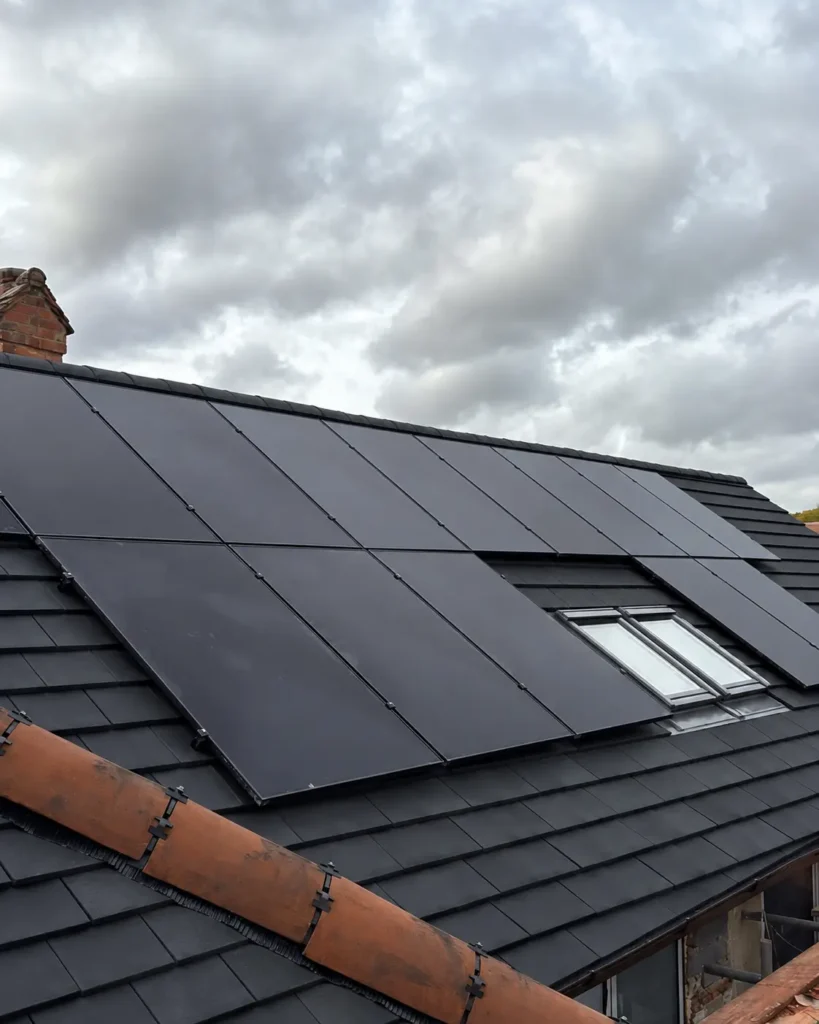
Local Solar Installers vs National Solar Companies
Neither business model is automatically better. What matters is the quality of the design, installation, contract and aftercare.
| Consideration | Local installer | National installer |
|---|---|---|
| Local knowledge | May know local housing types, roof styles and network requirements well | Processes may cover many regions |
| Survey access | Often easier to arrange directly | May use regional survey teams |
| References | May have nearby installations you can inspect | Often has a larger overall review base |
| Aftercare | Potentially direct contact with the same team | Usually handled through a central support system |
| Pricing | Can be competitive with lower overheads | May benefit from larger purchasing volumes |
| Key check | Credentials, track record and financial stability | Credentials, subcontractors and who actually installs the system |
Treat these as characteristics rather than guarantees. Some local companies use subcontractors, while some national firms employ regional installation teams directly.
How to Find Local Solar Panel Installers Near You
Start with the MCS Find an Installer service. You can search by postcode or region and select Solar PV.
Energy Saving Trust specifically recommends using this route and obtaining quotations from at least three installers. Energy Saving Trust
You can also search the Renewable Energy Consumer Code member directory. RECC lets homeowners search by postcode and technology and suggests asking local installers about previous installations in the area.
Local recommendations can add useful context. However, a neighbour’s positive experience should complement certification and contractual checks rather than replace them.
What Qualifications Should a Solar Installer Have?
Check MCS certification
For professionally installed domestic solar PV, MCS certification is an important quality check. MCS covers the design, installation, commissioning and handover requirements for certified systems.
Verify the company itself on the MCS register and confirm that its certification includes Solar PV. Do not rely solely on an MCS logo displayed on a website or quotation.
MCS documentation also matters after installation. Its solar PV handover guidance includes an MCS certificate, system information, commissioning records, manuals and maintenance information among the documents associated with a compliant handover. MCS Certified
Check consumer protection
RECC advises consumers to use MCS-certified businesses for the relevant technology and companies listed within its own consumer-code membership. It also advises obtaining at least three quotes before choosing a contractor. RECC
Ask which consumer code applies to your installation and verify membership independently.
Check the actual contracting company
Confirm the legal company name, Companies House details, trading history and insurance.
This is particularly important if the salesperson, quotation provider and installation company have different names. Ask explicitly:
“Which legal company am I signing the contract with, and which company will physically install the system?”
That simple question can reveal whether work will be subcontracted.
What Should a Local Solar Installer Check at Your Home?
A proper quotation should be based on more than satellite imagery.
Before you commit to the final design, the installer should assess roof dimensions, orientation, pitch, shading, roof condition, access and your electrical installation. Energy Saving Trust says installers should assess the roof before installation and design the system around the available space and property. Energy Saving Trust
The survey should also consider where the inverter will go, practical cable routes and whether electrical upgrades may be necessary.
For a more detailed preparation guide, see the solar panel installation survey guide.
A larger system is not automatically a better system. The proposal should make sense for the usable roof area, likely generation, household electricity demand and any future battery, EV charger or heat-pump plans.
How to Compare Solar Panel Quotes Properly
Ask every installer to quote on a comparable basis.
| Check | What you should see |
|---|---|
| System size | Total capacity in kWp and number of panels |
| Panels | Manufacturer, model, output and warranties |
| Inverter | Exact make, model and capacity |
| Generation | Property-specific annual kWh estimate and assumptions |
| Roof work | Mounting system, scaffolding and access |
| Electrical work | Cabling, protection and any consumer-unit work |
| Grid connection | Who handles applicable DNO procedures |
| Certification | MCS and relevant electrical paperwork |
| Warranties | Product, performance and workmanship cover |
| Total cost | Clear VAT treatment and significant exclusions |
Be especially careful when two quotations predict substantially different annual generation from essentially the same roof. Ask each installer to explain the difference.
RECC says consumers should receive a written, property-specific performance estimate and an all-inclusive breakdown before signing. RECC
If you want to understand the stages behind the quotation, use the solar panel installation process guide.
How Much Should Solar Panel Installation Cost?
Energy Saving Trust currently gives around £7,600 as the cost of an average 4.5kWp domestic solar PV system. Actual quotations can differ because of system size, roof access, equipment, roof condition and installation complexity. Energy Saving Trust
Treat that figure as a benchmark, not a target price.
For example, a difficult three-storey roof may require more scaffolding than a simple bungalow. Premium panels, microinverters, battery storage or electrical upgrades can also raise the total cost.
Qualifying installed solar panels in residential accommodation currently benefit from 0% VAT until 31 March 2027. Under current legislation, the rate is scheduled to return to the reduced rate after that date. GOV.UK
Ask installers to separate optional extras so you can see whether a battery, optimiser system, bird protection or other upgrade improves the proposal enough to justify its cost.
Questions to Ask a Solar Installer Before Signing
A competent installer should be comfortable answering detailed questions.
Ask who will carry out the installation and whether any work is subcontracted. Confirm the exact panel and inverter models, why that system size has been recommended and how shading has been included in the generation forecast.
You should also ask what happens if your roof survey reveals additional work, who handles the DNO process, which warranties apply, who provides aftercare and what happens if the installer stops trading.
For financial projections, ask which electricity import and export prices have been assumed. Savings forecasts can look impressive when unrealistic future electricity prices are used.
Solar Installer Warning Signs
Pressure to sign immediately deserves caution. RECC advises consumers not to sign because of time-limited discounts or sales pressure and says deposits should not exceed 25% of the contract price, with protection arrangements checked. RECC
Other reasons to investigate further include vague equipment descriptions, unusually high generation forecasts, unclear warranty terms and reluctance to identify the installation company.
Be wary when an installer cannot explain why a particular system size suits your home.
Likewise, “MCS paperwork will come later” is not a substitute for confirming the company’s current certification before entering the contract.
Recent UK solar discussions also show homeowners repeatedly comparing not just prices but subcontracting, MCS status, workmanship warranties, DNO handling and after-sales support. Those discussions are anecdotal, but they reinforce the value of checking the complete package rather than headline price alone. Reddit
What Happens After Installation?
The installer should commission the system, explain its operation and provide the relevant handover documents.
For an MCS installation, make sure you receive the promised certification and warranty information. Keep these documents safely because they may be useful for export tariffs, warranties and future property sales.
In Great Britain, the Smart Export Guarantee allows eligible small-scale generators to receive payments for qualifying electricity exported to the grid. Ofgem confirms that solar PV is included and that tariff rates and contract terms differ between suppliers. Ofgem
Ofgem’s generator guidance says solar PV systems up to 50kW seeking SEG eligibility need appropriate installation and installer certification. Your chosen SEG supplier determines what evidence it accepts, so check its requirements rather than assuming every tariff operates identically.
Get Your Free Air Source Heat Pump Quote
Find the right air source heat pump solution for your home. Tell us a few details and our team will help you explore suitable options at a competitive price.
Quick to complete. No obligation.
Get your quote
Enter your details below and one of our team will get back to you.
Frequently asked questions
Find clear answers to common questions comparing air source and ground source heat pumps, including efficiency, installation and running costs, winter performance, noise, land requirements and borehole depth.
Search the official MCS installer register by postcode, then compare at least three companies covering your area.
For most homeowners seeking a professionally certified installation and straightforward access to export tariffs, choosing an MCS-certified solar PV installer is sensible.
SEG suppliers require suitable evidence that qualifying installations meet applicable certification rules. MCS is the normal route for domestic installations, although Ofgem allows recognised equivalent certification in relevant circumstances.
Energy Saving Trust and RECC both recommend obtaining at least three quotations.
Not automatically. Compare design quality, credentials, workmanship, price, warranties and aftercare rather than choosing solely by company size.
Energy Saving Trust currently estimates around £7,600 for an average 4.5kWp domestic system. Your price may be higher or lower.
It should identify system size, panels, inverter, mounting, scaffolding, electrical work, estimated generation, warranties, certification and relevant grid-connection responsibilities.
Yes. Roof condition, dimensions, shading, orientation, pitch and mounting suitability can affect the final design.
A desktop estimate can be useful initially, but the final specification should reflect an appropriate technical assessment of the property.
Not on price alone. A cheaper quote may exclude scaffolding, electrical upgrades, stronger warranties or other work included elsewhere.
Search the business directly on the official MCS register and confirm that its current certification covers Solar PV.
The Renewable Energy Consumer Code is a consumer-protection scheme for businesses selling or installing small-scale renewable energy systems.
RECC advises consumers not to pay more than 25% of the contract price upfront and to check that the deposit is protected.
Installers normally deal with the relevant network process, but confirm responsibility in writing before signing.
Often yes. Tell the installer about future battery plans because inverter choice, electrical design and grid arrangements can affect the upgrade.
Energy Saving Trust says the physical installation itself commonly takes around one to two days, although surveys, scaffolding and network procedures extend the overall project. Energy Saving Trust
Expect applicable electrical documentation, product and workmanship warranties, operating information, monitoring details and relevant MCS and DNO documentation.
Some do because their engineers are based nearby, but proximity does not guarantee better service. Ask for written response arrangements and recent customer references.
Final Checklist for Choosing a Local Solar Installer
Before signing, confirm that you have compared several itemised quotes, checked current MCS status, identified the legal contracting company and understood who will complete the work.
Make sure the generation estimate is specific to your property. Check scaffolding, electrical work, DNO responsibilities, warranties, exclusions and aftercare.
Price matters, but the cheapest quotation can become expensive if important work is missing.
Use the solar panel installation checklist before making a final decision.
A strong local installer should leave you understanding exactly what is being installed, why it suits your property, what it should generate and who will support you if something goes wrong.


