
Solar Panel Installation Requirements UK: 2026 Guide
Check Your Eligibility for Boiler Upgrade Scheme (BUS)
Complete your details below to check your eligibility.
Thank you
We've received your details and will be in touch shortly.

Quick Answer: What Are the Main Solar Panel Installation Requirements?
For many farms, yes. Solar is most attractive where the business has consistent daytime electricity demand and suitable roof space, because every kilowatt-hour used directly on site can replace electricity that would otherwise be bought from the grid. Exporting surplus electricity can add revenue, but self-consumption is normally the stronger value driver.
A farm solar project should be sized around actual demand rather than roof area alone. Roof condition, structural loading, three-phase supply, DNO export limits, seasonal demand, battery economics and tax treatment can all affect the result. In 2026, current commercial market guides commonly put mid-sized rooftop installations at roughly £750–£1,100 per kWp, depending on size and complexity. Only a site survey and detailed quotation can establish a reliable price.
Solar Panel Installation Requirements UK: What Your Home Must Meet in 2026
For a typical UK home, solar panel installation requires a structurally suitable roof, enough usable roof area, a safe mounting design, compliant electrical work and the correct grid-connection process. Planning permission is often unnecessary because rooftop solar can fall under permitted development, but limits apply and the rules differ across the UK.
A competent installer should assess roof condition, structural loading, wind exposure, shading, cabling, inverter location, consumer-unit suitability and Distribution Network Operator requirements. If you want an MCS-certified system, the design and installation must also follow the current MCS Solar PV Installation Standard. Leasehold, listed and protected properties can require additional permission.
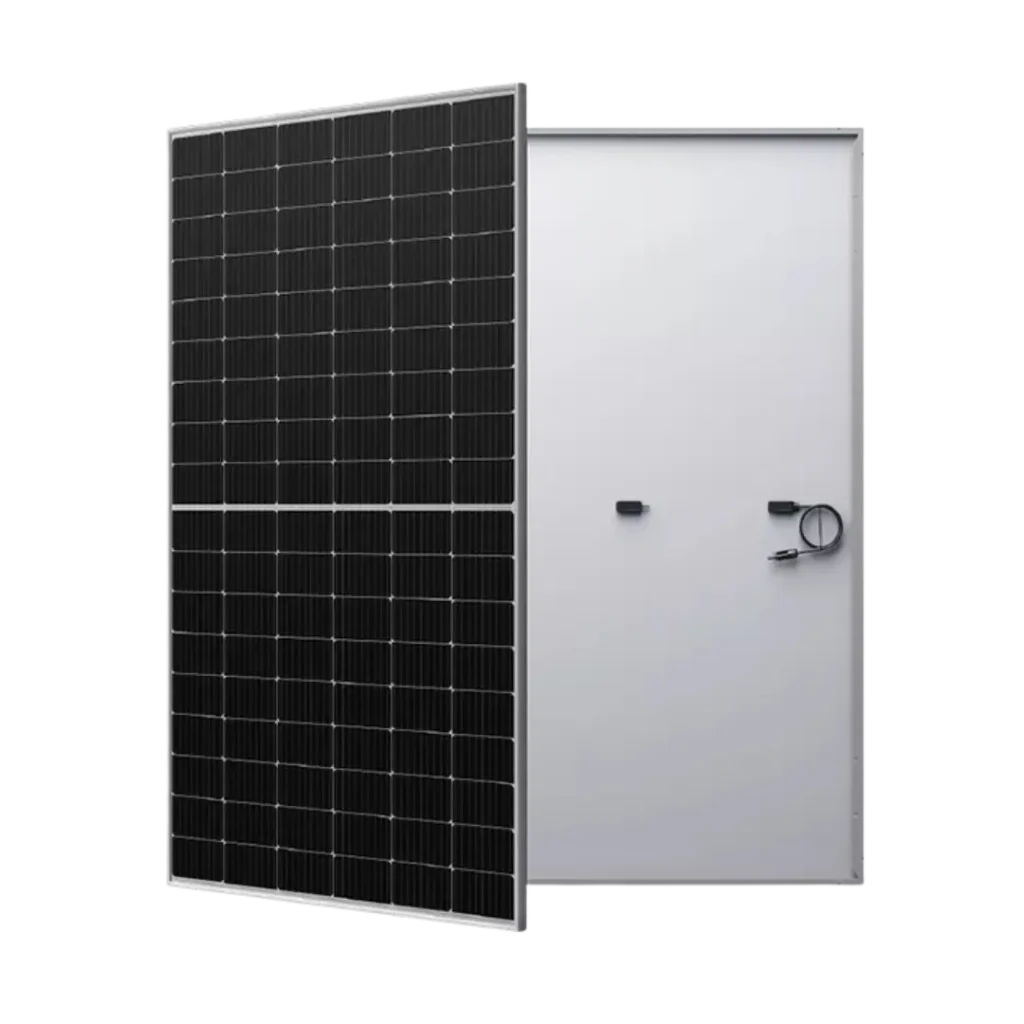
Solar Panel Installation Requirements at a Glance
| Requirement | What Needs Checking | Why It Matters |
|---|---|---|
| Planning | Permitted development, listed status and local restrictions | Confirms whether consent is needed |
| Roof | Condition, loading, wind loads and mounting method | Confirms the array can be supported safely |
| Layout | Usable area, pitch, orientation and shading | Affects system size and generation |
| Electrics | Consumer unit, earthing, protection and cable routes | Ensures a safe electrical connection |
| Grid | G98/G99 route, inverter rating and export limits | Determines the DNO process |
| Certification | MCS requirements where specified | Supports installation quality and export-tariff evidence |
| Access | Scaffolding or another safe access method | Enables safe roof work |
1. Do You Need Planning Permission for Solar Panels?
Most conventional domestic rooftop systems can be installed without a full planning application. However, “permitted development” does not mean there are no rules.
In England, the Planning Portal’s current solar guidance says panels on a pitched roof should not rise above the highest part of the roof, excluding the chimney, and should generally project no more than 200mm from the roof slope. England updated its solar permitted-development rules on 27 August 2026, with transitional provisions running until 27 August 2027.
Planning law is not identical across the UK.
| Nation | Typical Domestic Position | Important Point |
|---|---|---|
| England | Often permitted development | Check the current post-August 2026 rules |
| Wales | Often permitted development for houses | Flat-roof and protected-area limits differ |
| Scotland | Permitted-development rights are available | Conservation areas and listed buildings have additional restrictions |
| Northern Ireland | Many domestic systems are permitted development | Dimensional limits differ from Great Britain |
For example, the Welsh Government guidance generally applies a 200mm projection limit to pitched-roof and wall-mounted domestic solar, while flat-roof panels have different conditions. Scotland uses separate permitted-development classes, including specific rules for solar equipment on dwellings.
Northern Ireland has its own domestic microgeneration provisions under the Planning (General Permitted Development) Order (Northern Ireland) 2015. Do not assume that measurements quoted in an English solar guide apply throughout the UK.
Local restrictions, listed status and protected locations can also change the answer.
2. Your Roof Must Be Structurally Suitable
Building regulations normally apply to rooftop solar because the existing roof must be capable of carrying the additional loads. The Planning Portal’s Building Regulations guidance for solar panels specifically says the ability of the roof to carry the installation needs to be checked and proven. Strengthening may sometimes be necessary.
The assessment is not only about the panels’ weight. The mounting system must resist wind uplift and safely transfer loads into the roof structure.
Tiled, slate, metal and flat roofs can all require different fixing methods. In England, Approved Document A provides statutory guidance covering structural elements including roofs.
A proper survey should examine the roof covering, supporting structure, previous repairs, deterioration and proposed fixing points.
If the roof is approaching the end of its useful life, repairing or replacing it before solar installation can prevent the extra expense of removing and reinstalling panels later. See our guide to whether you need a new roof before solar panels for this decision in more detail.
3. You Need Enough Suitable Roof Area
A roof does not have to face due south to support a useful solar installation. East- and west-facing roofs can also generate electricity, while split arrays can make use of more than one roof face.
However, the installer needs enough usable area after allowing for chimneys, roof windows, vents, valleys and other obstacles.
Shading from trees, neighbouring buildings or roof features should also form part of the assessment because it can reduce generation at certain times.
Orientation, pitch and shading are mainly performance considerations rather than general legal requirements. They influence how much electricity the system may produce and whether the proposed layout offers reasonable value.
A proper solar panel installation survey should turn those factors into a property-specific layout and generation estimate rather than relying on a generic number of panels.
4. The Electrical Installation Must Be Compliant
Solar PV becomes part of your fixed electrical installation. The electrical work therefore needs to be designed, installed, inspected and tested correctly.
In England, Approved Document P covers electrical safety in dwellings. The installer should assess the existing consumer unit, earthing and bonding, protective devices, cable routes, isolation and proposed inverter connection.
An older consumer unit does not automatically mean a complete replacement is necessary. However, unsafe or unsuitable equipment may need upgrading before the new generation circuit can be connected.
The inverter also needs an appropriate position. It should remain accessible for maintenance, operate within the manufacturer’s environmental requirements and allow safe cable routing.
5. The DNO Connection Route Must Be Confirmed
Solar PV connects generation to the electricity network, so your local Distribution Network Operator, or DNO, must be dealt with correctly.
In Great Britain, the current ENA framework places fully type-tested microgenerators up to and including 16A per phase within G98. On a normal single-phase 230V supply, 16A equates to approximately 3.68kW of AC generating capacity. Equipment outside the G98 scope generally comes under G99.
The Energy Networks Association document catalogue lists the current G98/G99 connection documents and the March 2026 Distributed Generation Connection Guide.
Do not assume that a “4kWp solar system” automatically requires G99. Panel-array capacity in kWp and inverter AC generating capacity are not the same measurement.
Batteries, hybrid inverters and export-limitation arrangements can also affect the connection assessment.
Your quotation should explain which route applies, who completes the DNO paperwork and whether an export restriction is expected.
6. MCS Certification Matters, but Understand Why
MCS is a certification and standards scheme for small-scale renewable-energy installations. It is not the same thing as planning permission or Building Regulations approval.
However, many homeowners choose an MCS-certified installer because the scheme sets requirements covering design, installation, commissioning and handover.
The current MCS Solar PV Installation Standard, MIS 3002 Issue 6.0 was published on 18 March 2026 and became mandatory for MCS-certified contractors on 18 June 2026.
MCS can also matter when you want to receive export payments. Ofgem’s Smart Export Guarantee framework requires eligible generators to demonstrate suitable installation certification. For systems up to 50kW, an MCS certificate or equivalent certification is normally used.
If MCS certification is included in your quotation, verify the installer’s current status rather than relying only on a logo. Our guide to MCS-certified solar installers explains what to check.
7. Safe Roof Access Must Be Planned
Installing solar panels involves working at height. Safe access is therefore a requirement of the project, not simply an optional extra.
The Health and Safety Executive’s work-at-height guidance states that work must be properly planned, supervised and carried out by competent people using appropriate equipment. HSE specifically identifies scaffolds and other collective protection as methods of preventing falls where work at height cannot be avoided.
For many pitched domestic roofs, scaffolding is the practical solution. However, the correct access system depends on the property and risk assessment.
Conservatories, extensions, narrow access, fragile roof coverings and unusual roof shapes can make access more complicated. Confirm whether scaffolding and other required access equipment are included in the quotation.
8. Leasehold, Listed and Protected Properties Need Extra Checks
Leaseholders may need consent from a freeholder, landlord or management company even when planning permission is not required.
Listed buildings need particular care. Conservation areas, World Heritage Sites and other protected locations may also restrict where panels can be placed.
For example, current English, Welsh and Scottish guidance all contain additional provisions relating to protected properties or areas, although the details differ.
Do not rely on a neighbour’s installation as proof that your proposed system is permitted. The property type, elevation, planning history or installation date may differ.
Where there is genuine uncertainty, confirm the position with the relevant local planning authority before ordering equipment.
9. What Paperwork Should You Receive?
The project is not complete simply because the panels are generating electricity.
Your handover pack should contain the documentation relevant to the installation. Depending on the system and location, this can include:
Electrical Installation Certificate
Building Regulations compliance documentation
commissioning records
panel and inverter specifications
product and workmanship warranties
operating and shutdown instructions
monitoring details
DNO application or notification records
MCS certificate where applicable
The current MCS installation standard explicitly covers commissioning and handover as part of an MCS-compliant solar PV installation.
Keep this paperwork. It may be useful for export tariffs, warranty claims, future electrical work and a later house sale.
10. Solar Panel Installation Requirements: Pre-Installation Checklist
Before accepting a final quotation:
Confirm which UK nation’s planning rules apply to the property.
Check whether the property is listed, leasehold or subject to conservation restrictions.
Make sure the roof and supporting structure have been assessed.
Resolve significant roof repairs before installing panels.
Review the proposed layout and generation assumptions.
Confirm that the existing electrical installation is suitable.
Ask whether G98 or G99 applies and who handles the DNO paperwork.
Verify MCS status if an MCS-certified installation is being sold.
Confirm scaffolding and access costs.
Ask for a written list of certificates, warranties and handover documents.
The Energy Saving Trust’s current installation guide also recommends using MCS-certified installers and obtaining several quotations before committing.
Once these checks are complete, compare quotations on the complete specification rather than headline price alone.
Get Your Free Air Source Heat Pump Quote
Find the right air source heat pump solution for your home. Tell us a few details and our team will help you explore suitable options at a competitive price.
Quick to complete. No obligation.
Get your quote
Enter your details below and one of our team will get back to you.
Frequently asked questions
Find clear answers to common questions comparing air source and ground source heat pumps, including efficiency, installation and running costs, winter performance, noise, land requirements and borehole depth.
Usually not for a conventional domestic rooftop system, provided the installation meets the permitted-development rules that apply where you live. England, Wales, Scotland and Northern Ireland have different limits.
Yes, rooftop solar normally involves Building Regulations or the corresponding building-standards regime. Structural capacity and electrical safety are two important areas that need to be addressed.
The installer should assess the roof structure, condition, mounting design and relevant loads. Strengthening may be required where the existing structure cannot safely support the proposed installation.
Not for every straightforward pitched-roof installation. However, unusual structures, uncertain roof capacity and some flat-roof or ballasted designs may require structural engineering input.
If significant repair or replacement will probably be needed soon, completing it before installing solar panels can avoid paying to remove and reinstall the array later.
Yes. Flat roofs can support solar PV, but structural loading, ballast or mechanical fixings, wind resistance, waterproofing and planning rules need careful consideration.
MCS certification is not a blanket substitute for planning, Building Regulations or electrical requirements. However, MCS provides a recognised installation-certification framework and can be important when applying for Smart Export Guarantee payments.
G98 covers qualifying fully type-tested microgeneration up to and including 16A per phase. Generating equipment outside the G98 scope generally follows G99 requirements.
No. The panel array's DC rating in kWp is not necessarily the same as the inverter's AC generating capacity used for the grid-connection assessment.
Not automatically. The installer should assess the existing consumer unit, protection, earthing and overall electrical installation. Upgrades are required only where the existing equipment is unsuitable or unsafe.
Scaffolding is commonly used for domestic pitched-roof systems, but the appropriate access method depends on the roof and the installer’s risk assessment. HSE requires suitable measures to control work-at-height risks.
Yes. East- and west-facing arrays can generate useful electricity. The installer should model the expected output rather than judging suitability on orientation alone.
Potentially. A leaseholder may need consent from the landlord, freeholder or management company even if the installation qualifies as permitted development.
Additional consent is likely to be needed. Listed buildings and their curtilages receive additional protection under the planning regimes across the UK, so seek property-specific planning advice before proceeding.
Depending on the system, you may receive electrical certification, commissioning records, warranties, operating instructions, monitoring details, DNO documentation, Building Regulations evidence and an MCS certificate where applicable.
Conclusion
The main solar panel installation requirements are more than having a sunny roof and enough space. A compliant project needs the correct planning position, a structurally suitable roof, safe mounting, sound electrical design, the correct DNO route and appropriate handover documentation.
The details vary by property and across the four UK nations. A final design should therefore follow a proper survey rather than a generic online estimate.
Compare written quotations on the same basis: system size, roof work, access, electrical upgrades, DNO responsibilities, certification, warranties and aftercare. That makes it much easier to identify what each quotation actually includes and make an informed decision.


