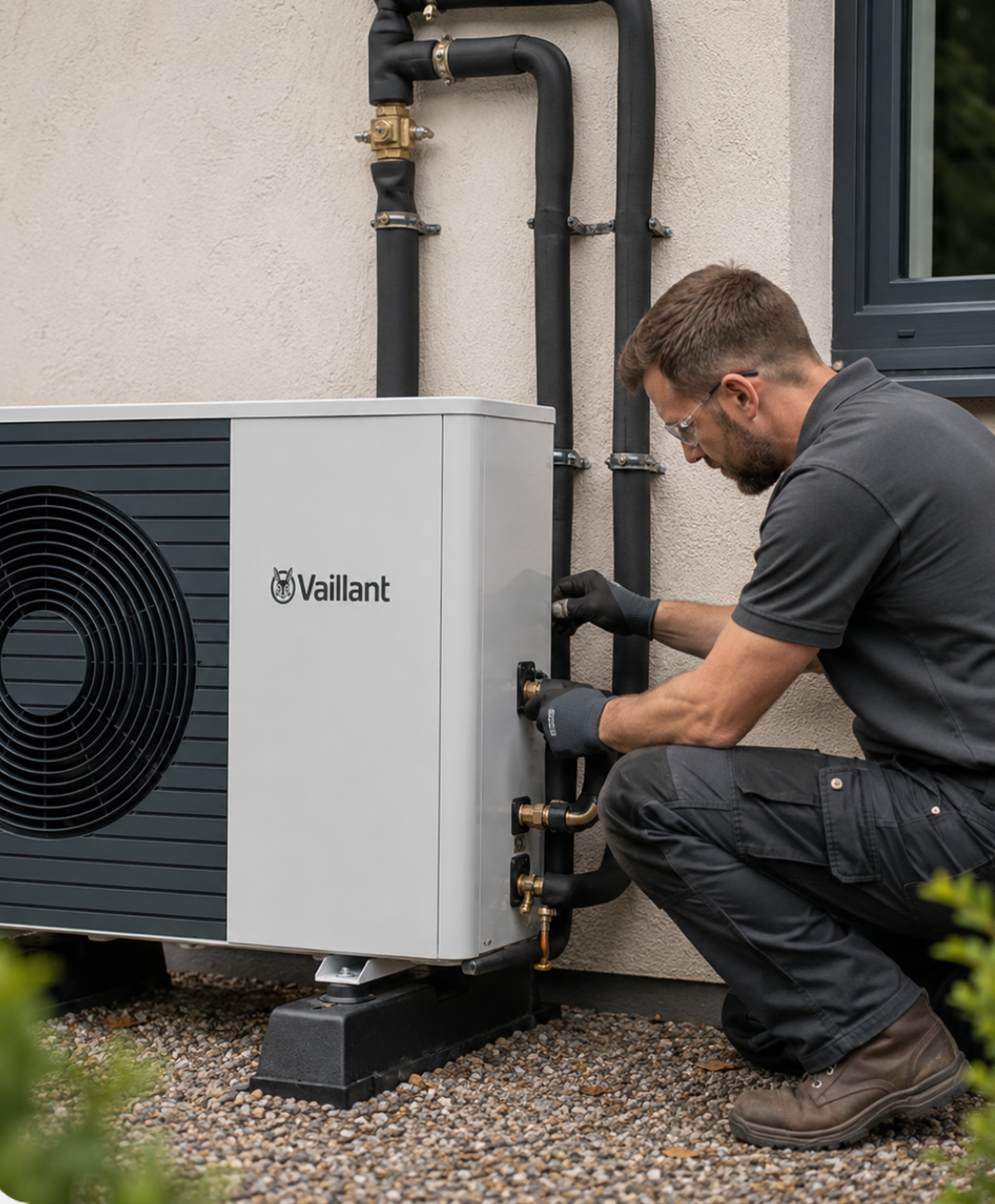
Air Conditioning vs Air Cooler UK: Which Is Better?
Check Your Eligibility for Boiler Upgrade Scheme (BUS)
Complete your details below to check your eligibility.
Thank you
We've received your details and will be in touch shortly.
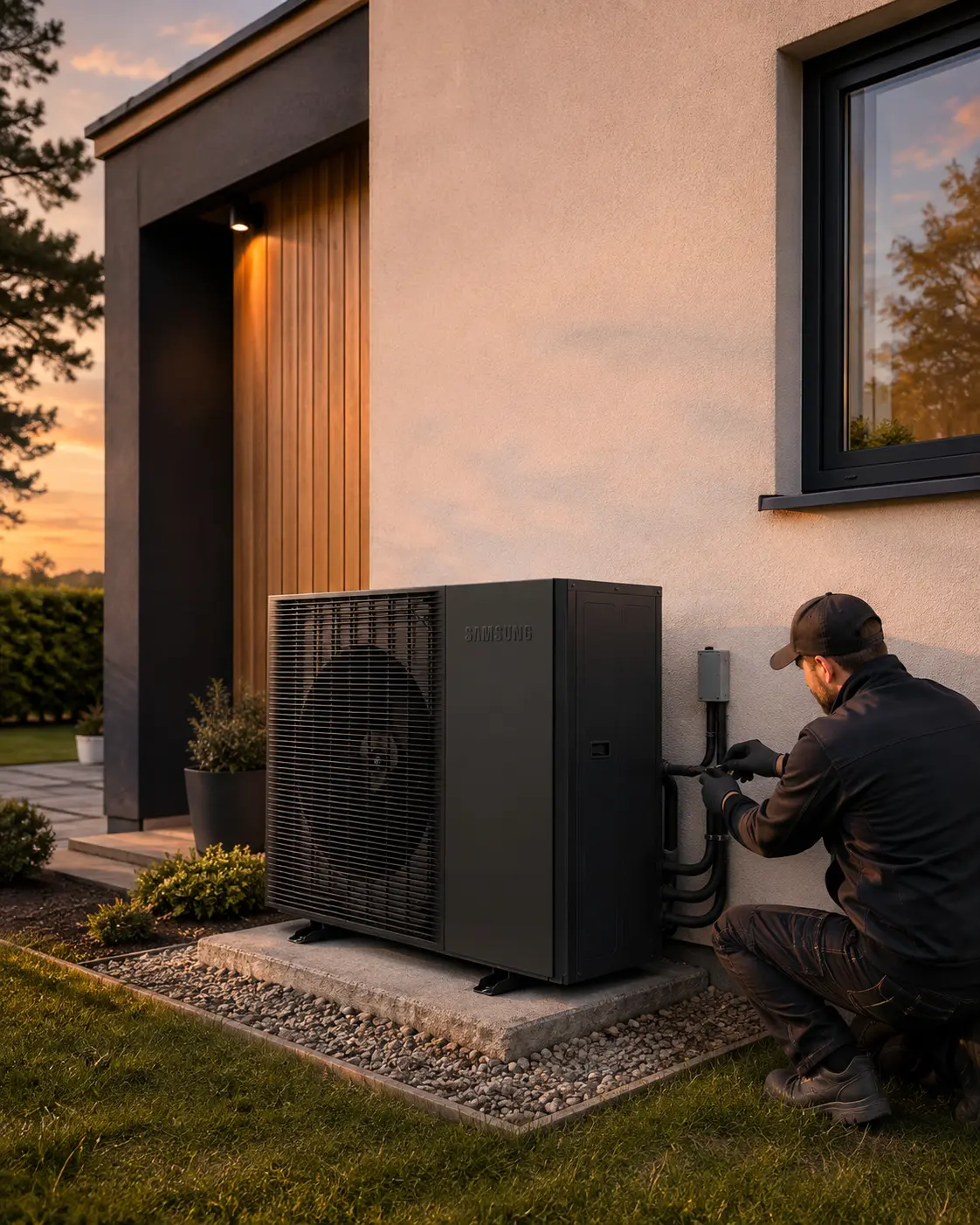
Quick Answer: Air Conditioner or Air Cooler in the UK?
For most UK households that need reliable room cooling, air conditioning is the stronger option. It actively removes heat from the room, can maintain a chosen temperature and also reduces humidity.
An evaporative air cooler costs much less to run and requires no refrigerant circuit or external exhaust hose. However, it only cools by evaporating water. Its performance therefore falls as humidity increases, and it adds moisture to the indoor air.
Choose an air cooler for low-cost personal cooling where modest temperature reduction is acceptable. Choose air conditioning for bedrooms, loft rooms, offices or living spaces where you need dependable cooling during hot or humid weather.
Air Conditioning vs Air Cooler UK: Which Is Better for Your Home?
If your home becomes uncomfortably hot in summer, you may be comparing an air conditioner with an air cooler. They can look similar in product listings, but they work in completely different ways.
An air conditioner uses a refrigerant system to remove heat from a room and transfer it outside. It can reduce room temperature substantially and usually removes moisture from the air at the same time.
An air cooler, usually meaning an evaporative cooler, passes air through water-soaked material. Evaporation lowers the temperature of the outgoing airflow but adds moisture. Its effectiveness therefore depends heavily on humidity.
For UK homes, that difference is crucial. An air cooler can provide inexpensive relief in suitable conditions. However, it is not a direct replacement for proper air conditioning when you need reliable room-temperature control.
This guide compares cooling performance, running costs, humidity, installation, noise and suitability so you can choose the right option.
If you already know that reliable room cooling is your priority, you can compare options through Get Free Quote.
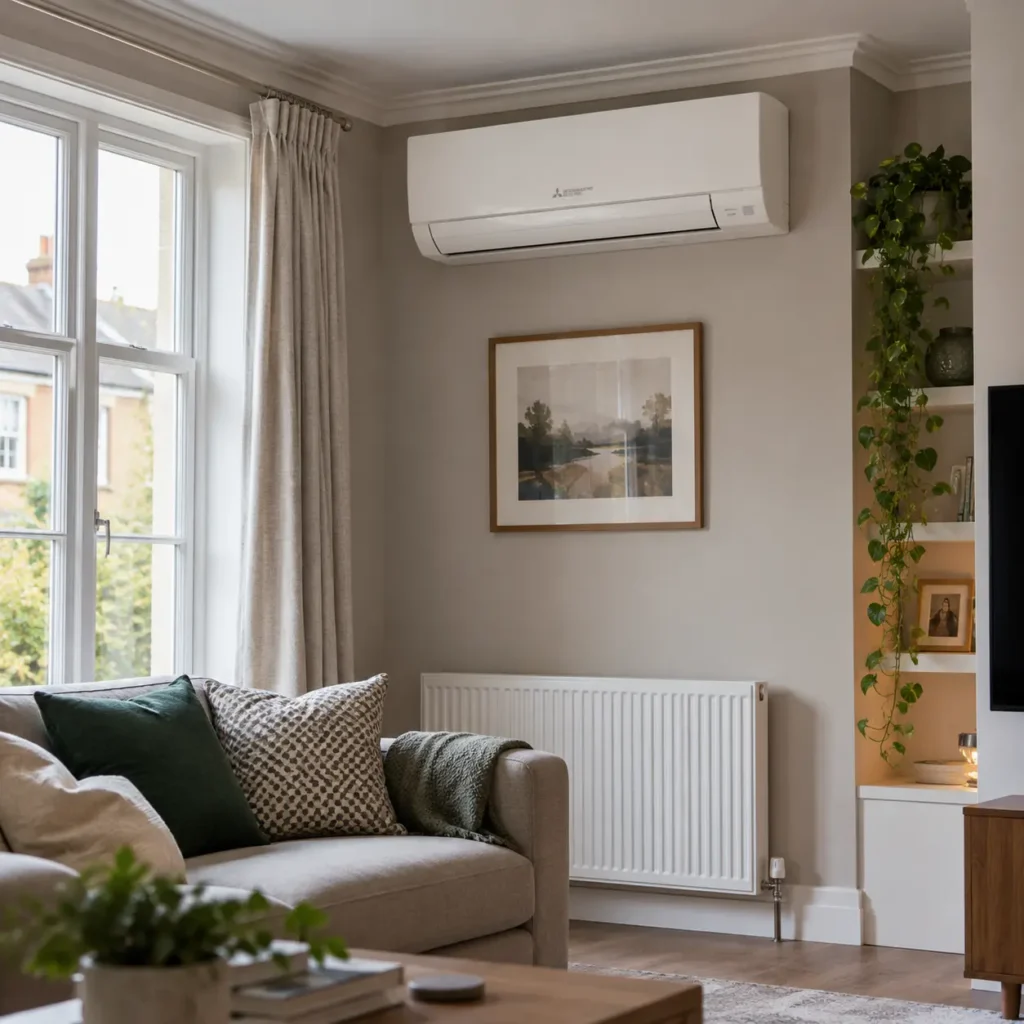
Air Conditioning vs Air Cooler UK: Quick Comparison
| Feature | Air Conditioning | Evaporative Air Cooler |
|---|---|---|
| Cooling method | Refrigerant moves indoor heat outside | Water evaporation cools passing air |
| Cooling strength | High and controllable | Moderate and weather-dependent |
| Humidity effect | Usually removes moisture | Adds moisture |
| Temperature control | Thermostat-controlled | Limited |
| Electricity use | Higher | Much lower |
| Installation | Portable units need exhaust; split systems need installation | Usually plug-in |
| Best use | Reliable room cooling | Personal or supplementary cooling |
| UK suitability | Good where overheating is persistent | Best during warmer, drier conditions |
| Heating option | Many split systems can also heat | No |
| Upfront cost | Higher | Lower |
How Does an Air Cooler Work?
Most domestic air coolers sold in the UK use direct evaporative cooling.
A fan draws warm air across a wet pad. Some of the water evaporates and absorbs heat from the air. The appliance then blows slightly cooler, more humid air into the room.
The UK Government’s Energy Technology List defines an evaporative air cooler as a device that cools air through water evaporation. It also explains that direct systems move air through a water-saturated medium.
This system has several advantages. It needs no compressor, refrigerant circuit or hot-air exhaust hose. Electrical demand can also be low because most of the work is done by a fan and small water pump.
The limitation is physics: evaporation becomes less effective as the air contains more moisture.
The US Department of Energy similarly notes that evaporative cooling works best in arid climates.
Does an Air Cooler Actually Cool the Room?
Yes, but its effect should not be confused with refrigeration-based air conditioning.
An evaporative cooler can lower the temperature of the air passing through the appliance. However, the resulting room-temperature reduction depends on air temperature, relative humidity, airflow and ventilation.
It is therefore better to think of a small domestic air cooler as a step above a fan, rather than a miniature air-conditioning system.
How Does Air Conditioning Work?
Air conditioning uses a refrigeration cycle rather than evaporation.
In cooling mode, refrigerant absorbs heat from the indoor air at the evaporator. A compressor raises the refrigerant pressure, and the system then transfers the collected heat outside through the condenser.
As the indoor coil becomes cold, water vapour can also condense on it. This means air conditioning can reduce humidity as well as temperature.
You can read the broader system comparison in Get Free Quote’s UK air-conditioning guide.
Fixed split systems place the compressor and condenser outside, with an indoor unit supplying conditioned air. Portable refrigerant air conditioners instead reject heat through an exhaust hose.
Many modern split systems are reversible. In winter, they can operate as air-to-air heat pumps and transfer heat into the property rather than out of it. For a wider comparison with wet central-heating heat pumps, see the air source heat pump guide.
Which Cools a Room Better?
Air conditioning wins clearly when the objective is controlling room temperature.
An appropriately sized air conditioner continuously transfers heat outside until the room approaches the thermostat setting. Its compressor then adjusts or cycles as required.
An evaporative cooler cannot offer the same control because its maximum cooling effect changes with environmental conditions.
That distinction matters in rooms with persistent heat gain, such as:
loft conversions
south- or west-facing bedrooms
highly glazed living rooms
conservatory-style spaces
home offices with computers
poorly shaded upper-floor flats
Before installing active cooling, it is also worth reducing solar heat gain where practical. Shading, insulation and ventilation can reduce the amount of cooling equipment you need. Get Free Quote’s home insulation guide covers relevant fabric improvements.
Why Humidity Matters So Much in the UK
Humidity is where the difference between the two systems becomes especially important.
Evaporative cooling relies on water entering the air as vapour. If the air already contains substantial moisture, less additional water can evaporate. Cooling performance falls accordingly.
The Met Office explains that warm, humid conditions occur regularly in the UK and that high humidity reduces the rate at which moisture evaporates.
This does not mean an air cooler never works in Britain. Warm, relatively dry afternoons can provide useful conditions for evaporative cooling.
However, performance can change from one day to another. A cooler that feels effective during a dry afternoon may provide much less temperature reduction during a muggy evening.
Air conditioning has the opposite advantage: it removes moisture as it cools.
Which Costs Less to Run?
Air coolers generally consume far less electricity because they do not power a refrigeration compressor.
The exact cost depends on the appliance wattage and your tariff.
Ofgem’s average electricity rate for a standard-variable Direct Debit customer in Great Britain from 1 October to 31 December 2026 is 26.32p per kWh. Your actual tariff may be different.
Using that rate purely as an example:
50W air cooler
0.05kW × 26.32p = approximately 1.3p per hour
1kW air conditioner
1kW × 26.32p = approximately 26.3p per hour
These are illustrations, not universal running-cost figures. Appliances vary significantly, and inverter air conditioners change their electrical demand as cooling requirements change.
The important point is that the cheaper appliance to run is not necessarily providing an equivalent service. Spending a few pence on evaporative cooling is excellent value if it keeps you comfortable. It is poor value if you actually need substantial room-temperature control.
Air Cooler vs Air Conditioning: Which Is Easier to Install?
An air cooler is much simpler.
Most portable models require only a socket, water and space for airflow. You may need to clean the tank and cooling pads regularly.
A portable air conditioner also plugs into a normal supply, but its hot exhaust air needs to go outside. Poorly arranged window hoses can allow warm outside air back into the room.
A fixed split system needs professional design and installation, including refrigerant pipework, condensate drainage and electrical connections.
Where regulated F-gases are involved, GOV.UK states that people carrying out relevant installation and servicing work must hold the appropriate qualification.
For more detail, see Get Free Quote’s air-conditioning installation guide.
Which Is Better for Sleeping?
Air conditioning is generally the better solution for bedrooms that remain uncomfortably hot overnight.
It can lower the room temperature to a defined target and remove moisture. A quiet split-system indoor unit can also avoid having a compressor operating inside the bedroom.
An air cooler may still help if you mainly want a cooler breeze near the bed. However, night-time humidity can reduce evaporative performance, and continually adding moisture may be undesirable in rooms already affected by condensation or damp.
Noise also matters. Compare manufacturer sound figures rather than assuming that one technology will always be quieter.
Which Option Is Best for You?
| Your Priority | Better Choice | Why |
|---|---|---|
| Lowest running cost | Air cooler | Low electrical demand |
| Strong cooling | Air conditioning | Actively transfers heat outside |
| Precise temperature control | Air conditioning | Thermostat-controlled |
| No installation | Air cooler | Usually plug-and-play |
| Humid weather | Air conditioning | Does not depend on evaporation |
| Reducing humidity | Air conditioning | Condenses moisture while cooling |
| Occasional personal cooling | Air cooler | Cheap and portable |
| Hot bedroom every summer | Air conditioning | More predictable overnight comfort |
| Heating as well as cooling | Reversible split AC | Can operate as an air-to-air heat pump |
There is one further consideration for homeowners considering a reversible system rather than cooling-only equipment. Eligible residential air-to-air heat pumps in England and Wales can currently qualify for £2,500 under the Boiler Upgrade Scheme, subject to the scheme rules.
That does not make an ordinary evaporative cooler eligible, and you should not assume every air-conditioning installation qualifies.
Get Your Free Air Source Heat Pump Quote
Find the right air source heat pump solution for your home. Tell us a few details and our team will help you explore suitable options at a competitive price.
Quick to complete. No obligation.
Get your quote
Enter your details below and one of our team will get back to you.
Frequently asked questions
Find clear answers to common questions comparing air source and ground source heat pumps, including efficiency, installation and running costs, winter performance, noise, land requirements and borehole depth.
No. An air cooler normally uses water evaporation, while an air conditioner uses a refrigeration cycle to transfer heat outside.
They can work during warm, relatively dry weather, but their performance falls as humidity increases. They are better suited to modest or personal cooling than guaranteed room-temperature control.
Yes. Evaporation can lower the temperature of the air leaving the appliance. The size of that reduction depends heavily on temperature and humidity.
For substantial and reliable room cooling, yes. An air conditioner can maintain a thermostat setting and does not rely on dry air for its cooling effect.
Direct evaporative coolers add water vapour to the air, so they increase humidity.
Yes. Water vapour condenses on the cold indoor coil during cooling and drains away as condensate.
Usually by a considerable margin because an air cooler mainly powers a fan and water pump rather than a refrigeration compressor.
Normally no. Portable refrigerant air conditioners usually need an exhaust hose, while evaporative coolers do not.
Evaporative cooling generally benefits from airflow and ventilation because moisture needs somewhere to escape. A sealed room can become increasingly humid.
Air conditioning is better where the bedroom regularly remains hot overnight. An air cooler may be adequate if you only want local airflow and conditions are relatively dry.
It depends on the model. Split air conditioning can be particularly quiet indoors because the compressor sits outside. Check published sound-pressure or sound-power figures before buying.
Because direct evaporative coolers add moisture, excessive use in poorly ventilated or already damp rooms may be undesirable. Manage ventilation and follow the manufacturer’s instructions.
Many modern split systems are reversible and work as air-to-air heat pumps, providing heating as well as cooling.
A conventional direct evaporative air cooler does not use a refrigeration circuit or refrigerant.
Air conditioning. Evaporative cooling becomes less effective as relative humidity rises, while refrigerated air conditioning can cool and dehumidify simultaneously.
No. Portable systems usually contain the compressor indoors and exhaust heat through a hose. Split systems separate the indoor and outdoor components.
It can be where rooms repeatedly overheat or interfere with sleep and work. Occasional mild overheating may be better handled first with shading, ventilation and lower-cost measures.
Ordinary cooling-only equipment does not automatically qualify. Eligible residential air-to-air heat pumps can currently receive £2,500 under the Boiler Upgrade Scheme in England and Wales, subject to scheme requirements.
Air Conditioning vs Air Cooler UK: Final Verdict
An air cooler and an air conditioner solve different problems.
Choose an evaporative air cooler if you want an inexpensive appliance that can provide a cooler airflow during suitable weather. It is portable, inexpensive to run and requires little setup. However, expect modest, humidity-dependent cooling rather than complete control of room temperature.
Choose air conditioning if the room genuinely overheats and you need predictable comfort. It costs more to buy and run, but it removes heat from the property rather than simply using evaporation to reduce the temperature of an airflow.
For many UK homeowners, that distinction makes air conditioning the better long-term answer for persistently hot bedrooms, loft conversions and home offices.
Before buying either, reduce avoidable solar gain where possible and decide what outcome you actually need. If the goal is simply to feel cooler while sitting at a desk, an air cooler may be sufficient. If the goal is to keep a bedroom at a comfortable temperature throughout a humid summer night, proper air conditioning is much more likely to deliver it.