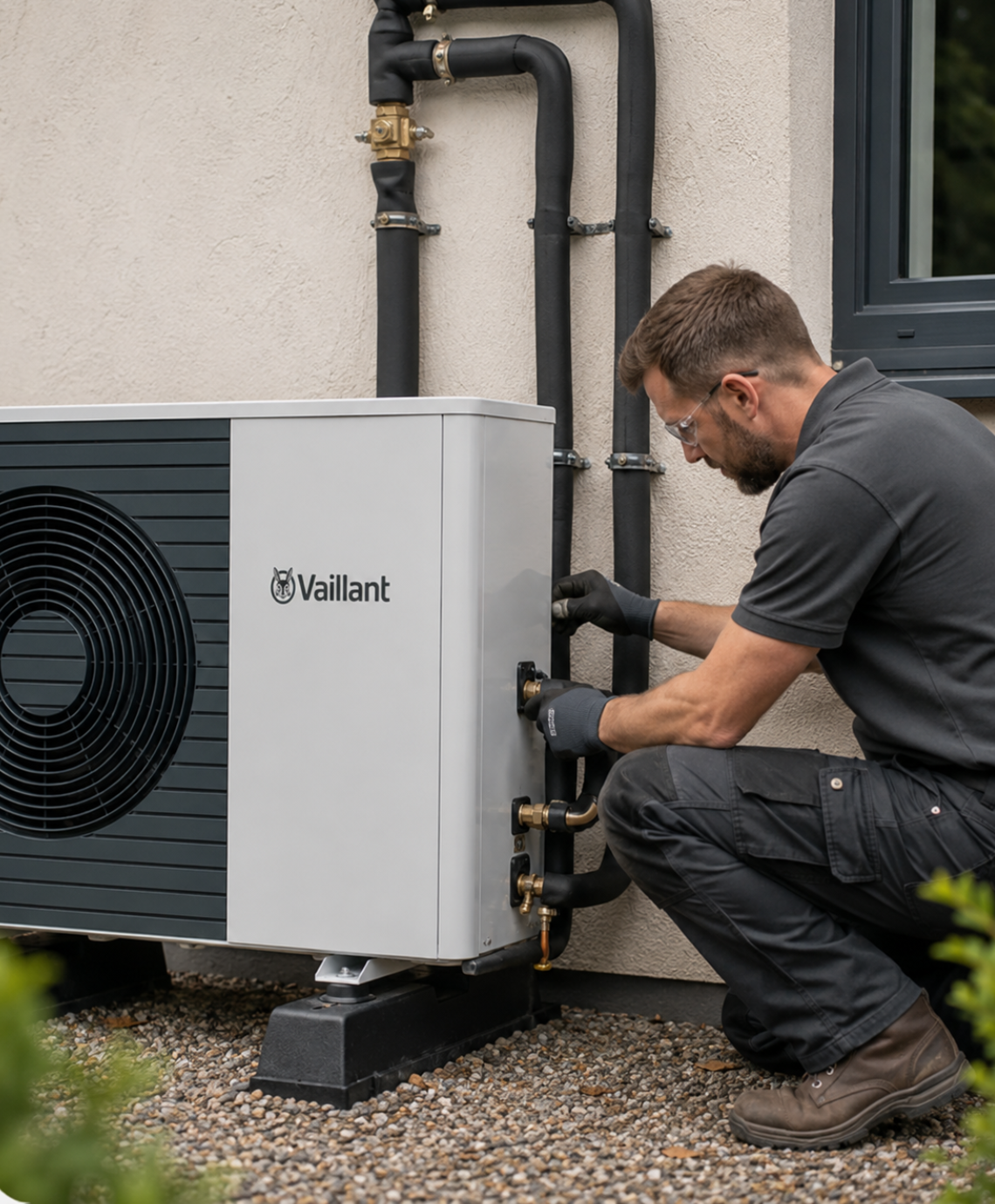
Air Source Heat Pump Explained: A Complete Beginner’s Guide
August 14, 2026
Check Your Eligibility for Boiler Upgrade Scheme (BUS)
Complete your details below to check your eligibility.
Thank you
We've received your details and will be in touch shortly.
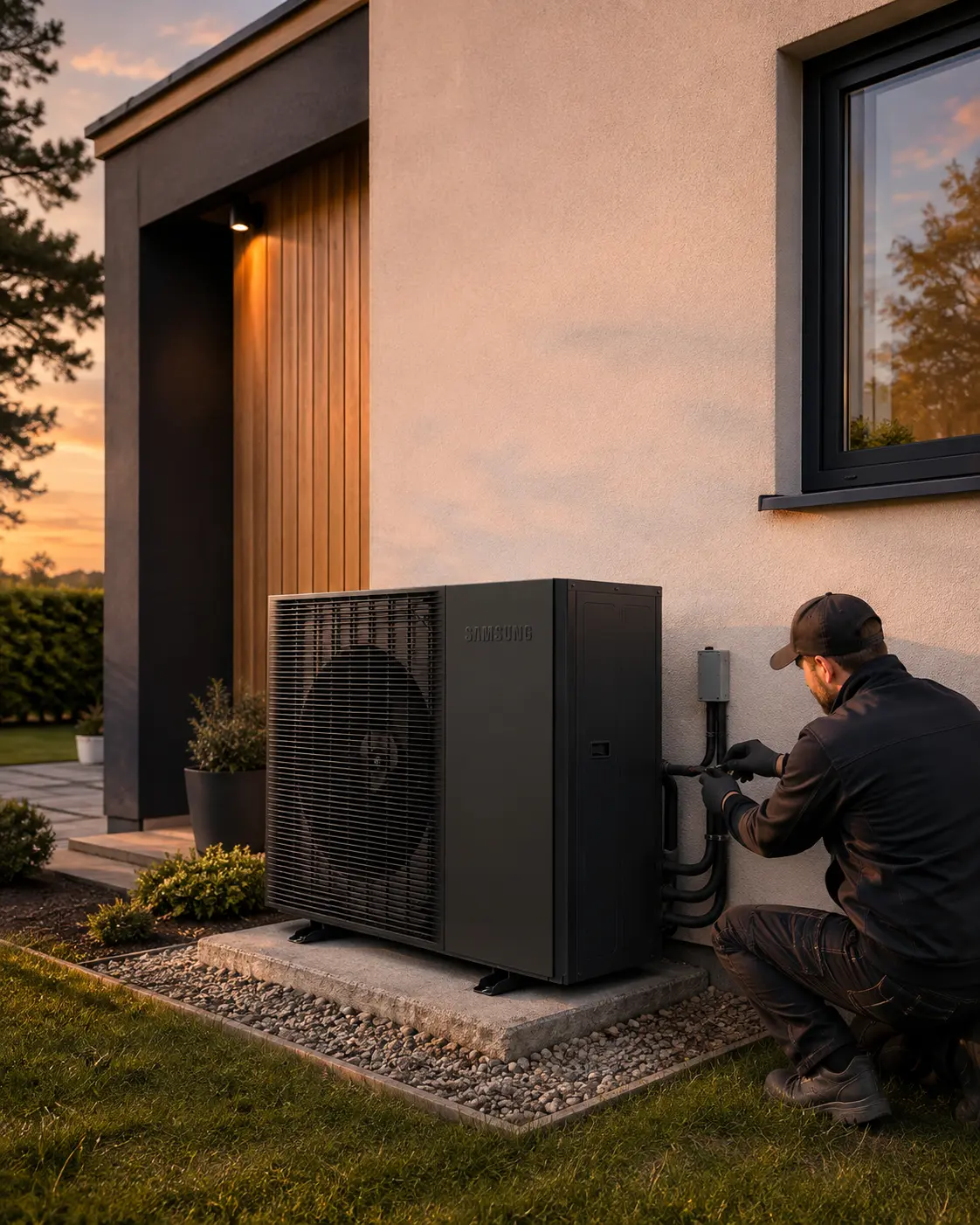
Quick answer: What is an air source heat pump?
An air source heat pump is an electric heating system that takes heat from the outside air and transfers it into your home.
Most UK homes use an air-to-water heat pump. This type of system heats water for radiators, underfloor heating and a hot-water cylinder.
Unlike a boiler, a heat pump does not create all of its heat by burning fuel. Instead, it moves heat that already exists in the air. Therefore, it can produce several units of useful heat for each unit of electricity it uses.
Heat pumps also work when the temperature outside falls below freezing. However, their efficiency normally drops as the weather gets colder.
Source: https://energysavingtrust.org.uk/advice/air-source-heat-pumps/
Air Source Heat Pump Explained: A Complete Beginner’s Guide
If you are thinking about replacing your boiler, you may be wondering how an air source heat pump works and whether one would suit your home.
The simple answer is that an air source heat pump uses electricity to take heat from the outside air and move it into your property. In most UK homes, an air-to-water heat pump supplies warm water to radiators or underfloor heating. It can also heat the water stored in a hot-water cylinder.
Heat pumps work differently from gas boilers. Instead of heating radiators very quickly to a high temperature, they usually provide gentler heat for longer periods. As a result, correct sizing, suitable radiators and good controls are important.
In this guide, we explain how air source heat pumps work, what they cost, how they perform in winter and whether your property could be suitable. We also cover radiators, hot water, grants, running costs, noise and installation.
Get a Free Quote: Compare properly surveyed air source heat pump quotes before choosing a system or installer.
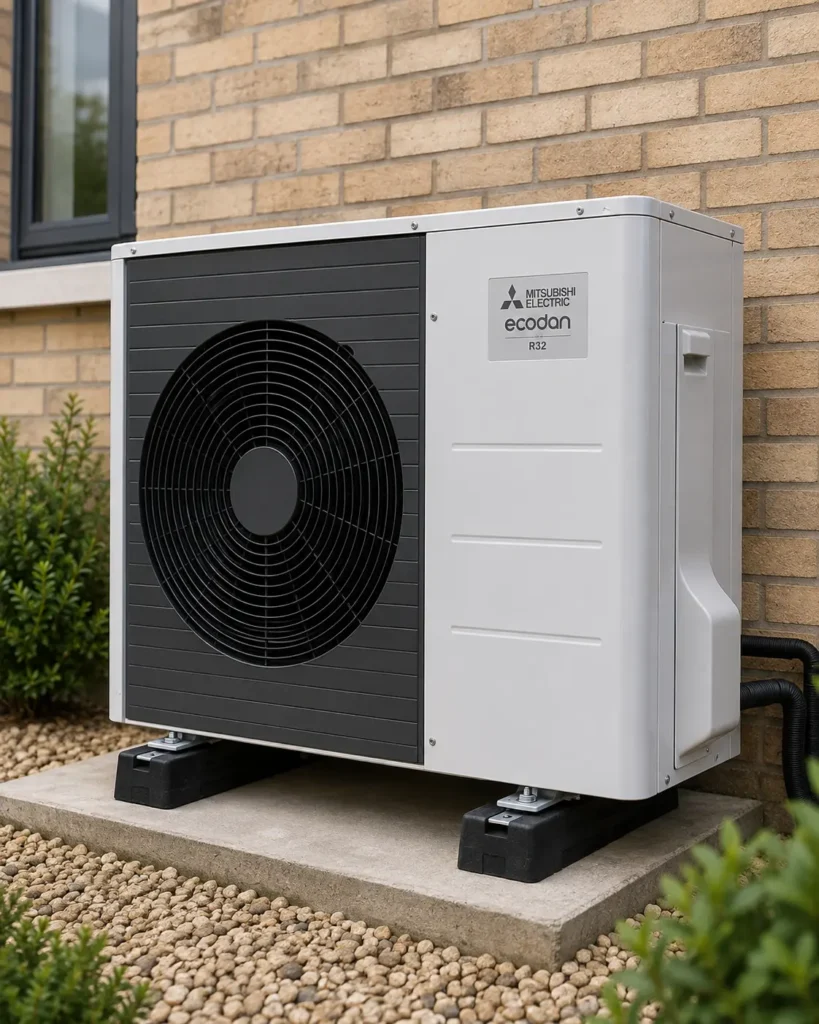
Air-to-water vs air-to-air heat pumps
There are two main types of air source heat pump. However, most people replacing a boiler will be looking at an air-to-water system.
| Type | What it heats | Best for | Main consideration |
|---|---|---|---|
| Air-to-water | Radiators, underfloor heating and stored hot water | Most UK homes replacing a boiler | Usually requires a hot-water cylinder |
| Air-to-air | Rooms through indoor fan units | Smaller or open-plan homes | Usually needs a separate way to heat water |
| Gas boiler | Radiators and hot water | Homes staying on mains gas | Burns fossil fuel inside the property |
This guide mainly focuses on air-to-water systems because they are the usual choice for homes with traditional central heating.
How does an air source heat pump work?
An air source heat pump collects heat from the air outside, even when the weather feels cold.
First, the outdoor unit draws air across a heat exchanger. A refrigerant inside the system absorbs some of this heat.
Next, a compressor raises the temperature of the refrigerant. The system then transfers that heat into the water used by your heating system.
Finally, the cycle starts again.
Because heat pumps move heat rather than creating all of it directly, they can be very efficient.
For a more technical explanation of the refrigerant cycle, compressor and other components, read our guide to how air source heat pumps work.
What is it like to live with an air source heat pump?
Living with a heat pump can feel slightly different from living with a gas boiler.
Heating your home
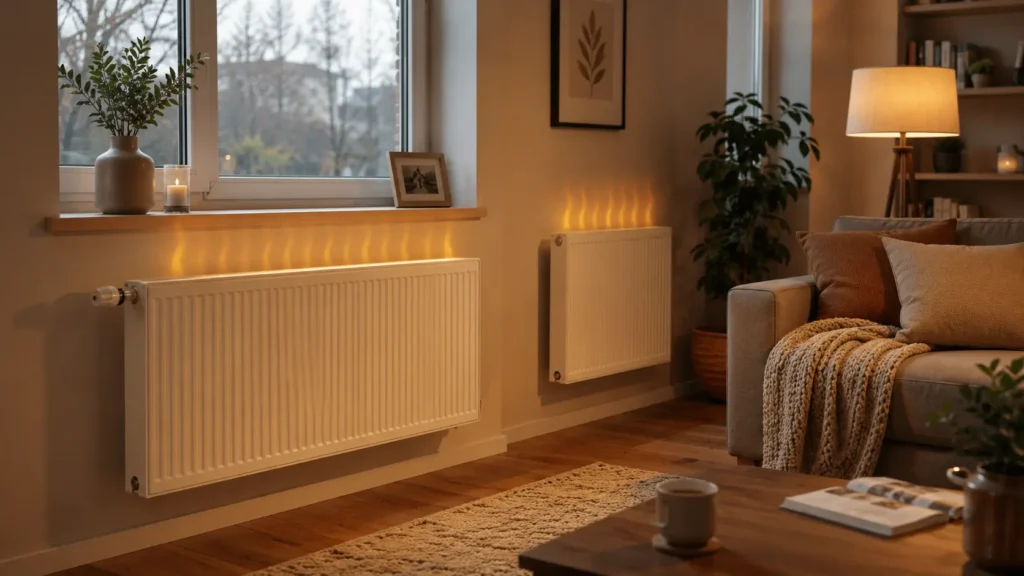
A boiler often heats radiators to a high temperature for shorter periods. By comparison, a heat pump usually works best at a lower water temperature for longer.
Therefore, radiators may feel warm rather than very hot. That does not mean the system is failing.
Instead, a well-designed heat pump should keep your home at a steady and comfortable temperature.
Hot water
Most air-to-water heat pumps use a hot-water cylinder.
For that reason, households moving from a combi boiler need to consider where the cylinder will go.
Cylinder size also matters. For example, a family taking several showers each morning may need more stored hot water than a couple living in the same size property.

What are the benefits of an air source heat pump?
Air source heat pumps have several advantages.
They can:
- Heat your home without burning gas or oil on site.
- Provide efficient heating when designed correctly.
- Work during cold UK winter weather.
- Provide heating and stored hot water.
- Work with radiators or underfloor heating.
- Be combined with solar panels and battery storage.
- Work well with some smart electricity tariffs.
- Reduce reliance on fossil-fuel heating.
In addition, government grants can reduce the upfront cost for eligible households.
What are the drawbacks?
Heat pumps are not the right choice for every home.
For example, you may need:
- A new hot-water cylinder.
- Larger radiators in some rooms.
- Electrical upgrades.
- Space outside for the heat pump.
- Changes to heating controls.
- Better insulation in areas with high heat loss.
The initial cost can also be higher than replacing a boiler.
However, many of these issues can only be confirmed after a proper survey. Therefore, it is better to assess the whole heating system rather than looking at the heat pump unit alone.
Which homes are suitable for an air source heat pump?
Air source heat pumps can work in many types of UK property.
That includes:
- Detached houses.
- Semi-detached homes.
- Terraced properties.
- Bungalows.
- New-build homes.
- Older houses.
- Off-gas properties.
An older property is not automatically unsuitable.
Instead, the key question is how much heat the building loses on a cold day. Your installer should calculate this room by room.
Does insulation matter?
Good insulation can reduce heat loss. As a result, the heat pump has less work to do.
However, you do not necessarily need to turn an older property into a new-build standard home before installing a heat pump.
Simple improvements such as loft insulation or fixing obvious draughts can still help.
How to choose the right air source heat pump
Choosing a heat pump involves more than comparing brands.
Use these eight steps before making a decision.
- Check the home’s heat loss. Your installer should work out the heat needed in each room.
- Check the required flow temperature. Heat pumps are generally more efficient when they can operate at lower temperatures.
- Assess the radiators. Some may already be suitable, while others may need to be larger.
- Choose the right cylinder. It should match the household’s normal hot-water use.
- Check the outdoor location. The unit needs suitable airflow and enough room for servicing.
- Compare expected efficiency. Look beyond one headline efficiency figure and ask about expected seasonal performance.
- Review controls and warranty. Easy-to-use controls and good aftercare can make a major difference.
- Check available grants. Confirm eligibility before signing an installation contract.
How much does an air source heat pump cost?
Energy Saving Trust currently gives an indicative cost of around £12,000 for a typical air source heat pump installation before grants.
However, the actual cost can vary widely.
| Cost factor | Typical position or effect |
|---|---|
| Typical air source heat pump installation | Around £12,000 before grants |
| Standard Boiler Upgrade Scheme support | £7,500 for an eligible air-to-water heat pump |
| Qualifying off-gas oil/LPG homes | Up to £9,000 under the temporary uplift |
| Radiators, cylinder and electrical work | Can increase the total installation cost |
| Running costs | Depend on heat demand, system efficiency and electricity prices |
For this reason, online prices should only be used as a guide.
A home survey is needed before an installer can provide an accurate quotation.
What heat pump grants are available?
The Boiler Upgrade Scheme can reduce the cost of installing an eligible heat pump in England and Wales.
The standard grant for an eligible air-to-water heat pump is £7,500.
In addition, qualifying homes that are not connected to mains gas and are replacing oil or LPG heating may currently receive extra support.
Grant rules can change. Therefore, check the latest eligibility before making a decision.
You can find the current details in our Boiler Upgrade Scheme 2026 update.
Will an air source heat pump save money?
It may, but savings are not guaranteed.
Running costs depend on several factors, including:
- How much heat your home needs.
- The efficiency of the heat pump.
- Your electricity tariff.
- The temperature of the heating water.
- The heating system you are replacing.
- How you use the controls.
For example, a highly efficient heat pump running on a suitable electricity tariff may cost less to operate than a poorly designed system using an expensive tariff.
Therefore, be careful with adverts that promise a fixed percentage saving for every home.
A useful quote should show the assumptions behind any estimated running costs.
Do air source heat pumps work in winter?
Yes. Modern air source heat pumps continue to operate during freezing weather.
Even cold air contains useful heat energy.
However, the system has to work harder as the outdoor temperature falls. As a result, efficiency normally reduces during very cold periods.
Get Your Free Air Source Heat Pump Quote
Find the right air source heat pump solution for your home. Tell us a few details and our team will help you explore suitable options at a competitive price.
Quick to complete. No obligation.
Get your quote
Enter your details below and one of our team will get back to you.
What happens when the outdoor unit freezes?
During cold and damp weather, frost can build up on the outdoor heat exchanger.
This is normal.
The heat pump will occasionally enter a defrost cycle to remove the frost. You may notice water or a cloud of vapour around the outdoor unit while this happens.
The main issue is not whether a heat pump can work below zero. Instead, your installer needs to make sure the chosen unit can provide enough heat on the coldest days expected in your area.
Do you need new radiators?
Not always.
Some existing radiators may already be large enough. Others may need to be replaced with models that provide more heat at a lower water temperature.
Therefore, each room should be checked separately.
A good installer should provide a radiator schedule showing which radiators can stay and which need changing.
Are air source heat pumps noisy?
An air source heat pump produces some sound because it contains a fan and compressor.
However, modern units are designed for residential use.
The amount of noise you notice will depend on:
- The heat pump model.
- Where the outdoor unit is installed.
- The distance from windows.
- Nearby walls and surfaces.
- The quality of the installation.
For that reason, the cheapest or easiest position is not always the best position.
Planning rules and noise requirements may also apply, so the proposed location should be checked before installation.
Why does the installer matter so much?
A good heat pump can perform poorly if the heating system has been badly designed.
For example, problems can occur if:
- The heat pump is too large or too small.
- Radiators cannot provide enough heat.
- The flow temperature is unnecessarily high.
- Controls are set up badly.
- The cylinder is too small.
- The outdoor unit is poorly positioned.
- The system has not been commissioned correctly.
What should a good installer provide?
Before you accept a quote, ask for:
- A room-by-room heat-loss calculation.
- The proposed heat pump size.
- The expected flow temperature.
- A radiator schedule.
- The proposed hot-water cylinder size.
- Details of electrical work.
- Expected seasonal efficiency.
- Warranty information.
- Servicing and aftercare details.
In short, compare the complete heating design rather than comparing heat pump brands alone.
Is an air source heat pump worth it?
For many UK homes, an air source heat pump can be a good long-term heating choice.
It may be particularly attractive if your current boiler or heating system already needs replacing.
Heat pumps can also make sense for homes using oil, LPG or direct electric heating. In addition, current grants can reduce the cost for eligible households.
However, they are not automatically the cheapest solution for every property.
The final decision should depend on your home’s heat loss, existing radiators, hot-water needs, electricity tariff, installation cost and available grants.
Therefore, the best starting point is a proper survey rather than choosing a heat pump based on an online price or headline specification.
Conclusion
An air source heat pump takes heat from the outside air and uses it to warm your home and hot water.
Although the basic idea is simple, good performance depends on proper system design.
Before choosing one, check your home’s heat loss, radiators, hot-water requirements, outdoor space and grant eligibility. More importantly, choose an installer who can explain how the complete system has been designed.
A heat pump should not simply be treated as a boiler replacement. Instead, think of it as a complete home heating system.
Want to know whether an air source heat pump could work in your home? Get a free, no-obligation quote and compare suitable options based on your property, heating needs and budget.
Frequently asked questions
Find clear answers to common questions about air source heat pumps, including how they work, replacing boilers, cold-weather performance, older homes, radiators, insulation, hot water and noise.
An air source heat pump takes heat from outdoor air and moves it into your home using electricity. Most UK systems heat radiators, underfloor heating and stored hot water.
A correctly designed air-to-water heat pump can provide both home heating and hot water. Therefore, many properties do not need to keep a gas boiler.
Modern heat pumps continue operating below 0°C. However, they normally use more electricity as the outside temperature falls.
Older homes can use heat pumps successfully. The main factors are heat loss, radiator size, insulation and the quality of the heating design.
Underfloor heating is not required. Properly sized radiators can also work very well with an air source heat pump.
Probably not. An installer should check each room and identify which existing radiators provide enough heat at the planned flow temperature.
Good insulation helps because it reduces heat loss. However, an older home does not have to meet new-build insulation standards before a heat pump can work.
It can, provided the hot-water cylinder is large enough. For example, a larger household with several daily showers may need a bigger cylinder.
A heat pump can replace a combi boiler. However, most air-to-water systems use a hot-water cylinder rather than producing hot water instantly.
Modern units produce some sound from the fan and compressor. In practice, good positioning and correct installation can make a big difference to how noticeable it is.