
Boiler Upgrade Scheme Qualifying Heating Systems: 2026 Guide
Check Your Eligibility for Boiler Upgrade Scheme (BUS)
Complete your details below to check your eligibility.
Thank you
We've received your details and will be in touch shortly.

Quick Answer: Which Heating Systems Qualify for the Boiler Upgrade Scheme?
As of September 2026, the Boiler Upgrade Scheme supports air-to-water heat pumps, residential air-to-air heat pumps, ground source heat pumps including water source systems and shared ground loops, and qualifying biomass boilers.
Air-to-water and ground source heat pumps normally receive £7,500. Eligible off-gas-grid properties replacing oil or LPG can receive £9,000 until 31 March 2027. Residential air-to-air heat pumps receive £2,500, while biomass boilers receive £5,000 under stricter rural and off-gas-grid rules.
Fossil-fuel heat-pump hybrids do not qualify. Nor can a retrofit normally receive BUS funding simply to replace an existing heat pump. The announced £2,500 heat-battery grant is not yet a current standalone BUS grant.
Source: https://www.ofgem.gov.uk/environmental-and-social-schemes/boiler-upgrade-scheme-bus/boiler-upgrade-scheme-bus-property-owners
Boiler Upgrade Scheme Qualifying Heating Systems: What Counts in 2026?
The Boiler Upgrade Scheme qualifying heating systems have changed in 2026. Homeowners in England and Wales can now receive support towards air-to-water heat pumps, ground and water source heat pumps, residential air-to-air heat pumps and, in more limited circumstances, biomass boilers.
The standard grant is currently £7,500 for eligible air-to-water and ground source systems, £2,500 for residential air-to-air heat pumps and £5,000 for qualifying biomass boilers. Until 31 March 2027, some off-gas-grid properties replacing oil or LPG heating can receive £9,000 towards an air-to-water or ground source heat pump.
However, choosing an eligible technology is only part of the test. The system configuration, property, existing heating and installer must also meet Boiler Upgrade Scheme rules.
For a broader explanation of this year’s changes, see .
Considering replacing your current heating? Compare suitable heating systems and properly surveyed quotations before deciding which BUS-funded option is right for your property.
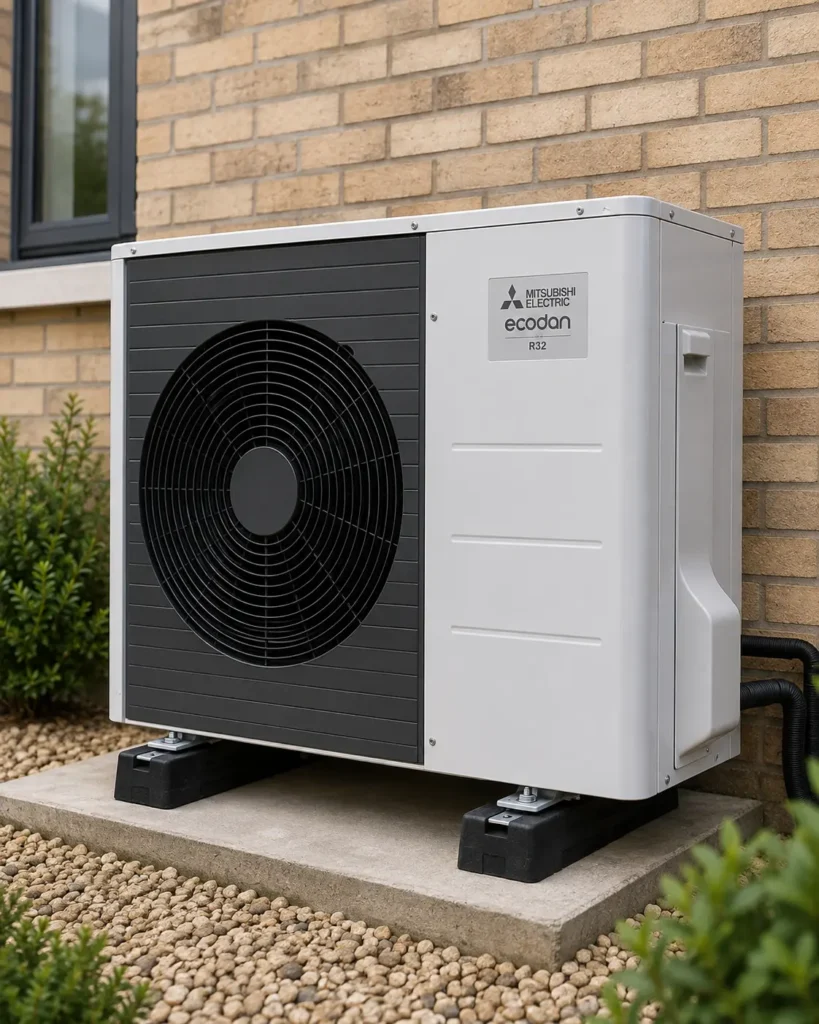
Boiler Upgrade Scheme Qualifying Heating Systems Compared
| Heating system | Current BUS grant | Important qualification |
|---|---|---|
| Air-to-water heat pump | £7,500; £9,000 for qualifying off-gas oil/LPG properties | Must meet BUS heat-pump performance and system rules |
| Ground/water source heat pump | £7,500; £9,000 for qualifying off-gas oil/LPG properties | Ground, water-source and qualifying shared-loop systems can be covered |
| Air-to-air heat pump | £2,500 | Residential properties only |
| Biomass boiler | £5,000 | Rural, off-gas-grid properties only, with additional emissions requirements |
These are the current approved grant categories. The £9,000 uplift applies to qualifying oil- or LPG-heated off-gas-grid properties until 31 March 2027; it does not apply to air-to-air heat pumps or biomass boilers.
Which Heating Systems Qualify for the Boiler Upgrade Scheme?
Air-to-water heat pumps
An air-to-water heat pump is the main air source option supported by BUS. It takes heat from outside air and transfers it into water that circulates through radiators or underfloor heating.
Eligible installations can receive £7,500. The amount rises to £9,000 where an eligible off-gas-grid property replaces oil or LPG heating during the temporary uplift period.
The BUS-funded heat pump must have enough capacity to meet the property’s full space-heating requirement. The complete heating arrangement must also meet its space-heating and domestic hot-water demand, although qualifying non-fossil supplementary appliances can now form part of the system.
Air-to-water and ground source heat pumps must achieve an in-situ Seasonal Coefficient of Performance, or SCOP, of at least 2.8 under the current Ofgem requirements.
For the technology itself rather than repeating the refrigeration cycle here, read .
Air-to-air heat pumps
One of the biggest 2026 changes is that air-to-air heat pumps now qualify.
Eligible residential installations receive a £2,500 grant. Unlike air-to-water systems, air-to-air heat pumps distribute warm air directly through indoor units rather than heating water for radiators. Many systems can also provide cooling.
However, BUS funding is not simply a £2,500 subsidy for adding an air-conditioning unit to one room.
Ofgem requires the BUS-funded heat pump to have sufficient capacity to meet the full space-heating needs of the property. Air-to-air systems are also excluded from BUS in non-residential buildings.
Domestic hot water does not necessarily have to come directly from the air-to-air heat pump. Since April 2026, a heat pump can operate with supplementary non-fossil appliances. Examples in Ofgem’s installer guidance include immersion heaters, hot-water heat pumps, direct electric heating and heat batteries. The combined arrangement must still meet the property’s heating and hot-water requirements.
That distinction is particularly important for flats and electrically heated properties where installing a new wet radiator system may be impractical.
Ground source and water source heat pumps
Ground source heat pumps qualify for BUS, including water source heat pumps and qualifying systems connected to shared ground loops.
The standard grant is £7,500. Qualifying properties without a mains gas connection that replace oil or LPG can currently receive £9,000.
Ground source systems collect low-temperature heat through buried pipework, boreholes or eligible water-based sources. They generally involve more groundworks than air source systems but may offer stable source temperatures.
An individual BUS heat-pump installation is normally limited to 45kWth. A multi-heat-pump system can reach 70kWth, while a shared ground loop can have a combined capacity of up to 300kWth, subject to the detailed requirements.
Homeowners deciding between the two technologies can explore the practical differences in air source vs ground source heat pumps.
Biomass boilers
A biomass boiler can qualify for a £5,000 BUS grant, but the rules are much narrower.
Ofgem states that an eligible biomass boiler must be installed in a rural property that is not, and has never been, connected to the gas grid. The boiler must provide the property’s full space-heating and hot-water requirements and meet the scheme’s emissions requirements. Biomass boilers are not eligible for BUS-funded self-build installations.
This means biomass should not be viewed as a universal alternative to a heat pump. It is primarily relevant to particular rural, off-grid properties where its fuel storage, deliveries and operating requirements make practical sense.
For a technology-by-technology comparison, see heat pumps vs biomass boilers.
What Heating Systems Do Not Qualify?
Knowing the exclusions can prevent a costly misunderstanding.
| System or situation | BUS position |
|---|---|
| New gas, oil, LPG or coal boiler | Not an eligible BUS-funded technology |
| Heat pump retained alongside a fossil-fuel boiler | Fossil-fuel hybrid configurations are not eligible |
| Replacement of an existing heat pump in a retrofit | Normally not eligible |
| Air-to-air heat pump for a non-residential building | Not eligible |
| Biomass boiler in an urban or gas-connected property | Not eligible |
| Standalone heat battery | Announced for future support, but not yet a current grant category |
The scheme does allow more flexibility than it did previously. Since April 2026, qualifying heat pumps may operate alongside non-fossil supplementary heating appliances. What remains prohibited is a BUS-funded heat pump configured with fossil-fuel backup.
There is also a specialist exception worth knowing about. Current Ofgem installer guidance says exhaust air-to-water heat pumps can qualify for the £7,500 grant where they meet the air-to-water and MCS requirements. Exhaust air-to-air systems are not currently eligible because Ofgem says they cannot presently be MCS certified.
Does Your Existing Heating System Affect BUS Eligibility?
Yes. For an existing property, BUS is designed to fund a transition away from an eligible existing heating system rather than subsidise any new heating installation.
The previous system can be fossil-fuel based, including gas, oil, LPG or coal. It can also be an electric system that does not include a heat pump, such as storage heaters, electric panel radiators or an electric boiler.
So an electrically heated property is not automatically excluded from BUS.
By contrast, if the existing system already includes a heat pump providing space heating, a normal retrofit is not eligible for another BUS grant.
An eligible self-build is different. Qualifying self-builds do not need an existing heating system, but BUS support is limited to heat pumps rather than biomass. Most developer-built new homes remain outside the scheme.
If you are moving away from mains gas, our air source heat pump vs gas boiler guide explains the practical differences beyond grant eligibility.
What Rules Must a Qualifying Heating System Meet?
Technology eligibility does not guarantee that a particular installation will qualify.
The system must meet current BUS technical standards, and the installation must be completed by an MCS-certified installer. Ofgem maintains a Product Eligibility List to help installers identify products meeting relevant MCS standards, although Ofgem warns that appearing on the list does not by itself prove that an installation meets every BUS condition.
For heat pumps, current requirements include sufficient capacity to cover the property’s full space-heating demand. Air-to-water and ground source systems must also achieve the required SCOP. Any supplementary heating used as part of the qualifying arrangement cannot be fossil fuelled.
The property must normally be in England or Wales. A valid EPC is no longer a standing BUS eligibility requirement for applications properly made from 28 April 2026, although installers may need alternative evidence if there is no current EPC.
You can check the latest consumer rules in and the current grant values on .
How to Choose Between the Qualifying Systems
Start with the property rather than the size of the grant.
For a house with an existing wet radiator or underfloor-heating system, air-to-water is usually the logical first technology to assess. A property with suitable land or borehole potential may justify investigating ground source.
Air-to-air deserves particular consideration in homes without wet central heating, especially where installing radiators and new water pipework would be disruptive. However, the design still needs to provide whole-property heating and an acceptable hot-water solution.
Biomass has the narrowest eligibility. It is primarily an option for qualifying rural, permanently off-gas properties where fuel storage and delivery are practical.
In every case, compare the total installed price after BUS funding, predicted seasonal performance, heat-loss calculation, system design and long-term operating requirements rather than choosing whichever technology carries the largest headline grant.
Get Your Free Air Source Heat Pump Quote
Find the right air source heat pump solution for your home. Tell us a few details and our team will help you explore suitable options at a competitive price.
Quick to complete. No obligation.
Get your quote
Enter your details below and one of our team will get back to you.
Frequently asked questions
Find clear answers to common questions about which heating systems qualify for the Boiler Upgrade Scheme, including air-to-water, air-to-air, ground source and water source heat pumps, shared ground loops, hybrid systems, storage heaters, biomass boilers, self-builds, new builds and business properties.
Eligible technologies are air-to-water heat pumps, residential air-to-air heat pumps, ground source heat pumps including eligible water source and shared ground-loop systems, and qualifying biomass boilers.
Standard support is £7,500 for air-to-water and ground source heat pumps, £2,500 for air-to-air heat pumps and £5,000 for biomass boilers. Some off-gas oil/LPG properties receive £9,000 for air-to-water or ground source heat pumps until 31 March 2027.
Yes. Since the 2026 rule changes, eligible air-to-air heat pumps in residential properties can receive £2,500.
Not if the proposed installation only cools or heats part of the property. The BUS-funded heat pump must be sized to meet the property's full space-heating requirement.
It can form part of a system using qualifying non-fossil supplementary hot-water equipment, such as an immersion heater or hot-water heat pump. The complete arrangement must meet the property's requirements.
Yes. Ofgem includes water source heat pumps within the ground source category for BUS purposes.
Yes, subject to the scheme's design, capacity, property and technical requirements.
A heat pump operating alongside a fossil-fuel boiler does not qualify. A system using qualifying non-fossil supplementary heating may be eligible.
No. Current Ofgem rules exclude fossil-fuel hybrid arrangements, including a separate fossil-fuel boiler retained alongside the BUS-funded heat pump.
Potentially, yes. Existing electric systems such as storage heaters, panel heaters and electric boilers can meet the previous-heating-system requirement.
Normally no. In a retrofit, a previous heating system that already contains a heat pump providing space heating makes the property ineligible.
No. Biomass BUS funding is restricted to qualifying rural, off-gas-grid properties and is subject to additional emissions and system requirements.
Eligible self-builds can receive BUS support for qualifying heat pumps. Biomass boilers are excluded for self-builds.
Developer-built new properties are generally excluded. Eligible self-builds are the main new-build exception.
No. The £2,500 air-to-air BUS category is restricted to residential properties. Other eligible BUS technologies can potentially be used in qualifying non-residential buildings.
Conclusion: What Should You Budget?
The Boiler Upgrade Scheme is broader in 2026 than many older guides suggest.
Air-to-water, ground and water source heat pumps remain the main £7,500 options. Qualifying off-gas oil and LPG properties can currently receive £9,000 for those technologies. Residential air-to-air heat pumps now receive £2,500, while biomass boilers remain eligible for £5,000 under strict rural and off-grid conditions.
The key question is therefore not simply, “Does this technology qualify?” It is whether the specific property, existing heating system and proposed installation configuration qualify together.
If you are planning to replace your heating, compare free quotations based on a proper property assessment before committing to a BUS-funded system.


