
Why Does My Heat Pump Run Constantly? UK Guide 2026
Check Your Eligibility for Boiler Upgrade Scheme (BUS)
Complete your details below to check your eligibility.
Thank you
We've received your details and will be in touch shortly.

Quick Answer
A heat pump can run much longer than a gas boiler because it usually heats your home at a lower flow temperature. Instead of sending very hot water to radiators in short bursts, it supplies steady heat over a longer period and may modulate its output to match the heat your home is losing.
Long running is usually normal in cold weather if your rooms reach their target temperature. It is more concerning if the system runs continuously in mild weather, cannot reach the set temperature, uses unexpectedly high amounts of electricity, repeatedly defrosts or has changed behaviour suddenly.
Why Does My Heat Pump Run Constantly? Why Heat Pumps Run Longer Than Gas Boilers
If you have replaced a gas boiler with an air source heat pump, one of the biggest changes is how long the heating seems to run. A boiler may fire hard, make the radiators very hot, then switch off. A heat pump often does the opposite: it supplies gentler heat for much longer.
That can look wasteful, but long run times are often normal. Heat pumps usually work most efficiently when they maintain a steady indoor temperature using relatively low heating-water temperatures instead of repeatedly reheating a cold home.
The key question is not simply, “Why does my heat pump run constantly?” It is whether the system is keeping your home comfortable, operating without obvious faults and using a reasonable amount of electricity for the weather.
If you are still deciding whether a heat pump suits your property, Get Free Quote can help you compare surveyed heating options before you commit.
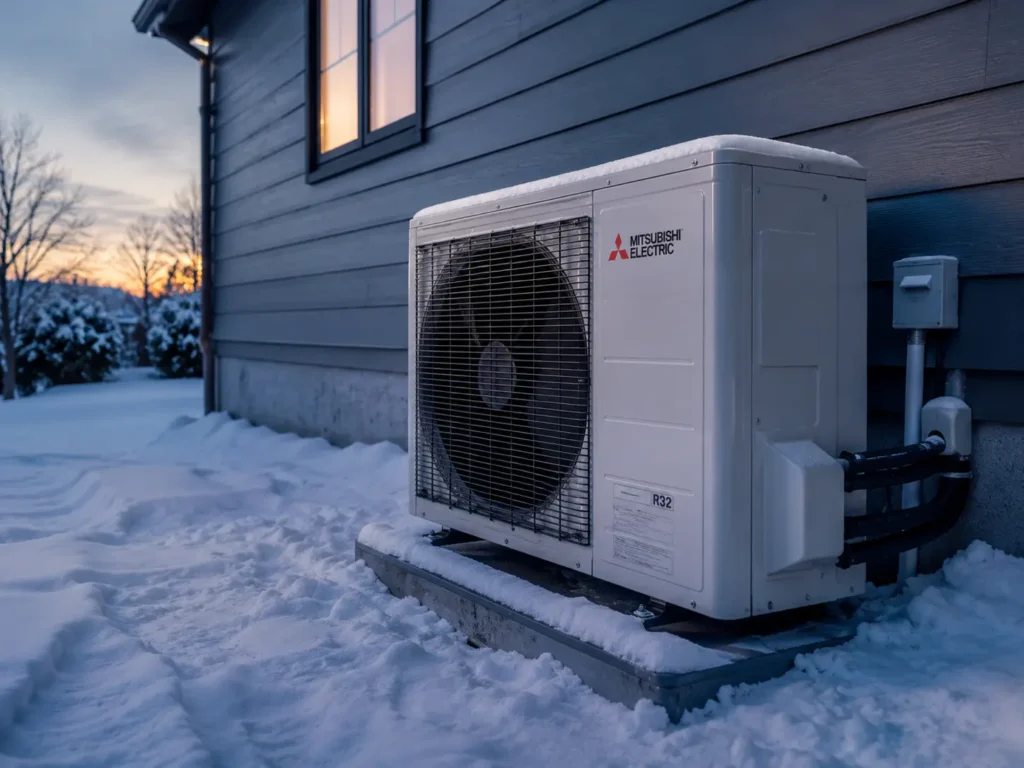
Heat Pump vs Gas Boiler: Why the Run Time Feels So Different
| Factor | Heat pump | Gas boiler |
|---|---|---|
| Heating style | Lower-temperature, steady output | Higher-temperature, shorter bursts |
| Radiator feel | Warm for longer | Often hot for shorter periods |
| Controls | Often weather compensated and modulating | Frequently thermostat-led on/off cycling |
| Cold-weather run time | Can be many hours | Usually shorter firing periods |
A gas boiler can produce a large amount of heat quickly. Many boiler systems therefore send hot water through the radiators until the thermostat is satisfied, then stop.
An air-to-water heat pump is designed to work efficiently with lower flow temperatures. Energy Saving Trust says heat pumps commonly send water to radiators at around 35–45°C and that running the heating for longer can still warm the home effectively. Energy Saving Trust’s heat-pump installation guidance
If you want the technical process behind the outdoor unit, refrigerant and compressor, see our guide to how air source heat pumps work. For a direct technology comparison, read our air source heat pump vs gas boiler guide.
What Does “My Heat Pump Runs Constantly” Actually Mean?
There is a difference between leaving a heat pump switched on and the compressor running at full power every minute.
Modern inverter-driven heat pumps can vary their output. When heat demand is modest, the compressor can reduce its output rather than operating continually at maximum capacity. Pumps and fans can also operate at different times from the compressor.
So a system that appears to be “on all day” may be operating gently for much of that time.
This is why run hours alone do not tell you whether a heat pump is expensive to operate. Electricity consumption, outdoor temperature, indoor temperature, flow temperature and the heat demand of the property are more useful indicators.
Why Long, Steady Operation Can Be Efficient
A heat pump becomes less efficient when it has to raise heating water to a much higher temperature. Keeping the required flow temperature lower reduces the temperature difference the refrigeration cycle must overcome.
Energy Saving Trust recommends maintaining a steadier temperature, running a heat pump for longer periods and lowering flow temperatures where appropriate. Its installer guidance also explains how weather compensation reduces the required flow temperature as outdoor conditions become milder, helping the heat pump match the building’s changing heat demand. Energy Saving Trust guidance on running a heat pump efficiently
That is the basic “low and slow” principle.
For example, imagine your home is losing about 4kW of heat at a particular outdoor temperature. A modulating heat pump may run steadily while producing approximately the heat the building is losing, rather than repeatedly switching between high output and off.
The result can be a more stable room temperature with fewer pronounced hot-and-cold swings.
For more detail on suitable heating-water settings, see our UK guide to air source heat pump temperatures.
When Long Heat-Pump Run Times Are Normal
| What you notice | Usually normal? | What it can mean |
|---|---|---|
| Runs for hours on a cold day | Often | The system is matching higher heat loss |
| Radiators feel warm rather than hot | Often | Lower flow temperature |
| Brief interruptions in frosty weather | Often | Automatic defrost cycles |
| Runs during hot-water periods | Yes | Cylinder reheating |
| Runs constantly but rooms stay cold | No | Design, settings or a fault may need checking |
| Starts and stops every few minutes | Worth checking | Possible short cycling |
Cold weather is the most obvious reason for longer operation. As outdoor temperature falls, heat escapes from your home more quickly, so the heating system must replace more heat.
Air source heat pumps may also interrupt normal heating to defrost the outdoor coil.
Mitsubishi Electric explains that frost can form on the outdoor unit during cold, damp weather. The heat pump periodically clears it using an automatic defrost cycle before returning to normal heating. Vapour and water around the outdoor unit during this process can therefore be normal. Mitsubishi Electric’s explanation of heat-pump defrost cycles
When Constant Running May Indicate a Problem
The clearest warning sign is a home that never reaches the requested temperature.
Possible causes include an undersized heat pump, radiators that cannot release enough heat at the chosen flow temperature, an incorrectly configured heating curve, excessive building heat loss or a technical fault.
Unexpectedly high electricity consumption is another reason to investigate, particularly if outdoor conditions and your normal settings have not changed significantly. A very high flow temperature, unnecessary electrical backup heating, unsuitable controls or poor system balance can all increase consumption.
A heavily iced outdoor coil that fails to clear, persistent error codes, unusual noises or a sudden change from the system’s normal behaviour also justify professional attention.
What Can You Check Before Calling an Engineer?
Start with observations rather than changing several settings at once.
Check whether the rooms actually reach their thermostat targets. Then note the outside temperature, displayed flow temperature and whether the heat pump is currently providing space heating or reheating the hot-water cylinder.
Compare electricity consumption across several days with similar weather rather than focusing on a single hour.
Make sure the outdoor unit has clear airflow and is not obstructed by leaves or other debris. Do not chip ice from the heat exchanger or interfere with refrigerant components.
Check that radiators and thermostatic radiator valves are being operated as your installer intended. Restricting too many emitters can affect the amount of heat the system can transfer into your home.
If you change the weather-compensation curve or flow temperature, make small adjustments and monitor the result. The objective is normally to find the lowest practical flow temperature that still maintains comfort, rather than simply selecting the lowest number available.
Our air source heat pump running-costs guide explains how seasonal efficiency, heat demand and electricity prices affect what you actually pay.
Sizing, Radiators and Heat Loss Matter More Than Run Time Alone
A correctly designed heat pump should match the property’s heating requirements closely enough to maintain comfort during local winter design conditions.
MCS explains that accurate heat-pump sizing requires a room-by-room heat-loss calculation. Factors include the building fabric, room dimensions, ventilation or air changes, required indoor temperatures and local winter conditions. MCS guidance on understanding heat loss
Energy Saving Trust similarly notes that poor sizing creates problems in both directions: an undersized heat pump can work excessively without meeting demand, while an oversized system can suffer from excessive cycling.
Radiators matter for the same reason. Lower-temperature water releases less heat from a given radiator, so some properties need larger emitters or underfloor heating. However, this does not mean every existing radiator automatically requires replacement. Each room should be assessed against its calculated heat loss.
If your heat pump has always run for long periods and keeps the property comfortable, that may simply reflect good modulation and system design.
If it runs continuously and still loses ground, ask the installer to review the heat-loss calculation, design flow temperature, heating curve, radiator outputs and commissioning settings.
Should You Turn a Heat Pump Off at Night?
Usually, a large overnight temperature drop is less suitable for a heat pump than it may be for a high-temperature boiler.
Energy Saving Trust recommends longer, steadier operation, while Nesta’s homeowner guidance notes that completely switching heating off overnight can create a larger recovery requirement when the home needs warming again. Nesta’s homeowner guidance on leaving heat pumps on
A small temperature setback may still make sense in some properties.
The best approach depends on insulation, thermal mass, the heating emitters, your electricity tariff and the controls fitted to the system. A highly insulated home with underfloor heating can respond very differently from an older property using radiators.
Avoid copying another household’s heating schedule without considering those differences.
Get Your Free Air Source Heat Pump Quote
Find the right air source heat pump solution for your home. Tell us a few details and our team will help you explore suitable options at a competitive price.
Quick to complete. No obligation.
Get your quote
Enter your details below and one of our team will get back to you.
Frequently asked questions
Find clear answers to common questions about air source heat pump efficiency and settings, including flow temperature, weather compensation, heating schedules, radiators, insulation, underfloor heating, defrosting, tariffs, solar PV, servicing and performance problems.
It can be. Heat pumps are designed to provide lower-temperature heat for longer periods than many gas boilers. Long operation is particularly normal during cold weather if the property reaches its target temperature.
A heat pump can remain switched on continuously, but that does not necessarily mean its compressor runs at full output for 24 hours. Modern systems can modulate, stop when there is no demand and restart when heating or hot water is required.
Heat pumps usually send lower-temperature water through the heating system. They therefore deliver heat more gradually, whereas a gas boiler commonly produces higher-temperature water in shorter bursts.
Not necessarily. Run time alone does not reveal energy use because a modulating heat pump can operate at relatively low electrical input for long periods. Actual consumption and seasonal efficiency are more useful measures.
It may switch off when the heating demand falls below what the system can provide efficiently, when the target temperature has been reached or when outdoor conditions are mild enough that no space heating is required.
Cold outdoor temperatures, a steady thermostat setting and weather-compensated controls can all cause overnight operation. This can be normal if the home remains comfortable and energy consumption is reasonable.
Continuous high output during mild weather deserves investigation. The weather-compensation curve, thermostat settings, temperature sensors, system sizing or control configuration may need checking.
Possible causes include insufficient heat-pump capacity, inadequate radiator output, an unsuitable flow temperature, incorrect controls, excessive building heat loss or a system fault. A qualified installer should investigate if the home cannot reach its design temperature.
Yes. A property normally loses heat faster as the outdoor temperature falls, so the heat pump needs to provide more heating. Air source units may also carry out automatic defrost cycles during cold, damp conditions.
A defrost cycle removes frost from the outdoor heat exchanger. The heat pump temporarily changes operation to warm the outdoor coil, melts the frost and then returns to normal heating.
Usually, a large overnight shutdown is not ideal. Heat pumps generally favour steadier temperatures, although a modest setback can work well in some properties.
Only if you genuinely want a lower indoor temperature. Continually changing the thermostat simply to force the heat pump off can undermine the control strategy and create a larger reheating demand later.
There is no universal figure. Energy Saving Trust says heat pumps commonly supply radiators at around 35–45°C, but the correct setting depends on heat loss, radiator sizing, outdoor conditions and system design.
Yes. Heat-pump radiators often operate at lower temperatures than radiators connected to a conventional boiler. Correctly sized emitters can still keep the room comfortable by releasing heat for longer.
Arrange a check if the home cannot reach its target temperature, electricity consumption rises unexpectedly, the outdoor coil remains heavily iced, error codes appear, unusual noises develop or the system's normal behaviour changes significantly.
Conclusion: Long Running Is Often Normal
A heat pump running much longer than your old gas boiler is not automatically a fault. It is often a result of lower flow temperatures, modulation and weather-compensated controls replacing lost heat steadily.
Focus on the outcome. Is your home comfortable? Does it reach the required temperature? Is electricity consumption broadly consistent with the weather and expected system performance? Does the outdoor unit defrost normally?
If the answer is yes, long run times can be perfectly normal.
If the property remains cold, electricity use has increased unexpectedly, the outdoor unit is icing heavily or the system has suddenly changed behaviour, arrange a proper check rather than simply increasing the flow temperature.
If you are comparing heating options or want a property-specific heat-pump quotation, Get Free Quote can help you compare suitable systems with no obligation.


