
Solar Panels Bristol: Costs, Grants & Quotes (2026)
Check Your Eligibility for Boiler Upgrade Scheme (BUS)
Complete your details below to check your eligibility.
Thank you
We've received your details and will be in touch shortly.

Quick Answer: Are Solar Panels Worth Installing in Bristol?
For many Bristol homes, solar panels can reduce the amount of electricity bought from the grid and create an additional income stream from exported electricity. A PVGIS-based Bristol model estimates approximately 3,692 kWh of annual generation from an optimally positioned 4 kWp system, although every roof is different.
Energy Saving Trust currently places the typical cost of a home solar PV installation at around £7,600 nationally. Bristol quotations can vary substantially depending on system size, access, roof condition, scaffolding, electrical work, equipment and battery storage.
Eligible Bristol households may also qualify for support through the Bright Green Homes scheme.
Solar Panels Bristol: Costs, Savings, Grants and Installation in 2026
If you are considering solar panels in Bristol, the important question is not simply whether solar works in the city. It does. The more useful question is whether solar will work well on your particular roof, with your electricity usage and at the price you have been quoted.
Bristol’s location gives homeowners a practical opportunity to generate a meaningful amount of electricity from rooftop solar. An independent model using PVGIS data estimates that an unshaded, south-facing 4 kWp system in Bristol could generate around 3,692 kWh a year. Actual production will vary with roof direction, pitch, shading and system losses.
This guide explains what solar panels can cost in Bristol, likely generation, current grants, planning considerations, batteries and how to compare installers.
For a wider overview before requesting local prices, you can also compare solar panel installation quotes.
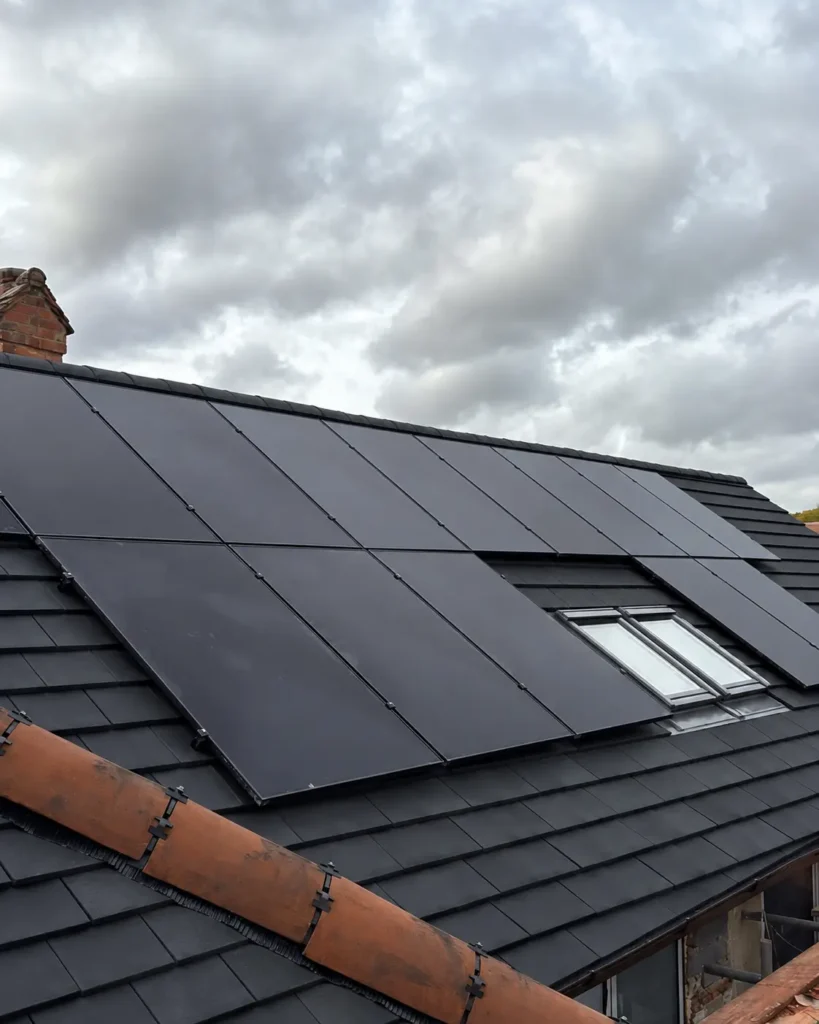
Are Solar Panels Suitable for Bristol Homes?
Solar panels generate electricity from daylight rather than requiring constant direct sunshine. That means they continue producing power during cloudy conditions, although output falls when available light is lower. Energy Saving Trust confirms that solar PV still generates electricity on cloudy days.
Roof design matters more than Bristol’s reputation for weather.
A largely unshaded south-facing roof normally provides favourable conditions. East- and west-facing roofs can also work well, particularly when electricity demand is higher in the morning or evening.
Shading from chimneys, neighbouring properties and mature trees should be included in the installer’s generation model. Small amounts of shade can have a disproportionate effect on some system designs.
Roof condition matters too. If tiles, felt or structural components are approaching replacement, completing that work before installing panels can avoid the expense of removing the array later.
How Much Electricity Can Solar Panels Generate in Bristol?
A useful starting point is system capacity, measured in kilowatt peak or kWp.
A PVGIS-based model for Bristol estimates that a 4 kWp south-facing array at around 35 degrees could produce approximately 3,692 kWh annually, equivalent to roughly 923 kWh per installed kWp under that model’s assumptions.
That figure should not be treated as a promise.
Your installer should calculate expected production using your actual address, orientation, pitch and shading. Ask for the assumptions behind the forecast rather than choosing the company offering the biggest generation number.
Solar output is also seasonal. Summer production will be much higher than winter production. This is why annual generation alone does not tell you how much money you will save.
Your self-consumption matters: the proportion of solar electricity that you use directly instead of exporting it.
Homes with daytime electricity demand, home working, electric vehicles, immersion heating or intelligently controlled appliances may be able to use more solar power as it is generated.
How Much Do Solar Panels Cost in Bristol in 2026?
There is no single Bristol price because two homes requiring the same number of panels can have very different installation costs.
Energy Saving Trust currently gives approximately £7,600 as the cost of an average domestic solar system. Meanwhile, current Checkatrade data for Bristol lists an average solar-panel installation figure of about £9,664, with quoted figures spanning roughly £7,490 to £12,531. The two figures should not be treated as directly comparable because system specifications and data collection methods differ.
| Cost factor | Why it matters |
|---|---|
| System capacity | More panels normally mean higher equipment and installation costs |
| Roof access | Difficult access or complex scaffolding can increase labour costs |
| Roof condition | Repairs or structural work may be required first |
| Panel specification | Higher-output or premium modules may cost more |
| Inverter design | String inverters, optimisers and microinverters have different costs |
| Battery storage | Batteries can materially increase the initial investment |
| Electrical upgrades | Consumer-unit, cabling or earthing work may be necessary |
| Roof layout | Multiple roof faces can make installation more complicated |
Always compare the system specification, not simply the bottom-line price.
Solar Grants, VAT and Export Payments in Bristol
Three financial considerations are particularly relevant in 2026.
Bright Green Homes
Bristol City Leap says its Bright Green Homes programme is currently providing grant-funded improvements to eligible households, including solar PV and battery storage. Check the current Bright Green Homes funding criteria.
Published eligibility includes an EPC rating of D, E, F or G, residence within the participating local-authority areas and annual household income of £36,000 or less, subject to an exception for qualifying lower-income postcode areas. Funding is limited and provided on a first-come, first-served basis.
0% VAT
Qualifying installations of solar panels in residential accommodation currently benefit from 0% VAT until 31 March 2027. Under existing legislation, the rate is scheduled to revert to 5% from 1 April 2027 unless the rules change. Read HMRC’s current energy-saving materials guidance
Smart Export Guarantee
Solar electricity that you do not use can potentially be exported to the grid.
Under the Smart Export Guarantee (SEG), participating electricity suppliers pay eligible small-scale generators for exported electricity. Suppliers set their own tariff rates and contract terms, so it is worth comparing export tariffs rather than assuming your electricity supplier automatically offers the most suitable arrangement. Read Ofgem’s Smart Export Guarantee guidance
Do You Need Planning Permission for Solar Panels in Bristol?
Many ordinary domestic rooftop solar installations can proceed under permitted development rights rather than requiring a full planning application.
However, there are important exceptions. Bristol City Council highlights additional considerations where equipment projects significantly from the roof, where panels extend above the highest roof level, on certain road-facing walls in conservation areas, and for listed buildings or properties within their grounds. Check Bristol City Council’s solar planning guidance
National permitted-development rules for domestic solar were also updated on 27 August 2026, with transitional arrangements running until 27 August 2027.
Therefore, owners of listed homes, conservation-area properties and unusual installations should confirm the current rules before work starts rather than relying on generic planning advice.
Which Solar Panels Should You Choose?
Panel efficiency gets considerable attention, but it should not be the only purchasing criterion.
Compare:
installed system capacity in kWp
expected annual generation
product and performance warranties
manufacturer track record
inverter specification
monitoring features
shading strategy
expected degradation
installer workmanship protection
total installed price.
A physically smaller roof may justify higher-efficiency panels because available area is limited. Where roof space is plentiful, paying a large premium for marginally higher module efficiency may deliver less value.
For equipment comparisons, see our guide to the best solar panels in the UK for 2026.
Flat roofs can also accommodate PV, but mounting, ballast, wind loading, spacing and panel angle require different design decisions. Read our guide to solar panels on flat roofs for more detail.
Should You Add a Solar Battery?
A battery stores electricity that would otherwise be exported so it can be used later.
That can increase solar self-consumption, particularly when the property is empty during daylight hours. Some battery systems can also charge from the grid during cheaper tariff periods.
However, a battery does not automatically provide the fastest financial return.
Compare a solar-only quotation with a solar-plus-battery quotation. Ask each installer to state:
usable battery capacity
charge and discharge power
round-trip efficiency
warranty terms
expected cycle limits
backup capability
predicted annual savings with and without the battery.
A battery should be sized around how the household actually uses energy, not simply paired with the largest capacity available.
How to Compare Solar Panel Installers in Bristol
A strong solar quotation should show more than a price and a panel count.
| Check | What you should expect |
|---|---|
| System design | Panel number, kWp capacity and roof layout |
| Generation estimate | Annual output plus orientation, pitch and shading assumptions |
| Equipment | Exact panel, inverter and battery models |
| Certification | Relevant installer and system certification clearly identified |
| DNO work | Responsibility for the grid-connection process |
| Installation | Scaffolding, mounting, electrical work and commissioning |
| Warranties | Separate product, performance and workmanship terms |
| Exclusions | Any likely additional costs clearly stated |
MCS-certified installers operating under the scheme must comply with applicable installation standards, performance-estimation requirements and customer commitments, and MCS installations are registered with an MCS certificate.
Do not compare quotes solely on projected savings. A more optimistic forecast is not necessarily a better system.
Recent Bristol and South West homeowner discussions also show that buyers encounter substantial differences between solar-and-battery quotations, reinforcing the value of comparing like-for-like specifications rather than isolated headline prices.
What Happens During Solar Panel Installation?
A typical project starts with an assessment of the roof, electrical system, shading and expected electricity generation.
The installer then finalises the layout and equipment, deals with relevant grid-connection requirements and arranges scaffolding where required.
Installation itself may only take a few days on a straightforward property, but the entire process can take longer once survey work, scaffolding, permissions and network requirements are included.
For a more detailed walkthrough, read our solar panel installation process guide.
At handover, make sure you receive the relevant certificates, warranties, monitoring details, electrical paperwork and operating instructions.
Get Your Free Air Source Heat Pump Quote
Find the right air source heat pump solution for your home. Tell us a few details and our team will help you explore suitable options at a competitive price.
Quick to complete. No obligation.
Get your quote
Enter your details below and one of our team will get back to you.
Frequently asked questions
Find clear answers to common questions comparing air source and ground source heat pumps, including efficiency, installation and running costs, winter performance, noise, land requirements and borehole depth.
Energy Saving Trust currently estimates around £7,600 for an average UK domestic solar installation. Bristol prices vary with system capacity, roof access, equipment, scaffolding and electrical work. Current local marketplace figures can be higher, so compare detailed written quotations rather than relying on one average.
One PVGIS-based local model estimates about 3,692 kWh per year from a 4 kWp south-facing array at approximately 35 degrees. Your actual output will depend on roof orientation, pitch, shading and system design.
Yes. Solar PV panels generate electricity from daylight and continue working in cloudy weather, although their output is lower than during strong sunshine.
Many standard residential rooftop systems fall within permitted development rights. Restrictions can apply to listed buildings, conservation areas and installations that fall outside relevant limits. Check the latest Bristol City Council and Planning Portal guidance before installation.
Potentially, but additional planning restrictions can apply depending on where panels are positioned and the property's status. Seek property-specific guidance before work begins.
Possibly, but listed-building controls require additional care and permissions may be needed. The design should consider the building's historic significance as well as energy performance.
Yes, for some households. Bristol City Leap's current Bright Green Homes programme includes solar PV and battery storage among the measures available to qualifying households. Funding and eligibility can change, so check before relying on it.
Current published criteria include properties with EPC ratings D–G, qualifying locations and household income of £36,000 or less, with an exemption from that income limit for certain lower-income postcode areas. Other conditions also apply.
Qualifying residential solar installations currently receive 0% VAT. The temporary zero rate is scheduled to run until 31 March 2027 under current rules.
Eligible systems can receive export payments through a Smart Export Guarantee tariff. Rates and contract terms vary between participating suppliers.
MCS provides a recognised quality-assurance framework for small-scale renewable installations. MCS-certified installers must work to relevant scheme standards and register qualifying installations with an MCS certificate.
It depends on when you use electricity, battery cost, usable capacity, tariff structure and how much solar power would otherwise be exported. Request separate solar-only and solar-plus-battery forecasts before deciding.
They can be. Output normally differs from an optimally positioned south-facing roof, but generation spread across the morning or afternoon can suit some household consumption patterns.
Yes, subject to structural, planning and design requirements. Flat-roof systems require suitable mounting, spacing and wind-loading calculations.
Straightforward domestic installation work may take only a few days, although surveying, scaffolding, permissions and grid-connection processes can extend the overall project timeline.
There is no single Bristol payback period. Installation cost, electricity prices, export tariffs, generation and self-consumption all affect the calculation. Energy Saving Trust's July 2026 modelling gives roughly 9–12 years across several representative UK locations, illustrating how geography and household behaviour can change the result.
Yes. Plug-in solar systems became available in Great Britain from 27 August 2026. Energy Saving Trust says current systems can provide up to 800 W and estimates possible annual bill savings of around £70–£100, although they are very different from a full rooftop PV system.
Are Solar Panels in Bristol Worth Considering?
Bristol is a credible location for residential solar, but the economics must be calculated property by property.
Start with your roof. Then consider your annual electricity use, daytime consumption, expected generation, export tariff, system price and whether battery storage improves the overall proposition.
Do not let an installer reduce the decision to a single payback figure. Ask to see the assumptions behind the calculation and compare several written quotations on the same basis.
If your property is suitable, the next practical step is to obtain comparable designs rather than guessing from national averages.


