Air Con Installation UK: Costs & Process Guide 2026
Check Your Eligibility for Boiler Upgrade Scheme (BUS)
Complete your details below to check your eligibility.
Thank you
We've received your details and will be in touch shortly.
Quick answer: what does air con installation involve?
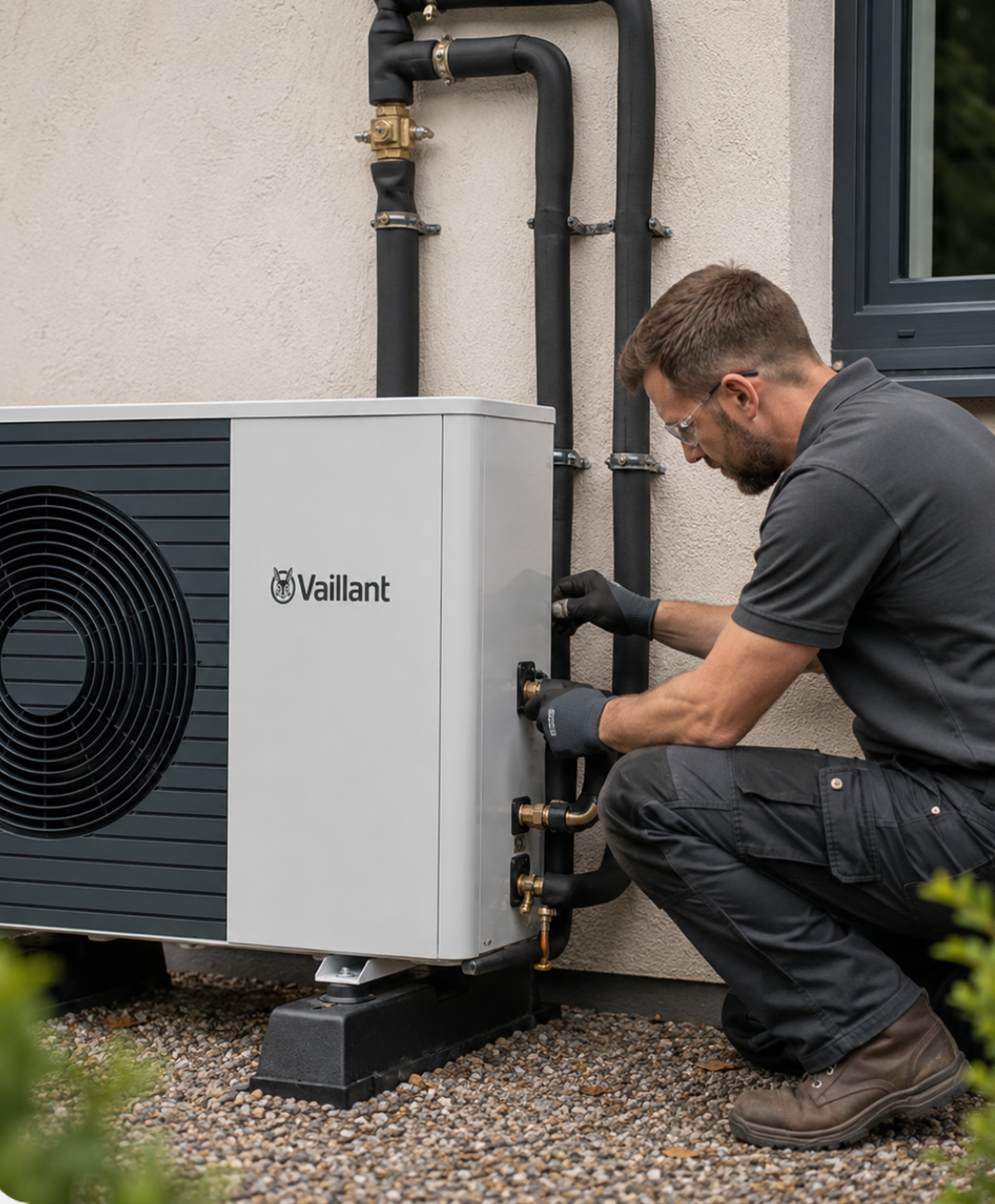
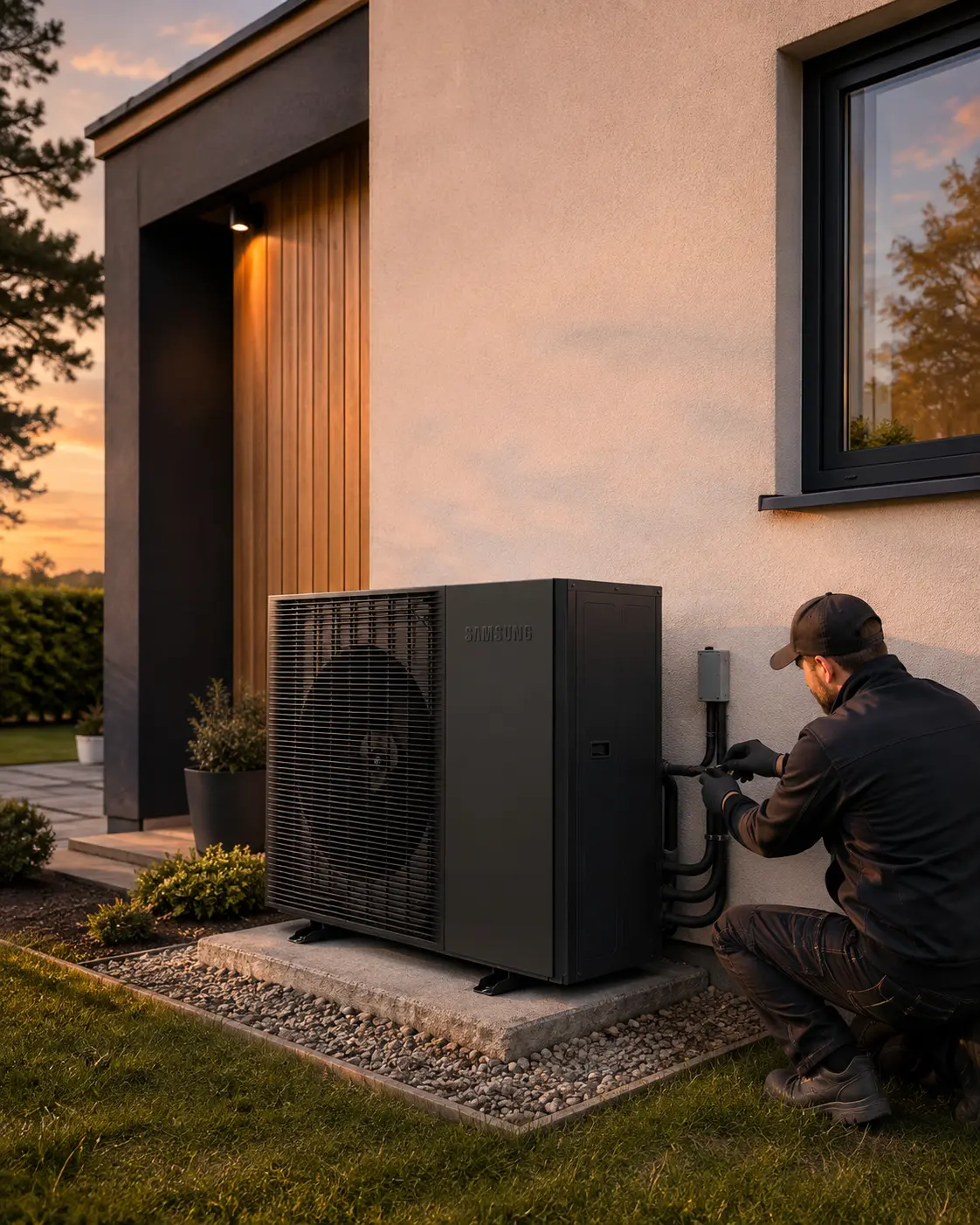
A typical domestic split air con installation uses one indoor unit and one outdoor unit connected by insulated refrigerant pipework, electrical cabling and a condensate drain. The installer surveys the room, sizes the system, selects practical unit positions, mounts the equipment, runs the pipework and drain, completes the electrical connection, pressure-tests and evacuates the refrigerant circuit, then commissions the system. A straightforward single-room job is often completed in one working day. Energy Saving Trust currently gives about £1,900 as a typical one-room air-to-air heat-pump installation, although access, electrical work, pipe length and equipment choice can change the final price.
Air Con Installation: UK Costs, Process, Planning and What to Expect in 2026
Fixed air conditioning can be practical when a bedroom, loft room, home office or living space regularly overheats. For most UK homes, air con installation means fitting a split system: an indoor unit conditions the room while an outdoor unit releases heat outside. Many modern systems are reversible, so they can also provide winter heating as air-to-air heat pumps. Energy Saving Trust
A good installation starts with the property, not the brand. The installer should assess heat gain, glazing, orientation, insulation, unit positions, drainage, pipe routes, noise and electrical requirements before specifying equipment.
This guide explains what is fitted, typical 2026 costs, what happens on installation day, and the UK rules around F-gas, planning, VAT and grants.
If you already want a fixed system, compare complete quotations rather than unit-only prices. You can compare suitable home-improvement quotes through Get Free Quote before you commit.
Which air conditioning system suits a UK home?
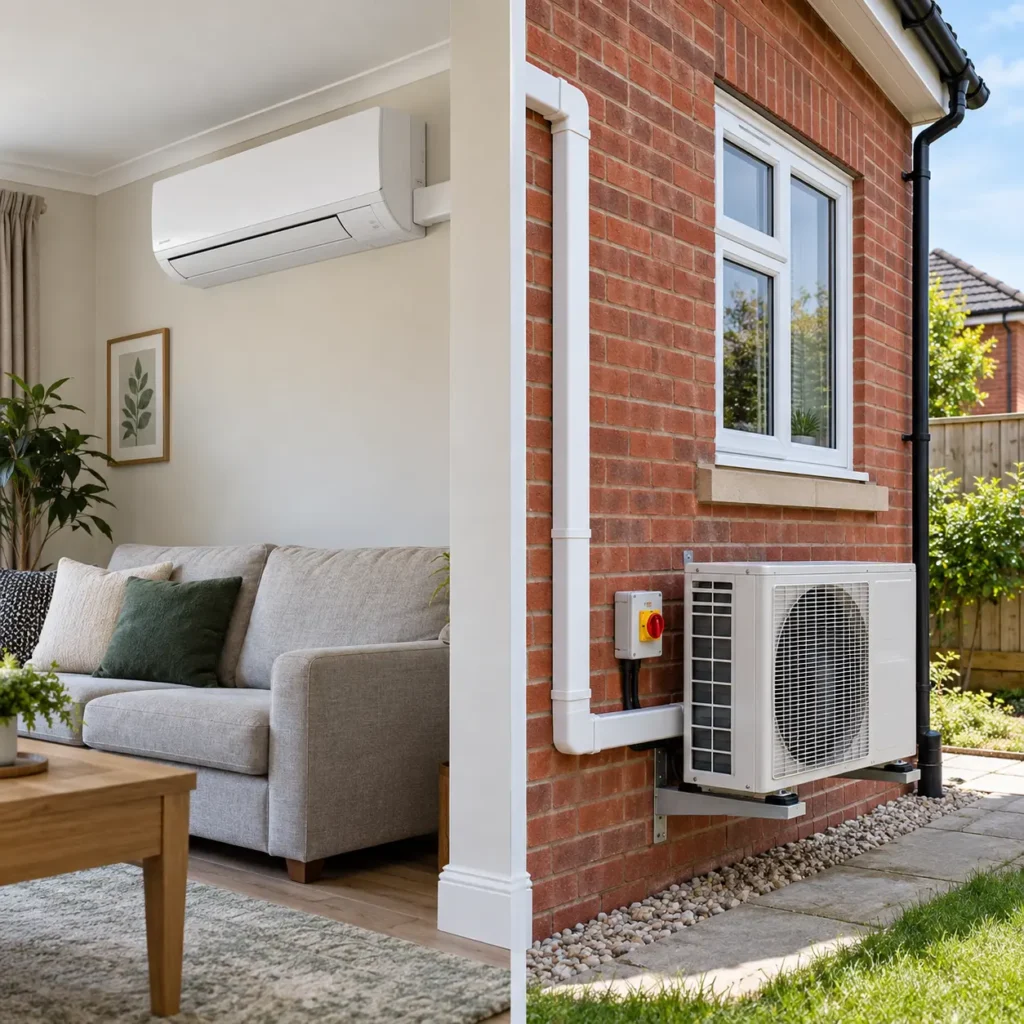
For most retrofit projects, a wall-mounted single-split or multi-split system is the starting point. A single split serves one room. A multi-split connects several indoor units to one outdoor unit. Ducted systems can be more discreet, but they need space for ductwork and are usually more disruptive to retrofit.
| System | Best for | Installation complexity | Main consideration |
|---|---|---|---|
| Single split | One bedroom, office or living room | Low to moderate | One indoor and one outdoor unit |
| Multi-split | Two or more separate rooms | Moderate | More pipework and careful system matching |
| Ducted | Major renovations or whole-home projects | High | Ceiling/loft space and building work |
| Monobloc | Where an outdoor condenser is difficult | Moderate | Different wall-duct and performance trade-offs |
If you are still choosing a system, the broader air con UK guide covers portable, split, multi-split and heating-capable options in more detail.
How does split air conditioning work?
Air conditioning moves heat rather than simply creating “cold”.
In cooling mode, warm room air passes across the indoor evaporator coil. Refrigerant absorbs that heat and evaporates. The compressor then raises the refrigerant’s pressure and temperature.
At the outdoor condenser, the heat is released outside. An expansion device lowers the refrigerant pressure and temperature before the cycle repeats.
Moisture also condenses on the cold indoor coil, so the installation needs a reliable condensate drain.
Many split systems can reverse this cycle. In heating mode they take heat from outdoor air and deliver it indoors, making them air-to-air heat pumps. Energy Saving Trust notes that these systems heat and cool rooms directly and usually do not provide domestic hot water. Energy Saving Trust’s air-to-air heat-pump guidance Energy Saving Trust
What happens during an air con installation?
A professional job should start with a survey. Room area matters, but glazing, solar gain, ceiling height, insulation, occupancy and heat-producing equipment can all change the cooling load.
Improving shading or home insulation options may also reduce the amount of active cooling you need.
A typical single-split installation then involves:
- Confirming the indoor and outdoor unit positions.
- Drilling a wall opening for pipes, cables and drainage.
- Mounting the indoor and outdoor units.
- Running insulated copper refrigerant pipes between them.
- Installing the condensate drain and electrical supply.
- Pressure-testing and evacuating the refrigerant circuit.
- Commissioning the system and explaining the controls.
A straightforward single room can often be completed in a day. Multi-room and ducted systems can take several days where pipe routes, ceilings or electrical work are complex. Checkatrade
How much does air con installation cost in the UK?
Published figures are budgeting guides, not quotations. Energy Saving Trust currently gives about £1,900 for a one-room air-to-air heat pump and around £3,700 for a three-bedroom semi-detached home. Checkatrade’s 2026 figures for a 12,000 BTU wall-mounted system indicate roughly £1,580–£2,270 for equipment and installation, before some electrical extras. Checkatrade’s 2026 air-conditioner installation cost guide
| Cost item or project | Indicative 2026 figure | What can change it |
|---|---|---|
| One-room air-to-air system | About £1,900 typical | Brand, capacity, pipe run, access |
| 12,000 BTU wall unit plus installation | Roughly £1,580–£2,270 | Electrical work, location, making good |
| Three-bed semi air-to-air system | About £3,700 typical | Number of indoor units and layout |
| Additional electrical work | Project-specific | New circuit, isolator or consumer-unit work |
Your quote should state the model, pipework allowance, drainage, outdoor mounting, electrical work, commissioning, warranty registration and any making-good work.
What affects running costs?
Do not treat cooling capacity as electrical consumption. A 3.5kW cooling system does not necessarily draw 3.5kW of electricity.
Inverter systems reduce compressor output as the room approaches the target temperature, so consumption changes with weather, set temperature, insulation, solar gain and use.
For 1 October to 31 December 2026, Ofgem’s average electricity unit rate for a standard-variable Direct Debit customer is 26.32p/kWh across Great Britain. At that rate, a system averaging 0.8kW electrical input would cost about 21p per hour while operating. Your tariff may differ. Ofgem’s current electricity unit-rate guidance Ofgem
For cooling, compare seasonal efficiency such as SEER. If winter heating matters, also compare SCOP and low-temperature heating performance. The heat-pump COP guide explains why a headline COP is only a snapshot.
Do you need planning permission or an F-gas installer?
Do not assume every outdoor air-conditioning unit is automatically permitted development.
In England, domestic air-source heat pumps can fall within permitted-development rights when all conditions are met. The Planning Portal states that these rights do not apply to systems used solely for cooling. Restrictions can also apply to flats, listed buildings, conservation areas and sensitive locations. Other UK nations have different rules, so check with your local planning authority if the position is unclear. Planning Portal’s air-source heat-pump planning guidance Planning Portal
Refrigerant rules are separate. GOV.UK says people working on stationary air-conditioning and heat-pump systems containing regulated F-gases need the appropriate qualification. Companies working on stationary F-gas equipment can also require company certification. GOV.UK’s F-gas qualification requirements GOV.UK
Ask the installer which refrigerant the product uses and what certification applies.
Can air con qualify for VAT relief or a grant?
Potentially.
HMRC says fixed air-source heat pumps can provide heating and cooling, and that its understanding is that most air-conditioning units are air-source heat pumps. Qualifying permanently fixed installations in residential accommodation are currently zero-rated for VAT until 31 March 2027. Whether a particular product qualifies depends on the facts of the installation. HMRC VAT Notice 708/6 GOV.UK
The Boiler Upgrade Scheme also includes a £2,500 grant for eligible residential air-to-air heat pumps in England and Wales. However, there is an important practical caveat. Energy Saving Trust said on 16 October 2026 that there were not yet MCS-certified installers for air-to-air heat pumps and expected certification before the end of 2026. Because BUS requires an MCS-certified installer, do not assume a normal air-conditioning quote can access the grant today. Ofgem’s Boiler Upgrade Scheme guidance Ofgem
Get Free Quote’s Boiler Upgrade Scheme 2026 update explains the wider rules.
How to compare air con installation quotes
Compare like with like, not just the total price. Ask for:
- Exact indoor and outdoor model numbers.
- Cooling and heating capacity.
- SEER and SCOP where relevant.
- Indoor and outdoor sound data.
- Proposed unit positions and pipe routes.
- Electrical work and drainage included.
- Refrigerant type and certification.
- Warranty and commissioning details.
Also ask what is excluded. Scaffolding, condensate pumps, long pipe runs, difficult drilling, consumer-unit upgrades and decoration can all add cost.
For one problem room, a correctly sized single split is often simplest. For several rooms, compare a multi-split design with separate single splits rather than assuming one option is always cheaper.
Get Your Free Air Source Heat Pump Quote
Find the right air source heat pump solution for your home. Tell us a few details and our team will help you explore suitable options at a competitive price.
Quick to complete. No obligation.
Get your quote
Enter your details below and one of our team will get back to you.
Frequently asked questions
Find clear answers to common questions comparing air source and ground source heat pumps, including efficiency, installation and running costs, winter performance, noise, land requirements and borehole depth.
Energy Saving Trust currently puts a typical one-room air-to-air installation at about £1,900. Actual quotes vary with capacity, pipework, access and electrical requirements. Energy Saving Trust
A straightforward single-split installation can usually be completed within one working day. Multi-split or ducted projects may take several days. Checkatrade
Possibly. In England, qualifying air-source heat pumps may have permitted-development rights, but cooling-only systems do not qualify under those heat-pump rights. Property type and location also matter. Planning Portal
If the system contains regulated F-gas, anyone carrying out relevant refrigerant work needs the appropriate qualification. Company certification may also be required. GOV.UK
Do not assume so. Refrigerant work on systems containing regulated F-gases requires qualified personnel, and the installation also involves electrical work, drainage and commissioning.
Yes. Many modern split systems reverse the refrigeration cycle and operate as air-to-air heat pumps for heating. Energy Saving Trust
Usually not. Standard air-to-air systems heat or cool room air and normally require a separate system for showers, baths and hot taps. Energy Saving Trust
Usually not effectively if rooms are separated. One unit may suit an open-plan space, while several rooms normally need multiple indoor units or a ducted design.
The system should be chosen from a cooling-load assessment considering room dimensions, glazing, orientation, insulation, occupancy and internal heat gains rather than floor area alone.
Noise varies by product and installation. Split systems keep the compressor outdoors, but you should still compare both indoor and outdoor sound figures before buying.
It depends on electrical input, operating time, efficiency and your tariff. At the current Ofgem average of 26.32p/kWh, a system averaging 0.8kW input would cost about 21p an hour. Ofgem
Follow the manufacturer's schedule. Filters generally need more frequent cleaning than the full system needs professional servicing.
Most domestic split systems mainly recirculate indoor air. They should not be treated as a substitute for suitable ventilation. Energy Saving Trust
The Boiler Upgrade Scheme includes £2,500 for qualifying residential air-to-air heat pumps in England and Wales. However, Energy Saving Trust reported on 16 October 2026 that MCS-certified air-to-air installers were not yet available, so practical access should be checked before purchase. Ofgem
Qualifying permanently fixed air-source heat-pump installations in residential accommodation are zero-rated until 31 March 2027. HMRC says most air-conditioning units are air-source heat pumps, but the treatment depends on the specific installation.
Conclusion
Air con installation is mainly a design decision, not just an equipment purchase. The system needs to match the room’s cooling load, fit the property physically, drain condensate safely, meet refrigerant and electrical requirements, and avoid unnecessary noise or planning problems.
For many UK homes, a single split can be fitted in a day and a typical one-room project sits around £1,900, but a property survey should determine the real cost. Energy Saving Trust
If you want year-round value, compare reversible systems that provide heating as well as cooling, then check current VAT and grant eligibility before signing a contract.