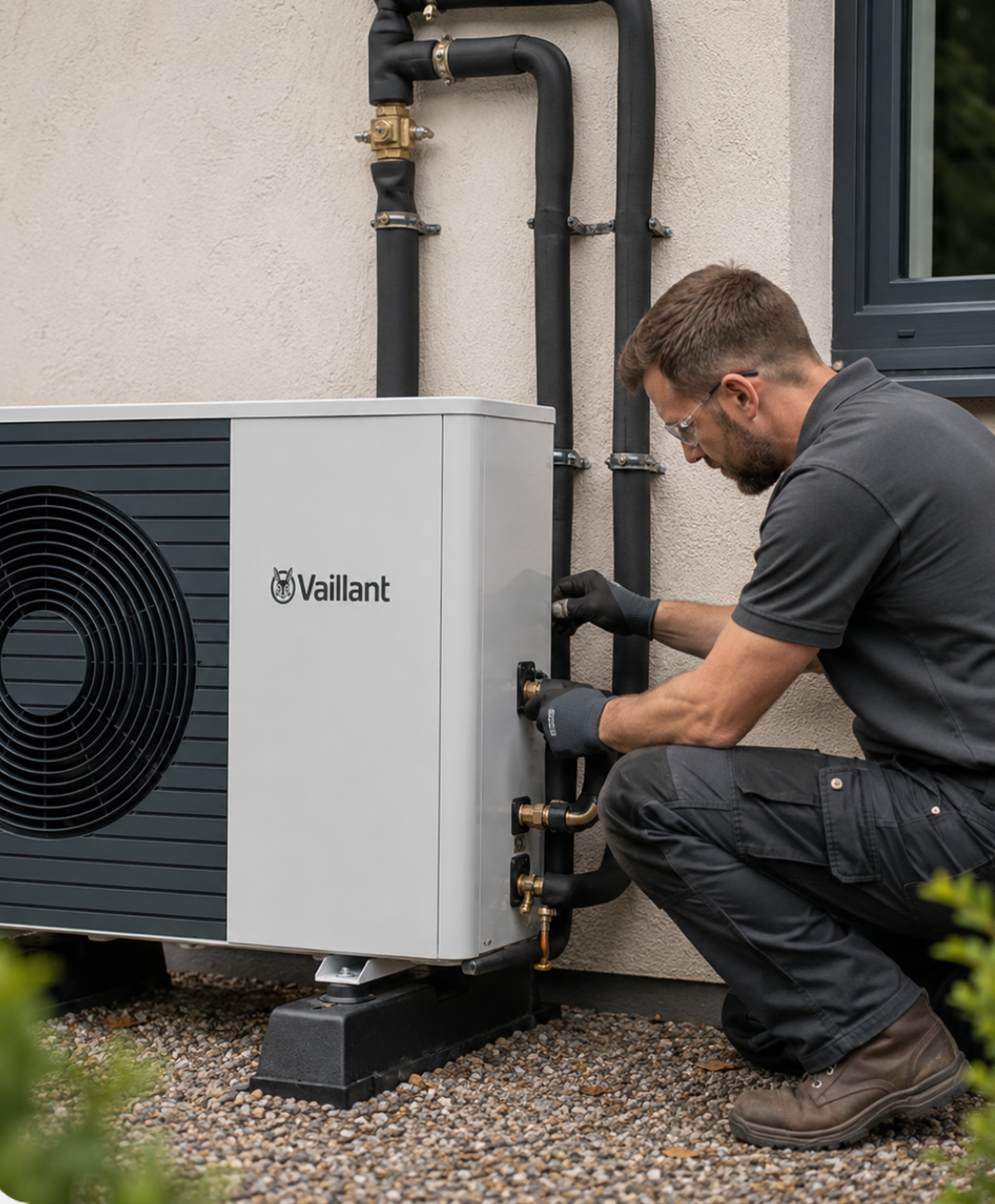
Hybrid Heat Pump UK: Costs, Pros, Cons & How It Works
Check Your Eligibility for Boiler Upgrade Scheme (BUS)
Complete your details below to check your eligibility.
Thank you
We've received your details and will be in touch shortly.
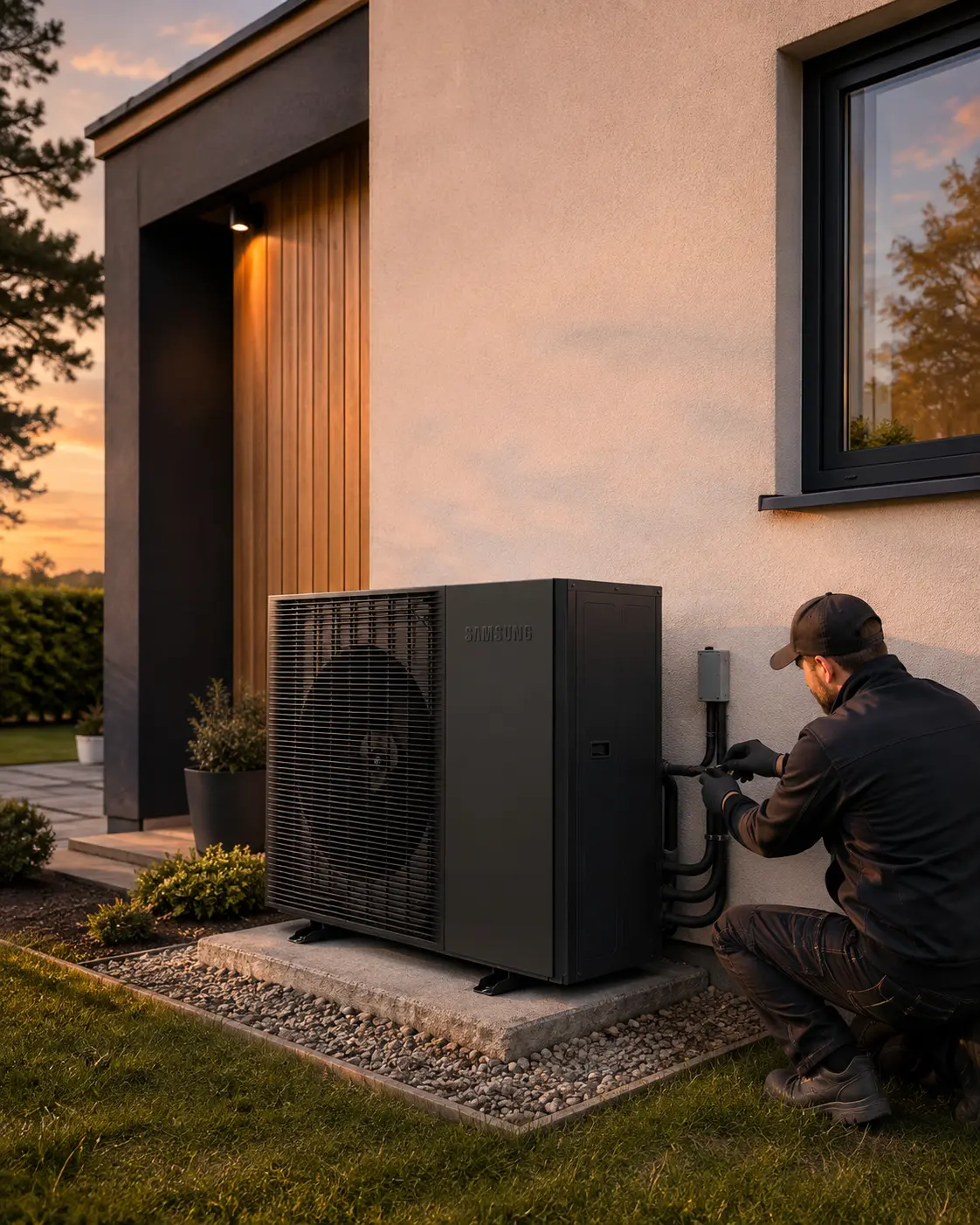
Quick Answer: What Is a Hybrid Heat Pump?
A hybrid heat pump combines a heat pump with a second heat source, normally a gas, oil or LPG boiler. In most UK domestic systems, an air-to-water heat pump handles as much space heating as practical. A controller brings in the boiler when extra output or higher water temperatures are needed, or when its control strategy judges the boiler cheaper to run.
Hybrid systems may use separate appliances or a more closely packaged design. They can suit some high-heat-loss homes or properties retaining a good boiler, but they are not automatically cheaper than a correctly designed standalone heat pump. Energy Saving Trust guidance on hybrid heat pumps
Hybrid Heat Pump UK: How It Works, Costs, Pros and Cons in 2026
A hybrid heat pump combines an electric heat pump with another heat source, usually a gas, oil or LPG boiler. Controls decide when the heat pump should run, when the boiler should take over and, in some designs, when both should contribute.
For UK homeowners, that can help where a full heat-pump conversion is difficult, heat demand is unusually high, or a serviceable boiler is worth retaining. However, hybrids also keep a fossil-fuel appliance, add system complexity and, under current rules, do not qualify for the Boiler Upgrade Scheme.
This guide explains how a hybrid heat pump works, what it may cost, how running costs are controlled and when a standalone heat pump may be the stronger option.
Considering a heating upgrade? Get a free quote and compare properly surveyed options before committing.
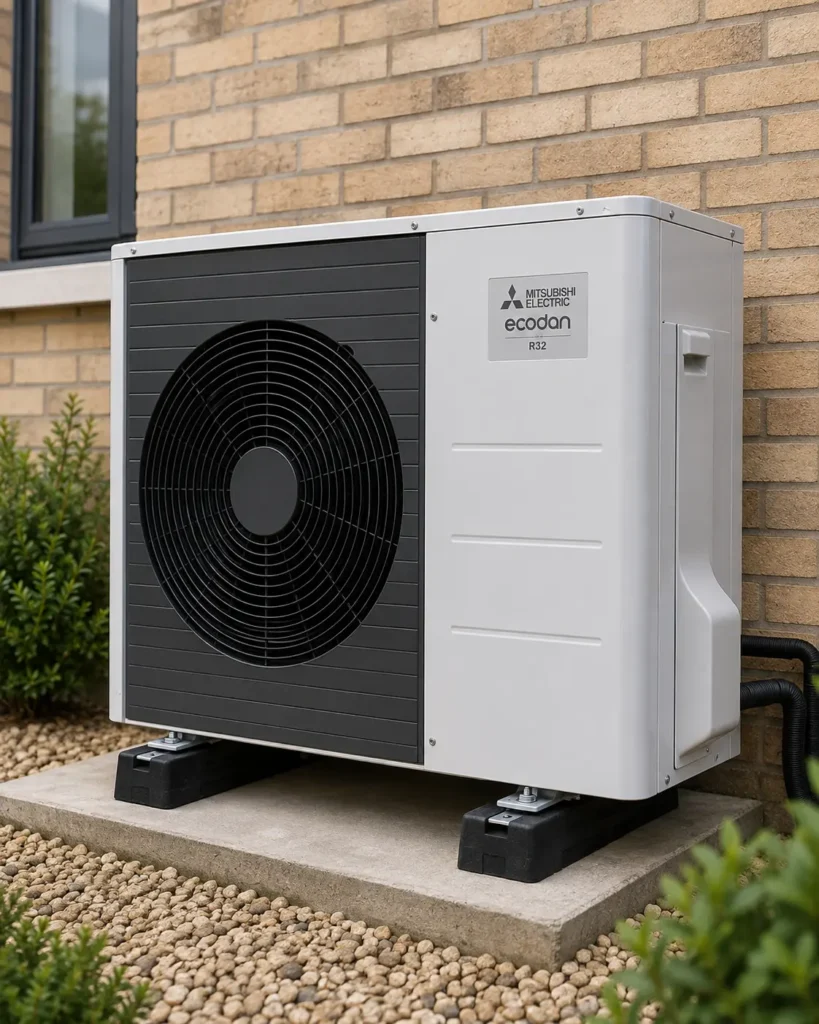
Hybrid Heat Pump vs Standalone Heat Pump
| Factor | Hybrid Heat Pump | Standalone Air-to-Water Heat Pump |
|---|---|---|
| Heat sources | Heat pump plus gas, oil or LPG boiler | Heat pump only |
| Best suited to | Some high-demand or difficult retrofit situations | Homes where a full heat-pump design can meet demand |
| Boiler Upgrade Scheme | Fossil-fuel hybrids are not eligible | Eligible systems can receive current BUS support |
| Hot water | Can sometimes retain combi-boiler hot water | Usually uses a hot-water cylinder |
| Complexity | Two heat sources plus hybrid controls | One main heat generator |
How Does a Hybrid Heat Pump Work?
The heat-pump side works like a normal air-to-water heat pump.
An outdoor fan first draws air across an evaporator, where refrigerant absorbs heat. The compressor then raises the refrigerant pressure and temperature.
Next, the hot refrigerant reaches a condenser or heat exchanger. Here, its energy transfers into water for radiators, underfloor heating or a hot-water cylinder.
Finally, an expansion valve reduces the refrigerant pressure and temperature. The refrigerant returns to the evaporator and the refrigeration cycle starts again.
For a fuller technical explanation of that process, see our guide to how air source heat pumps work.
The key hybrid difference is the controller. Instead of treating the heat pump and boiler as unrelated appliances, it coordinates them as one heating system.
How Do the Boiler and Heat Pump Share the Work?
A hybrid can use two broad control strategies.
Sequential or Bivalent Operation
The controller chooses one heat source at a time. The heat pump may cover normal heating, then hand over to the boiler below a chosen temperature or when operating costs favour the boiler.
Parallel Operation
The heat pump continues running while the boiler supplies additional heat. This can suit a property where the heat pump handles the base heating load but cannot economically meet the complete peak demand alone.
Hybrid controls may consider:
outdoor temperature;
required heating-water temperature;
expected heat-pump efficiency;
electricity and gas, LPG or oil prices;
time-of-use electricity tariffs;
available solar generation.
Energy Saving Trust recommends checking the assumptions an installer uses when deciding when the boiler or heat pump will run.
That matters because poor controls can make the boiler operate much more than expected. Correct sizing, hydraulic design and control configuration need to work together.
What Happens With Radiators and Hot Water?
A hybrid heat pump can supply a wet central-heating system using radiators or underfloor heating.
Heat pumps generally work most efficiently with lower heating-water temperatures. Boilers can deliver higher temperatures. A hybrid therefore gives the designer more flexibility if some existing radiators struggle to provide enough heat at lower temperatures.
However, retaining the boiler does not remove the need for proper system design. A room-by-room heat-loss calculation should determine how much heat each room needs and whether its radiator can provide that output.
MCS heat-load methodology is designed around room-level heat requirements rather than simple rules of thumb. MCS heat-load calculation guidance
Hot-water arrangements also vary. Some systems leave domestic hot water entirely to the boiler and use the heat pump mainly for space heating. With a suitable combi boiler, this may avoid the need for a new hot-water cylinder.
Other installations use a cylinder and allow the heat pump to cover more of the domestic hot-water demand.
Who Is a Hybrid Heat Pump Best For?
Energy Saving Trust identifies two main situations where a hybrid may be proposed: a home with unusually high heat demand, or a property where the expected economics of a standalone heat pump are unfavourable.
A hybrid is therefore worth investigating where:
peak heat loss is difficult or uneconomic to reduce;
you have a serviceable boiler and want the heat pump to cover much of the annual heating demand;
parts of the heating system need higher temperatures during peak conditions;
you currently use oil or LPG and want to reduce rather than immediately eliminate fossil-fuel consumption;
retaining combi-boiler hot water solves a genuine space or hot-water problem.
However, an older property does not automatically need a hybrid system. Many older homes can run successfully on a standalone heat pump when the system is designed around the building’s actual heat loss.
Read our guide to heat pumps for old houses before assuming property age makes a hybrid necessary.
Hybrid Heat Pump Pros and Cons
The main advantage is flexibility.
A heat pump can provide efficient lower-temperature heating through much of the year, while the boiler remains available for peak demand or a different hot-water strategy.
A retrofit hybrid may also allow you to keep a relatively new boiler instead of disposing of an appliance with useful life remaining.
However, there are significant drawbacks.
You still burn fossil fuel whenever the boiler operates. Gas-connected households may continue paying a gas standing charge. Two heating technologies need servicing and maintenance, while the additional controls increase system complexity.
Most importantly, a fossil-fuel hybrid is excluded from the Boiler Upgrade Scheme.
A hybrid should therefore solve a defined technical or financial problem. It should not be fitted simply because of the misconception that heat pumps stop working when outdoor temperatures fall.
The better question is whether a correctly sized standalone heat pump can meet your property’s calculated design heat load efficiently.
How Much Does a Hybrid Heat Pump Cost in the UK?
There is no dependable single UK price because the term “hybrid heat pump” covers very different installations.
Adding a heat pump and controller to a suitable existing boiler is very different from buying a heat pump, new boiler and associated heating-system upgrades at the same time.
Published 2026 figures illustrate that range. Worcester Bosch suggests around £5,000–£8,000 for a hybrid installation, with costs potentially towards the lower end when an existing boiler can remain. Checkatrade gives an indicative figure of about £16,000 for an air source heat pump plus a new gas combi boiler supplied and fitted.
These should be treated as indicative figures rather than quotations.
Property heat loss, heat-pump output, hydraulic alterations, radiator changes, electrical work, boiler compatibility and control equipment can all affect the final price.
Ask each installer what percentage of your annual heating demand they expect the heat pump to provide. That can be more revealing than comparing equipment prices alone.
Will a Hybrid Heat Pump Reduce Running Costs?
It can, but lower bills are not guaranteed.
For 1 October to 31 December 2026, Ofgem’s average Direct Debit price-cap rates are 26.32p/kWh for electricity and 7.97p/kWh for gas. Ofgem’s current energy price-cap unit rates
A simple comparison shows why heat-pump efficiency matters.
At a coefficient of performance of 3, electricity at 26.32p/kWh produces useful heat for about 8.8p/kWh.
A 90% efficient gas boiler using gas at 7.97p/kWh also produces useful heat for roughly 8.9p/kWh.
That simplified calculation excludes standing charges and other factors, but it shows why the switching point cannot be based on electricity and gas prices alone.
A strong seasonal coefficient of performance, a specialist heat-pump tariff or solar generation can move the economics towards electricity. High flow temperatures, poor sizing or an unsuitable tariff can have the opposite effect.
For a broader comparison, see our air source heat pump vs gas boiler guide.
Can You Get a Grant for a Hybrid Heat Pump in 2026?
No, not for a fossil-fuel hybrid under the current Boiler Upgrade Scheme.
GOV.UK specifically states that a hybrid system combining a fossil-fuel boiler with an air source heat pump is not eligible. GOV.UK Boiler Upgrade Scheme grant guidance
Eligible standalone air-to-water and ground source heat pumps can currently receive £7,500.
Until 31 March 2027, qualifying properties without a mains gas connection that replace oil or LPG heating can receive a further £1,500, taking support to £9,000.
That can dramatically alter the financial comparison.
A hybrid might appear cheaper before grants, yet an eligible standalone heat pump could cost less after BUS funding.
Check our Boiler Upgrade Scheme 2026 updates before comparing systems purely on their headline installation price.
How to Choose Between a Hybrid and Standalone Heat Pump
1. Start With a Room-by-Room Heat-Loss Calculation
Do not choose a heating system from floor area, property age or EPC rating alone.
2. Model the Standalone Heat-Pump Option
Ask what flow temperature, seasonal efficiency and radiator changes a properly sized standalone system would require.
3. Define Exactly Why the Boiler Is Needed
Is it providing peak space heating, domestic hot water, tariff optimisation or solving another specific constraint?
If that question has no clear answer, the justification for a hybrid becomes weaker.
4. Compare Whole-Life Costs
Include installation costs, BUS eligibility, fuel standing charges, servicing, expected energy use and the eventual cost of replacing the retained boiler.
5. Ask for the Hybrid Control Strategy
Find out what causes the boiler to start, whether the two heat sources can operate together and how electricity and fuel prices are entered into the controller.
6. Compare Properly Surveyed Quotes
Two systems using similar equipment can deliver very different results if their sizing, emitters and controls differ.
Get Your Free Air Source Heat Pump Quote
Find the right air source heat pump solution for your home. Tell us a few details and our team will help you explore suitable options at a competitive price.
Quick to complete. No obligation.
Get your quote
Enter your details below and one of our team will get back to you.
Frequently asked questions
Find clear answers to common questions about hybrid heat pumps in the UK, including existing boilers, combi systems, cold-weather operation, radiators, hot-water cylinders, running costs, maintenance, solar panels and Boiler Upgrade Scheme eligibility.
A hybrid heat pump combines an electric heat pump with another heating appliance, usually a gas, oil or LPG boiler. Controls decide which heat source should operate at different times.
Potentially. Compatibility depends on the boiler, heat pump, controls and hydraulic design. A working boiler is not automatically suitable for every retrofit hybrid system.
No. Under current rules, systems combining a fossil-fuel boiler with a heat pump are not eligible for BUS funding.
Yes. The heat pump continues extracting heat from outdoor air in cold conditions. The control system may bring in the boiler when demand rises or when the chosen switching strategy favours it.
No. A well-designed system normally aims to make deliberate use of the heat pump and brings the boiler in according to the configured control strategy.
Often, yes. However, each radiator's output should be checked against the room's heat loss and proposed water temperature.
Not always. Some systems retain a combi boiler for domestic hot water, which can remove the need to install a cylinder specifically for the heat pump.
Yes, certain systems are specifically designed to integrate a heat pump with a compatible combi boiler. Compatibility and control arrangements need checking before installation.
Sometimes, but not automatically. The result depends on heat-pump efficiency, fuel tariffs, flow temperature, heat demand and how the controls divide work between the two appliances.
Published figures vary widely. Straightforward systems retaining an existing boiler may cost considerably less than installations requiring both a new heat pump and new boiler. A property survey is required for reliable pricing.
Potentially. You retain two heat-producing appliances plus their control and hydraulic components, so maintenance requirements can be greater than with one heating technology.
Yes. Solar PV can provide some of the electricity consumed by the heat pump when generation and heating demand coincide.
Yes. Hybrid systems can pair heat pumps with oil or LPG heating as well as mains-gas boilers, subject to product compatibility and correct system design.
Not automatically. Building age alone does not decide heat-pump suitability. Actual heat loss, heating emitters, pipework and required flow temperatures matter more.
Possibly, but only if the heat pump and heating system can meet the property's complete design heat load without the boiler. If future full electrification matters, discuss this explicitly during the original system design.
Is a Hybrid Heat Pump Worth It?
A hybrid heat pump can be a sensible specialist solution where heat demand is unusually high or retaining a boiler solves a genuine retrofit constraint.
It can reduce fossil-fuel consumption while preserving another way of meeting peak heating demand.
For many UK homes, however, a properly designed standalone heat pump deserves careful comparison. It removes the need to coordinate two heat generators, can eliminate the gas standing charge where no other gas appliances remain and may qualify for substantial Boiler Upgrade Scheme support.
The right decision comes from the property’s heat-loss calculation and a transparent cost model, not from a general belief that one technology is always better.
Compare properly surveyed options through Getfreequote.co.uk and ask installers to show exactly how each proposed system will heat your home, its expected annual energy use and the assumptions behind those figures.