Heat Pump With Existing Boiler: UK Hybrid Guide 2026
Check Your Eligibility for Boiler Upgrade Scheme (BUS)
Complete your details below to check your eligibility.
Thank you
We've received your details and will be in touch shortly.
Quick Answer
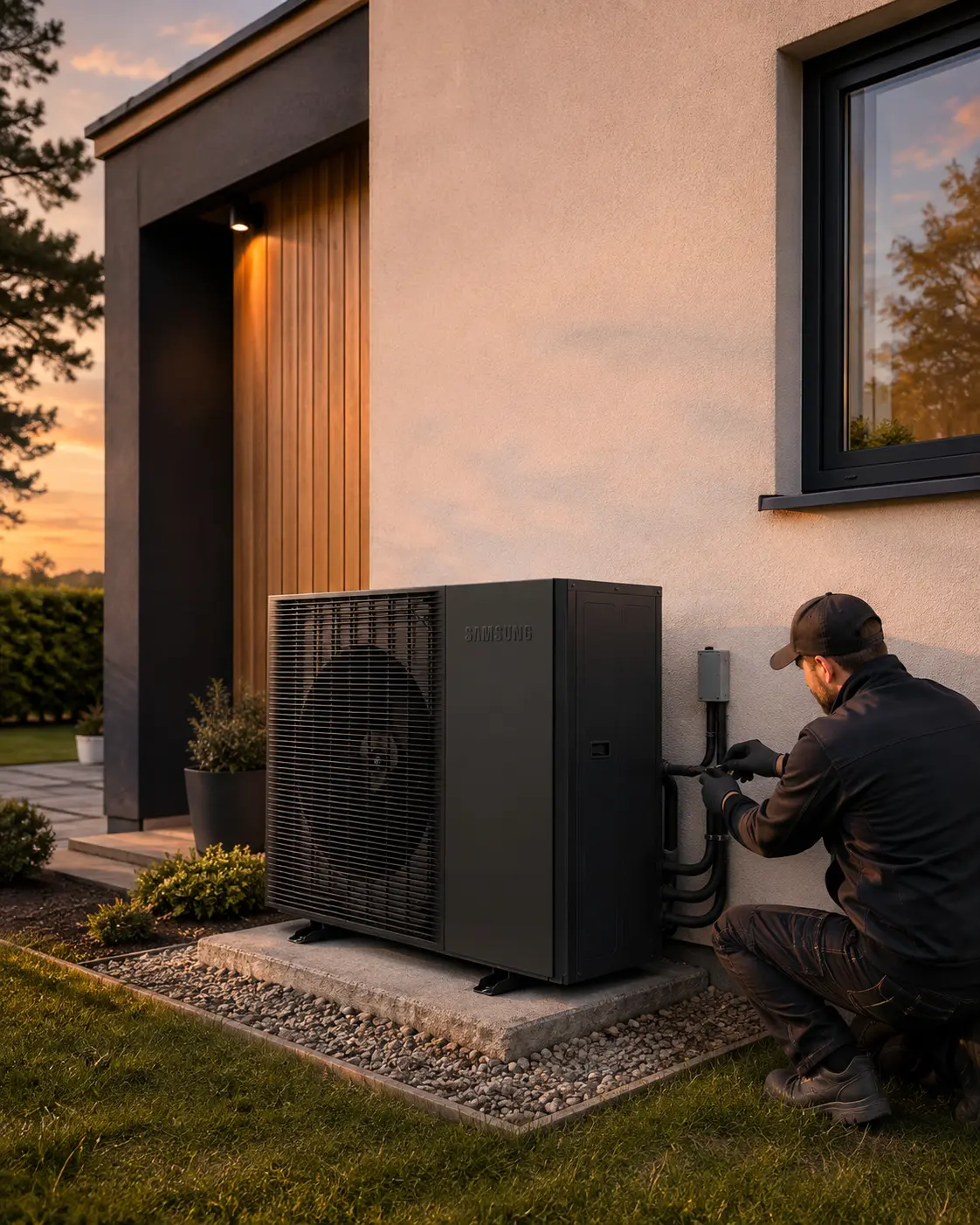
A heat pump can work with an existing gas, oil or LPG boiler as a hybrid heating system. The heat pump normally provides most space heating, while the boiler tops up demand or takes over when controls decide it is needed. Some designs let a combi boiler continue producing hot water, so a new cylinder may not be necessary. However, fossil-fuel hybrid systems are not eligible for the Boiler Upgrade Scheme in 2026. Before choosing one, get a room-by-room heat-loss calculation and confirm radiator, pipework, boiler and control compatibility.
Heat Pump With Existing Boiler: Can You Run Both Together? UK Guide 2026
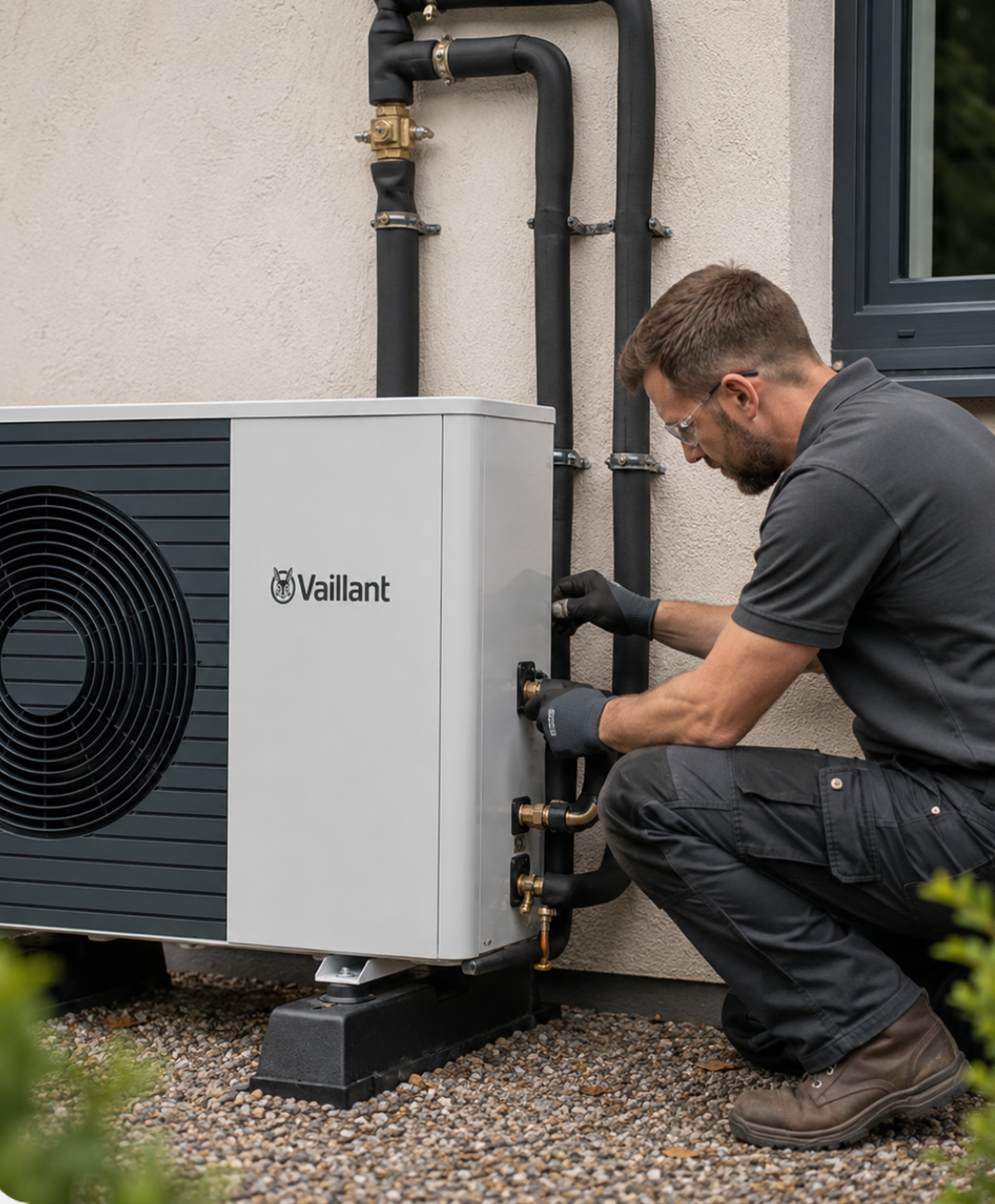
Yes, you can install a heat pump with an existing boiler. In the UK, this is usually called a hybrid or bivalent heating system. An air-to-water heat pump handles most space heating, while the gas, oil or LPG boiler supplies extra heat when required.
This can suit a high-heat-loss home, a property where major radiator upgrades are difficult, or someone who wants to reduce fossil-fuel use without removing a relatively new boiler.
However, fossil-fuel hybrids have a major disadvantage in 2026: they are not eligible for the Boiler Upgrade Scheme (BUS). You also keep the boiler’s fuel standing charge and servicing obligations.
Thinking about an upgrade? Compare properly surveyed heating options through Get Free Quote before choosing a hybrid or full heat-pump replacement.
Heat Pump With Existing Boiler: Your Main Options
| Option | Best suited to | Main advantage | Main drawback |
|---|---|---|---|
| Keep boiler only | Short-term, low-cost approach | Lowest immediate disruption | No meaningful move away from fossil heating |
| Add heat pump to existing boiler | Difficult retrofit or staged transition | Reduces boiler use while retaining backup | No BUS grant for fossil-fuel hybrid |
| Replace boiler with standalone heat pump | Heat-pump-ready homes | May qualify for BUS support | May need cylinder or emitter changes |
How Does a Heat Pump Work With an Existing Boiler?
The usual retrofit uses an air-to-water heat pump connected to the home’s wet central-heating system.
The heat pump absorbs low-temperature heat from outdoor air. Refrigerant collects that heat, a compressor raises its temperature, and a heat exchanger transfers it into heating water. Our guide to how an air source heat pump heats a home explains the refrigeration cycle in more detail.
The boiler remains as a supplementary heat source. The current MCS heat-pump design standard recognises hybrid systems in which the heat pump and supplementary heat source operate under an integrated control strategy.
How the Controls Decide What Runs
A changeover system runs the heat pump until a set condition is reached, then switches to the boiler. A concurrent system keeps the heat pump running while the boiler adds extra heat.
The trigger may be outdoor temperature, required flow temperature or operating cost. Weather compensation can also adjust water temperature as outdoor conditions change.
The boiler should not simply fire because the heat pump runs for longer. Heat pumps usually provide steadier, lower-temperature heating than boilers. Energy Saving Trust notes that hybrid controls can decide how the two heat sources operate according to factors including energy prices and heating demand.
What Can Stay in Your Existing Heating System?
Keeping the boiler does not mean everything else automatically stays unchanged. A survey should check:
Boiler condition and compatibility. Retaining a relatively new, serviceable boiler makes more sense than designing around one near the end of its life.
Room-by-room heat loss. This determines how much heat each room needs on a cold day.
Radiator output. Existing radiators produce less heat at lower water temperatures.
Pipework and flow rates. Heat pumps can require higher water flow, so restrictive pipework may need alteration.
Controls and zoning. Boiler, heat pump, pumps and valves need a coordinated strategy.
Electrical supply and outdoor space. The heat pump still needs suitable power, airflow, access and noise control.
MCS heat-load guidance treats room-by-room calculation as essential for accurate system sizing rather than relying only on floor area or the existing boiler.
Can You Use a Heat Pump With Existing Radiators?
Often, yes. A hybrid can be useful where some radiators are too small for an efficient standalone heat pump but replacing them all would be disruptive.
However, the boiler should not become an excuse for poor heat-pump design. If the heat pump regularly has to produce unnecessarily hot water, its efficiency falls.
Each radiator should be checked against the room’s calculated heat loss at the proposed flow temperature. Some may already be suitable; others may need higher-output replacements. Our heat pump with existing radiators guide explains that assessment in more detail. MCS guidance also shows how radiator output and heat-pump efficiency change as design water temperature changes.
Do You Need a Hot-Water Cylinder?
Not always.
If you keep a combi boiler, one possible design is for the heat pump to provide space heating while the combi continues making hot water on demand. That can avoid installing a cylinder.
Another design lets the heat pump provide both space heating and stored hot water, with the boiler available for backup. This normally needs a suitable cylinder.
The better option depends on hot-water demand, available space, tariff costs and how much fossil-fuel use you want to remove. Energy Saving Trust specifically identifies separating space heating and hot water as one possible hybrid configuration.
Will a Hybrid Heat Pump Lower Running Costs?
It can, but savings are not guaranteed.
A heat pump can deliver several units of heat for each unit of electricity it uses. Even so, electricity costs more per kWh than mains gas, so the cheaper heat source depends on heat-pump efficiency and current tariffs.
Energy Saving Trust’s hybrid heat-pump guidance notes that some controls can respond to electricity and fossil-fuel prices, time-of-use tariffs and solar generation. Ask the installer to show the assumptions behind the changeover point, including expected heat-pump efficiency, boiler efficiency and fuel prices.
Also include costs that are easy to miss. Keeping a mains-gas supply means retaining its standing charge, while a hybrid also leaves you with two heating technologies to maintain.
What Does a Hybrid Heat Pump Cost?
Published estimates vary because “hybrid” can mean adding a heat pump to an existing boiler or installing a completely new heat pump-and-boiler package.
Worcester Bosch currently gives an indicative hybrid installation range of roughly £5,000–£8,000. Nesta’s modelling uses upfront figures ranging from around £8,000 for a small property to £16,000 for a large one. These figures use different assumptions, so they should only be used for early budgeting.
A useful quotation should separate the heat pump, controls, electrical work, hydraulic components, radiator changes, pipework and boiler work. A property survey is still required for an accurate price.
Can You Get the Boiler Upgrade Scheme Grant for a Hybrid Heat Pump?
No, not if a fossil-fuel boiler remains part of the heating system.
As of October 2026, Ofgem says a BUS-funded installation must fully replace the property’s existing fossil-fuel heating system. Retrofit hybrids combining a heat pump with a gas, oil or LPG boiler are therefore ineligible. The Boiler Upgrade Scheme applies in England and Wales. Current Ofgem Boiler Upgrade Scheme guidance
That matters because eligible air-to-water and ground-source heat pumps normally receive £7,500. Qualifying off-gas-grid properties replacing oil or LPG can receive £9,000 until 31 March 2027.
If grant eligibility matters, compare the hybrid quote with the cost of a full heat-pump replacement. Our Boiler Upgrade Scheme qualifying heating systems guide explains the current grant categories, while our guide to replacing a gas boiler with a heat pump covers the full-replacement route.
When Does Keeping the Boiler Make Sense?
| Situation | Hybrid may make sense | Standalone heat pump may be better |
|---|---|---|
| Boiler is new and reliable | If retention has clear practical value | If BUS makes full replacement cheaper overall |
| Very high peak heat demand | Where fabric or emitter upgrades are limited | If a correctly sized system can meet demand |
| Major radiator changes would be disruptive | Can reduce emitter work | If targeted upgrades improve efficiency affordably |
| Combi hot water is important | Boiler can keep supplying hot water | If cylinder space exists and full electrification is preferred |
| Lowest carbon option or BUS funding is the priority | No | Usually yes |
A hybrid is strongest when it solves a specific constraint. It is weaker when chosen only for reassurance even though a properly sized standalone heat pump could meet the home’s demand.
Energy Saving Trust describes hybrids as a possible option where a standard heat-pump installation is unsuitable, particularly where a home has very high heat demand or the economics of standalone operation are unfavourable.
What Should You Ask Before Accepting a Hybrid Quote?
Ask for the room-by-room heat loss, design outdoor temperature, heat-pump capacity, radiator outputs, target flow temperature and expected seasonal efficiency.
The proposal should state when the boiler will run and whether both heat sources can operate together. Running-cost estimates should show expected annual electricity and fossil-fuel use plus the tariffs assumed.
Finally, ask what happens if you remove the boiler later. A staged design may allow future radiator, insulation or hot-water changes to support heat-pump-only operation. Do not assume the original heat pump will automatically be large enough.
Get Your Free Air Source Heat Pump Quote
Find the right air source heat pump solution for your home. Tell us a few details and our team will help you explore suitable options at a competitive price.
Quick to complete. No obligation.
Get your quote
Enter your details below and one of our team will get back to you.
Frequently asked questions
Find clear answers to common questions about adding a heat pump to an existing boiler, including hybrid systems, combi boilers, hot-water cylinders, radiators, microbore pipework, oil and LPG boilers, Boiler Upgrade Scheme eligibility and running costs.
Yes. An air-to-water heat pump can be integrated with an existing gas boiler as a hybrid system. The heat pump normally handles most heating, while the boiler provides supplementary heat when the control system calls for it.
A hybrid heat pump combines a heat pump with another heating appliance, usually a gas, oil or LPG boiler. Integrated controls determine which heat source operates and when.
Yes, subject to system compatibility and correct design. One common arrangement uses the heat pump for space heating while the combi boiler continues supplying hot water on demand.
Not necessarily. If an existing combi boiler continues providing domestic hot water, a cylinder may not be required. If the heat pump will produce stored hot water, a suitable cylinder is normally needed.
Some systems allow concurrent operation, where the boiler supplements the heat pump. Others use changeover control, where one heat source stops before the other starts.
That depends on the control strategy. Switching can be triggered by outdoor temperature, required heating output, flow temperature, energy prices or another programmed condition.
Possibly. Each radiator must provide enough heat at the proposed water temperature. Some existing radiators may be suitable while others need upgrading.
It can in some properties, but microbore needs careful hydraulic assessment. Heat pumps often require higher water flow rates than boilers, so restrictive sections may need changes or additional hydraulic components.
Yes. Hybrid heat-pump systems can use an oil boiler as the supplementary heat source where the equipment and controls are compatible.
Yes. An LPG boiler can form part of a hybrid system, although the system will remain partly dependent on fossil fuel.
No. In England and Wales, a heat pump operating alongside a fossil-fuel boiler is not eligible for BUS. A qualifying BUS-funded system must fully replace the existing fossil-fuel heating system.
Sometimes, but not automatically. The result depends on heat-pump efficiency, electricity and gas prices, boiler efficiency, control settings and how much heating demand the heat pump covers.
Only in some circumstances. A hybrid can help where peak heat demand, radiator limitations or hot-water requirements make full replacement difficult. A suitable standalone heat pump is usually the cleaner and simpler long-term system.
No. A correctly sized standalone heat pump can heat a suitable home through normal UK winter conditions. Keeping a boiler is a design choice for a hybrid system, not a universal technical requirement.
Potentially. However, the heat pump must then be capable of meeting the home's full heating demand. Radiators, hot-water provision, pipework or the heat pump itself may need upgrading before the boiler can be removed.
Conclusion
A heat pump can work with an existing boiler, and a well-designed hybrid can reduce fossil-fuel use while retaining the boiler for peak heating or hot water.
The key question is whether keeping the boiler solves a real technical or practical problem. If it does, hybrid heating can be a useful transition. If it does not, a standalone heat pump may be simpler, lower carbon and significantly cheaper after available BUS support.
Compare both options using the same heat-loss calculation, radiator assessment and realistic running-cost assumptions before deciding.
Ready to compare the two routes? Get properly surveyed, no-obligation quotations for both configurations so you can compare total installation cost, expected running costs and long-term flexibility.