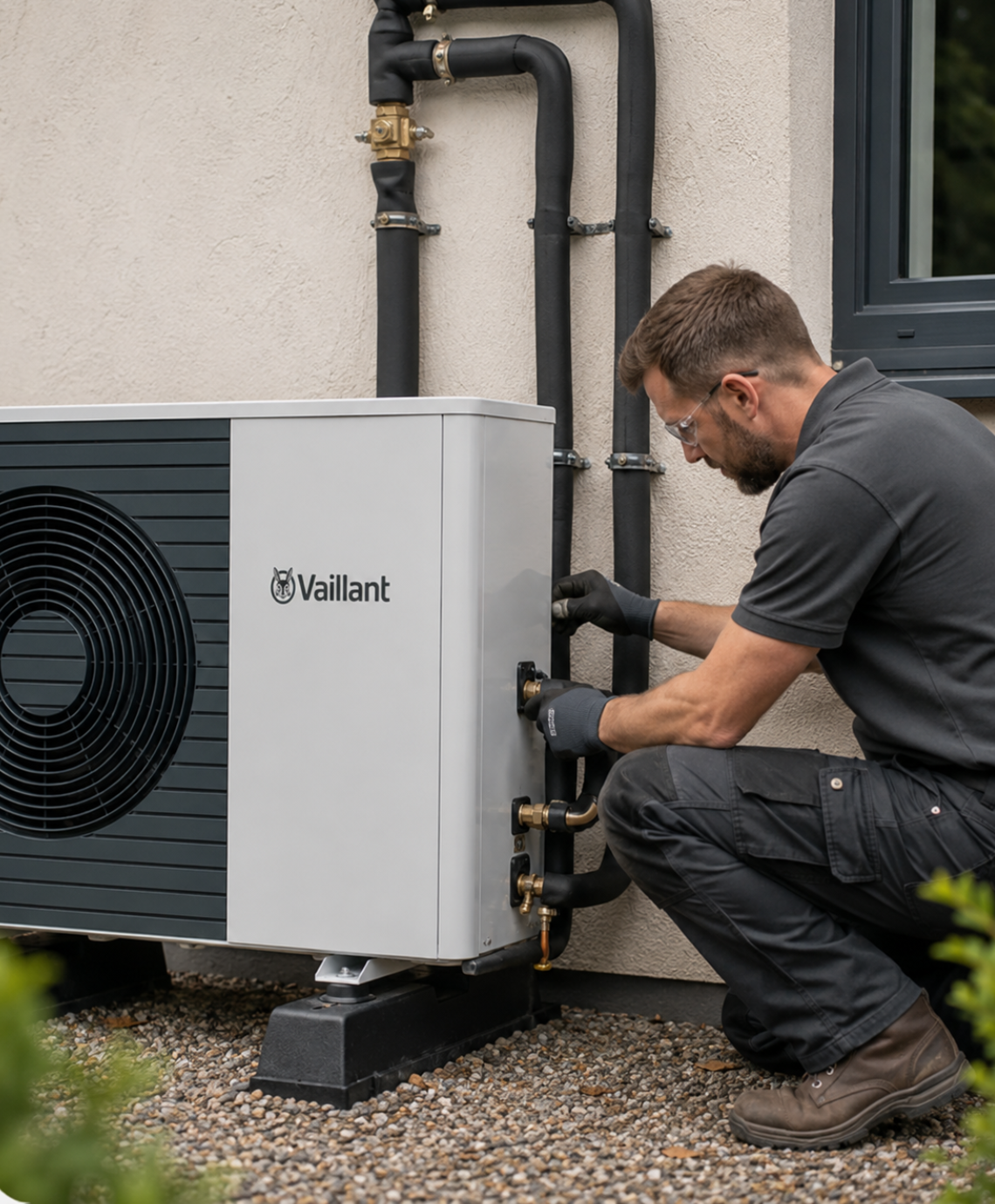
Air Source Heat Pump vs Electric Boiler: Which Is Better in the UK?
August 15, 2026
Check Your Eligibility for Boiler Upgrade Scheme (BUS)
Complete your details below to check your eligibility.
Thank you
We've received your details and will be in touch shortly.
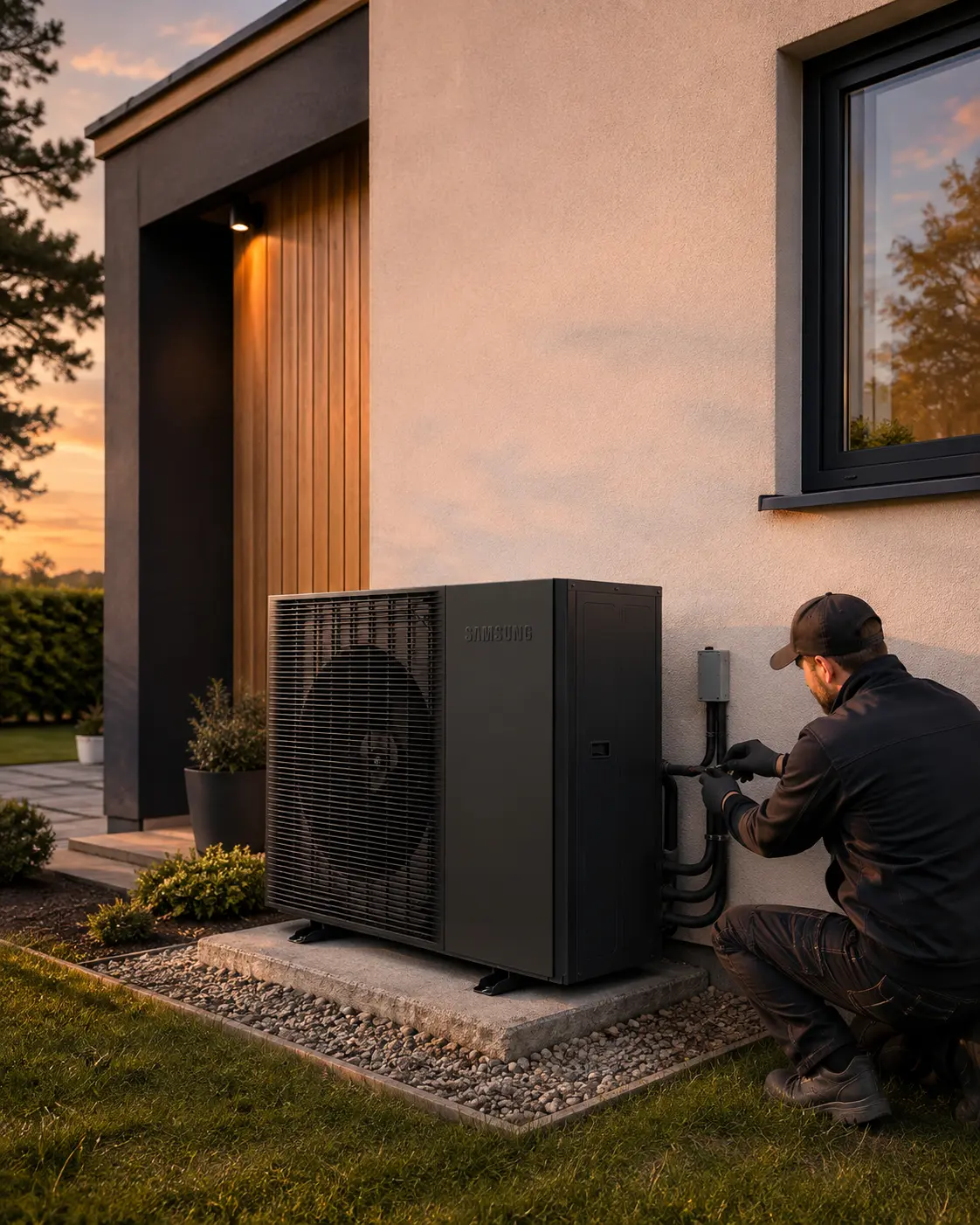
Quick Answer
For most medium-sized UK homes with meaningful heating demand, an air source heat pump is usually cheaper to run. A well-designed heat pump can deliver around three to four units of heat for each unit of electricity consumed, while an electric boiler needs roughly one unit of electricity for one unit of heat.
The electric boiler wins on simplicity, compact size, quiet operation and normally lower installation cost. The heat pump wins on energy efficiency, long-term electricity use and access to government support where eligible. The right choice depends on heat loss, space, hot-water demand, electrical capacity and installation quality.
Source: https://www.ofgem.gov.uk/environmental-and-social-schemes/boiler-upgrade-scheme-bus
Air Source Heat Pump vs Electric Boiler: Which Is Better in the UK?
If you are choosing between an air source heat pump vs electric boiler, the heat pump is usually the stronger long-term option for a UK home that can accommodate it. Both use electricity, but an electric boiler converts electricity directly into heat, while a heat pump uses electricity to move heat from outside. That difference can sharply reduce the electricity needed to produce the same amount of useful heat.
An electric boiler still has a place. It is compact, quiet, simple and often cheaper to install, making it practical for small homes, flats or properties where an outdoor unit is difficult. This guide compares efficiency, costs, hot water, noise, maintenance, grants and property suitability.
Get a free quote: Compare properly surveyed heating options before choosing either system.
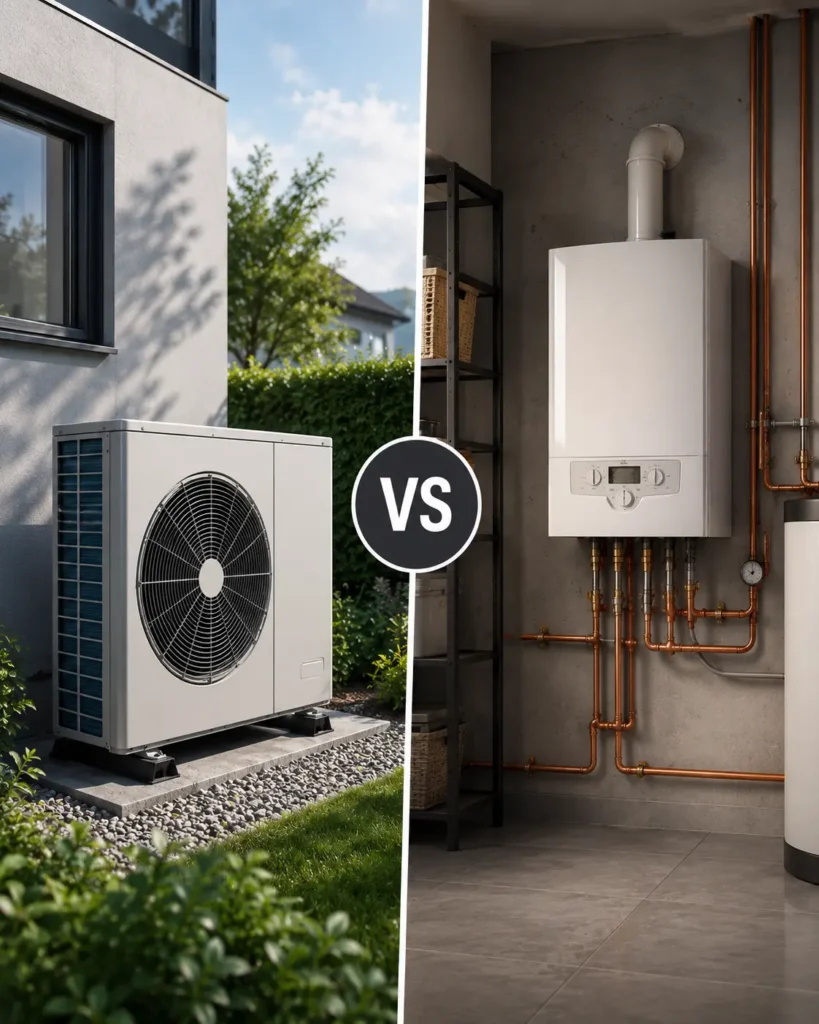
Air Source Heat Pump vs Electric Boiler: Quick Comparison
| Factor | Air Source Heat Pump | Electric Boiler |
|---|---|---|
| How it works | Moves heat from outside air | Converts electricity directly into heat |
| Typical efficiency | Around 300–400% in suitable conditions | Around 99–100% at point of use |
| Upfront cost | Higher before grants | Usually lower |
| Running cost | Usually far lower than direct electric heating | High on standard-rate electricity |
| Space | Outdoor unit plus usually a hot-water cylinder | Compact; cylinder depends on system |
| Noise | Outdoor fan and compressor | Essentially silent at the boiler |
| Heating style | Lower-temperature, longer-running | More boiler-like response |
| Best for | Whole-home, long-term heating | Small homes or difficult heat-pump sites |
Energy Saving Trust says heat pumps can typically return around three to four units of heat for each unit of electricity used, while manufacturer specifications for electric boilers can approach 100% point-of-use efficiency.
Air Source Heat Pump: Who Is It Best For?
Overview: An air-to-water heat pump transfers heat from outside air into water for radiators, underfloor heating and usually a hot-water cylinder. For the technical process, see our guide to how air source heat pumps work.
Best for: Homes with moderate or high annual heat demand, suitable outdoor space and owners planning for the long term.
Key features: High seasonal efficiency, weather-compensated controls and compatibility with wet central heating.
Pros: Much lower electricity consumption than direct electric heating, potential government support and compatibility with solar PV or time-of-use tariffs.
Things to consider: Radiators, pipework, electrics or the hot-water cylinder may need upgrading. Performance depends heavily on heat loss, flow temperature and commissioning.
Suitable property types: New builds, family homes, bungalows, renovations and many older homes following proper assessment. Older properties are not automatically unsuitable; heat loss and emitter design matter more than age alone.
Example UK use case: A three-bedroom semi-detached home replacing an electric boiler and using substantial electricity for space heating could significantly reduce heating electricity consumption with a correctly designed heat pump.
Expert recommendation: Compare predicted seasonal performance and the complete system design, not simply the brand on the outdoor unit. See our detailed air source heat pump pros and cons guide for the wider trade-offs.
Electric Boiler: Who Is It Best For?
Overview: An electric boiler uses resistance heating elements to warm water for a wet central-heating system. For example, Heatrae Sadia states that its Amptec electric flow boiler is 99.8% efficient, flueless and compact.
Best for: Small homes, flats, extensions and properties without a sensible location for an outdoor heat-pump unit.
Key features: Compact dimensions, quiet operation, no combustion and familiar wet-system controls.
Pros: Usually lower upfront cost, fewer moving components and no outdoor fan unit.
Things to consider: Near-100% efficiency sounds exceptional, but it still means roughly one unit of purchased electricity is required for each unit of heat. In a high-demand property, that can make running costs expensive.
Suitable property types: Smaller, well-insulated homes with relatively modest heat demand.
Example UK use case: A one-bedroom flat with a low heating requirement and no practical external-unit position may favour an electric boiler despite its higher running cost per unit of useful heat.
Expert recommendation: Compare lifetime electricity consumption before choosing the system with the cheapest installation quote.
Which Is Cheaper to Run?
This is the decisive difference.
For 1 July to 30 September 2026, Ofgem’s average electricity price-cap rate for Direct Debit customers in England, Scotland and Wales is 26.11p/kWh. At that rate, a near-100% efficient electric boiler costs approximately 26p for each kWh of useful heat.
A heat pump achieving a seasonal COP of 3.1 would need about 0.32kWh of electricity to provide 1kWh of useful heat, giving an illustrative cost of roughly 8.4p per kWh of useful heat.
For a home requiring 12,000kWh of useful heating each year, that efficiency difference becomes substantial.
Cost Guide: Installation and Illustrative Running Costs
Heat-pump costs vary substantially by property. Energy Saving Trust estimates a typical air source installation at around £12,000, while a ground source installation can start around £15,000 and become much more expensive where boreholes are required.
| Cost factor | Air Source Heat Pump | Electric Boiler |
|---|---|---|
| Typical installed cost | Around £12,000 before grants | Often around £2,000–£4,000 depending on system and electrical work |
| Government support | £7,500 BUS for eligible air-to-water systems; £9,000 for some qualifying off-gas oil/LPG properties until 31 March 2027 | No BUS grant for installing a standard electric boiler |
| Electricity for 12,000kWh useful heat | About 3,871kWh at SCOP 3.1 | About 12,024kWh at 99.8% efficiency |
| Illustrative annual cost at 26.11p/kWh | About £1,011 | About £3,140 |
Energy Saving Trust currently estimates a typical air source heat-pump installation at around £12,000. Market pricing for electric-boiler installations varies much more according to boiler type, cylinder requirements and electrical work, so a property-specific quotation is essential.
These running-cost figures are illustrations, not guaranteed savings. Your actual bill depends on heat demand, hot-water use, electricity tariff, weather, controls and the heat pump’s achieved seasonal performance.
Government support can dramatically alter the upfront comparison. The standard Boiler Upgrade Scheme support for an eligible air-to-water heat pump is currently £7,500 in England and Wales. A temporary £9,000 rate applies until 31 March 2027 to qualifying off-gas properties replacing oil or LPG heating.
Check our Boiler Upgrade Scheme 2026 update and the official GOV.UK guidance before assuming you qualify.
How to Compare an Air Source Heat Pump and Electric Boiler
Seasonal efficiency: Judge annual performance rather than a headline laboratory figure. With a heat pump, small improvements in seasonal efficiency can make a meaningful difference to annual electricity consumption.
Heat loss and sizing: Require a room-by-room heat-loss calculation. The objective is to understand how much heat each room needs during cold weather rather than selecting equipment from floor area alone.
Radiators and flow temperature: Heat pumps generally perform better at lower water temperatures, so some radiators may need enlarging. An electric boiler can operate at higher flow temperatures, but it still pays the full electricity cost of producing that heat.
Hot water: Most air-to-water heat pumps use a hot-water cylinder. Electric-boiler arrangements differ by model, property and household demand.
Noise and siting: Electric boilers are extremely quiet. Heat pumps contain an outdoor fan and compressor, making sensible positioning and applicable MCS requirements important.
Long-term value: Compare installed cost after grants, expected annual electricity use, warranty, maintenance and how long you expect to own the property.
Which Option Is Best for Different Buyers?
Best for lowest upfront cost: Usually an electric boiler.
Best for lowest long-term electricity consumption: Usually an air source heat pump.
Best for families: Usually a heat pump where the property has suitable space, emitters and hot-water storage.
Best for small flats: An electric boiler can be more practical when heat demand is low and external space is restricted.
Best for landlords: Property-specific. Simplicity may favour an electric boiler in a compact flat; lower tenant running costs can strengthen the case for a heat pump in a whole house.
Best for EV, solar or battery owners: A heat pump can fit particularly well into a wider home-electrification strategy, especially where flexible tariffs or self-generated electricity can be used.
Best for winter: Both systems can heat a property during winter when correctly sized. Air source heat pumps continue operating below freezing, although their efficiency generally falls as outdoor temperatures decrease.
How to Choose the Right System: 7 Steps
- Calculate heat loss room by room rather than sizing purely from property area.
- Check your electrical supply and establish whether upgrades will be required.
- Assess radiators and pipework at the proposed heating-water temperature.
- Plan hot water, including cylinder capacity, baths and simultaneous shower demand.
- Confirm outdoor siting for a heat pump, considering airflow, access and noise.
- Compare lifetime cost, not just the appliance or installation price.
- Check current grants using GOV.UK and Ofgem guidance before signing a contract.
Get Your Free Air Source Heat Pump Quote
Find the right air source heat pump solution for your home. Tell us a few details and our team will help you explore suitable options at a competitive price.
Quick to complete. No obligation.
Get your quote
Enter your details below and one of our team will get back to you.
Why the Installer Matters
A heat pump is a complete heating-system design, not simply an outdoor box.
The installer should calculate heat loss, size emitters, select realistic flow temperatures, configure weather compensation and controls, commission the system properly and explain how it should be operated. Poor design can increase electricity consumption while reducing comfort.
Electric boilers are simpler, but correct electrical design, boiler sizing, controls and cylinder specification still matter.
For a BUS-funded heat pump, the installation must meet the scheme’s certification requirements. Ofgem confirms that BUS applications are installer-led and require an MCS-certified installer.
Compare warranties, aftercare and the assumptions behind predicted running costs as carefully as you compare the installation price.
Final Verdict: Air Source Heat Pump or Electric Boiler?
For most UK homeowners comparing whole-home electric heating, the air source heat pump is the stronger long-term choice because it can provide several times more useful heat from each unit of purchased electricity. That advantage becomes increasingly valuable as annual heat demand rises.
Choose an electric boiler when simplicity, restricted space, low heat demand or the lack of a practical outdoor heat-pump position matters more than long-term running cost.
The final decision should come from a property survey. Compare heat loss, radiator requirements, hot-water demand, electrical work, grant eligibility and predicted annual consumption rather than choosing purely from appliance prices.
Next step: Get a free, no-obligation heating quote and ask for fully specified quotations showing what is included, what needs upgrading and which assumptions have been used to estimate performance.
Frequently asked questions
Find clear answers to common questions comparing air source heat pumps with electric boilers, including running costs, efficiency, installation costs, grants, winter performance, radiators and hot-water cylinders.
Usually, yes. Both use electricity, but a heat pump can provide around three to four units of heat for each unit of electricity, whereas direct electric heating is approximately one-for-one.
Electric boilers can be very close to 100% efficient at the point of use. For example, Heatrae Sadia specifies 99.8% for its Amptec flow boiler. The problem is not necessarily appliance efficiency; it is the amount and price of electricity required.
Energy Saving Trust currently gives a typical installation cost of about £12,000 before grants, although radiator, cylinder, electrical and pipework changes can alter the final quotation.
A straightforward domestic installation may commonly fall around £2,000–£4,000, but boiler type, output, hot-water storage and electrical upgrades can move the figure considerably. Always obtain a site-specific quote.
Potentially, yes. Current Ofgem rules allow eligible BUS-funded systems to replace an existing fossil-fuel or electric heating system, subject to the other scheme conditions.
Not under the temporary £9,000 off-gas uplift simply because you use an electric boiler. That enhanced rate is for qualifying off-gas properties replacing oil or LPG with eligible air-to-water or ground-source systems. Other eligible installations may receive the standard grant.
Yes. They can extract heat from outdoor air below freezing, although efficiency normally falls as the temperature drops. Correct cold-weather sizing is therefore important.
Sometimes. Your installer should calculate whether each existing radiator can meet the room's heat demand at the proposed flow temperature. Replacing every radiator automatically should not be assumed.
Not necessarily. Electric boilers can normally supply conventional wet radiators, although the complete heating system still needs to be sized correctly.
Most domestic air-to-water heat-pump systems do. That makes cylinder space an important consideration for homes currently using a combi boiler.