
Boiler Upgrade Scheme EPCs: Do You Need One in 2026?
Check Your Eligibility for Boiler Upgrade Scheme (BUS)
Complete your details below to check your eligibility.
Thank you
We've received your details and will be in touch shortly.

Quick answer: Do you need an EPC for the Boiler Upgrade Scheme?
No. From 28 April 2026, you do not necessarily need a valid EPC to qualify for the Boiler Upgrade Scheme in England and Wales.
If a valid EPC already exists, your MCS-certified installer should include its reference number in the BUS application. If there is no valid certificate, Ofgem allows the installer to provide alternative evidence. This can include a recent utility bill or fuel receipt, photographs of the existing heating system and an expired EPC where available.
The previous rule requiring a valid EPC was relaxed in April 2026. In addition, outstanding loft or cavity-wall insulation recommendations have not prevented BUS eligibility since May 2024.
Boiler Upgrade Scheme EPCs: Do You Need an EPC in 2026?
If you are applying for the Boiler Upgrade Scheme in 2026, you may find conflicting advice about Energy Performance Certificates. Some guidance still says you need a valid EPC before receiving a heat pump grant. Under the current rules, that is no longer always correct.
For Boiler Upgrade Scheme applications properly made on or after 28 April 2026, a valid EPC is not a standing eligibility requirement. If your property already has a valid EPC, your installer will normally provide its reference number. If there is no valid EPC, the installer can instead submit alternative evidence to Ofgem.
This guide explains the current Boiler Upgrade Scheme EPC rules, what changed, what happens if your EPC has expired and whether insulation recommendations can still affect your application.
For the wider eligibility rules, see our Boiler Upgrade Scheme requirements guide.
Considering a heat pump? Compare the property assessment, proposed system and final price after BUS support before committing to an installation.
How have the Boiler Upgrade Scheme EPC rules changed?
The confusion around Boiler Upgrade Scheme EPCs is understandable because there have been three different positions since the scheme launched.
| Period | EPC requirement | Loft/cavity-wall recommendations |
|---|---|---|
| Before 8 May 2024 | A valid EPC was generally required, except for eligible self-builds | Recommendations normally had to be dealt with before grant redemption, unless an exemption applied |
| 8 May 2024 to 27 April 2026 | A valid EPC was generally still required | Outstanding loft or cavity-wall recommendations no longer prevented eligibility |
| From 28 April 2026 | A valid EPC is no longer a standing requirement | Insulation recommendations do not determine BUS eligibility |
Before May 2024, properties generally needed an EPC generated within the previous 10 years. Where loft or cavity-wall insulation appeared as a recommendation, the work normally had to be completed before voucher redemption unless an exemption applied.
From 8 May 2024, Ofgem began accepting EPCs containing insulation recommendations. A further reform then took effect on 28 April 2026, relaxing the requirement to provide a valid EPC at all. The 2026 amendment regulations came into force on that date.
For a broader explanation of the latest changes, read our Boiler Upgrade Scheme 2026 updates.
What happens if you already have a valid EPC?
If your property has a valid EPC, you do not need to ignore it or replace it simply because the rules have changed.
Ofgem’s current guidance says the installer should include the EPC reference number in the BUS application where a valid certificate exists.
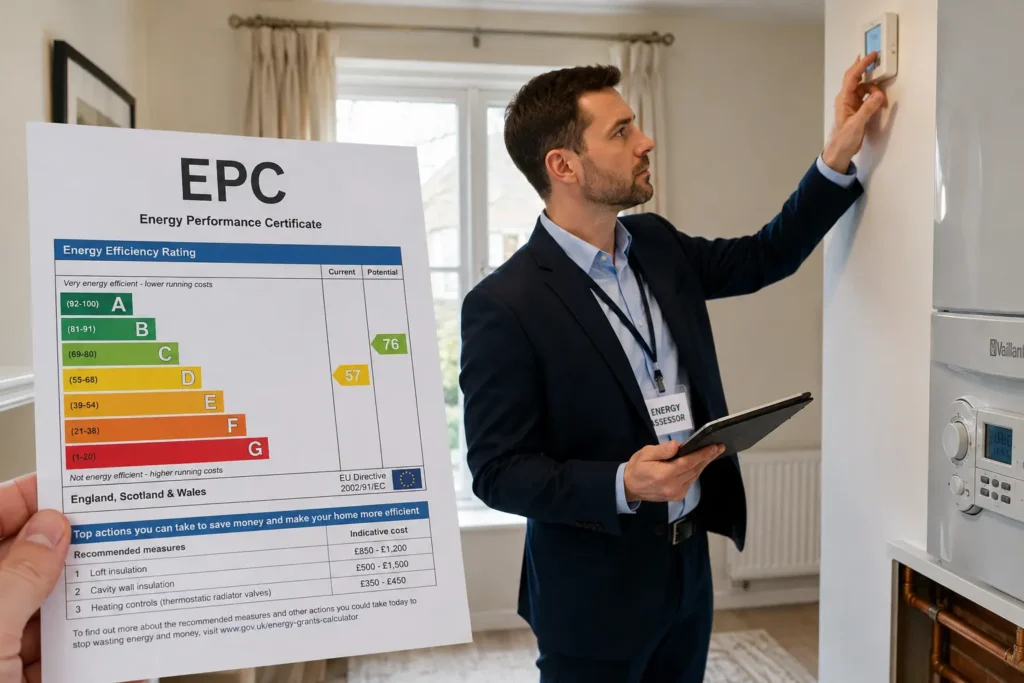
An EPC remains useful because it provides information about the property’s energy efficiency and possible improvements. However, it should not be confused with the detailed heat-loss assessment needed to design a heat pump.
Your installer should assess the property itself, including its heat loss and proposed heating system, before providing the final system design and quotation. Ofgem’s guidance specifically expects a property visit and heat-loss assessment at quotation stage.
What if your EPC has expired?
An expired EPC does not automatically stop a current BUS application.
Under the current rules, you have two main options.
You can commission a new EPC before the installer applies. Alternatively, the installer can submit evidence to Ofgem without obtaining a new certificate.
An expired EPC may itself form part of that supporting evidence, but you should not assume that an old certificate alone will establish eligibility. Ofgem may require other information about the property and existing heating system.
For reference, ordinary domestic EPCs are normally valid for 10 years. You can check whether a certificate already exists using the government’s EPC service. Check whether your property has a valid EPC on GOV.UK
What evidence can replace an EPC?
Where there is no valid EPC, Ofgem’s current property-owner guidance says alternative evidence may include:
- A utility bill dated within the previous three months.
- The most recent available fuel receipt.
- Photographs showing the existing heating system.
- An expired EPC, where one is available.
Your installer is responsible for supplying the supporting evidence to Ofgem, although you may need to provide documents or photographs. Ofgem can request clarification if the information submitted is not sufficient.
This is important because the change does not mean that Ofgem has stopped checking properties. It means the scheme now allows eligibility to be evidenced in more than one way.
The application remains installer-led. See our guide to the Boiler Upgrade Scheme application process for the wider sequence.
Do you need loft or cavity-wall insulation first?
Not as a condition of BUS eligibility under the current rules.
The requirement to deal with outstanding loft and cavity-wall insulation recommendations was removed from 8 May 2024. Therefore, seeing one of these recommendations on an existing EPC does not by itself disqualify your property from BUS.
However, that should not be interpreted as meaning insulation no longer matters.
Heat pumps generally perform better when unnecessary heat loss is reduced. Ofgem recommends considering energy-efficiency improvements where they are practical and affordable. It also recommends discussing them with the installer during system design.
The key distinction is between grant eligibility and good heating design. Insulation may improve comfort, reduce heat demand or allow a smaller heating system even when it is not mandatory for the grant.
Should you still get a new EPC before installing a heat pump?
Sometimes.
If you already need an EPC for another reason, commissioning one may make sense. It can also provide a useful overview of the property’s efficiency and highlight areas worth investigating.
However, paying for a new EPC solely because you believe BUS always requires one may now be unnecessary.
Ask your installer what evidence they intend to submit before commissioning a certificate specifically for the grant.
An EPC also cannot tell you everything needed to size a heat pump correctly. A proper heat-loss calculation considers how much heat individual rooms lose under design conditions. That information helps determine heat-pump capacity and whether existing radiators can provide sufficient heat.
If you are still deciding which technology suits the property, our air source heat pump explained guide covers how a typical air-to-water system heats a UK home.
What do landlords need to know about EPCs and BUS?
The BUS rule change does not remove separate EPC obligations that apply to selling or letting property.
GOV.UK states that an EPC is generally required when a property is sold, rented out or newly built, subject to relevant exemptions. Domestic EPCs are normally valid for 10 years.
Therefore, a landlord could be in a position where BUS does not require a new EPC but property legislation requires a valid certificate for a different reason.
Treat the two issues separately:
BUS eligibility: a valid EPC is no longer automatically necessary.
Landlord or sale obligations: an EPC may still be legally required independently of the grant.
How does a BUS application work if you do not have an EPC?
The process is largely the same as any other BUS application.
First, choose an installer who is appropriately MCS certified. Ofgem confirms that the scheme is installer-led and that eligible installations must use an MCS-certified installer.
The installer assesses the property and checks the wider eligibility requirements. You then agree a quotation showing the applicable BUS grant as an upfront deduction.
If there is no valid EPC, the installer gathers the alternative evidence needed to support the application. They submit the voucher application to Ofgem on your behalf.
Ofgem then contacts you so you can confirm consent and complete identity verification. A voucher application is considered properly made once Ofgem has the information it needs, together with the required consent and identity verification.
For a step-by-step overview, see how the Boiler Upgrade Scheme works.
What BUS funding is available in September 2026?
The EPC change applies alongside the wider 2026 BUS rules.
The standard grant is currently £7,500 for eligible air-to-water and ground-source heat pumps, £2,500 for residential air-to-air heat pumps and £5,000 for eligible biomass boilers. Certain off-gas-grid properties replacing oil or LPG with an air-to-water or ground-source heat pump can receive £9,000 until 31 March 2027.
Grant values do not mean every installation qualifies. The property, previous heating system, proposed technology and installation still need to meet BUS rules.
Common Boiler Upgrade Scheme EPC mistakes to avoid
One of the biggest risks is relying on an old article, council page or installer checklist without checking when it was written.
Rules that were accurate in 2023 or early 2024 can now produce the wrong answer.
Also avoid assuming that removing the EPC requirement removes the need for evidence. Your installer still has to demonstrate that the installation meets scheme requirements.
Finally, do not treat an EPC as a substitute for heat-pump design. An EPC is useful for understanding energy efficiency, but the heating system still needs a proper property assessment and heat-loss calculation.
Get Your Free Air Source Heat Pump Quote
Find the right air source heat pump solution for your home. Tell us a few details and our team will help you explore suitable options at a competitive price.
Quick to complete. No obligation.
Get your quote
Enter your details below and one of our team will get back to you.
Frequently asked questions
Find clear answers to common questions about EPC requirements for the Boiler Upgrade Scheme, including valid and expired EPCs, alternative evidence, EPC ratings, insulation recommendations, landlords, businesses, self-builds and the difference between an EPC and a heat-loss calculation.
Not necessarily. For applications properly made from 28 April 2026, a valid EPC is no longer a standing BUS eligibility requirement.
Potentially, yes. An expired EPC may be submitted as part of the alternative evidence where no valid certificate exists. Your installer may also need bills, fuel receipts or photographs.
Not solely because of BUS in every case. Ask your installer whether they can establish eligibility using alternative evidence.
BUS currently does not impose a minimum EPC band as a general eligibility condition. Other property or funding rules may impose separate requirements.
Potentially, yes, provided the property and installation satisfy the remaining BUS eligibility requirements.
A low EPC band does not by itself exclude a property under the current BUS rules. However, high heat loss could influence the recommended heating design and efficiency improvements.
Ofgem says evidence may include a recent utility bill, recent fuel receipt, photographs of the existing heating system and an expired EPC where available.
The installer submits the supporting evidence as part of the BUS application. You may need to provide documents to them.
No. EPC insulation recommendations have been accepted since 8 May 2024.
Not simply because the EPC recommends it. The previous BUS insulation requirement was removed in May 2024.
Often, yes. Reducing heat loss can improve comfort and lower the amount of heat the system must provide. Ofgem recommends considering practical and affordable energy-efficiency improvements.
A landlord may need an EPC under separate rules for letting a property even though BUS no longer automatically requires one.
A valid EPC is no longer a standing BUS requirement for qualifying applications from 28 April 2026. Separate commercial property EPC obligations may still apply.
Self-builds have specific eligibility rules and may require additional evidence. Your installer should establish which documents apply to the particular project.
No. An EPC assesses the property's broader energy performance. A heat-loss calculation helps determine how much heating each room and the property require.
Conclusion: do you need an EPC for the Boiler Upgrade Scheme?
For applications properly made from 28 April 2026, you do not automatically need a valid EPC for the Boiler Upgrade Scheme.
Where a valid EPC exists, your installer should normally use its reference number. Where one does not exist, Ofgem permits alternative evidence such as recent bills, fuel receipts, photographs of the existing heating system and an expired EPC where available.
Outstanding loft or cavity-wall insulation recommendations are also no longer a BUS eligibility barrier. Nevertheless, improving insulation can still reduce heat loss and help a correctly designed heat pump operate efficiently.
Before paying for a new EPC purely for BUS purposes, ask your MCS-certified installer whether it is actually needed for your application.
Next step: compare properly assessed heat-pump quotations, confirm your BUS eligibility and make sure the grant deduction and proposed system design are clear before signing a contract.


