
Heat Pump Cost for a 2 Bedroom House UK (2026)
Check Your Eligibility for Boiler Upgrade Scheme (BUS)
Complete your details below to check your eligibility.
Thank you
We've received your details and will be in touch shortly.

Quick Answer: How Much Does a Heat Pump Cost for a 2-Bedroom House?
A typical air source heat pump for a two-bedroom UK house may cost around £8,000 to £12,500 before grants.
If you qualify for the standard £7,500 Boiler Upgrade Scheme grant, your contribution could fall to around £500 to £5,000.
In addition, some installers offer £0 customer-contribution deals for suitable smaller homes when the complete installation can be delivered within the available grant funding.
However, the price can rise if you need several new radiators, a new hot-water cylinder, electrical upgrades or major pipework changes.
Therefore, the best way to establish your true cost is through a property survey and room-by-room heat-loss calculation.
Source: https://www.edfenergy.com/energywise/ground-source-vs-air-source-heat-pumps
Air Source Heat Pump Cost for a 2-Bedroom House: UK 2026 Guide
If you are researching the heat pump cost for a 2 bedroom house, you may find that many online prices are based on larger UK homes. As a result, they can make the cost of switching a smaller property look higher than it really is.
For a typical two-bedroom UK house, a sensible 2026 planning budget is around £8,000 to £12,500 before grant support. However, a simple installation in a smaller, heat-pump-ready property can cost less.
More importantly, eligible homeowners in England and Wales can currently receive £7,500 through the Boiler Upgrade Scheme (BUS) towards an air-to-water heat pump. Therefore, the amount you actually pay could fall to roughly £500 to £5,000, depending on the property and the work required.
In some cases, a small house can cost even less. A few companies offer qualifying smaller homes a fully funded or £0 customer-contribution installation where the £7,500 BUS grant covers the quoted installation cost.
However, that does not mean every two-bedroom house automatically gets a free heat pump. Your final price still depends on heat loss, radiators, hot-water storage, electrical work and the complexity of the installation.
This guide explains what a two-bedroom homeowner should realistically budget and what to check before accepting a quote.
Get a Free Quote: Find out what an air source heat pump could cost for your two-bedroom property after available grant support.
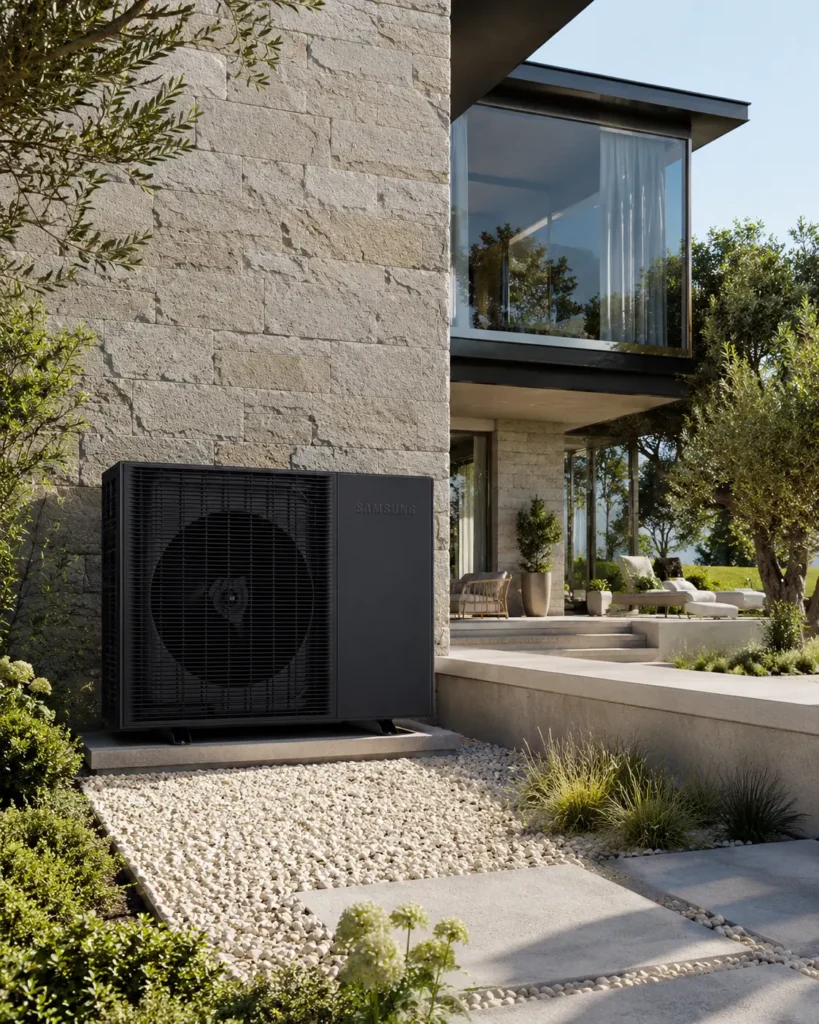
Heat Pump Cost for a 2-Bedroom House at a Glance
The table below gives useful planning figures. However, your actual quotation may be higher or lower after a full survey.
| 2-bedroom property | Typical cost before BUS | £7,500 BUS grant | Potential homeowner cost |
|---|---|---|---|
| Straightforward small terrace or heat-pump-ready home | £7,500–£9,500 | -£7,500 | £0–£2,000 |
| Typical 2-bed terrace or semi | £9,000–£11,500 | -£7,500 | £1,500–£4,000 |
| More complex retrofit | £11,500–£12,500+ | -£7,500 | £4,000–£5,000+ |
These figures are best used as a starting point rather than a fixed price.
For comparison, the Energy Saving Trust gives around £12,000 as an indicative cost for a typical air source heat pump installation across UK property types.
Because a two-bedroom property is normally smaller, it may need a smaller unit and fewer radiator changes. As a result, a well-suited two-bedroom home can sometimes come in below the wider UK average.
Can the £7,500 BUS Grant Cover the Full Cost?
Yes, it can in some cases.
The Boiler Upgrade Scheme currently provides £7,500 towards an eligible air-to-water heat pump in England and Wales.
Rather than receiving the money yourself, your installer normally applies for the grant and deducts it from the price you pay.
For more detail on the current rules, see our Boiler Upgrade Scheme 2026 updates.
When could a heat pump cost £0?
Some companies offer qualifying smaller properties an installation where the customer pays £0 after the BUS grant.
For example, this may be possible when:
- the home has relatively low heat loss;
- only a small heat pump is required;
- most existing radiators are suitable;
- pipework changes are limited;
- electrical work is straightforward; and
- the installation can be completed within the grant-supported price.
Therefore, smaller terraces and compact two-bedroom semis can sometimes be strong candidates.
However, “fully funded” should be treated as an installer offer rather than a government promise.
When would you still need to contribute?
A two-bedroom house may still require a homeowner contribution if the project needs extra work.
For example, older properties may need several radiator upgrades, more pipework, electrical improvements or a new hot-water cylinder.
Consequently, two houses with the same number of bedrooms can have very different installation prices.
There is also additional BUS support for some off-gas properties. According to current GOV.UK guidance, qualifying homes replacing oil or LPG can receive higher support until 31 March 2027.
What Changes the Cost of a Heat Pump for a 2-Bedroom House?
Bedroom count gives you a useful starting point. However, heat loss has a much bigger effect on the final system design.
| Cost factor | How it affects the quote | What you should check |
|---|---|---|
| Heat loss | Higher heat loss can require more heating output | Ask for room-by-room calculations |
| Radiators | Some may need replacing with larger models | Ask which radiators stay and which change |
| Hot-water cylinder | Combi-boiler homes normally need stored hot water | Check whether the cylinder is included |
| Electrical work | Older homes may need upgrades | Confirm all electrical work is included |
| Outdoor-unit position | Difficult access or long pipe runs increase labour | Agree the location before signing |
| System design | Better design can improve efficiency | Ask about flow temperature and expected seasonal performance |
Why heat loss matters more than bedrooms
Consider two different two-bedroom houses.
One is a modern mid-terrace with good insulation and neighbouring properties on both sides. The other is an older detached cottage with solid walls.
Although both have two bedrooms, the detached property may lose far more heat.
Therefore, the heat pump should be sized from the property’s heating requirement rather than from bedroom count alone.
MCS guidance places strong importance on heat-loss calculations and correct system design. You can read more through MCS.
What Size Heat Pump Does a 2-Bedroom House Need?
Many two-bedroom homes may fall within roughly the 4kW to 7kW range.
However, you should not buy a heat pump simply because an installer describes it as a “two-bedroom package”.
Instead, the installer should calculate how much heat each room loses during cold weather. The system can then be sized around the whole property’s requirement.
A well-insulated two-bedroom mid-terrace could require considerably less output than an exposed cottage of the same size.
For the technical explanation of the system itself, rather than repeating it here, see how air source heat pumps work.
How Much Does a Heat Pump Cost to Run in a 2-Bedroom House?
There is no fixed running cost for every two-bedroom home.
Instead, annual cost depends mainly on:
- your property’s heat demand;
- the heat pump’s seasonal efficiency;
- your electricity tariff;
- desired indoor temperature;
- hot-water use; and
- how well the system has been designed.
A simple running-cost example
Suppose a two-bedroom property requires 8,000kWh of useful heat each year.
If the heat pump achieves a seasonal efficiency equivalent to a COP of 3.2:
8,000 ÷ 3.2 = 2,500kWh of electricity
If electricity costs 26p per kWh, that would equal roughly:
2,500 × £0.26 = £650 per year
This is only an example. In practice, your usage could be lower or higher.
Therefore, when comparing quotes, ask the installer to provide an estimated annual electricity figure based on your property’s calculated heat demand.
Current domestic energy price information is available from Ofgem.
Will a Heat Pump Save Money in a 2-Bedroom House?
It depends mainly on the heating system you are replacing.
Replacing electric, LPG or oil heating
The financial case can be particularly attractive if you currently use:
- direct electric heaters;
- older electric storage heaters;
- LPG; or
- inefficient oil heating.
Because a heat pump can provide several units of heat for each unit of electricity used, it may reduce energy use significantly compared with direct electric heating.
Replacing a gas boiler
By contrast, the calculation against a modern mains-gas boiler is closer.
Electricity costs more per unit than gas. Therefore, the heat pump needs to operate efficiently to compete on running costs.
The installation price also matters. For example, a £1,000 contribution after BUS produces a very different financial case from a £5,000 contribution.
For a more detailed comparison, see our air source heat pump vs gas boiler guide.
You can also read are air source heat pumps worth it? for the wider financial and practical considerations.
What Is the Payback Period?
There is no single reliable payback period for a two-bedroom house.
Instead, compare the heat pump with the heating system you would otherwise install.
For example, suppose the heat pump costs you £2,000 more after the BUS grant than your alternative system.
If it then saves £250 per year:
£2,000 ÷ £250 = 8 years
However, if your extra upfront cost is £5,000 and you save only £100 per year, the financial payback will be much longer.
What improves the payback?
Generally, the numbers become more attractive when:
- BUS covers most of the installation;
- you are replacing expensive electric, LPG or oil heating;
- the property has relatively low heat loss;
- the system achieves good seasonal efficiency; and
- you can access a suitable electricity tariff.
As a result, getting the installation price down can matter just as much as chasing small differences in heat-pump efficiency.
How to Compare Heat-Pump Quotes for a 2-Bedroom House
A cheap headline price does not always mean a cheaper complete installation.
Therefore, use the following seven-step check before deciding.
- Ask for the heat-loss calculation. The installer should design the system around the property rather than bedroom count.
- Check the gross price. Make sure you can see the total cost before BUS and the grant deduction separately.
- Confirm what is included. Check radiators, cylinder, controls, electrics, pipework and commissioning.
- Ask about flow temperature. A well-designed lower-temperature system can improve efficiency.
- Request expected annual electricity use. Ask which assumptions were used.
- Compare surveyed quotations. Online estimates can change after the property has been assessed.
- Check warranties and aftercare. Make sure you understand what happens if there is a fault later.
For wider practical points, see our air source heat pump pros and cons guide.
Which Two-Bedroom Homes Offer the Best Value?
Best chance of a £0 or low-cost installation
A compact terrace or semi with modest heat loss, suitable pipework and limited radiator changes may have the best chance of achieving a very low customer contribution after BUS.
Best chance of reducing running costs
Homes moving away from direct electric heating, old storage heaters, LPG or inefficient oil can often present a stronger running-cost case.
Best for renovators
A heat pump can also make sense during a wider renovation. For example, if you already plan to replace radiators or the hot-water system, some of the work required for the heat pump overlaps with improvements you intended to make anyway.
Best for gas-heated homes
For homes currently using mains gas, focus carefully on the post-grant installation cost and expected seasonal efficiency.
In other words, do not assume a heat pump will automatically cost less to run than a modern gas boiler. Ask for realistic figures first.
Get Your Free Air Source Heat Pump Quote
Find the right air source heat pump solution for your home. Tell us a few details and our team will help you explore suitable options at a competitive price.
Quick to complete. No obligation.
Get your quote
Enter your details below and one of our team will get back to you.
Frequently asked questions
Find clear answers to common questions comparing air source and ground source heat pumps, including efficiency, installation and running costs, winter performance, noise, land requirements and borehole depth.
A sensible 2026 planning range is around £8,000 to £12,500 before grants. However, straightforward smaller installations can cost less.
If the installation costs £8,000 to £12,500, an eligible homeowner could pay roughly £500 to £5,000 after the standard £7,500 BUS grant.
Potentially. Some companies offer qualifying smaller properties installations with a £0 customer contribution after BUS. However, this is an installer-specific offer rather than an automatic government entitlement.
Yes. The standard grant for an eligible air-to-water heat pump in England and Wales is currently £7,500.
Some qualifying off-gas-grid homes replacing oil or LPG can receive additional BUS support under current rules. Therefore, check the latest GOV.UK eligibility guidance before getting quotes.
Many smaller homes may need around 4kW to 7kW. However, the correct size must come from a heat-loss calculation rather than the number of bedrooms.
Not always. Some existing radiators may already be large enough. However, others may need replacing so they can provide enough heat at lower water temperatures.
If you are replacing a combi boiler with an air-to-water heat pump, you will normally need stored hot water. Therefore, check whether a suitable cylinder is included in the quote.
Not automatically. The answer depends on electricity prices, gas prices, heat demand and heat-pump efficiency. As a result, ask for a property-specific running-cost estimate.
It can be. A heat pump can provide several units of heat for every unit of electricity used. Therefore, it can use much less electricity than direct resistance heating.
There is no fixed payback period. Instead, compare the extra amount you pay for the heat pump with the heating system you would otherwise choose and divide that by your expected annual savings.
No. However, reducing heat loss can allow the system to run more efficiently and may reduce the heat-pump output required.
Yes. Air source heat pumps operate during cold UK weather. However, efficiency changes as outdoor temperatures fall.
Modern units are designed for residential use. Even so, outdoor-unit position matters, which is why installers should assess noise and siting as part of the design.
Eligible landlords can use BUS for qualifying properties. However, the property and proposed installation still need to meet scheme requirements.
Normally, no. The installer applies for the voucher on behalf of the property owner and deducts the grant from the amount charged.
Not automatically. Instead, compare what each quote includes, the heat-loss calculation, radiator changes, estimated electricity use, warranties and the final amount you pay after BUS.
Yes. Solar PV can normally be added separately. In addition, using your own solar electricity can reduce the amount of electricity you need to buy from the grid.
Conclusion: What Should You Budget?
For a typical two-bedroom house, allow around £8,000 to £12,500 before grant support as a practical starting point.
However, eligible homeowners in England and Wales can currently receive £7,500 through the Boiler Upgrade Scheme. As a result, a straightforward two-bedroom installation could leave you paying approximately £500 to £5,000.
In addition, some companies offer suitable smaller properties a fully funded or £0 customer-contribution installation when the grant covers the complete quoted cost.
However, eligibility for BUS does not guarantee that your whole installation will be free.
Your actual cost depends on heat loss, radiator requirements, hot-water storage, electrical work and the complexity of the property.
Therefore, the most useful next step is to compare properly surveyed quotes rather than relying on national averages.
Get a Free Quote: Find out how much an air source heat pump could cost for your two-bedroom home after the Boiler Upgrade Scheme and compare your available options before committing.


