
Heat Pump Defrost Cycle Explained | UK Homeowner Guide
Check Your Eligibility for Boiler Upgrade Scheme (BUS)
Complete your details below to check your eligibility.
Thank you
We've received your details and will be in touch shortly.

Quick answer: what is a heat pump defrost cycle?
A heat pump defrost cycle is an automatic operating mode that clears frost or ice from the outdoor coil of an air source heat pump. In cold, damp weather, moisture can freeze on the coil because its surface may be colder than the outdoor air. If frost becomes thick enough, it restricts airflow and heat transfer. Most modern systems detect when defrosting is needed and temporarily change refrigerant operation so the outdoor coil warms up. The ice melts, water drains away and the heat pump returns to normal heating. Steam-like vapour, dripping water and a temporarily stopped outdoor fan can all be normal during this process.
What Is the Defrost Cycle on an Air Source Heat Pump
If you see frost on your outdoor heat-pump unit, a cloud of vapour rising from it or the fan suddenly stop on a cold morning, the system may be running a normal defrost cycle.
The heat pump defrost cycle automatically removes frost from the outdoor heat exchanger. This matters because ice can restrict airflow and reduce the coil’s ability to collect heat from outside air.
This guide explains why frost forms, what happens during defrost, what you may see and hear, how it affects efficiency, and when icing may need professional attention.
If you are considering a new system, compare free heat-pump quotes based on your property rather than choosing on headline output alone.
Normal defrost behaviour vs signs to investigate
| What you notice | Usually normal | Worth investigating |
|---|---|---|
| Light frost on the coil | Yes, in cold, damp weather | Solid ice that does not clear |
| Outdoor fan stops briefly | Common during defrost | Heating does not restart |
| White vapour or “steam” | Common as frost melts | Smoke or burning smells |
| Water beneath the unit | Expected after defrost | Water freezing and blocking drainage |
| Brief dip in heat output | Possible | Prolonged loss of heating |
| More frequent defrost in damp cold | Can be normal | Repeated cycling in mild weather |
Why does frost form on an air source heat pump?
In heating mode, an air source heat pump draws outdoor air across a heat exchanger called the evaporator. Refrigerant inside the coil is colder than the air, so it can absorb heat.
That process also cools the coil surface. Moisture can condense on the fins and freeze if the surface temperature falls below 0°C. Frost can therefore form even when the measured outdoor air temperature is slightly above freezing.
This is why damp conditions can be more frost-prone than a colder but very dry day. CIBSE’s guidance on efficient heat-pump application explains how low temperature and high relative humidity promote frosting.
A thin frost coating is not automatically a fault. The problem begins when ice restricts airflow through the coil and reduces heat transfer.
For the wider refrigeration process, see Getfreequote’s guide to how air source heat pumps work.
How does the heat pump defrost cycle work?
The exact controls vary by manufacturer, but reverse-cycle defrost is common.
1. The heat pump detects the need to defrost
Sensors and control logic monitor operating conditions. Depending on the model, the system may use coil temperatures, pressure conditions, elapsed run time or a combination of inputs.
2. The outdoor fan may stop
Stopping the fan helps the unit warm the outdoor coil instead of continually drawing cold air across it.
3. Hot refrigerant warms the outdoor coil
A reversing valve changes the refrigerant path. Hot refrigerant then warms the outdoor heat exchanger and melts the frost.
On many air-to-water systems, some of the heat used during defrost comes from thermal energy already stored in the heating-water circuit. The Energy Saving Trust installer toolkit explains why sufficient available system water volume matters during defrost.
4. Meltwater drains away
The melted frost leaves the unit as water. Correct drainage matters because that water can refreeze around the base during cold weather.
5. Normal heating resumes
Once the coil is sufficiently clear, refrigerant operation returns to normal and the fan restarts.
Grant UK’s explanation of the Aerona defrost cycle describes the fan stopping, refrigerant flow reversing and heating resuming automatically after the ice clears.
What does a defrost cycle look and sound like?
Defrost can look dramatic if you have not seen it before.
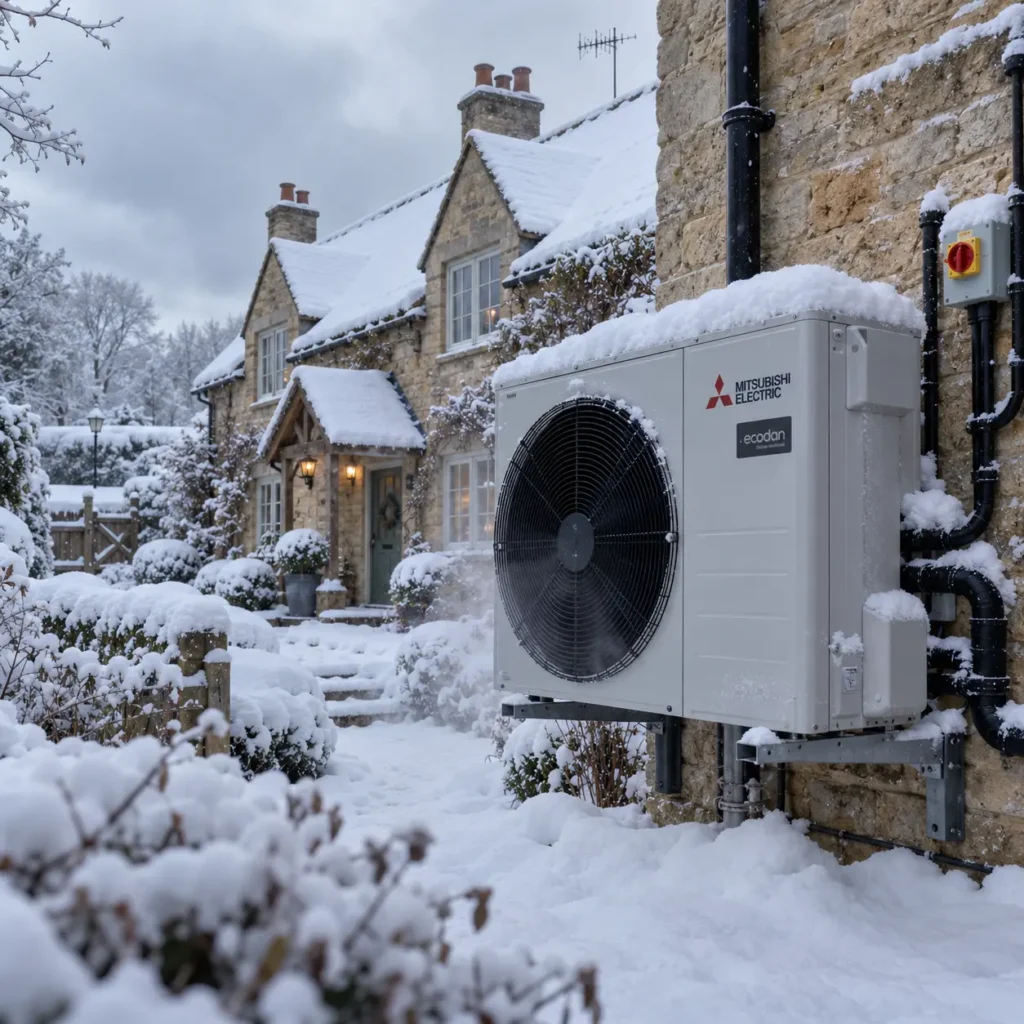
A white cloud may appear around the outdoor unit as frost melts. Mitsubishi Electric and Grant both describe this steam-like vapour as normal during cold-weather defrost.
You may hear a change in compressor tone, a whoosh as the refrigerant path changes, or the fan stopping and restarting. Water beneath the unit is also expected after melting frost.
The installation should manage this water safely. Poor drainage can allow it to pool or freeze around the unit or across a walkway.
For siting and drainage considerations, see the guide to air source heat pump location.
How long does a heat pump defrost cycle last?
There is no single duration for every heat pump.
Manufacturer guidance is more reliable than a generic internet figure. Grant says its normal defrost period lasts only a few minutes. Mitsubishi Electric says its Ecodan can usually clear frost within a couple of minutes. Other products and weather conditions can differ.
If your controller shows a defrost symbol or operating status, use it alongside the user manual.
A system that remains heavily iced or does not return to heating deserves investigation.
How often should an air source heat pump defrost?
There is no universal interval.
Mitsubishi Electric says frequency depends on outdoor temperature, humidity, airflow and fan operation. Cold, damp weather can therefore trigger more defrosting than equally cold but dry weather.
Different models also use different control strategies. Two homes can experience different defrost patterns even on the same day because the heat-pump model, location, heating load and exposure differ.
For that reason, claims that every heat pump should defrost at one fixed interval should be treated cautiously.
Does defrost reduce heat-pump efficiency?
Temporarily, yes.
During conventional reverse-cycle defrost, the heat pump is using energy to clear the outdoor coil instead of delivering its normal heating output. That creates a short-term efficiency penalty.
However, leaving the coil heavily frosted would restrict airflow and reduce heat transfer. Defrosting is therefore necessary to restore effective operation. Research into air-source heat pumps also shows that frosting and defrost strategy can materially affect heating performance and energy consumption.
For homeowners, seasonal performance matters more than one short cycle. Flow temperature, outdoor temperature, system sizing, controls, hot-water production and auxiliary heater use all influence efficiency across winter.
See Getfreequote’s air source heat pump efficiency guide for more detail on COP and SCOP.
Will the house go cold during defrost?
A correctly designed air-to-water system should make a short defrost relatively unobtrusive.
Conventional systems may briefly pause normal space-heating output. The thermal mass of the home, radiators, underfloor heating and water in the heating circuit helps bridge that interruption.
Energy Saving Trust’s installer guidance notes that enough system water volume must remain available to provide thermal energy for defrost. Some installations use a volumiser or buffer where extra permanently available water volume is required.
The exact hydraulic design is manufacturer-specific, so homeowners should not alter components or settings simply to change defrost behaviour.
When should you be concerned?
Contact your installer or service engineer if the heat pump does not clear ice, loses heating for prolonged periods, repeatedly shows fault codes, or appears to defrost unusually often in conditions where frost is unlikely.
Possible causes include restricted airflow, blocked drainage, sensor or control faults, fan problems, refrigerant-system faults or installation issues. Proper diagnosis is more useful than assuming frequent defrost always means the same fault.
Focus on the outcome: does the system clear the coil and return to stable heating?
If yes, visible frost and vapour may be normal winter operation. If no, arrange an inspection.
For professional maintenance and fault checks, see Getfreequote’s air source heat pump servicing guide.
What can homeowners safely check?
- Keep the air inlet and outlet clear of leaves, vegetation, snow and stored items.
- Check that meltwater can drain away without repeatedly freezing around the base.
- Look for persistent ice that remains after the unit has had time to defrost.
- Note any error code or defrost symbol on the controller.
- Check the manufacturer’s user manual before changing settings.
Do not chip ice from delicate coil fins or dismantle the outdoor unit.
Get Your Free Air Source Heat Pump Quote
Find the right air source heat pump solution for your home. Tell us a few details and our team will help you explore suitable options at a competitive price.
Quick to complete. No obligation.
Get your quote
Enter your details below and one of our team will get back to you.
Frequently asked questions
Find clear answers to common questions about air source heat pump defrost cycles, including frost, steam, drainage, fan behaviour, heating interruptions, electricity use, manual defrosting and when persistent icing needs professional attention.
Yes. Defrosting is a normal cold-weather function on air source heat pumps. It removes frost from the outdoor coil so airflow and heat transfer can recover.
The white cloud is usually water vapour or mist created as frost melts from the outdoor coil. It can look dramatic but is normally harmless.
Water is expected when frost melts during defrost. The important point is that the installation has a safe drainage route so water does not pool or refreeze around the unit.
Not necessarily. A light frost coating can be normal in cold, damp weather. Persistent solid ice that does not clear after defrost should be investigated.
Yes. The outdoor coil can be colder than the surrounding air, so moisture may freeze on the coil even when the measured air temperature is slightly above freezing.
There is no universal duration. Some manufacturers describe normal defrost as lasting only a few minutes. Check the guidance for your specific model.
There is no fixed interval for every system. Frequency depends on the heat-pump model, outdoor temperature, humidity, airflow, heating load and control strategy.
It can. On many systems the outdoor fan stops temporarily while the coil is warmed, then restarts when normal heating resumes.
Some conventional reverse-cycle systems briefly reduce or pause normal space-heating output. A properly designed system should make the interruption short and usually unobtrusive.
Defrost creates a temporary efficiency penalty because energy is used to clear the coil. However, allowing thick frost to remain would also reduce performance, so defrost is necessary.
Normally you should not need to. The heat pump controls defrost automatically. Use manufacturer-approved controls and contact an installer if the unit is failing to clear ice.
Do not use boiling water, tools or force to remove ice unless the manufacturer specifically instructs you to do so. You could damage the coil or create more ice around the unit.
Heavy ice that does not clear may point to restricted airflow, blocked drainage, a fan or sensor problem, a refrigerant-system fault or another issue that needs diagnosis.
Cold, humid conditions can cause frequent defrosting. If it happens repeatedly in mild weather, the coil is not clearing, or heating performance is poor, arrange an inspection.
Call an installer or service engineer if ice remains after repeated cycles, heating is lost for long periods, fault codes appear, the fan does not restart, or drainage repeatedly freezes and causes problems.
Conclusion
The heat pump defrost cycle is a normal cold-weather function, not evidence that an air source heat pump cannot cope with winter.
Frost forms because the outdoor coil can become cold enough to freeze moisture from the air. When that frost starts to restrict heat transfer, the heat pump warms the coil, melts the ice and then returns to heating.
Steam-like vapour, dripping water, a brief fan stop and a short dip in heating output can all be normal. Persistent ice, extended heating loss or fault behaviour should be checked.
If you are considering an air source heat pump, Getfreequote can help you compare suitable systems based on your property, heating requirements and proposed system design.


