
Heat Pump High Electricity Usage: Causes & Fixes UK
Check Your Eligibility for Boiler Upgrade Scheme (BUS)
Complete your details below to check your eligibility.
Thank you
We've received your details and will be in touch shortly.

Quick answer:
High heat-pump electricity usage usually comes from one of two things: your home needs a lot of heat, or the system is using more electricity than necessary to deliver it. Usage normally rises in cold weather because the property loses heat faster and an air source heat pump becomes less efficient as the temperature difference increases. Unnecessarily high flow temperatures, incorrect weather compensation, frequent electric backup heating, hot-water boosts, undersized radiators and poor controls can increase consumption further. Start by checking actual kWh use rather than the bill value, then compare similar weather periods and review flow temperature, hot-water settings and backup-heater operation.
Heat Pump High Electricity Usage: Why Is My Air Source Heat Pump Using So Much Electricity?
If your air source heat pump is using much more electricity than expected, the first question is whether the system is genuinely inefficient or simply being asked to produce more heat.
Cold weather, a warmer thermostat setting and higher hot-water demand can all raise consumption without indicating a fault. However, high flow temperatures, poor weather-compensation settings, frequent immersion or backup-heater use, undersized radiators and control problems can make usage unnecessarily high.
This guide explains how to separate normal demand from a problem and what to check first.
Want a professional assessment of a new or replacement system? Compare free quotes through Getfreequote.co.uk.
First check: is the problem your bill or your electricity use?
A larger bill does not automatically mean the heat pump is consuming more energy. Your unit rate may have changed, your Direct Debit may have been adjusted, or more consumption may now fall into expensive tariff periods.
Check kilowatt-hours (kWh), not only pounds.
As of 24 September 2026, Ofgem’s average Direct Debit electricity rate under the price cap for England, Scotland and Wales is 26.11p/kWh. From 1 October 2026, the published average becomes 26.32p/kWh. Your tariff may differ. See Ofgem’s current energy price-cap unit rates for the latest figures.
If the heat pump replaced gas, oil or LPG, remember that heating demand has moved onto the electricity meter. Compare the new electricity cost with the fuel cost that has fallen or disappeared.
What counts as unusually high heat-pump electricity usage?
There is no reliable daily kWh figure for every home. A large detached house on a freezing day can reasonably use far more electricity than a small, insulated terrace in mild weather.
A better benchmark is your own system design. Look for expected annual electricity consumption, heat demand, proposed flow temperature and seasonal performance in the documentation supplied with the installation.
If your system shows heat produced and electricity consumed, divide heat output by electricity input. For example, 60kWh of heat from 20kWh of electricity gives a COP of 3 for that period. One day’s COP is not the same as annual SCOP.
If you want the technical background first, our guide explains how air source heat pumps work.
| What you notice | Possible explanation | What to check |
|---|---|---|
| Bill rises but kWh is similar | Tariff change | Unit rate and tariff periods |
| kWh rises in colder weather; home is warm | Higher heat demand | Similar-weather days |
| High kWh; rooms still cold | Flow temperature, emitters, sizing or fault | Heating curve and design |
| Spikes around hot-water times | Immersion or boost | Cylinder schedule |
| Frequent on/off operation | Control conflict | Thermostat and weather compensation |
| Backup heater runs regularly | Setup or design issue | Controller logs and installer settings |
1. Cold weather increases demand
As outdoor temperature falls, your home loses heat faster. At the same time, an air source heat pump must move heat across a larger temperature difference.
That means the house asks for more heat while the heat pump may use more electricity for each unit of heat supplied.
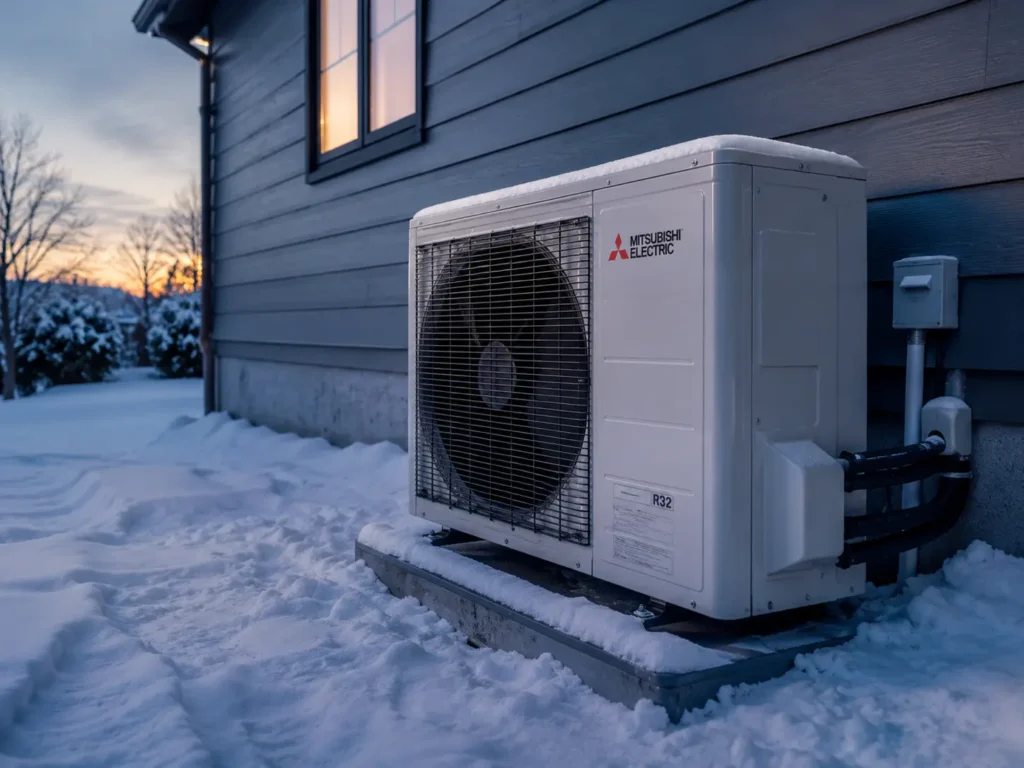
Cold, damp weather can also trigger defrost cycles. Occasional defrosting, water beneath the unit and visible vapour can be normal. Persistent ice, repeated fault codes or failed defrosts need investigation.
2. The flow temperature may be too high
Flow temperature is the temperature of the water leaving the heat pump for radiators or underfloor heating.
The compressor generally works harder as flow temperature rises. A system producing 50°C water when the home could stay comfortable at 40°C is likely to use more electricity than necessary.
The aim is the lowest practical flow temperature that still heats every room comfortably. Energy Saving Trust recommends adjusting the heating curve gradually and notes that lower flow temperatures can have a significant effect on running costs. Read Energy Saving Trust’s heat-pump efficiency guidance
Lower temperatures also mean slower heat-up, so heat pumps usually suit steadier operation rather than short boiler-style bursts.
For more detail, see our guide to air source heat pump temperature.
3. Weather compensation may be badly set
Weather compensation changes the target flow temperature according to outdoor conditions. In mild weather, the system can usually circulate cooler water. In colder weather, it raises the target.
If the heating curve is set too high, the heat pump may make hotter water than necessary for much of the season. A third-party thermostat that repeatedly switches the system on and off can also interfere with the intended control strategy.
Energy Saving Trust says an incorrectly set heating curve can increase running costs and recommends checking that it has been configured correctly.
Ask your installer what flow temperature the system was designed to deliver at the local winter design temperature rather than copying settings from another property.
4. An immersion or backup heater may be running too often
Many systems include an electric immersion heater for the hot-water cylinder or an auxiliary heater for space heating.
These heaters are useful, but they behave like direct electric heating rather than a heat pump. Frequent use can therefore cause noticeable consumption spikes.
Check for controller terms such as immersion, booster, auxiliary heat, backup heater or heating boost.
A periodic hot-water hygiene cycle may legitimately use the immersion heater. Energy Saving Trust’s installer guidance explains that many systems use an immersion or booster during a scheduled disinfection cycle. See the Energy Saving Trust guidance on immersion and booster heaters
Do not disable safety or hygiene functions simply to reduce consumption. Instead, investigate why direct electric heat is being called so often.
5. Hot-water settings can hide extra consumption
Domestic hot water usually requires a higher temperature than space heating, so efficiency may fall while the cylinder is being heated.
Usage can rise if the cylinder reheats many times a day, the normal target temperature is unnecessarily high, boost is used frequently or the immersion heater does more work than intended.
Keep the manufacturer’s hygiene settings in place. However, check whether the normal hot-water schedule and comfort temperature match your household’s actual needs.
A consumption spike at roughly the same time every day can be a useful clue that hot-water heating rather than space heating is responsible.
6. Radiators may be forcing the system to run hotter
A heat pump can only use low flow temperatures if the radiators or underfloor heating can release enough heat into each room.
If one radiator is undersized, the homeowner may compensate by increasing the temperature for the whole system. That can reduce efficiency everywhere simply to satisfy one cold room.
Larger or higher-output radiators can often provide the required heat using cooler water. Energy Saving Trust identifies appropriate radiator sizing, controls and electricity tariffs as important influences on running costs.
If most rooms are comfortable but one or two are cold, investigate those emitters before raising the whole-system temperature.
7. Your home may need more heat than expected
High consumption is not always a heat-pump fault.
A higher thermostat setting, open windows, more time at home, greater hot-water use, poor insulation or an underestimated heat-loss calculation can all raise demand.
MCS heat-load guidance calls for room-by-room calculations that consider building fabric, room dimensions, air changes, target indoor temperatures and local winter conditions. See MCS guidance on understanding heat loss
If the heat pump appears to be operating efficiently but electricity use remains high, the building’s underlying heat demand may be the main reason.
A practical seven-day diagnostic check
Before changing several settings at once, collect a short baseline:
- Record whole-house electricity use each day.
- Record heat-pump electricity separately if available.
- Note outdoor temperature and your indoor setpoint.
- Record hot-water boosts or immersion use.
- Note the heating flow temperature.
- Check whether the backup heater operates.
- Write down fault codes, persistent icing or unusual cycling.
If your system gives heat-output data, record that too. Electricity input tells you consumption; comparing heat output with input tells you much more about performance.
For general annual costs, see our air source heat pump running costs guide. For the relationship between heat output and electrical input, read our air source heat pump efficiency guide.
When should you call your installer?
Arrange a system check if consumption rises sharply without a matching change in weather or household behaviour, the home stays cold despite high use, the backup heater operates regularly, error codes return, the outdoor coil remains heavily iced or the system cycles repeatedly.
Ask the installer to review the heat-loss design, heat-pump sizing, heating curve, design flow temperature, radiator outputs, hydraulic flow, control settings, hot-water schedule and auxiliary-heater operation.
The diagnosis should separate high heat demand from poor heat-pump efficiency. Simply increasing the flow temperature may mask the problem while raising electricity use.
Get Your Free Air Source Heat Pump Quote
Find the right air source heat pump solution for your home. Tell us a few details and our team will help you explore suitable options at a competitive price.
Quick to complete. No obligation.
Get your quote
Enter your details below and one of our team will get back to you.
Frequently asked questions
Find clear answers to common questions about air source heat pump electricity use, winter consumption, flow temperatures, immersion heaters, hot water, defrosting, radiators, insulation, thermostats and overnight operation.
Yes. Your property loses heat faster in colder weather, while the heat pump normally becomes less efficient as the temperature difference between outdoors and the heating water increases.
There is no reliable figure for every home. Property heat loss, weather, indoor temperature, hot-water demand and system efficiency all affect daily consumption.
Check whether the weather became colder, the thermostat setting changed, hot-water use increased or an immersion or backup heater started operating. A sudden unexplained increase can also justify an installer check.
Usually, yes. Raising the heating-water temperature makes the compressor work across a larger temperature difference, which generally reduces efficiency.
Not necessarily. Some homes need around 50°C during cold conditions. However, if the property can stay comfortable at a lower temperature, reducing the flow temperature may improve efficiency.
Long running periods can be completely normal. Heat pumps often work efficiently by providing lower-temperature heat steadily rather than repeatedly switching on for short, high-temperature bursts.
No. Continuous low-output operation can be efficient. More important questions are whether the home is comfortable, what flow temperature the system uses and how much heat it delivers for the electricity consumed.
Yes. An immersion heater uses direct electrical resistance heating. Scheduled hygiene cycles may require it, but frequent or prolonged immersion use can substantially increase consumption.
Stored hot water generally requires a higher temperature than space heating. Heat-pump efficiency normally falls as the required output temperature rises.
Defrosting adds some energy use and temporarily interrupts normal heating, but occasional defrost cycles are part of normal air source heat-pump operation in cold, damp conditions.
Indirectly, yes. Small radiators may require a higher flow temperature to heat the room adequately, and higher flow temperatures normally reduce heat-pump efficiency.
Yes. Poor insulation and draughts increase the amount of heat the property loses. The heat pump must replace that heat regardless of how efficient the appliance itself is.
It can if its control strategy conflicts with the heat pump’s weather-compensation or modulation controls. Compatibility and correct commissioning matter more than whether the thermostat is labelled “smart”.
Large temperature setbacks are not always the most efficient approach. Many heat pumps work well with a modest overnight setback rather than allowing the building to cool substantially before reheating it.
Investigate when high consumption is accompanied by poor comfort, frequent backup-heater use, repeated fault codes, persistent icing, excessive cycling or a major increase that cannot be explained by colder weather or changed household use.
Conclusion
Heat pump high electricity usage is not automatically evidence of a faulty unit. Winter weather, higher comfort levels and hot-water use can all raise demand legitimately.
However, the system should not use unnecessarily high flow temperatures or direct-electric backup heat. Start with actual kWh, compare similar weather and gather several days of data before changing multiple settings.
If high consumption comes with poor comfort, frequent backup heating or recurring faults, ask a competent installer to review the complete system.
If you are considering a replacement or want a properly surveyed system designed around your property, compare free heat-pump quotes with Getfreequote.co.uk.


