Do Solar Panels Damage Your Roof? UK Guide 2026
Check Your Eligibility for Boiler Upgrade Scheme (BUS)
Complete your details below to check your eligibility.
Thank you
We've received your details and will be in touch shortly.
Quick answer: do solar panels damage your roof?
No. Correctly installed solar panels should not damage a sound roof. On a typical pitched roof, mounting brackets connect the array to the roof structure, while rails support the panels above the covering. The design should keep tiles or slates properly seated, maintain weather resistance and account for structural and wind loads.
Damage can occur when installers crack tiles, use unsuitable fixings, leave gaps around brackets, disturb underlay, create poor cable penetrations or ignore an existing defect. An older roof is not automatically unsuitable, but active leaks, structural distress or major roofing work due soon should be addressed first.
Do Solar Panels Damage Your Roof? UK Guide 2026
Solar panels should not damage a suitable roof when they are properly surveyed, designed and installed. Problems usually arise from poor workmanship, unsuitable mounting, hidden roof defects or fitting panels to a roof that already needs repair.
For UK homeowners, the key question is whether the complete solar installation preserves the roof’s structural strength and weather-tightness. The current MCS Solar PV Installation Standard (MIS 3002 Issue 6.0) says PV systems should not adversely affect either and should maintain them for the life of the system.
This guide explains the real roof-damage risks, how professional installations avoid them and what to check before work starts.
Compare solar options for your home: Get Free Quote can help you compare suitable solar quotations after your property and roof have been assessed.
Solar roof damage: the main risks
| Risk | Typical cause | Prevention |
|---|---|---|
| Cracked tiles or slates | Careless access or poor bracket detailing | Replace damage and use roof-specific fixings |
| Water leaks | Displaced coverings, torn underlay or poor penetrations | Preserve weather-tightness and use correct flashing |
| Structural stress | Inadequate load assessment | Check the roof structure before installation |
| Wind damage | Incorrect fixing design | Design for wind uplift and roof-edge forces |
| Warranty problems | Solar work conflicts with roof warranty terms | Check the warranty before installation |
| Costly future roof work | Solar fitted over a roof nearing replacement | Repair or re-roof first when genuinely necessary |
How are solar panels attached without damaging the roof?
Most domestic solar panels sit above the existing roof covering.
On many tiled pitched roofs, installers lift selected tiles, fix roof hooks or brackets into structural timber, then refit the tiles around them. Rails attach to the brackets and the panels clamp onto the rails. The array’s load is therefore transferred into the roof structure rather than simply resting on individual tiles.
MCS requires tiles or slates to be notched or flashed where necessary so they are not left displaced with larger gaps after installation. A tile forced upwards by a badly positioned bracket can create a route for wind-driven rain.
For the wider process, see Get Free Quote’s guide to how solar panels are installed.
Visual suggestion: a labelled cutaway diagram showing roof tile, rafter, roof hook, mounting rail and solar panel.
Can solar panels cause roof leaks?
They can if the installation is poor, but leaks are not an inevitable result of rooftop solar.
Common causes include cracked tiles left beneath the array, roof hooks that stop tiles sitting correctly, torn membrane or underlay, poorly sealed cable entries, unsuitable penetrations and damaged flashing. Sometimes the problem was already present before the panels were fitted.
MCS Issue 6.0 states that a PV system should maintain the building’s weather-tightness for the life of the system. For mounting arrangements outside MCS 012 scope, the contractor must also be able to evidence how weather-tightness has been maintained.
A good pre-installation assessment should therefore identify known leaks and damaged roof coverings before the array goes on.
Can solar panels damage tiles or slates?
Tiles and slates can be broken during installation, especially if they are brittle, cracked already or handled carelessly.
That does not make tiled or slate roofs unsuitable for solar. It means the fixing method must suit the covering.
A competent installer should replace coverings they break and should not leave tiles or slates propped up awkwardly around brackets. MCS specifically requires appropriate notching or flashing where needed to avoid creating larger gaps around the mounting system.
Before work starts, ask who pays for breakages, whether matching replacements are available and whether the installer will photograph the roof before and after the work.
Visual suggestion: side-by-side illustration of a correctly seated roof tile around a solar hook and an incorrectly lifted tile.
Can the extra weight damage the roof structure?
The roof should be checked rather than assumed to be strong enough.
MCS requires the roof structure to be assessed by a suitably competent person for the loads imposed by the solar PV system. Where the structure is unusual or there is doubt, a qualified structural engineer must be consulted. Examples include structural distress, post-construction alterations, particularly shallow roofs and some designs involving hips, valleys or parapets.
Wind uplift is also part of the design. MCS says modules should not normally be installed within 400mm of a domestic roof edge unless specific measures are taken, such as extra fixings or additional roof timbers.
The useful question is therefore not simply, “Are solar panels too heavy?” It is: “Has this roof been checked for this specific array and mounting system?”
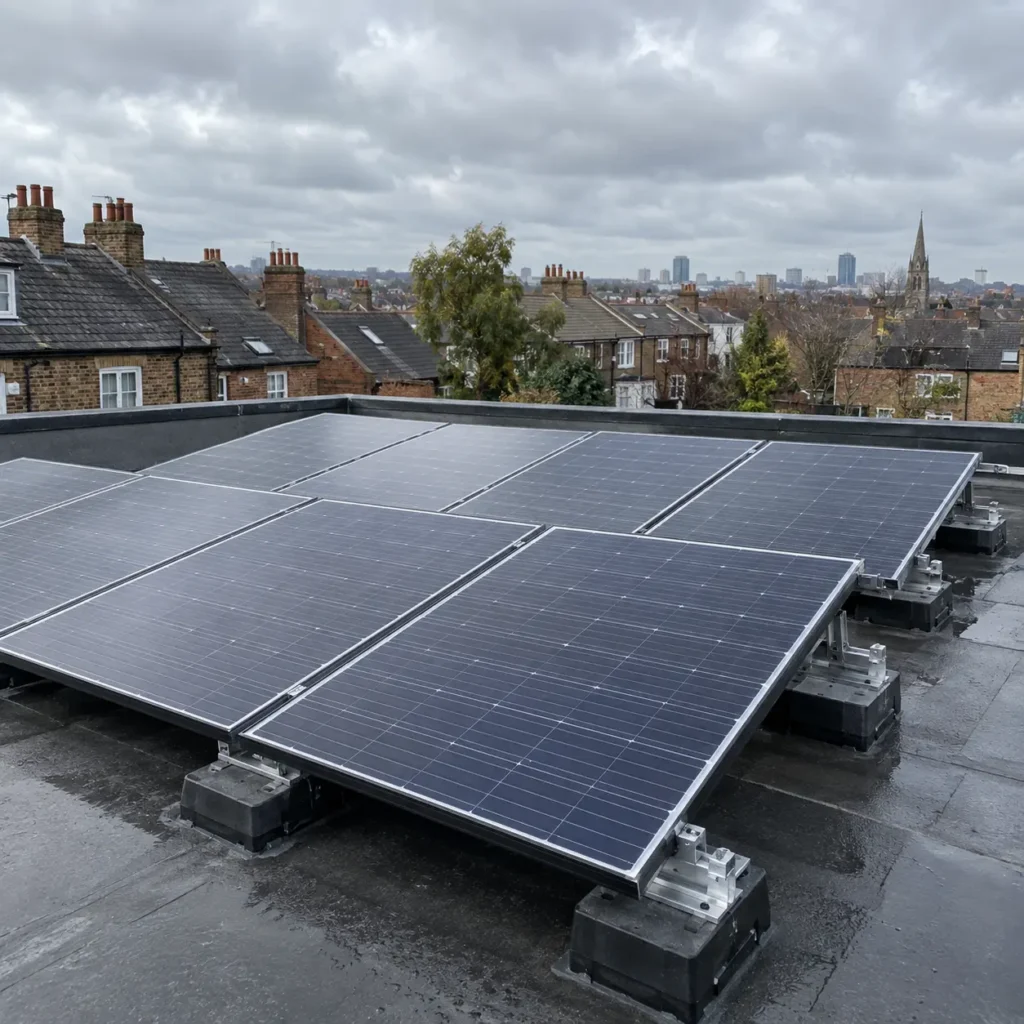
What about solar panels on flat roofs?
Flat roofs use different mounting methods. Some systems are mechanically fixed, while others use ballast to keep the array in position.
Ballast can add significant load, so structural assessment is particularly important. MCS requires a qualified structural engineer to confirm that a flat roof can withstand the combined load from the PV system and proposed ballast. It also requires a compatible protection or slip layer between ballasted mounting and the waterproofing layer.
A flat roof can therefore be suitable for solar, but its membrane, drainage, load capacity and mounting design need to be considered together.
Do you need a new roof before installing solar panels?
Not automatically. A sound older roof can be perfectly suitable.
Condition matters more than age. However, solar is a long-term installation. Energy Saving Trust states that solar panels should last 25 years or more. If major roof work is likely much sooner, fitting solar first may create avoidable removal, scaffolding and reinstallation costs later.
Warning signs worth investigating include active leaks, sagging, widespread cracked or slipping tiles, rotten timber, failed flashing and substantial deterioration of the covering or underlay.
If you are unsure, read Get Free Quote’s guide on whether you need a new roof before solar panels.
Can solar panels invalidate a roof warranty?
Potentially. It depends on the warranty terms.
MCS says that where an existing roof covering is under warranty, the warranty provider should be consulted. If the proposed installation may invalidate that warranty, the MCS contractor must notify the customer in writing and obtain explicit written agreement before proceeding.
This is especially important for newer roofs and specialist flat-roof membranes.
Do not rely on a verbal assurance that the warranty “should be fine”. Ask the warranty provider directly and keep its response with your solar paperwork.
Can solar panels make later roof repairs more difficult?
Yes. Panels can usually be removed and refitted, but roof work becomes more involved.
If a leak develops beneath the array or the roof later needs replacement, panels may need to be electrically isolated, removed and reinstalled. Scaffolding may also be required again.
That is why the survey should consider both present condition and likely near-term roofing work. It does not make sense to replace a serviceable roof early, but known defects should be repaired before panels make them harder to reach.
How to reduce the risk of solar panels damaging your roof
Start with a proper survey. Confirm the roof covering, visible defects, structure, access and mounting method before the design is final.
Use the correct mounting system. Fixings, flashings and brackets should suit the roof and follow manufacturer instructions.
Check structural suitability. Ask how load capacity was assessed and whether a structural engineer is needed.
Repair existing leaks first. Solar should not cover an unresolved roof problem.
Agree responsibility for breakages. Put this in writing before installation.
Check roof-warranty terms. Ask the warranty provider before work begins.
Verify installer credentials. Energy Saving Trust recommends looking for MCS-certified installers and obtaining at least three quotations.
Keep evidence. Save roof photographs, the survey, design, warranties and installation documentation.
Get Free Quote’s solar panel installation survey guide explains the checks that should happen before the final system design.
Visual suggestion: homeowner checklist graphic covering roof condition, structure, mounting, warranty and photographs.
What should you do if your roof leaks after solar panels are fitted?
Act promptly, but do not assume the panels are automatically responsible.
A leak may come from a cracked tile, flashing defect, cable entry, displaced covering or an unrelated roof problem. Photograph the damp area, note when it appears and contact the solar installer. Check the workmanship or installation warranty before arranging invasive work.
Avoid moving panels or roof fixings yourself. If the cause is unclear, an independent roofer or solar specialist may need to inspect the area. If panels must be removed, use a competent contractor who can safely isolate and refit the PV system.
For cover and claims, see Get Free Quote’s solar panel installation warranty guide.
Get Your Free Air Source Heat Pump Quote
Find the right air source heat pump solution for your home. Tell us a few details and our team will help you explore suitable options at a competitive price.
Quick to complete. No obligation.
Get your quote
Enter your details below and one of our team will get back to you.
Frequently asked questions
Find clear answers to common questions about solar panels and roof damage, including leaks, roof fixings, cracked tiles, slate roofs, structural checks, roof age, warranties, flat roofs, repairs and what to inspect after installation.
Not when they are installed correctly on a suitable roof. Leaks are more likely to result from broken or displaced tiles, poor flashing, damaged underlay or badly detailed penetrations.
Structural fixings are needed, but the method depends on the roof. On many tiled pitched roofs, brackets fix to the structure beneath the tiles rather than simply drilling through the exposed face of every tile.
They can if the wrong bracket is used or it presses incorrectly against a brittle tile. Correct detailing should avoid damaging the roof covering and should allow tiles to sit properly.
A slate roof can support solar when its condition and structure are suitable. Slates need careful handling because they can be brittle, and the mounting method must suit the roof covering.
Not necessarily. Roof age alone does not determine suitability. The structure must be checked for the actual loads imposed by the proposed system.
The roof should be assessed as part of the solar design. MCS requires a suitably competent person to check structural capacity, with a structural engineer involved where the roof is unusual or there is doubt.
Not for every conventional pitched roof. A qualified structural engineer is required under MCS where the structure is unusual or its suitability is uncertain. Ballasted flat-roof systems also require structural-engineer assessment under the current standard.
Yes. Known defects should normally be repaired before the panels go on, particularly if they could allow water ingress or become difficult to access later.
No. A sound older roof can still be suitable. Its present condition and likely remaining service life matter more than an arbitrary age limit.
Only when the roof genuinely needs substantial work or is likely to need it soon. Replacing a serviceable roof simply because you are installing solar can be unnecessary.
They can affect some warranties. MCS requires the existing warranty provider to be consulted where the roof covering is under warranty.
Yes. However, the PV system may need to be electrically isolated, removed and then safely reinstalled. This can increase labour, access and scaffolding costs.
They should not when the system is properly designed. Flat roofs require careful attention to waterproofing, structural loading, wind resistance and the mounting or ballast arrangement.
They may shade some of the covering from direct sun and weather, but solar panels should not be treated as roof protection or a solution for an already failing roof.
The damaged tiles should be replaced appropriately. Before signing a contract, confirm in writing who is responsible for installation-related roof damage and replacement materials.
Look for visibly displaced or broken tiles where safely observable, signs of water ingress after rainfall and anything that differs from the agreed installation. Keep photographs and all warranty and handover documents.
Conclusion
Solar panels do not normally damage a suitable roof. The real risks are poor surveying, careless roof work, unsuitable mounting details and installing over a roof that already needs attention.
A good installation checks structural capacity, preserves weather-tightness, keeps tiles or slates correctly seated, accounts for wind loading and records any warranty implications before work begins.
If your roof is sound, there is no reason to replace it simply because you want solar. If it has leaks, structural concerns or major work approaching, deal with those issues first.
When comparing quotations, ask each installer to explain exactly how they will protect your roof—not just which panels they plan to fit.
Main article length: approximately 1,580 words, excluding FAQs and supporting SEO material below.