
Solar Panel Installation Time UK: 2026 Timeline
Check Your Eligibility for Boiler Upgrade Scheme (BUS)
Complete your details below to check your eligibility.
Thank you
We've received your details and will be in touch shortly.

Quick Answer: How Long Does Solar Panel Installation Take in the UK?
A typical domestic solar panel installation takes around one to two days on site. Straightforward systems can sometimes be completed in one working day. Larger arrays, batteries, awkward roof layouts, flat-roof mounting, electrical upgrades or poor weather can extend the work.
The complete project takes longer. From accepting a quote to a commissioned system, allow several weeks rather than a few days. One major variable is the grid-connection route. Smaller systems within G98 limits can generally be installed before the DNO is notified, while larger G99 projects normally need network involvement before connection. Energy Networks
Solar Panel Installation Time UK: How Long Does It Take in 2026?
For a typical UK home, the physical solar panel installation usually takes one to two days. Energy Saving Trust gives the same one-to-two-day estimate for a standard rooftop system. Energy Saving Trust’s rooftop solar installation guide energysavingtrust.org.uk
The wider project can take several weeks because it may include a survey, system design, scaffolding, equipment scheduling, Distribution Network Operator (DNO) requirements and, in some cases, planning checks.
A straightforward system on an accessible roof can move quickly. A larger array needing prior grid approval or roof work can take longer. This guide separates installation-day time from the full journey, so you can plan realistically.
Ready to compare timescales as well as price? Get Free Quote helps homeowners compare their options, while you can also compare solar panel installation quotes by scope, warranties and expected timescale. Get Free Quote operates as a comparison and introduction service rather than the installer itself.
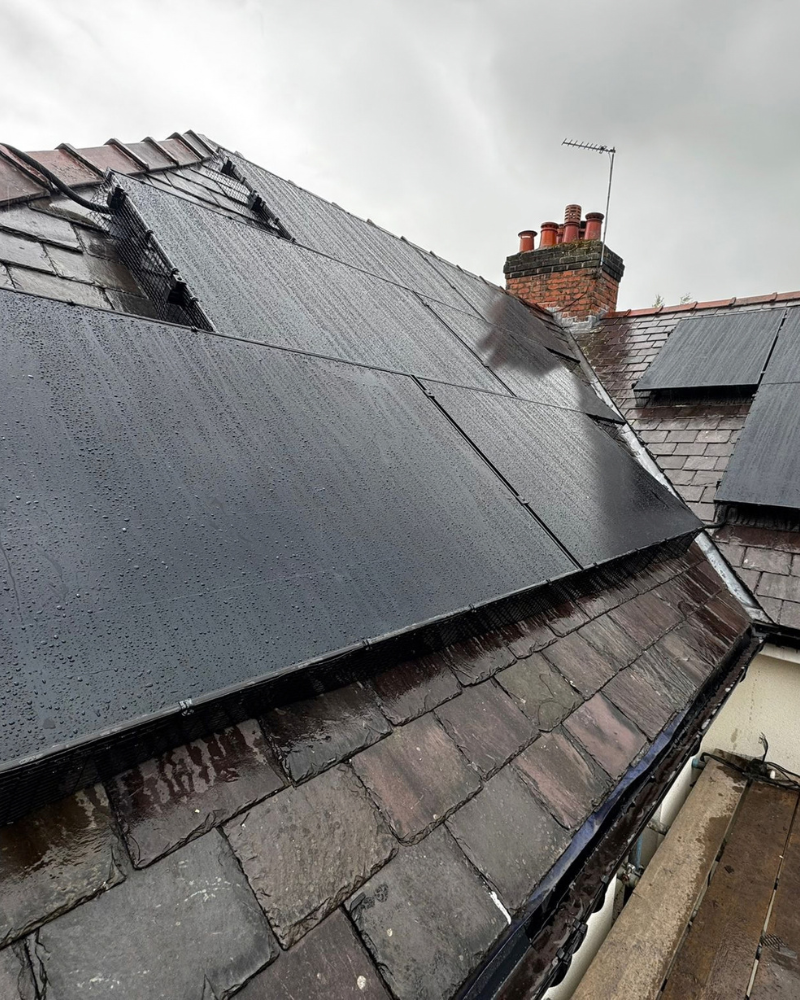
Typical Solar Panel Installation Timeline
There is no guaranteed UK-wide end-to-end timescale. Installer workload, equipment availability, roof condition and DNO requirements vary. Use the table below as a planning guide, not a promised schedule.
| Stage | Typical planning allowance | What happens |
|---|---|---|
| Quote and initial assessment | A few days to around 1 week | Energy use, roof layout and system options are reviewed. |
| Site survey and final design | Several days to around 2 weeks | Roof, electrics, access, shading and equipment locations are confirmed. |
| DNO process | No prior wait for many G98 systems; potentially several weeks for G99 | The route depends on generation capacity and local network conditions. |
| Scaffolding and scheduling | Usually shortly before installation | Safe roof access is prepared and equipment is booked. |
| Physical installation | Usually 1–2 days | Mounting, panels, inverter, cabling and any battery are fitted. |
| Testing and handover | Usually on the final installation day | The system is tested, commissioned and monitoring is set up. |
| Export-tariff setup | After installation; supplier times vary | MCS/DNO evidence and export metering are used to apply for a tariff. |
Recent UK solar guides give end-to-end estimates ranging from roughly two to ten weeks, depending on what stages they include and whether prior DNO approval is required. That variation is why an installation date should remain provisional until the survey and connection route are known. SolarLove
Visual suggestion: a horizontal “quote to switch-on” timeline, with a branch showing the difference between G98 and G99 projects.
What Happens Before the Installation?
Survey and final design
The survey confirms whether the original quote matches the property. A proper solar panel installation survey should check roof condition, usable area, shading, access, cable routes, inverter location, consumer-unit condition and whether a battery is being added.
This stage affects timing because problems can change the scope. Loose tiles, an ageing roof, difficult cable routes or electrical work may need resolving before installation.
DNO connection requirements
Your DNO runs the local electricity distribution network. The relevant connection process depends on electrical capacity, not simply the number of panels.
Energy Networks Association connection guidance uses 16 amps per phase as the G98 limit. On a single-phase 230V connection, that corresponds to 3.68kW. A qualifying single-premises G98 system can normally be installed and commissioned before notification; current DNO guidance requires notification within 28 days afterwards. Energy Networks
Above the applicable G98 limit, G99 procedures generally apply. The installer may need approval before the system can connect. Timescales depend on the DNO and local network.
For example, SSEN’s current G99 connection guidance says applications above 3.68kW per phase and up to 50kW may take up to 45 working days for a connection quotation once complete information has been received. That is one DNO’s timescale, not a universal UK deadline. SSEN
This is why two otherwise similar homes can have very different overall solar installation times.
Planning and permissions
Most conventional rooftop solar installations will not require a full planning application, but exceptions exist.
In England, domestic solar equipment can fall within permitted development under Part 14 when the relevant conditions are met. Listed buildings, designated locations and unusual arrangements may need additional checks. Rules differ across the UK, so confirm the requirements for your nation and local authority. GOV.UK permitted-development guidance GOV.UK
Leasehold properties may also require permission from a freeholder or managing agent.
How Long Does the Physical Solar Panel Installation Take?
For most homes, one to two days is the best working assumption. energysavingtrust.org.uk
A straightforward pitched-roof system can often be completed within one day once scaffolding is ready. The roof team installs the mounting system and panels while electrical work covers the inverter, isolators, cabling and connection.
For a more detailed technical walkthrough, see the solar panel installation process. This article stays focused on how each stage affects the overall timescale.
What happens on installation day?
The sequence usually includes:
- Confirming the design, access and safety arrangements.
- Fitting roof fixings, mounting rails and panels.
- Running DC cabling to the inverter.
- Installing the inverter and any battery.
- Connecting the solar circuit to the home’s electrical system.
- Testing protection, generation and monitoring.
- Commissioning the system and completing the handover.
Your electricity may need to be switched off briefly during the electrical connection. Ask your installer beforehand if uninterrupted power matters for medical equipment, home working or other essential loads.
A proper solar PV commissioning process should not be rushed simply to finish the installation within one day.
Visual suggestion: an annotated diagram showing panels → DC cabling → inverter → consumer unit → home/grid.
What Can Make Solar Installation Take Longer?
Roof type and access
A simple pitched roof is usually quicker than one with several elevations, dormers, fragile coverings or restricted access.
Flat roofs may require different mounting or ballast systems and additional structural checks. The current MCS solar PV standard includes specific requirements for mechanically fixed and ballasted flat-roof systems, including structural considerations. MCS Certified
System size, batteries and electrics
More panels mean more mounting and wiring. Battery storage, backup-power hardware, older consumer units or long cable routes can also add work.
A good survey should identify most of these issues before the installation team arrives.
DNO approval
The network process can be one of the biggest differences between projects. A qualifying G98 installation usually avoids a pre-installation network wait. G99 installations can require assessment before connection, and network constraints may result in an export limit or other conditions. SSEN
Weather and roof repairs
High winds, heavy rain, ice or another unsafe roof condition can postpone external work.
If the roof needs substantial repairs, completing them before fitting solar panels is normally more practical than installing the array and later removing it for roofing work.
Visual suggestion: a “What can delay solar?” checklist covering DNO approval, roof work, access, electrics, equipment and weather.
How Long Does Solar Plus Battery Storage Take?
A battery does not automatically add another full day. Many straightforward solar-and-battery projects can still fit within a one-to-two-day installation window.
However, larger batteries, backup-power equipment, additional consumer-unit work or complicated cable routes can extend the job. Battery storage may also affect the network assessment because storage can behave as generation when exporting electricity. Energy Networks
Ask each installer whether its proposed installation time includes the battery, monitoring setup, commissioning and any required electrical alterations.
When Can You Start Using Your Solar Panels?
In many cases, solar generation can begin once installation, testing and commissioning are complete and the applicable DNO requirements have been satisfied. That may be on the final installation day.
Getting paid for exported electricity is a separate process.
In Great Britain, the Smart Export Guarantee pays eligible small-scale generators for electricity exported to the grid. Ofgem’s Smart Export Guarantee guidance explains that participating suppliers set their own tariff terms. Energy Saving Trust notes that households will usually need an eligible system, appropriate certification and an export-capable meter. Ofgem
For an MCS-certified installation, the current 2026 MCS solar PV installation standard requires the MCS contractor to register the completed installation and generate the MCS certificate within 10 working days of commissioning. MCS Certified
Your panels may therefore be generating electricity before your export tariff is fully activated.
How to Keep Your Solar Installation on Schedule
You cannot control the weather or your local network, but you can remove avoidable delays.
Before accepting a quote, ask whether the design is expected to follow G98 or G99, whether any required DNO application has been submitted, who arranges scaffolding and whether the proposed date depends on equipment being in stock.
Provide requested information promptly, including electricity-supply details, MPAN information and access requirements. Make sure the surveyor can reach the loft, consumer unit and proposed inverter or battery position.
Most importantly, do not judge an installer only by the earliest promised date. Compare what the quotation includes, which approvals remain outstanding and whether the timescale reflects the real condition of your roof and electrics.
Get Your Free Air Source Heat Pump Quote
Find the right air source heat pump solution for your home. Tell us a few details and our team will help you explore suitable options at a competitive price.
Quick to complete. No obligation.
Get your quote
Enter your details below and one of our team will get back to you.
Frequently asked questions
Find clear answers to common questions comparing air source and ground source heat pumps, including efficiency, installation and running costs, winter performance, noise, land requirements and borehole depth.
A typical domestic installation takes one to two days on site. More complicated systems may take longer. Energy Saving Trust currently gives the same one-to-two-day estimate. energysavingtrust.org.uk
Yes. A straightforward residential system on an accessible pitched roof can sometimes be installed and commissioned in one working day. Larger or more complicated systems may need a second day.
Allow several weeks in many cases. Current UK guides give varying ranges because installer availability, scaffolding, surveys and DNO requirements differ substantially. SolarLove
G98 covers qualifying smaller generation connected at low voltage, including systems up to 16A per phase. Larger systems generally follow G99, which may require the DNO to assess the connection before installation or commissioning. Energy Networks
Not necessarily. The connection route is determined by the electrical configuration and registered generating capacity, rather than simply the DC nameplate capacity of the panels. Your installer should confirm the correct G98 or G99 route.
There is no single national waiting time. As one example, SSEN says an application above 3.68kW per phase and up to 50kW can take up to 45 working days for a connection quotation once complete information is supplied. SSEN
It can, although many straightforward solar-and-battery installations can still be completed within one or two days. Backup equipment or significant electrical alterations may extend the job.
They can. Flat roofs may require ballasted or mechanically fixed mounting, additional design work and structural checks that are not needed for every pitched-roof installation. MCS Certified
Yes. Light weather does not automatically stop every job, but high winds, heavy rain, ice or unsafe roof conditions can postpone rooftop work.
Usually for at least part of the electrical connection and testing process. The exact duration depends on the system and work required, so ask the electrician before installation day.
You will normally need to arrange access for indoor electrical work, the consumer unit and possibly the loft. You may not need to remain at home beside the installation team all day.
Often not, but it depends on the property and location. In England, many domestic installations qualify as permitted development subject to conditions. Listed buildings and some designated locations need particular care. GOV.UK
Often yes, once the installation has been safely commissioned and all applicable DNO connection requirements have been satisfied.
Under the current MCS solar PV installation standard, an MCS contractor must register the installation and generate its MCS certificate no later than 10 working days after commissioning. MCS Certified
No. SEG payments require a separate application to an eligible supplier and are not automatic. Your supplier may require certification, DNO information and an appropriate export meter before completing the setup.
Conclusion: What Is a Realistic Solar Panel Installation Time in the UK?
For a typical UK home, the physical installation usually takes one to two days. The complete project is better measured in weeks.
A simple roof, available equipment and a straightforward G98 connection route can keep things moving quickly. G99 requirements, roof repairs, planning issues, electrical upgrades, difficult access or unsafe weather can extend the schedule.
Before signing, ask for both the expected installation date and the assumptions behind it. That is more useful than a headline promise of “installed in a day”.
When you are ready to proceed, Get Free Quote can help you compare solar options on scope, equipment, warranties and timescale as well as price.


