
Solar Panel Installation Cost UK 2026: Full Price Guide
Check Your Eligibility for Boiler Upgrade Scheme (BUS)
Complete your details below to check your eligibility.
Thank you
We've received your details and will be in touch shortly.

Quick answer:
In 2026, Energy Saving Trust says a typical 4.5kWp domestic solar PV system costs about £7,600. Government solar-cost data also shows why quotes should be compared on a £ per kWp basis rather than panel count alone. A battery can add roughly £5,000–£8,000, although combined solar-and-battery packages may share some installation costs. In Great Britain, qualifying installed solar currently benefits from 0% VAT until 31 March 2027. The right price for your home depends on roof condition, access, system size, equipment and electrical work, so a survey and itemised written quote are essential.
Solar Panel Installation Cost UK 2026: What Should You Expect to Pay?
If you are pricing solar panels in the UK in 2026, a sensible starting point is around £7,600 for a typical domestic system. Energy Saving Trust currently uses that figure for a roughly 4.5kWp installation. Your actual quote may be lower or higher because system size, roof access, scaffolding, electrical work, inverter choice and battery storage all change the final price.
This guide explains what a solar installation costs, what a quote should include, how batteries affect the budget and how to judge value for your home.
If you are ready to compare prices, you can get started with Get Free Quote and ask installers to quote against the same system specification.
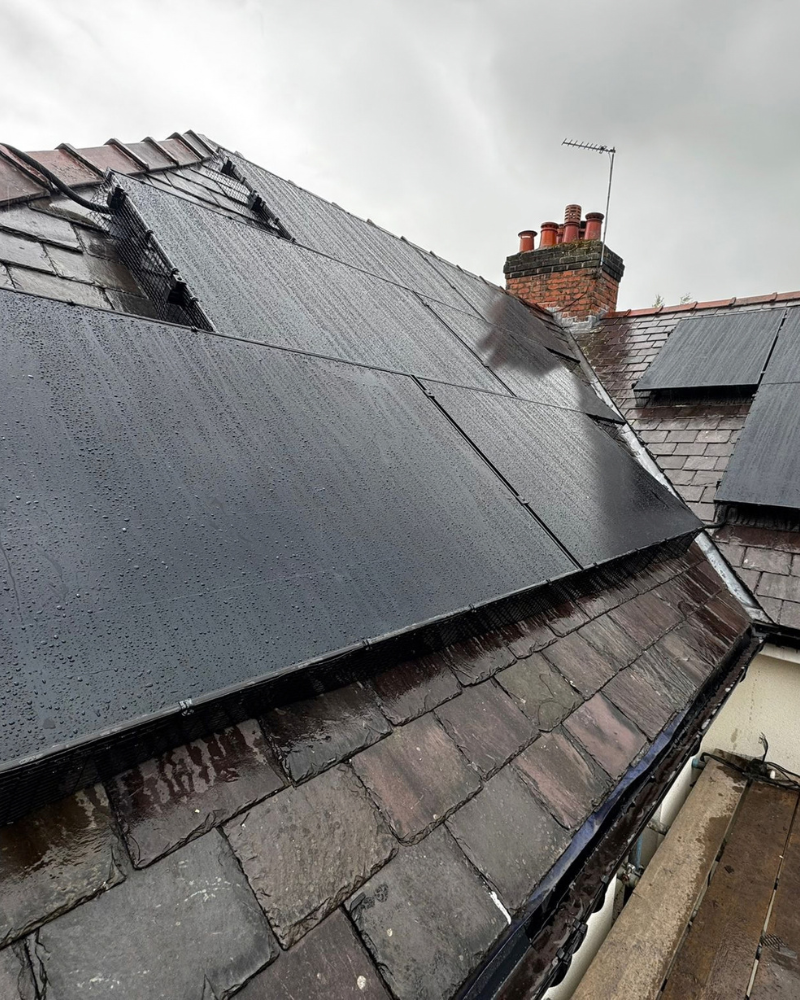
How much does solar panel installation cost in the UK?
Energy Saving Trust’s current benchmark is about £7,600 for a typical 4.5kWp home solar system. A 4.5kWp array usually needs around 20–30m² of roof space and roughly 12 panels, although modern panel wattages mean the exact panel count varies.
See Energy Saving Trust’s current solar-panel guidance
The Department for Energy Security and Net Zero also publishes official solar PV cost data taken from the MCS Installation Database. Its latest release covers 2025/26 installations and reports costs by installed capacity.
View the UK Government solar PV cost data
A practical comparison is installed price divided by system capacity in kWp. A £7,600 quote for 4.5kWp is about £1,689 per kWp. Systems will differ, but this creates a common benchmark.
| System size | Rough 2025/26 benchmark* | Typical context |
|---|---|---|
| 3kWp | Around £4,800–£5,400 | Smaller roof or lower electricity use |
| 4kWp | Around £6,400–£7,200 | Common domestic size |
| 4.5kWp | Around £7,600 | Energy Saving Trust typical-home benchmark |
| 5kWp | Around £7,700–£8,100 | Larger roof or higher daytime use |
| 6kWp | Around £9,300–£9,700 | Larger household, EV or electrified home |
*The 3kWp, 4kWp, 5kWp and 6kWp figures are broad calculations using median/mean cost-per-kW benchmarks reported from the government’s 2025/26 MCS-derived dataset. They are not quotations. Property-specific costs can differ materially.
What does the installation price include?
A proper quotation should cover the modules, inverter, mounting system, cabling, isolators, labour, scaffolding or access equipment, commissioning and connection paperwork.
Ask whether the quote includes DNO notification or application, generation estimates, monitoring, warranties and the MCS certificate where applicable. If one installer looks much cheaper, check what has been left out.
“Price per panel” is therefore a poor comparison. Compare total kWp, expected annual generation and equipment specification instead.
For a deeper checklist, see the solar panel installation quote guide.
What affects solar panel installation cost?
System size and panel choice
More capacity usually means a higher total bill, but larger systems often cost less per kWp because scaffolding, design and some labour are fixed costs.
Premium high-efficiency panels can cost more and may suit limited roof space, but they are not automatically best value. Compare output, degradation warranty, product warranty and installed cost. The best-value solar panels guide explains the trade-offs.
Roof access and complexity
A simple pitched roof with good access is usually cheaper than a tall property, split roof, dormer-heavy roof or difficult scaffold setup. Flat roofs may need tilted mounting frames, ballast or structural checks.
Roof condition matters too. If the covering is near the end of its life, replacing it before solar can avoid paying to remove and reinstall panels later. Energy Saving Trust also notes that renewing the roof covering can sometimes make sense before installation.
Read whether you need a new roof before solar panels before accepting a quote that assumes the roof is sound.
Inverter and electrical work
A standard string inverter is often the lower-cost option. Microinverters or power optimisers can add cost but may be useful on roofs affected by shading or multiple orientations.
Your consumer unit, earthing, cabling and meter setup may also need work. Grid-connection requirements can affect system design, especially where higher-capacity inverters or batteries are involved.
How much does a solar battery add?
Energy Saving Trust currently says home battery storage tends to cost around £5,000–£8,000. The figure depends heavily on usable capacity, inverter type, brand, warranty and whether backup power is included.
A battery does not automatically give the best return. Its value depends on your usage pattern, import tariff, export tariff and surplus solar.
Ask for two versions of the proposal: solar only, and solar plus battery. Compare the extra battery cost with the additional annual savings it is expected to create. If the installer cannot show the assumptions behind those savings, treat the headline payback figure cautiously.
How much can solar panels save?
Savings come from two places. First, every unit of solar electricity you use at home reduces the electricity you need to buy. Second, eligible households in Great Britain can receive payments for exported electricity through the Smart Export Guarantee (SEG).
Energy Saving Trust’s current examples, based on July 2026 fuel prices and including export payments, show payback periods of around nine years in London, 10–11 years in Manchester, nine–10 years in Aberystwyth and 11–12 years in Stirling.
Those are examples, not promises. Results depend on output, electricity prices, self-consumption, export rates and installation cost.
Ofgem says SEG tariff rates and contract terms are set by suppliers, and eligible generators can shop around rather than using the same company that supplies their electricity.
Read Ofgem’s Smart Export Guarantee guidance
Are solar panel grants or VAT relief available?
For qualifying domestic installations in England, Scotland and Wales, installed solar panels currently benefit from 0% VAT. HMRC says this temporary zero rate runs until 31 March 2027. Northern Ireland follows different VAT rules, so check the position that applies to your property.
Check HMRC’s current VAT rules for energy-saving products
There is no single universal UK grant that pays for solar panels for every homeowner. In England, the Warm Homes: Local Grant can fund energy-efficiency improvements, including solar PV, for eligible low-income households in qualifying privately owned homes. Delivery is through participating local authorities.
Wales has its own support, including the Nest Warm Homes programme, which can include solar panels for eligible households. Scotland’s mainstream Home Energy Scotland Grant and Loan no longer offers new funding for solar PV, although other local or fuel-poverty schemes may differ.
Check official eligibility before including grant funding in your payback calculation.
How to compare solar installation quotes
Do not choose on total price alone. Use the same checklist for every installer:
Compare the installed system size in kWp, not just the number of panels.
Check the exact panel and inverter models, warranties and expected annual generation.
Confirm whether scaffolding, electrical upgrades, DNO work and certification are included.
Ask for solar-only and solar-plus-battery prices where relevant.
Compare the assumptions used for electricity prices, self-consumption and export income.
Confirm who provides workmanship cover and aftercare.
Check installer credentials directly rather than relying on a logo in a brochure.
Energy Saving Trust recommends getting at least three quotes and using MCS-certified installers. MCS also publishes the installation standard covering the design, installation, commissioning and handover of certified solar PV systems.
You can also read the MCS-certified solar installer guide before choosing a contractor.
Get Your Free Air Source Heat Pump Quote
Find the right air source heat pump solution for your home. Tell us a few details and our team will help you explore suitable options at a competitive price.
Quick to complete. No obligation.
Get your quote
Enter your details below and one of our team will get back to you.
Frequently asked questions
Find clear answers to common questions comparing air source and ground source heat pumps, including efficiency, installation and running costs, winter performance, noise, land requirements and borehole depth.
Energy Saving Trust currently puts a typical 4.5kWp domestic system at around £7,600. Your price can change with system size, roof access, equipment, electrical work and scaffolding.
A reasonable 2025/26 benchmark is roughly £6,400–£7,200, based on published analysis of the government’s MCS-derived cost-per-kW data. Treat this as a comparison figure rather than a quotation.
It depends on what is included. £10,000 may be high for a straightforward smaller solar-only array but reasonable for a larger system, premium components, difficult scaffolding or a package including battery storage.
Energy Saving Trust currently gives a typical battery-storage cost of around £5,000–£8,000.
Qualifying installations in Great Britain currently receive 0% VAT until 31 March 2027. Northern Ireland has different rules.
There is no universal UK solar grant for every homeowner. However, schemes such as England’s Warm Homes: Local Grant and Wales’ Nest programme can include solar for eligible households.
Energy Saving Trust’s July 2026 examples range from about nine to 12 years, depending on location and usage assumptions. Your own payback may differ.
Yes. Solar PV generates electricity from daylight rather than requiring hot weather. Output is lower during shorter, darker winter days.
Yes. Generation falls when light levels drop, but panels still produce electricity under cloudy UK conditions.
No. South-facing roofs generally maximise annual output, but east- and west-facing arrays can still work well. Energy Saving Trust estimates east- or west-facing systems may produce around 15–20% less energy than directly south-facing systems.
Not necessarily. However, a roof approaching replacement age should be assessed first because removing and reinstalling panels later creates additional cost.
It often does, but never assume this. Ask for an itemised written quotation confirming scaffolding and access costs.
Domestic rooftop panels are commonly permitted development, but exceptions can apply to listed buildings, conservation areas and other protected locations. Check the rules for your property.
Kilowatt peak, or kWp, measures a solar array’s maximum rated output under standard test conditions. It is more useful for comparing system sizes than simply counting panels.
Energy Saving Trust recommends obtaining at least three installer quotes.
MCS certification is particularly important where you need recognised installation certification and access to schemes such as the Smart Export Guarantee. Check the contractor directly against current MCS records.
Eligible generators in Great Britain can receive export payments through the Smart Export Guarantee. Rates and terms vary between participating suppliers.
Not automatically. Compare system capacity, equipment, annual-generation assumptions, warranty cover, scaffolding, electrical work, certification and aftercare before comparing the final price.
Is solar worth the installation cost in 2026?
For many suitable homes, solar can make financial sense over a long ownership period, especially where the household can use a good share of generation during the day. The strongest case is usually a well-sized system on an unshaded roof, bought at a competitive installed price with realistic generation assumptions.
The weakest case is an oversized or expensive system sold using optimistic savings, an unsuitable roof, or a battery added without showing what extra value it creates.
A good quote should let you answer three questions: what will the system cost, how much electricity should it generate, and what assumptions produce the stated savings?
If those numbers are transparent, you can compare offers confidently. If they are not, ask for a revised written proposal before signing.


