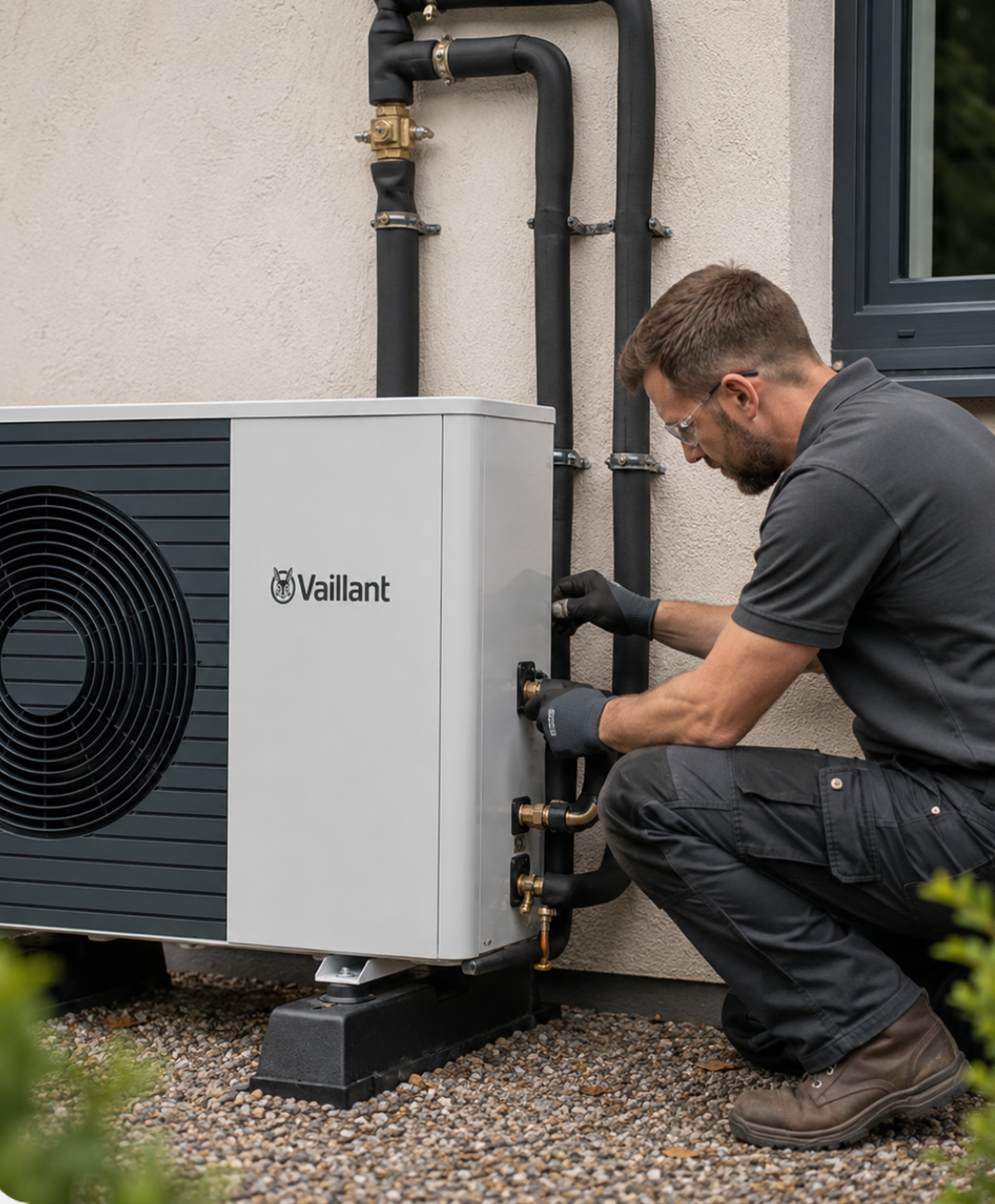
Home Air Conditioning UK: Costs, Types & Guide 2026
Check Your Eligibility for Boiler Upgrade Scheme (BUS)
Complete your details below to check your eligibility.
Thank you
We've received your details and will be in touch shortly.
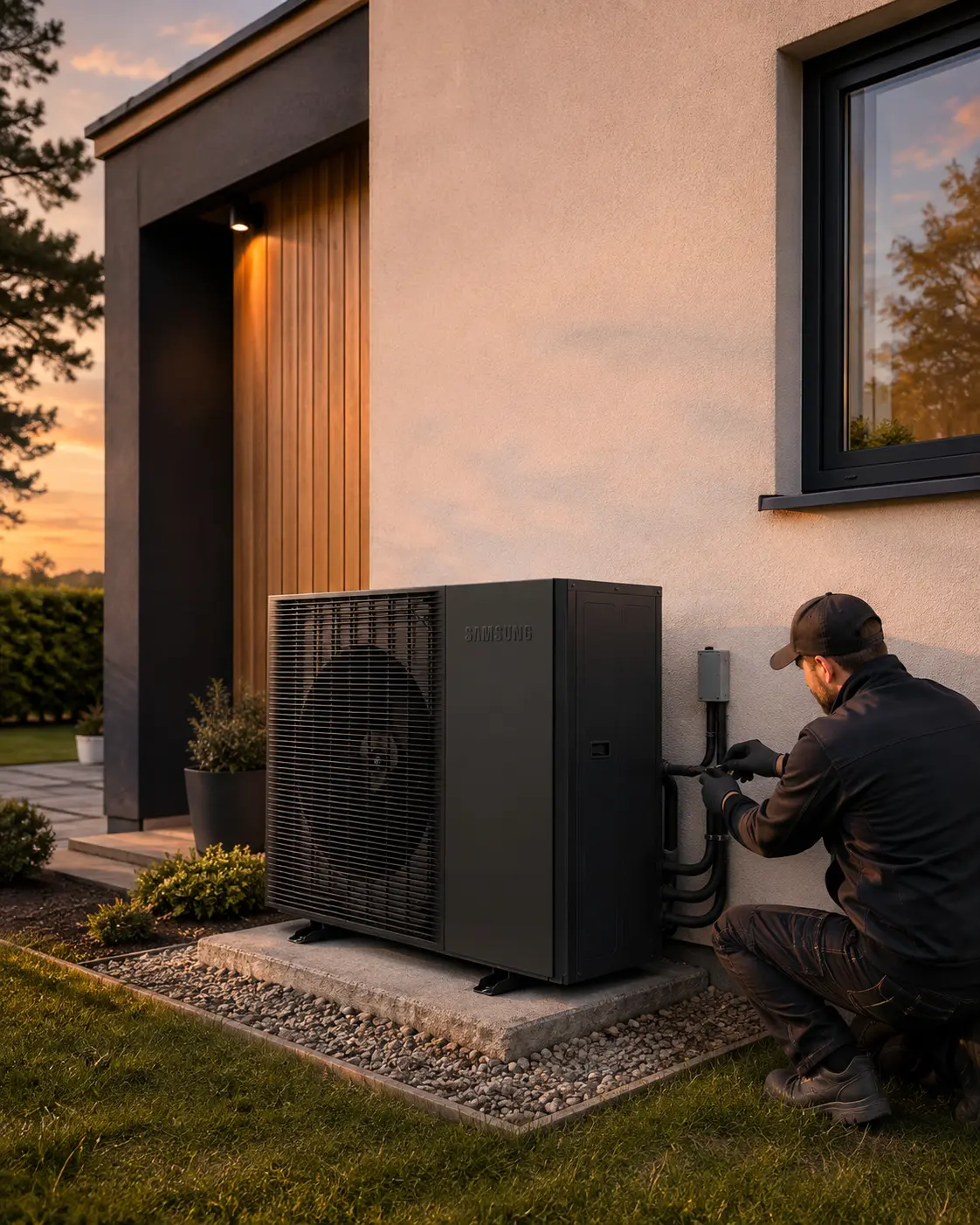
Quick Answer: What Is the Best Home Air Conditioning for a UK Property?
For most owner-occupied UK homes, a professionally installed split system is the strongest long-term option. A single split suits one bedroom, office or living room, while a multi-split can serve several rooms from one outdoor unit. Portable air conditioners cost less upfront and suit renters, but they are usually noisier and less efficient because the compressor remains inside the room.
A typical single-room fixed split system costs roughly £1,500–£3,000 supplied and installed in 2026, although complex or premium installations can cost more. The right capacity should be based on room heat load, not floor area alone.
Home Air Conditioning UK: Costs, Types, Running Costs and What to Choose in 2026
Home air conditioning can make bedrooms, loft rooms, home offices and living spaces far more comfortable during hot weather. Modern fixed systems can also work in reverse and provide heating in cooler months.
For most UK homeowners, the main decision is whether to use a portable unit, a single split for one room, a multi-split for several rooms or a ducted system. Correct sizing, outdoor-unit position, noise, electrical work, planning rules and installer qualifications all affect the result.
This guide explains how home air conditioning works, typical 2026 costs, running costs, sizing and the checks to make before installation.
Compare free quotes: If you know which rooms you want to cool, start with Get Free Quote to compare suitable home-improvement quotations before choosing an installer.
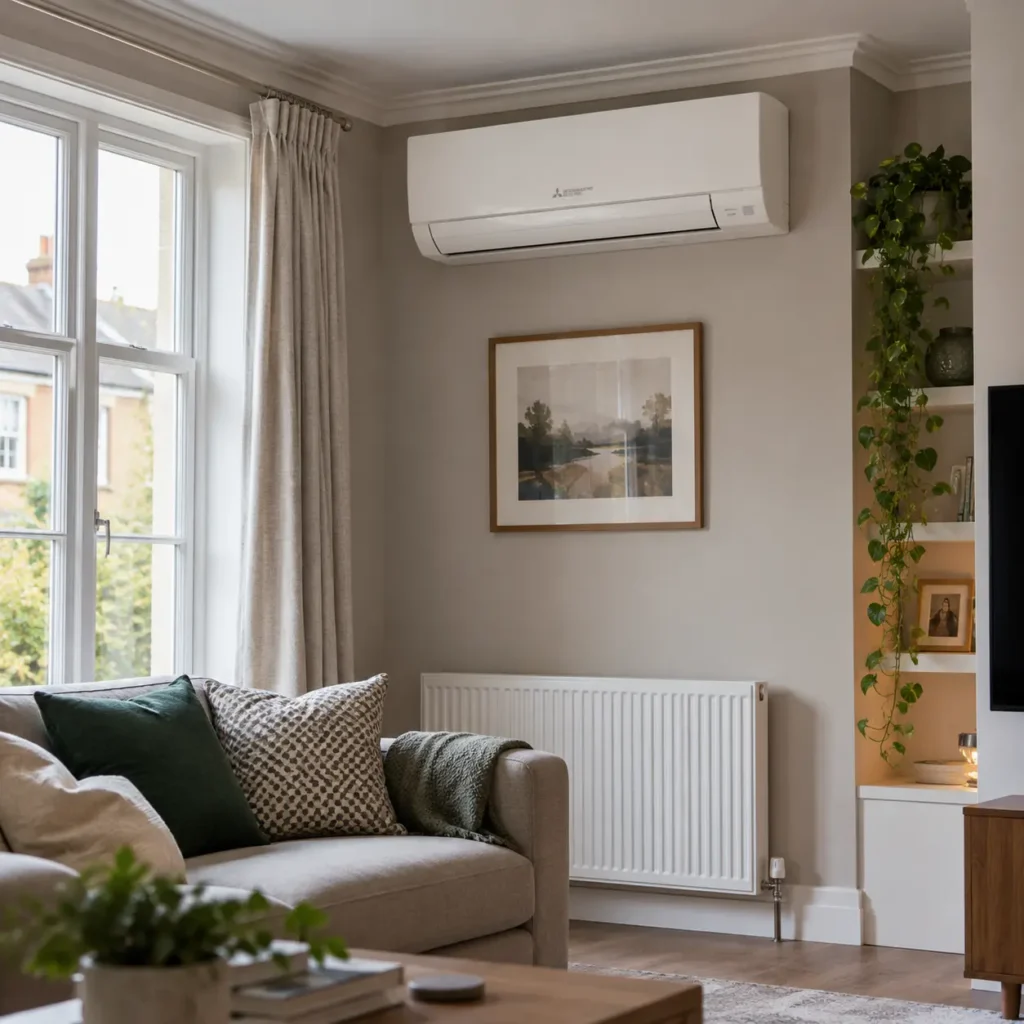
Home Air-Conditioning Options Compared
| System | Best for | Main strength | Main consideration |
|---|---|---|---|
| Portable | Renters or occasional one-room cooling | Low upfront cost | Noisy, less efficient and needs a window exhaust |
| Single split | One bedroom, lounge, office or garden room | Quiet and efficient | Needs indoor and outdoor units |
| Multi-split | Several rooms | One outdoor unit can serve several indoor units | More complex design |
| Ducted | Renovations and larger homes | Discreet outlets and zoning | Higher cost and duct space needed |
Portable units can help where permanent installation is impossible. The Energy Saving Trust guide to keeping homes cool notes that portable air conditioners use substantially more energy than fans and must exhaust hot air outside. Gaps around the exhaust hose can also reduce their effectiveness.
For homeowners planning to stay in the property, a fixed split is usually the better long-term option. See the Air Con UK guide for a broader overview of available systems.
How Does Fixed Home Air Conditioning Work?
A fixed air conditioner moves heat from inside your home to the outside rather than simply “creating cold”.
Warm room air passes across an indoor evaporator coil. Refrigerant absorbs heat from the air before travelling to the compressor, which raises its pressure and temperature.
The outdoor condenser then releases that heat into the outside air. After passing through an expansion device, the refrigerant drops in pressure and temperature before returning to the evaporator. The cycle then repeats.
This refrigeration cycle explains why split systems have indoor and outdoor units connected by refrigerant pipework. Pipe routing, airflow and equipment position can therefore affect real-world performance.
Many modern fixed systems are reversible. In heating mode, the refrigeration cycle changes direction so the system takes heat from outdoor air and transfers it indoors. In that mode, the air conditioner is operating as an air-to-air heat pump. Energy Saving Trust confirms that air-to-air heat pumps can provide cooling as well as heating.
Which Home Air-Conditioning System Should You Choose?
Single split: best for one important room
A single split is often the simplest fixed option when overheating mainly affects one bedroom, loft conversion, home office, garden room or open-plan living area.
It gives effective cooling without keeping the compressor inside the room. That usually makes it a better bedroom solution than a conventional portable appliance.
For more detail on the fitting process, see the air-conditioning installation guide.
Multi-split: best for several rooms
A multi-split connects two or more indoor units to one outdoor unit. Individual rooms can normally be controlled separately.
This can make sense where several bedrooms or living spaces overheat but you want to minimise the number of outdoor units.
Design is more involved because the installer needs to consider total demand, pipe routes and how often several rooms will operate simultaneously.
Portable: best when flexibility matters
Portable air conditioners suit tenants, occasional cooling and rooms where permanent installation is impossible.
Most UK portable systems exhaust hot air through a flexible hose. Single-hose designs can create negative pressure in the room, allowing warm replacement air to enter through gaps elsewhere in the building. This is also a recurring concern among UK owners discussing portable systems.
The portable vs split air-conditioning guide explains the differences in more detail.
How to Size Home Air Conditioning Correctly
Do not choose an air conditioner from floor area alone.
A proper heat-load calculation should consider floor area, ceiling height, insulation, glazing, window area, solar gain, room orientation, occupancy and heat-producing appliances.
A south-facing conservatory and a shaded bedroom of identical size can therefore need very different cooling capacities.
Oversizing is not automatically safer. A unit that is too large may cycle more frequently and control temperature or humidity less smoothly. An undersized unit may run continuously without reaching the required temperature.
Use the UK air-conditioning sizing guide to understand the factors behind an installer’s kW or BTU recommendation.
How Much Does Home Air Conditioning Cost in 2026?
Current UK cost guides vary, so online prices should be treated as indicative rather than guaranteed quotations. Recent 2026 guides broadly place single-room installations around £1,500–£3,000, with multi-room and ducted projects increasing substantially with system size and complexity.
| System | Indicative UK cost |
|---|---|
| Portable air conditioner | Around £300–£650 |
| Single-room fixed split | Around £1,500–£3,000 supplied and fitted |
| Multi-split | Roughly £3,000–£7,500+ |
| Ducted or whole-home | Often £5,000–£15,000+ |
Installation price depends on capacity, equipment brand, pipe-run length, condensate drainage, electrical work and access. Scaffolding, difficult outdoor-unit locations or premium equipment can also increase the quotation.
Ask each installer to confirm whether the price includes equipment, brackets, pipework, electrics, drainage, commissioning, warranty registration and making good.
A property survey is therefore more useful than relying on a headline online price.
What Does Home Air Conditioning Cost to Run?
Running cost depends on the unit’s electrical input, not its advertised cooling output.
For example, a small fixed split may produce around 2.5kW of cooling while drawing roughly 0.6–0.9kW of electricity under particular operating conditions. At the current October–December 2026 Ofgem average electricity price-cap rate of 26.32p/kWh, that equates to approximately 16–24p per hour while drawing that amount of power.
Actual consumption varies with weather, room temperature, insulation, unit efficiency and thermostat setting. Inverter systems can reduce compressor output once the room approaches its target temperature, so maximum electrical input does not necessarily continue throughout the whole cooling period.
You can also reduce demand by shading windows before strong sunlight enters and ventilating when outdoor air becomes cooler. Energy Saving Trust recommends passive cooling measures first because preventing heat entering a home is generally easier than removing it afterwards.
Do You Need Planning Permission for Home Air Conditioning?
Do not assume every fixed system is automatically permitted development.
In England, qualifying domestic air-source heat pumps can fall within Class G permitted-development rights if the relevant limits and conditions are met. Current rules cover factors including MCS planning standards, outdoor-unit size, position and the number of units. The legislation also states that the heat pump must not be solely used for cooling.
The Planning Portal guidance for domestic air-source heat pumps provides more detail on the conditions.
Listed buildings, some flats, conservation areas and unusual external locations may need additional checks. Planning regimes also differ across England, Wales, Scotland and Northern Ireland.
The UK Government has separately clarified that there is no blanket ban on home air conditioning, and many small-home installations do not require a planning application. However, homeowners should check their particular property with the local planning authority before work begins.
Who Can Install a Fixed Air Conditioner?
Refrigerant work is regulated.
The GOV.UK guidance on F-gas qualifications states that individuals working on stationary refrigeration, air-conditioning and heat-pump systems containing F gas need the appropriate qualifications. Companies carrying out installation, maintenance or servicing for others may also require company certification.
Ask who will commission the refrigerant circuit and verify the relevant F-gas credentials before accepting a quotation.
Can Home Air Conditioning Heat Your Home?
Yes, if you choose a reversible system.
Most modern fixed split systems can operate as air-to-air heat pumps. In cooling mode they transfer heat outdoors. In heating mode they reverse the process and move heat from outside air into the property.
That can make them useful for bedrooms, offices, garden rooms and properties needing both summer cooling and flexible electric heating.
However, using one wall-mounted system as occasional supplementary heating is different from designing an air-to-air heat-pump system to replace the main heating system throughout a property.
Can You Get a Grant for Air-to-Air Heat Pumps in 2026?
Potentially.
The Boiler Upgrade Scheme now provides £2,500 towards eligible air-to-air heat pumps in residential properties in England and Wales.
According to Ofgem’s current Boiler Upgrade Scheme guidance, a BUS-funded heat pump must be installed and commissioned by an MCS-certified installer and sized to meet the property’s full space-heating needs.
That distinction matters. Installing one reversible unit simply to cool a bedroom does not automatically make the project grant-eligible.
Qualifying heat-pump installations also currently benefit from 0% VAT until 31 March 2027. HMRC’s VAT guidance for energy-saving materials specifically notes that permanently fixed air-source heat pumps can operate in reverse to provide cooling as well as heating.
How to Choose Home Air Conditioning: 7 Practical Checks
Identify the rooms that genuinely overheat. Do not automatically cool the whole house.
Compare portable, single-split and multi-split options. Match the system to how long you expect to stay in the property.
Ask for a heat-load calculation. Do not rely solely on a floor-area estimate.
Check indoor noise levels. This matters particularly for bedrooms.
Confirm the outdoor-unit position. Check drainage, airflow, access and electrical requirements.
Verify installer credentials. Check F-gas qualifications and, for BUS-funded installations, MCS certification.
Compare complete quotations. Look at equipment, installation scope, warranties, servicing requirements and exclusions.
Get Your Free Air Source Heat Pump Quote
Find the right air source heat pump solution for your home. Tell us a few details and our team will help you explore suitable options at a competitive price.
Quick to complete. No obligation.
Get your quote
Enter your details below and one of our team will get back to you.
Frequently asked questions
Find clear answers to common questions about home air conditioning in the UK, including installation costs, running costs, system types, sizing, heating, planning permission, humidity, servicing, solar power and government grants.
For most homeowners who can install a permanent system, a fixed split air conditioner offers the best balance of cooling performance, efficiency and low indoor noise. Portable units are more suitable for renters or occasional use.
A single-room fixed split typically costs around £1,500–£3,000 supplied and fitted in 2026. Multi-room and ducted installations cost more, depending on the number of rooms, equipment and installation complexity.
A small fixed unit drawing around 0.6–0.9kW would cost roughly 16–24p per hour at the October–December 2026 average Ofgem electricity cap rate of 26.32p/kWh. Actual consumption varies.
Fixed split systems are generally more efficient because the compressor and heat-rejection equipment sit outside. Portable systems also lose efficiency through their exhaust arrangement and, particularly with single-hose models, unwanted warm-air infiltration.
Yes. A reversible split air conditioner can operate as an air-to-air heat pump, transferring heat from outside into the room during cold weather.
It depends on more than floor area. Glazing, insulation, ceiling height, solar gain, orientation and occupancy should all form part of the heat-load calculation.
Both can describe cooling capacity. UK installers increasingly use kilowatts, while many consumer products still advertise BTU per hour. The capacity required should come from the room's calculated heat load.
Not always. However, the answer depends on the technology, property and location. Qualifying air-source heat pumps in England can benefit from permitted-development rights subject to conditions, while listed buildings, flats and some protected locations require extra checks.
Potentially, but you may need permission from the freeholder, managing agent or landlord as well as any necessary planning approval. Outdoor-unit position and noise are particularly important in flats.
Do not assume permitted-development rights apply. Current English Class G rules exclude installations on a listed building or within its curtilage from those particular permitted-development rights. Seek specialist planning advice before proceeding.
Usually not. Open windows allow warm outside air back into the cooled space, increasing the cooling load and energy consumption.
Yes. During cooling, moisture in warm indoor air can condense on the cold evaporator coil and drain away. This dehumidifying effect can improve comfort on humid days.
Follow the manufacturer's warranty and maintenance requirements. Annual servicing is common for domestic split systems and may be required to maintain some installer or manufacturer warranties.
A straightforward single-room split can often be installed within a working day, while multi-room, ducted, electrical or difficult-access projects can take longer. Site conditions should be confirmed during the survey.
Solar panels can contribute electricity towards an air conditioner whenever the panels are generating and the home is using that electricity. The amount supplied directly by solar depends on generation, cooling demand and other household loads.
Not for an ordinary cooling-only installation. However, eligible residential air-to-air heat-pump installations in England and Wales can currently receive £2,500 through the Boiler Upgrade Scheme if they satisfy the scheme's heating, installation and property requirements.
Is Home Air Conditioning Worth It in the UK?
It can be, particularly where a property repeatedly overheats or hot bedrooms affect sleep and everyday comfort.
A fixed split system costs more upfront than a fan or portable appliance, but it offers stronger cooling, lower indoor noise and the option of heating in winter. Its value is highest where the system will be used regularly rather than for only a few hours each year.
Start with the problem rather than the product. Identify the rooms that overheat, reduce avoidable solar gain, calculate the required capacity and then compare properly specified systems.
For most homeowners, the best next step is a property-specific survey and several like-for-like quotations rather than choosing a unit from an online BTU chart.
Compare free quotes: Compare system specifications, installation scope, warranties and total project cost before deciding whether fixed home air conditioning is right for your property.