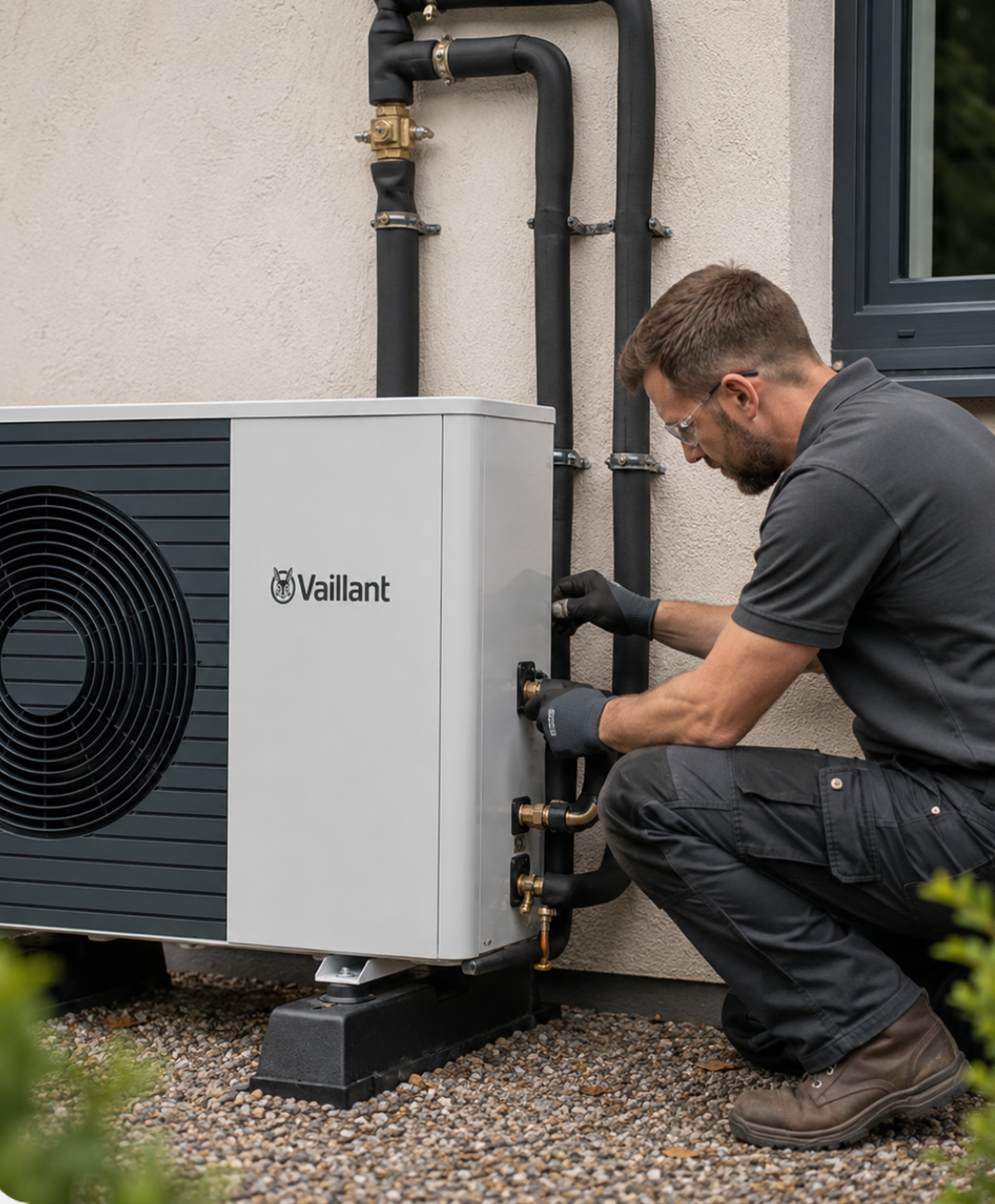
Replacement for Old Boiler: Best Options UK 2026
Check Your Eligibility for Boiler Upgrade Scheme (BUS)
Complete your details below to check your eligibility.
Thank you
We've received your details and will be in touch shortly.
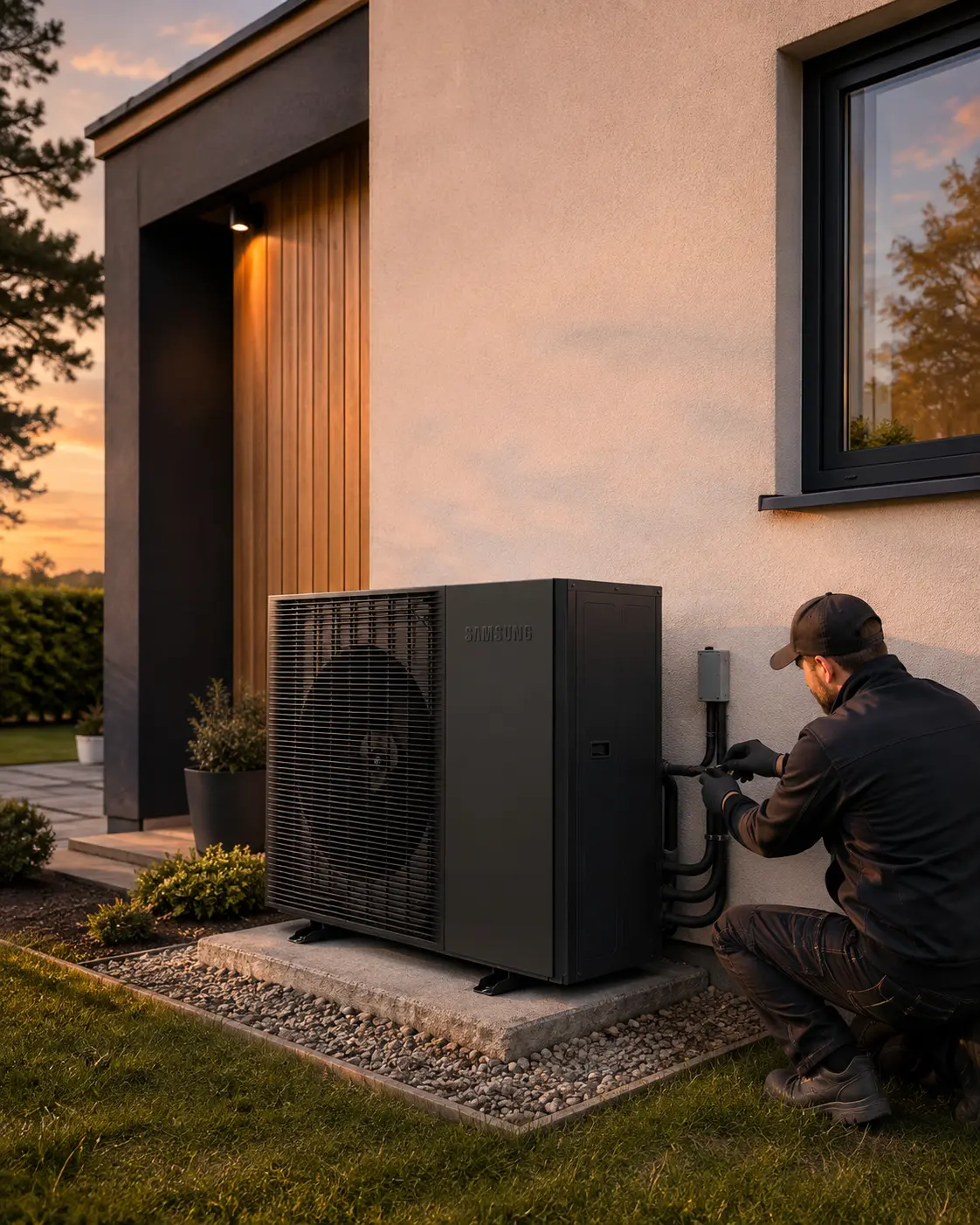
Quick Answer
For many UK homes, the best replacement for an old boiler is either a modern A-rated condensing boiler or an air source heat pump.
A gas boiler is usually cheaper and simpler to install, while a well-designed heat pump is much more efficient and can qualify for government support. Energy Saving Trust puts a typical replacement gas boiler at about £3,500 and an air source heat pump at around £11,000–£12,000 before grants.
In England and Wales, eligible air-to-water heat pumps currently receive £7,500 through the Boiler Upgrade Scheme. Qualifying off-gas homes replacing oil or LPG can receive £9,000 until 31 March 2027.
The best choice depends on heat loss, radiators, hot-water needs, available space and your energy tariff.
Replacement for Old Boiler: What Should You Install Instead in 2026?
If your boiler is old, unreliable or expensive to repair, replacing it is no longer simply a choice between one gas boiler and another. UK homeowners can compare a modern condensing boiler with an air source heat pump and, in some homes, ground source heat pumps or biomass.
The right replacement depends on your property, heating system, budget and plans for the home. A new gas boiler usually offers the lowest upfront cost and least disruption. An air source heat pump can be a stronger long-term option when the property can heat effectively at lower water temperatures and available grants make installation competitive.
Considering replacing an old boiler? Get a free quote and compare property-specific options before committing.
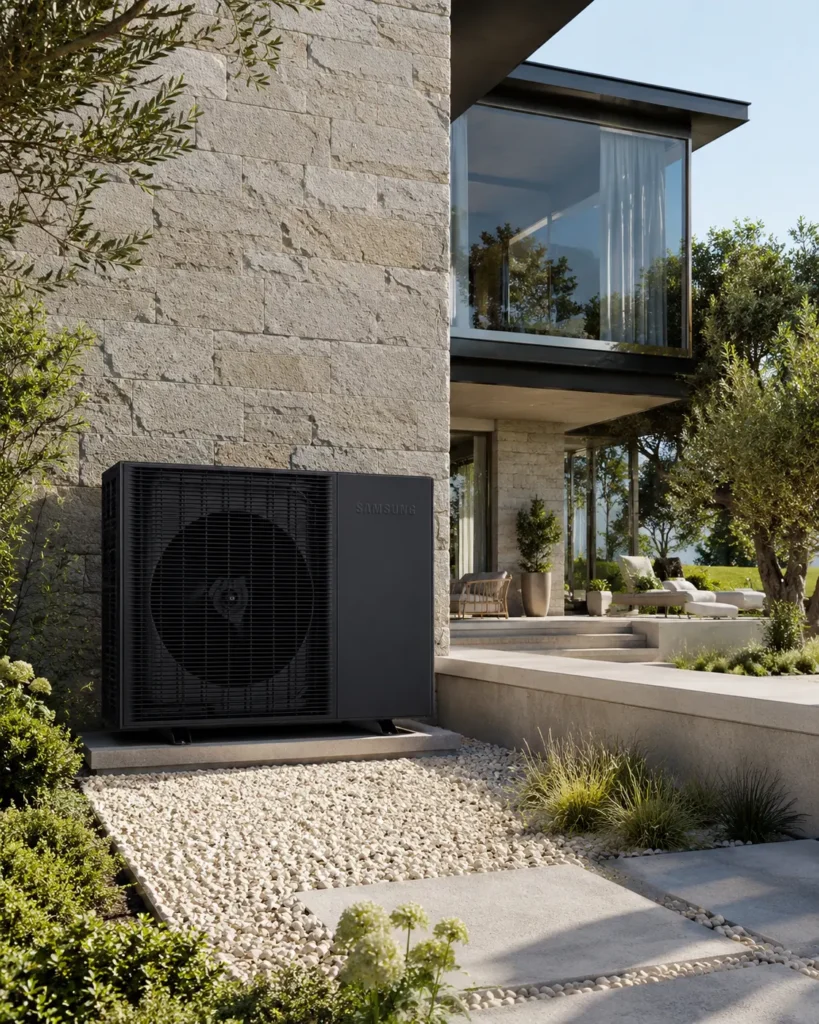
Should You Repair or Replace an Old Boiler?
Age alone does not mean a boiler must be replaced. Replacement becomes more sensible when problems combine: frequent breakdowns, costly parts, poor efficiency, unreliable hot water or repeated engineer visits.
Energy Saving Trust says the average boiler lifespan is around 10–15 years. If a major repair is required near the end of that range, compare the repair cost with the value of putting that money towards a new heating system.
Planning before failure also matters. It gives you time to compare technologies and quotations properly rather than accepting an emergency like-for-like replacement during cold weather.
What Are the Best Replacements for an Old Boiler?
| Replacement | Best suited to | Main advantage | Main consideration |
|---|---|---|---|
| Modern gas boiler | Gas-connected homes needing a straightforward replacement | Lower upfront cost | Still uses fossil gas; no BUS grant |
| Air source heat pump | Many homes with suitable heat loss and outdoor space | High efficiency and grant support | May need radiator, cylinder or electrical changes |
| Ground source heat pump | Homes with substantial land or borehole potential | Stable, high efficiency | Much higher installation cost |
| Biomass boiler | Certain rural, off-gas properties | BUS support may be available | Fuel storage and maintenance |
| Electric boiler | Small homes or properties with specific constraints | Compact and simple | Direct electric heating can be expensive to run |
For most homeowners in 2026, the practical shortlist is a new gas boiler versus an air-to-water heat pump.
A Modern Condensing Boiler
A new gas boiler is usually the least disruptive route if your home already has mains gas, suitable pipework and radiators.
According to Energy Saving Trust’s boiler guidance, a typical replacement gas boiler costs around £3,500.
A combi boiler can also preserve on-demand hot water without requiring a cylinder. That can be useful in smaller properties.
If your priority is the lowest initial spend, a like-for-like replacement can therefore remain a rational choice.
However, compare more than the installation price. You remain exposed to future gas prices and the gas standing charge, while the new boiler becomes another long-term fossil-fuel heating asset.
An Air Source Heat Pump
An air-to-water heat pump transfers heat from outdoor air into water for radiators, underfloor heating and a hot-water cylinder.
Because it moves heat rather than producing it through combustion, it can deliver several units of useful heat for every unit of electricity consumed.
Energy Saving Trust says heat pumps are generally around four times as efficient as a new gas boiler, although real seasonal performance varies with the property, system design and operating temperatures.
For a deeper technology comparison, see air source heat pump vs gas boiler.
Heat Pump or New Gas Boiler: Which Is Better?
A heat pump is usually the stronger long-term candidate when:
Your home can operate efficiently at relatively low flow temperatures.
You have a suitable outdoor location.
There is room for hot-water storage.
Required radiator or pipework changes are manageable.
The final price after grants works for your budget.
A gas boiler is often more practical when you need the lowest upfront cost, have very limited space, require a rapid replacement or would face disproportionate heating-system adaptation costs.
Running costs are not decided by efficiency alone.
From 1 October to 31 December 2026, Ofgem’s current price-cap rates average 26.32p/kWh for electricity and 7.97p/kWh for gas for Direct Debit customers.
A heat pump’s much higher efficiency can offset electricity’s higher unit price. However, the actual result depends on its seasonal performance, your tariff and the amount of heat your home needs.
For the detailed calculation rather than repeating it here, use the heat pump vs gas boiler running-cost guide.
How Much Does Replacing an Old Boiler Cost?
| Option | Typical indicative cost | Current support in England and Wales |
|---|---|---|
| Replacement gas boiler | Around £3,500 | No Boiler Upgrade Scheme grant |
| Air source heat pump | Around £11,000–£12,000 before grant | £7,500 for eligible air-to-water systems |
| Eligible off-gas heat pump replacing oil/LPG | Property-specific | £9,000 until 31 March 2027 |
| Ground source heat pump | Around £15,000 with trenches; potentially much more with boreholes | £7,500 normally; £9,000 for qualifying off-gas oil/LPG replacements |
Energy Saving Trust estimates air source heat pump installations at around £11,000–£12,000. Ground source systems start considerably higher, with boreholes capable of pushing costs far beyond a standard air source installation.
These are guide figures, not guaranteed quotations. Radiators, electrical work, hot-water cylinders, pipework, access and system size can materially affect the final price.
The Boiler Upgrade Scheme is therefore central to the comparison.
Current GOV.UK Boiler Upgrade Scheme guidance provides £7,500 for eligible air-to-water and ground source heat pumps. A temporary £9,000 rate applies to qualifying off-gas properties replacing oil or LPG until 31 March 2027.
Read the Boiler Upgrade Scheme 2026 update before budgeting.
Will a Heat Pump Work With Your Existing Radiators?
Possibly. You do not automatically need to replace every radiator.
Heat pumps usually work most efficiently with lower heating-water temperatures than traditional boilers. Each room therefore needs enough radiator surface area to deliver the required heat at the proposed flow temperature.
Some existing radiators may already be large enough. Others may need larger or higher-output replacements.
Ofgem’s current BUS guidance confirms that suitable existing components, including radiators and pipework, can sometimes remain as part of a qualifying installation.
The correct starting point is therefore a room-by-room heat-loss calculation rather than the age of the property.
Older homes can use heat pumps successfully when the heating system is designed around the building’s actual heat demand. Energy Saving Trust also advises installers to assess heat demand and identify necessary radiator or insulation changes before quoting.
If you are unsure about your property, see is my home suitable for a heat pump?.
Hot water needs planning too. A combi boiler heats water on demand, while most air-to-water heat pumps use a hot-water cylinder. That can affect cupboard or utility-room space.
How to Choose the Right Replacement for Your Old Boiler
Check whether repair still makes financial sense. Ask about the repair cost, likely remaining boiler life and availability of replacement parts.
Get a heat-loss assessment. This shows how much heat your property needs on a cold day and helps determine whether a heat pump is suitable.
Review radiators and pipework. Do not assume everything needs replacing, but make sure each room’s heat output has been checked.
Plan your hot water. Compare your current combi or cylinder arrangement with what the proposed replacement requires.
Compare complete installed prices. Include grants, radiators, controls, electrical work, cylinders and necessary building work.
Challenge running-cost estimates. Ask which energy tariff and seasonal heat-pump efficiency the calculation assumes.
Get multiple quotations. Energy Saving Trust recommends comparing at least three heat-pump installers. BUS-funded installations are installer-led and require an appropriately MCS-certified installer.
Is an Air Source Heat Pump the Best Replacement for an Old Boiler?
It can be, particularly when your existing boiler is already due for replacement.
That timing matters because you should not compare the full heat-pump price with spending nothing. You should compare it with the boiler replacement you would otherwise have to pay for.
A heat pump becomes particularly compelling when the survey shows manageable heat loss, your radiators can work at sensible flow temperatures, suitable equipment space exists and the available grant brings the capital cost within budget.
It may be less attractive when adaptation costs are unusually high or the property has major practical constraints. In those cases, a modern boiler may remain the sensible short-term replacement.
The important point is not to make the decision from the boiler cupboard alone. Compare the complete heating system, the property and your likely period of ownership.
Get Your Free Air Source Heat Pump Quote
Find the right air source heat pump solution for your home. Tell us a few details and our team will help you explore suitable options at a competitive price.
Quick to complete. No obligation.
Get your quote
Enter your details below and one of our team will get back to you.
Frequently asked questions
Find clear answers to common questions about replacing an old boiler, including repair versus replacement, heat pumps, Boiler Upgrade Scheme grants, radiators, hot-water cylinders, insulation, running costs and replacing gas boilers in 2026.
Frequent breakdowns, costly repairs, unreliable heating or hot water and difficulty obtaining parts are strong warning signs. Boiler age should be considered alongside condition rather than used on its own.
Sometimes, but a costly repair on a boiler already around the typical 10–15-year lifespan deserves careful comparison with replacement. Ask the engineer about likely remaining life and future parts availability.
For many UK homes, an air-to-water heat pump is the main low-carbon alternative. Ground source heat pumps can also work well where sufficient land or borehole access exists.
Yes. A correctly designed air-to-water heat pump can provide both space heating and stored domestic hot water. A BUS-funded installation must generally fully replace the existing fossil-fuel heating system.
Yes. Property age alone does not determine suitability. Heat loss, radiator capacity, insulation, pipework and required flow temperature are more important.
No. Existing radiators can remain where their output is adequate at the proposed heating-water temperature. Each room should be assessed individually.
Yes, but domestic hot water normally works differently. Most air-to-water heat-pump installations use a hot-water cylinder rather than producing unlimited hot water on demand.
Most eligible air-to-water and ground source heat pumps in England and Wales receive £7,500. Qualifying off-gas properties replacing oil or LPG can receive £9,000 until 31 March 2027.
Normally, no. The temporary £9,000 uplift applies to qualifying properties without a mains-gas connection that replace eligible oil or LPG heating.
It can be. At current October–December 2026 average price-cap rates, a heat pump achieving a seasonal performance factor of roughly 3.0 is around the fuel-cost break-even point against a 90%-efficient gas boiler. Actual costs depend on your tariff and system performance.
Yes. Replacement gas boilers can still be installed in existing UK homes in 2026, subject to applicable building regulations and gas-safety requirements. Gas work must be carried out by a suitably Gas Safe registered engineer.
No. Better insulation can reduce heat demand and improve performance, but imperfect insulation does not automatically make a home unsuitable. A proper heat-loss calculation is more useful than judging the house by age or EPC rating alone.
Usually not. Planning while it still operates gives you time to obtain surveys, compare quotes, investigate grants and decide whether changing heating technology makes sense.
Generally, no. Ofgem requires the BUS-funded system to fully replace the existing fossil-fuel heating system rather than operating as a funded hybrid system.
No. BUS applies in England and Wales. Scotland has separate home-energy support arrangements, while Northern Ireland has different schemes and eligibility rules.
Conclusion
There is no single best replacement for every old boiler.
A modern condensing boiler remains the simplest and usually cheapest upfront option for many gas-connected homes. An air source heat pump offers much higher efficiency, substantial grant support and a credible route away from fossil-fuel heating, but it requires proper system design.
If your boiler is approaching the end of its life, compare both paths before it fails.
A room-by-room survey, realistic running-cost estimate and complete installed quotation will tell you far more than a headline appliance price.