
Replace Gas Boiler With Heat Pump Grant: BUS 2026 Guide
Check Your Eligibility for Boiler Upgrade Scheme (BUS)
Complete your details below to check your eligibility.
Thank you
We've received your details and will be in touch shortly.

Quick Answer: How Much Does a Heat Pump Cost for a 2-Bedroom House?
You can apply for the Boiler Upgrade Scheme if you have a gas boiler, provided you own an eligible property in England or Wales and the new qualifying heat pump replaces your existing fossil-fuel heating system. In 2026, a typical mains-gas property can receive £7,500 towards an eligible air-to-water or ground source heat pump. The temporary £9,000 rate does not apply to ordinary mains-gas homes; it is for qualifying off-gas-grid properties replacing oil or LPG until 31 March 2027. Your MCS-certified installer applies on your behalf, and the grant is deducted from your quotation and invoice rather than paid to you as cash.
Considering a heat pump? Compare fully surveyed quotations before choosing a system. The grant is important, but property suitability and the complete installation cost matter more.
Can You Apply for BUS If You Have a Gas Boiler? How the Heat Pump Grant Works in 2026
Yes. If your home uses a gas boiler, that can be the heating system you replace through the Boiler Upgrade Scheme (BUS). For an eligible property in England or Wales, the standard grant is £7,500 towards an air-to-water or ground source heat pump.
BUS supports a move away from fossil-fuel heating. A mains-gas connection does not stop you getting the standard grant, but a BUS-funded heat pump cannot form a fossil-fuel hybrid with your gas boiler. Current GOV.UK guidance specifically includes gas among the fossil-fuel heating systems that BUS can replace.
This guide explains who qualifies, what “replacing” a gas boiler means, how much support is available, and what happens to your radiators, hot water and existing boiler.
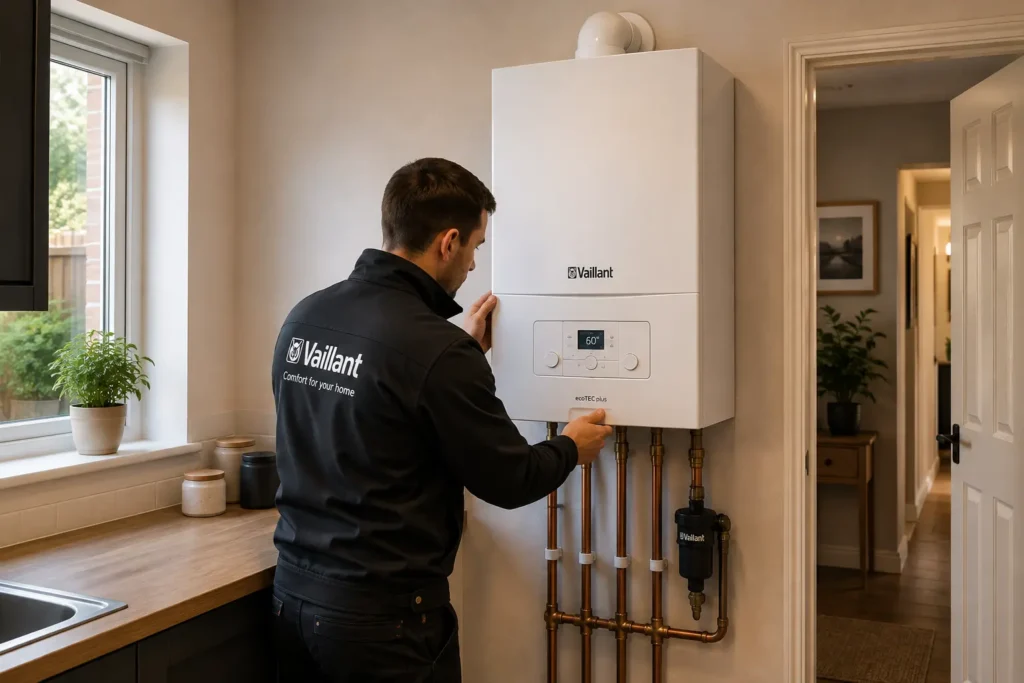
Can a Gas-Boiler Home Qualify for the Boiler Upgrade Scheme?
Yes. The official GOV.UK BUS eligibility guidance specifically lists gas among the fossil fuels that can be replaced. The scheme reduces the upfront cost of moving from fossil-fuel heating to eligible low-carbon systems.
You must still satisfy the wider rules. The property needs to be in England or Wales, you must own it, and the installation must meet the scheme’s technical requirements. Private landlords, owners of second homes and eligible business-property owners can also qualify.
For the wider changes introduced this year, including the temporary off-gas uplift, see our Boiler Upgrade Scheme 2026 updates.
Does Your Gas Boiler Have to Be Removed?
This is where many homeowners become confused.
BUS will not fund a hybrid system that combines a fossil-fuel boiler with a heat pump. Ofgem says the heat pump must be sized to meet the property’s full space-heating needs. Any supplementary heating forming part of the eligible system must not be fossil fuelled.
In practice, you should expect the gas boiler to stop being an operational backup heat source. A BUS-funded heat pump is intended to replace the fossil-fuel heating rather than sit alongside a working gas boiler as a hybrid.
However, being connected to mains gas does not prevent you receiving the standard £7,500 grant. The stricter “no mains gas connection” condition applies to the temporary £9,000 uplift for qualifying oil- and LPG-heated properties.
If you are comparing the practical differences between the two systems, read our air source heat pump vs gas boiler guide.
How Much BUS Grant Can You Get in 2026?
| Existing situation | New system | Current BUS support | Key point |
|---|---|---|---|
| Mains-gas home | Air-to-water heat pump | £7,500 | Standard grant |
| Mains-gas home | Ground source heat pump | £7,500 | Standard grant |
| Eligible residential property | Air-to-air heat pump | £2,500 | Different requirements |
| Off-gas property replacing oil or LPG | Air-to-water or ground source heat pump | £9,000 | Until 31 March 2027 |
These are the current grant categories in September 2026.
A gas-heated home should therefore budget around the standard £7,500 figure for an eligible air-to-water or ground source system. Removing a gas boiler does not unlock the £9,000 rate. That uplift depends on the property being off the gas grid and replacing qualifying oil or LPG heating.
BUS Eligibility Checklist for a Gas-Heated Home
For a straightforward gas-boiler replacement, check that:
- You own an eligible property in England or Wales.
- You are replacing fossil-fuel heating, such as a gas boiler.
- The new technology and installation meet BUS and MCS requirements.
- The heat pump is sized to meet the full space-heating requirement.
- The proposal is not a gas-boiler/heat-pump hybrid.
- The installation has not already received conflicting public funding.
Most new-build properties and social housing are outside the scheme, although qualifying self-build properties are treated differently.
A valid EPC is also no longer a standing eligibility requirement. If your property has a valid EPC, its details should be supplied. If it does not, the installer can provide alternative evidence under the current Ofgem process.
For the wider eligibility criteria, see our Boiler Upgrade Scheme requirements guide.
How Do You Apply If You Currently Have a Gas Boiler?
BUS is installer-led, so you do not normally submit the grant claim yourself.
Start by contacting MCS-certified heat-pump installers and obtaining quotations. Your installer should assess the property, confirm likely eligibility and specify the proposed system. Once you agree a quote, the installer submits the voucher application to Ofgem on your behalf.
Ofgem then contacts you to confirm your consent and relevant details. The grant must appear as an upfront deduction on your quotation and final invoice. You pay the remaining installation cost, while the installer later redeems the BUS voucher.
This is not cashback where you pay the complete installation price and wait for £7,500 to arrive in your bank account.
The Boiler Upgrade Scheme application guide covers the process in more detail.
What Happens to Your Radiators and Hot Water?
Replacing the boiler does not automatically mean replacing every radiator.
Air-to-water heat pumps commonly operate at lower water temperatures than gas boilers. An installer should calculate each room’s heat loss and check whether each existing radiator can provide enough heat at the proposed flow temperature. Some may already be suitable; others may need a larger or higher-output replacement.
Hot water also needs planning. Many gas combi boilers produce hot water on demand, while an air-to-water heat pump usually works with a hot-water cylinder. Homes moving from a combi boiler therefore need a suitable location for the proposed hot-water arrangement.
These changes are property-specific. They are a reason to insist on a proper survey, not a reason to assume your home is unsuitable. MCS guidance also emphasises room-by-room heat-load assessment when sizing heating systems.
How Much Might You Pay After the £7,500 Grant?
Energy Saving Trust currently gives an indicative figure of around £11,000 for an air source heat-pump installation. On that simple example, a £7,500 BUS grant would leave around £3,500 before property-specific differences.
| Illustrative item | Example amount |
|---|---|
| Indicative air source heat-pump installation | Around £11,000 |
| Standard BUS grant | −£7,500 |
| Illustrative balance | Around £3,500 |
Treat that only as an example, not a quotation. Radiator changes, cylinder work, electrical upgrades, access and heat-pump size can move the final price substantially.
Running costs are separate. They depend on heat demand, system efficiency, electricity tariff and operating temperature. See our heat pump vs gas boiler running costs guide before assuming the cheapest installation will deliver the lowest bills.
Common Reasons a Gas-Heated Property May Not Qualify
Having gas heating is not the problem. Eligibility can fail for other reasons.
A project may be unsuitable for BUS if it keeps the gas boiler as part of a fossil-fuel hybrid, replaces an existing low-carbon heating system, concerns most developer-built new homes, involves social housing, or duplicates prohibited public funding for the same installation.
Technical compliance also matters. BUS is attached to an eligible complete installation, not simply to buying a heat-pump unit.
The useful question is therefore not just, “Is my boiler gas?” It is, “Will the proposed replacement system and property meet the current BUS rules?”
Is It Worth Replacing a Gas Boiler With a Heat Pump Using BUS?
The £7,500 grant can materially reduce the upfront cost, especially when your boiler already needs replacing or your home is being renovated. However, grant eligibility and financial suitability are different questions.
A heat pump needs to be designed around the building’s heat loss, radiators or underfloor heating, hot-water demand, available space and realistic operating temperatures. Running costs can compare differently with gas from one property to another.
Compare complete quotations after the BUS discount. Ask each installer to explain the proposed flow temperature, radiator changes, expected seasonal performance, cylinder specification and likely electricity use.
If the design works for your property, BUS can make replacing a gas boiler with a heat pump substantially more affordable. The next step is a property-specific assessment rather than a generic online estimate.
Get Your Free Air Source Heat Pump Quote
Find the right air source heat pump solution for your home. Tell us a few details and our team will help you explore suitable options at a competitive price.
Quick to complete. No obligation.
Get your quote
Enter your details below and one of our team will get back to you.
Frequently asked questions
Find clear answers to common questions about using the Boiler Upgrade Scheme when replacing a gas boiler, including the £7,500 grant, the £9,000 off-gas uplift, gas connections, hybrid systems, EPCs, landlords, second homes, new builds and radiator requirements.
Yes. Gas is an eligible fossil-fuel heating system to replace, provided the property and new installation meet the current BUS rules.
The standard BUS grant is £7,500 for an eligible air-to-water or ground source heat pump.
The BUS-funded system cannot be a fossil-fuel hybrid. In practice, the heat pump must replace the gas heating rather than rely on the gas boiler as its backup heat source.
Yes. A mains gas connection does not itself prevent access to the standard £7,500 grant. The stricter no-gas-connection rule applies to the temporary £9,000 off-gas uplift.
Normally no. The £9,000 temporary uplift is for qualifying off-gas-grid properties replacing oil or LPG with an eligible air-to-water or ground source heat pump until 31 March 2027.
No. BUS does not fund fossil-fuel hybrid heat-pump systems.
No. An MCS-certified installer applies to Ofgem on your behalf after you agree the proposed installation and quotation.
No. The grant is applied as an upfront discount and must appear on the quotation and final invoice.
A valid EPC is no longer a standing requirement. If one exists, its details are used; if not, the installer can provide alternative evidence under current Ofgem rules.
Yes. A private landlord who owns an eligible property can potentially use BUS, subject to the normal scheme requirements.
Yes. Property owners can potentially use BUS for an eligible second home, subject to the scheme rules.
Most developer-built new homes are not eligible. Certain qualifying self-build properties can be eligible.
Not necessarily. The installer should calculate room-by-room heat loss and check whether each radiator can deliver enough heat at the proposed flow temperature.
Conclusion
Yes, you can apply for BUS if you have a gas boiler. Replacing fossil-fuel heating is central to the scheme.
For a typical mains-gas home in England or Wales, the headline support is £7,500 towards an eligible air-to-water or ground source heat pump. Your mains-gas connection does not automatically disqualify you, but the BUS-funded system cannot operate as a fossil-fuel hybrid with the old boiler.
Check eligibility first, then compare properly surveyed quotations that show the grant deduction and every required system change.
Ready to explore your options? Compare free heat-pump quotes and assess the complete installation before deciding.


