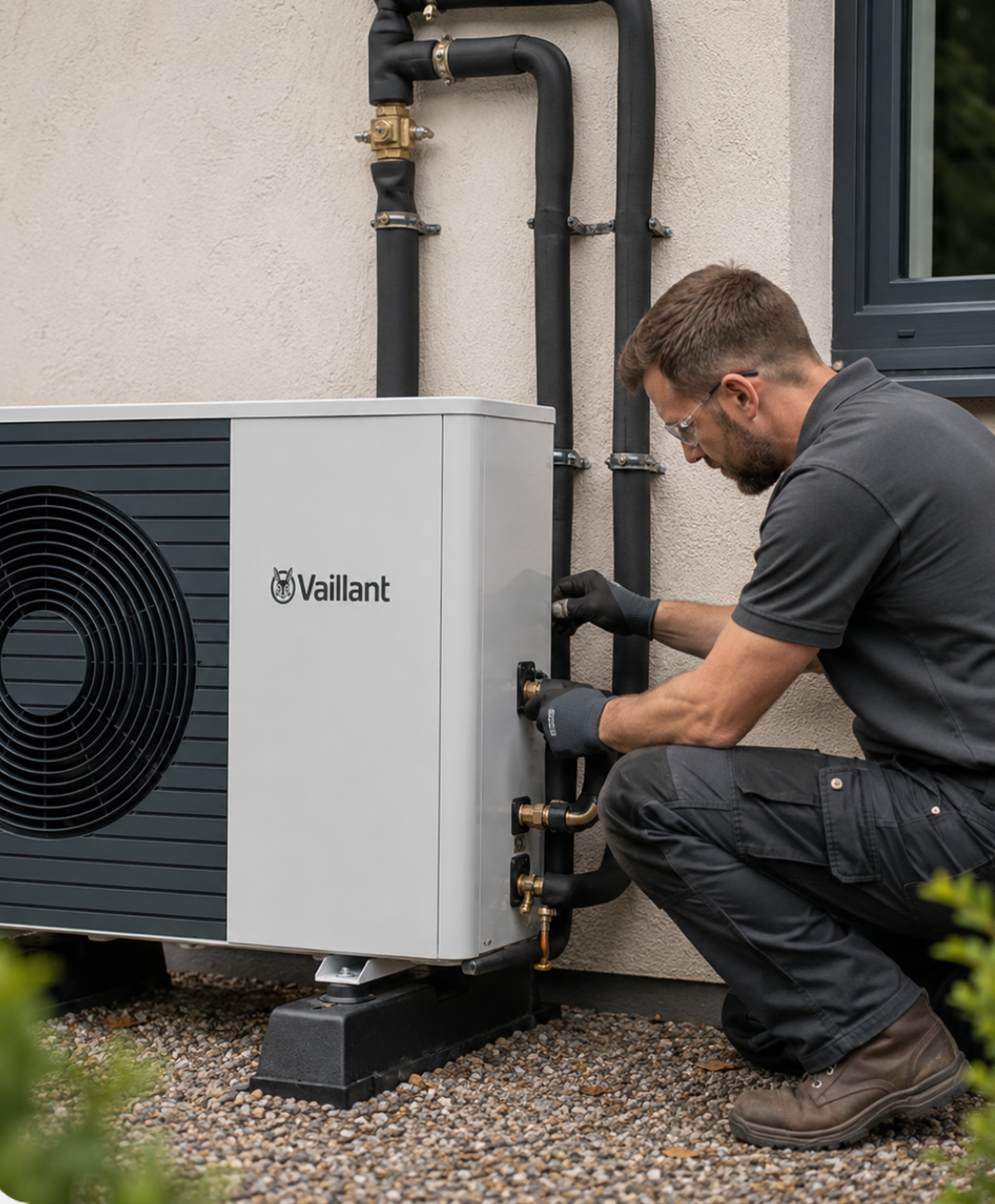
Best Air Conditioning Installers Near Me | UK Guide 2026
Check Your Eligibility for Boiler Upgrade Scheme (BUS)
Complete your details below to check your eligibility.
Thank you
We've received your details and will be in touch shortly.
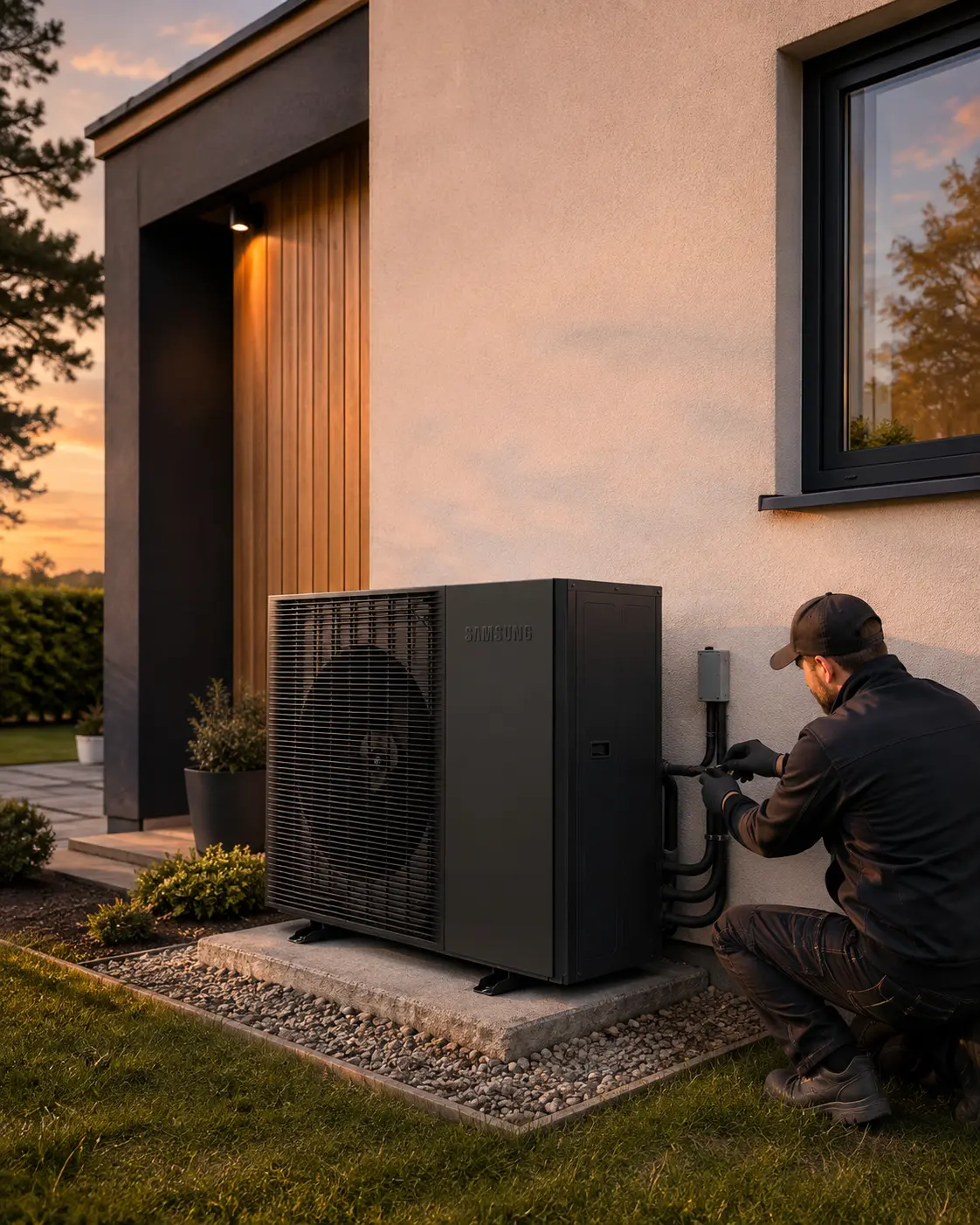
Quick answer: how do I find the best air conditioning installer near me?
The best local air conditioning installer is not necessarily the closest or cheapest. Start with at least three companies that work in your area. Check the engineer’s relevant F-Gas qualification and the company’s required F-Gas certification where the system contains regulated refrigerant. Then compare the survey, exact equipment, sizing method, pipework and drainage plan, electrical work, commissioning, warranty and aftercare.
Strong installers explain why a system suits your property and give a written quotation with model numbers and clear exclusions. Manufacturer-approved status, recent reviews and photographs of comparable work can add useful evidence.
Best Air Conditioning Installers Near Me: How to Choose in the UK
Searching for the best air conditioning installers near me is usually the point where product research becomes a real home-improvement decision.
For UK homeowners, the safest approach is to shortlist at least three installers and compare the complete proposal rather than the headline price. Energy Saving Trust recommends getting at least three quotations, while GOV.UK requires appropriate qualifications for work on stationary air-conditioning systems containing regulated F-gases.
Ready to compare options? Get free, no-obligation air conditioning quotes and compare the proposed system, installation scope, warranty and total cost before choosing.
What separates the best air conditioning installers from average ones?
A strong installer starts with your property and intended use, not with a preferred brand or the largest unit available.
| Check | What good looks like | Why it matters |
|---|---|---|
| F-Gas competence | Relevant individual qualification and company certification where required | Refrigerant work is regulated |
| Survey quality | Room loads, glazing, orientation, insulation, drainage, electrics and unit positions assessed | Helps avoid poor sizing and awkward installation |
| Written specification | Exact indoor/outdoor model numbers and capacities | Makes quotes comparable |
| Installation scope | Pipework, drainage, electrical work, mounting and commissioning listed | Reduces surprise extras |
| Warranty | Product and workmanship cover explained in writing | Protects you if faults appear |
| Aftercare | Clear servicing and warranty-claim process | Important over the system’s life |
| Evidence | Recent relevant reviews and installation photos | Helps assess workmanship and communication |
Look beyond the overall review score. Read recent comments about workmanship, communication and what happened when a problem occurred. Recent UK homeowner discussions repeatedly emphasise the importance of reviewing previous work and aftercare rather than choosing on price or star rating alone.
Suggested visual: a downloadable “Air Conditioning Installer Checklist” graphic showing the seven checks above.
Do air conditioning installers need F-Gas certification?
For systems containing regulated fluorinated greenhouse gases, relevant refrigerant work must be completed by appropriately qualified people.
GOV.UK distinguishes between the individual engineer’s qualification and the company certification required for businesses carrying out covered stationary air-conditioning work for other people. Company certification bodies listed by GOV.UK include REFCOM, the F-Gas Register operated by Quidos and Bureau Veritas.
Before booking, ask:
What F-Gas qualification will the engineer working on my system hold?
Which approved body certifies the company?
Will the same qualified engineer commission the system?
F-Gas certification is essential where applicable, but it does not replace good design, workmanship or customer service.
Check the current GOV.UK F-Gas qualification requirements
What should happen during an air conditioning survey?
A permanent system should not be sized from floor area alone.
The installer should consider room dimensions, ceiling height, insulation, glazing, solar gain, orientation, occupancy and heat-producing equipment. A south-facing loft bedroom can need more cooling than a larger shaded room.
The survey should also confirm unit locations, refrigerant pipe routes, condensate drainage, electrical supply, service access and likely noise impact.
If you want to understand what the survey should cover before comparing quotations, read the air conditioning sizing UK guide and the broader air conditioning installation UK guide.
How should I compare air conditioning quotes?
Compare like with like. A cheap quote can become expensive if it excludes electrical work, long pipe runs, condensate pumps, access equipment or making good.
| Quote item | What to compare |
|---|---|
| Equipment | Manufacturer, exact model, capacity and refrigerant |
| Performance | SEER, SCOP if heating is required, and sound figures |
| System design | Single split, multi-split or ducted arrangement |
| Installation | Pipe length, trunking, brackets, drainage and electrical work |
| Commissioning | Pressure testing, evacuation, controls setup and handover |
| Warranty | Equipment term, workmanship cover and registration requirements |
| Extras | Scaffolding, pumps, core drilling, decoration and waste removal |
| Timing | Lead time, installation date and what happens if equipment is delayed |
Energy Saving Trust advises homeowners not to compare installers on cost alone and warns against pressure to sign immediately.
If several rooms need conditioning, ask why the installer prefers separate single splits or one multi-split. The single-split vs multi-split air conditioning guide explains the trade-offs.
Suggested visual: a side-by-side example showing a weak one-line quote versus a properly itemised installation quotation.
How much does air conditioning installation cost near me?
Local prices vary with property type, region, installer availability and equipment.
Energy Saving Trust currently gives around £1,900 as a typical cost for a one-room air-to-air heat pump and about £3,700 for a three-bedroom semi-detached home.
Other current 2026 UK guides place a straightforward professionally installed single-room split at roughly £1,500–£3,500, although specification and installation complexity can push quotations higher.
Treat online figures as budgeting guidance, not a quotation. Cost can rise with:
long refrigerant pipe runs;
difficult outdoor-unit positions;
electrical upgrades;
condensate pumps;
several indoor units;
scaffolding or difficult access;
complex drilling; and
premium equipment.
Demand also affects availability. UK installer and homeowner discussions during 2026 reported long lead times and shortages of some equipment during the exceptionally busy summer. Confirm equipment availability before accepting a promised installation date.
Are manufacturer-approved installers worth considering?
They can be a useful extra signal, especially when you already know which brand you want.
Daikin says D1 and D1+ partners can receive extended warranties of up to seven years on air-conditioning equipment, subject to its warranty terms.
Mitsubishi Electric’s Diamond Quality Partners undergo auditing, and its current programme states that qualifying partners can offer 10-year warranties on air-conditioning systems.
Manufacturer status should not be your only filter. A capable independent installer may still be an excellent choice. However, approved-installer schemes can indicate product training, technical support and stronger warranty options.
If you are still choosing equipment, compare the best air conditioning units in the UK before deciding whether brand-specific installer status matters to you.
Do I need planning permission for air conditioning?
Possibly.
In England, Planning Portal guidance says qualifying heating-capable air-source heat-pump installations may fall within permitted-development rights when all conditions are met. Cooling-only systems do not benefit from those particular rights. Flats, listed buildings, conservation areas and leasehold properties need extra care, and planning rules differ elsewhere in the UK.
A good installer should flag obvious planning or noise issues, but the property owner remains responsible for ensuring the correct permissions are in place.
Check current Planning Portal guidance before installing an external unit
What warranty and aftercare should I expect?
Ask for both the manufacturer warranty and the installer’s workmanship cover in writing.
Check who registers the product, whether annual servicing is required to keep the warranty valid, who handles a claim and what happens if the original installer stops trading. Ask whether parts and labour are both covered and whether the warranty transfers to a future owner.
Aftercare matters because air conditioning includes filters, condensate drainage, fans, electrical components and a sealed refrigerant circuit. A reliable installer should explain basic homeowner maintenance and the recommended professional service schedule.
Red flags when choosing a local air conditioning installer
Be cautious if a contractor:
recommends a system without gathering meaningful property information;
refuses to identify exact model numbers;
cannot explain F-Gas credentials;
provides only a vague cash price;
claims a bigger unit is always better;
avoids discussing drainage or electrical work;
pressures you to sign immediately; or
gives no clear warranty and aftercare process.
A remote estimate is not automatically a problem. Photos, plans and measurements can support an initial budget. The concern is a final specification that still has not properly assessed the property.
How to choose the best air conditioning installer near you
Define the job. Decide which rooms need cooling and whether winter heating matters.
Shortlist at least three installers. Use local search, recommendations, directories and manufacturer installer finders.
Verify competence. Check F-Gas qualifications and company certification where applicable.
Compare survey quality. The strongest proposal should reflect your glazing, heat gain, layout, drainage, electrics and noise constraints.
Compare written quotes. Match model numbers, capacities, installation scope, warranties and exclusions.
Check evidence and aftercare. Read recent reviews, inspect photographs and ask who handles faults and servicing.
Choose the complete proposal. Balance design quality, workmanship, warranty, communication, availability and price.
Next step: compare free, no-obligation quotations through Get Free Quote and judge each proposal on the complete installation rather than price alone.
Get Your Free Air Source Heat Pump Quote
Find the right air source heat pump solution for your home. Tell us a few details and our team will help you explore suitable options at a competitive price.
Quick to complete. No obligation.
Get your quote
Enter your details below and one of our team will get back to you.
Frequently asked questions
Find clear answers to common questions about choosing air conditioning installers, including qualifications, F-Gas certification, quotations, surveys, installation costs, planning permission, warranties, VAT and aftercare.
Shortlist at least three companies that serve your area. Compare F-Gas competence, survey quality, exact equipment, written quotations, recent work, warranties and aftercare rather than choosing solely by distance or price.
For regulated F-Gas equipment, engineers carrying out relevant refrigerant work need the appropriate individual qualification. Businesses undertaking covered stationary air-conditioning work for customers also need company certification.
Company F-Gas certification is required for covered work, but REFCOM is not the only approved certification body. GOV.UK also lists Quidos F-Gas Register and Bureau Veritas.
Ask which qualification the engineer holds and which approved certification body covers the company. A professional installer should be willing to provide the relevant details.
At least three is a sensible target. Energy Saving Trust recommends comparing at least three quotations to assess value, system design and installer experience.
A straightforward single-room split commonly falls within roughly £1,500–£3,500 in current 2026 UK cost guides. Your property, system specification, electrical work, pipe routes and access can materially change the figure.
An initial estimate can be produced from photographs, plans and measurements. The final design still needs enough information to confirm capacity, unit positions, drainage, pipework, electrical work and access.
It should assess room dimensions, glazing, orientation, solar gain, insulation, occupancy, internal heat sources, indoor and outdoor unit positions, pipework, drainage, electrics, noise and servicing access.
A straightforward single-split installation can often be completed within one working day. Multi-room, ducted or difficult installations can take longer.
Possibly. In England, qualifying heating-capable air-source heat pumps can sometimes benefit from permitted-development rights, subject to conditions. Cooling-only equipment does not benefit from those particular rights.
Potentially, but flats require extra checks. You may need planning permission as well as landlord, freeholder or managing-agent consent for external equipment and alterations.
Not automatically, but manufacturer schemes can provide useful evidence of training or auditing and may unlock longer warranties. Compare their technical proposal and workmanship just as carefully as any other installer.
Terms vary by manufacturer and installer. Ask separately about equipment warranty, labour or workmanship cover, registration conditions, servicing requirements and who handles claims.
A single split is usually simplest for one room. Multi-split systems can serve several rooms from fewer outdoor units, but installation and system design become more complex.
Qualifying permanently installed air-source heat pumps in residential accommodation are currently zero-rated until 31 March 2027. HMRC says most air-conditioning units are air-source heat pumps, but whether a particular installation qualifies depends on the facts of that installation.
Relevant refrigerant work on equipment containing regulated F-gas requires appropriately qualified people. Permanent systems can also involve specialist electrical work, drainage, pressure testing and commissioning.
One indoor unit works best in the room or open-plan zone it directly serves. Separate enclosed rooms normally need several indoor units or a properly designed ducted system.
Avoid assuming there is one guaranteed cheap period. Demand often rises sharply during hot weather, so planning before summer can provide more time to compare installers and equipment availability.
Not automatically. Check whether quotations include the same equipment, electrical work, pipework, drainage, commissioning, warranty and aftercare before comparing totals.
Follow the manufacturer’s requirements and your installer’s maintenance plan. Homeowners normally clean accessible filters more frequently than the system needs a professional service.
Conclusion
Searching for the best air conditioning installers near me should produce a shortlist, not an instant winner.
Use proximity to find companies that serve your area, then verify F-Gas competence, compare the quality of the survey and insist on written specifications. Look closely at model numbers, capacity, pipework, drainage, electrics, commissioning, warranty and exclusions.
The strongest installer is usually the one that makes the design easy to understand, answers questions without pressure and gives you confidence about what happens after installation as well as on installation day.