
Best Solar Panels for Cloudy Weather UK: 2026 Guide
Check Your Eligibility for Boiler Upgrade Scheme (BUS)
Complete your details below to check your eligibility.
Thank you
We've received your details and will be in touch shortly.

Quick Answer
The best solar panels for cloudy weather in the UK are high-efficiency monocrystalline panels that retain good relative efficiency at low irradiance. Strong 2026 candidates include Maxeon 7, LONGi Hi-MO X10, REC Alpha Pure-RX and AIKO NEOSTAR 3P+. Maxeon explicitly highlights low-light conversion, LONGi combines high efficiency with back-contact design and tested shade resistance, REC uses HJT cells and a four-section layout, and AIKO combines very high efficiency with partial-shading optimisation.
No panel can overcome very dark cloud: less light means less electricity. A well-sized array on an unshaded roof usually matters more than a small difference between premium panels.
Best Solar Panels for Cloudy Weather UK: What Performs Best in Low Light in 2026
Cloudy weather does not stop solar panels working, but it reduces the light reaching the cells. For UK homeowners, the useful question is which panels keep strong efficiency when irradiance falls and which system design best suits the roof.
In 2026, the strongest options tend to use high-efficiency monocrystalline cells, including back-contact and heterojunction designs. Maxeon 7, LONGi Hi-MO X10, REC Alpha Pure-RX and AIKO NEOSTAR 3P+ are all worth comparing. However, roof orientation, shading, array size and inverter design can affect annual generation more than small differences between premium modules.
Compare solar quotes: Getfreequote.co.uk can help you compare solar options for your home.
Best Solar Panels for Cloudy Weather: Quick Comparison
| Panel | Technology | Maximum listed efficiency | Why it suits UK conditions | Main consideration |
|---|---|---|---|---|
| Maxeon 7 | IBC monocrystalline | Up to 24.1% | Manufacturer specifies enhanced low-light conversion; very high efficiency | Premium price and availability |
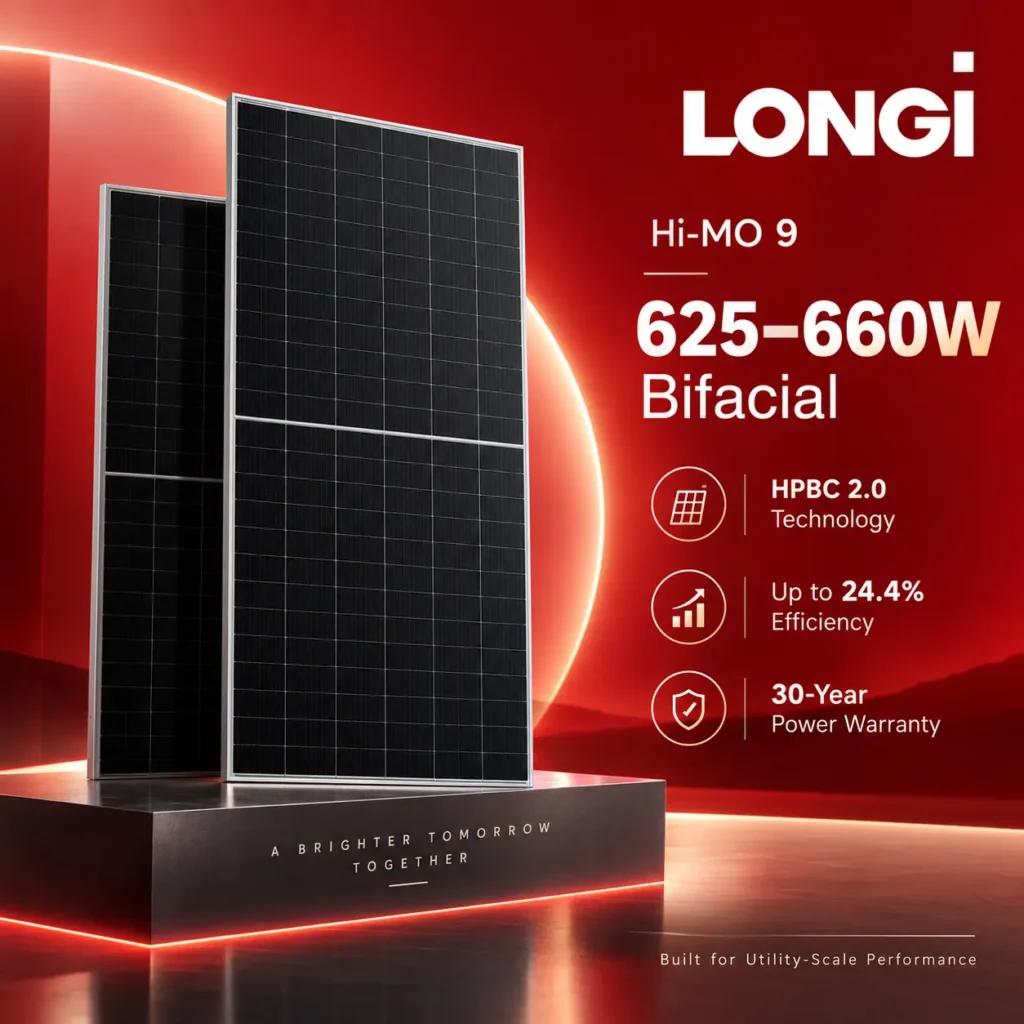
| LONGi Hi-MO X10 | HPBC 2.0 back-contact | Up to about 24.5% | High efficiency, strong diffuse-light case and tested shade resistance | Check exact model and warranty |
| REC Alpha Pure-RX | HJT | Up to 22.6% | HJT cells, low-irradiance behaviour and four-section shade layout | Larger footprint than some rivals |
| AIKO NEOSTAR 3P+ | ABC back-contact | Up to 24.8% | Very high efficiency plus partial-shading optimisation | Warranty term depends on package |
Maxeon’s residential technical material specifically refers to higher energy conversion in low-light conditions such as mornings, evenings and cloudy days. LONGi says its HPBC 2.0 architecture improves diffuse-light performance, while REC and AIKO emphasise designs that can reduce losses from partial shading.
Do Solar Panels Work on Cloudy Days in the UK?
Yes. Solar PV cells convert light into electricity and can use diffuse daylight as well as direct sunlight. The Energy Saving Trust’s solar-panel guidance confirms that panels keep generating on cloudy days, although output falls as available light drops.
A grey sky therefore does not mean zero generation. However, a heavily overcast winter day can produce far less energy than a bright summer day because irradiance is lower and daylight hours are shorter.
Annual yield matters more than a single cloudy-day reading. The MCS Solar PV Standard requires an annual performance estimate and makes clear that generation cannot be predicted with certainty because solar radiation varies between locations and years.
Low Light Is About Irradiance
Panels are normally rated under Standard Test Conditions at 1,000W/m² of irradiance and a 25°C cell temperature. Real British conditions often involve much lower irradiance.
A good low-light panel does not create extra sunlight. Instead, it converts the available light efficiently and avoids an excessive drop in relative efficiency as irradiance falls.
Cool weather can actually help photovoltaic efficiency. Therefore, the main winter problem is limited daylight and weaker irradiance rather than cold air itself.
What Makes a Solar Panel Good in Cloudy Weather?
First, look for strong low-irradiance behaviour. Some manufacturers publish curves showing relative efficiency at reduced light levels. These tell you more about dull-weather behaviour than peak efficiency alone.
Second, consider module efficiency. Higher efficiency lets you install more generating capacity within a limited roof area. That matters where chimneys, roof windows or awkward geometry restrict usable space.
Third, consider cell architecture. Back-contact technologies move electrical contacts away from the front of the cell, leaving more active surface exposed. Heterojunction, or HJT, combines crystalline silicon with thin-film layers and can provide strong conversion efficiency and low degradation.
Finally, separate cloud from shade. Cloud normally lowers irradiance across most or all of an array. A chimney or tree creates localised shade and electrical mismatch.
Bypass architecture, split-panel layouts and optimisers can reduce partial-shade losses. They cannot increase the sunlight available beneath uniform cloud cover.
The Best Panels to Compare for Cloudy UK Weather
Maxeon 7: Strongest Direct Low-Light Claim
Maxeon 7 is one of the clearest premium options for homeowners specifically concerned about low light. Its residential datasheet says the panel is designed for higher energy conversion in low-light conditions, including mornings, evenings and cloudy days.
The 435–445W range reaches up to 24.1% efficiency and uses interdigitated back-contact cells. Current Maxeon warranty information lists 40-year product and power coverage for qualifying Maxeon modules from May 2026.
That combination suits smaller roofs where every square metre matters. The main question is value: a premium panel should justify its extra cost through additional usable output, roof-space benefits or warranty protection.
LONGi Hi-MO X10: Strong for Cloud Plus Partial Shade
LONGi’s Hi-MO X10 uses HPBC 2.0 back-contact cells. Current residential variants reach roughly 24% to 24.5% efficiency, depending on the specific module.
LONGi also highlights improved light absorption under diffuse conditions. The Hi-MO X10 has received TÜV Rheinland Class A certification for shadow resistance, making it particularly interesting for roofs exposed to both overcast skies and intermittent shadows.
However, shade testing does not prove that one panel will beat every competitor under uniform cloud. Ask for the exact module code and a roof-specific annual yield calculation.
REC Alpha Pure-RX: Balanced HJT Performance
REC Alpha Pure-RX uses heterojunction cells and reaches up to 470W at 22.6% efficiency. REC’s four-section panel layout is designed to keep more of the module generating when part of it is shaded.
For UK homes, its strengths are balanced: good efficiency, low warranted degradation and practical behaviour where partial shading occurs.
The 470W version is physically larger than some compact residential modules. Therefore, compare watts per square metre and how many panels actually fit your roof rather than judging panels on wattage alone.
AIKO NEOSTAR 3P+: Ideal Where Roof Area Is Tight
AIKO’s NEOSTAR 3P+54 dual-glass panel reaches up to 495W and 24.8% efficiency. Its ABC back-contact design removes front-side busbars, while AIKO lists partial-shading optimisation across the current NEOSTAR range.
This makes AIKO especially attractive where roof area is the main constraint. Fitting more kWp into a small usable area may improve annual generation more than chasing a marginal low-light advantage elsewhere.
Its standard product warranty is 15 years, extendable to 25 years, with a 30-year performance warranty on the current 3P+54 specification. Check which warranty package your installer is including.
Cloud Cover and Roof Shade Need Different Solutions
If your roof is simply in a cloudier part of the UK, prioritise annual yield, total system size, panel efficiency and low-irradiance performance.
If the roof also has hard shadows, prioritise the shading assessment and electrical design.
The Energy Saving Trust notes that optimisers can reduce the effect of shading when one affected panel would otherwise reduce the performance of others. It also states that optimisers will not increase generation on a roof without a shading problem.
Before accepting a quote, ask to see the installer’s shading assumptions and predicted annual generation in kWh.
How to Choose the Right Panel for Your Roof
| Situation | What to prioritise | Panels worth comparing |
|---|---|---|
| Small roof | Efficiency and watts per square metre | AIKO NEOSTAR 3P+, Maxeon 7 |
| Chimney or tree shade | Shade-tolerant design plus good system engineering | LONGi Hi-MO X10, REC Alpha Pure-RX |
| Premium long-term system | Warranty, degradation and efficiency | Maxeon 7, REC Alpha Pure-RX |
| Large unshaded roof | Installed kWp and overall value | Compare premium panels with good-value N-type alternatives |
A larger, well-designed array using good mainstream panels can generate more electricity than a smaller array using premium modules.
For broader research, read Getfreequote’s best solar panels UK guide, best solar panels for 2026 and best solar panels for UK homes. Its solar panel installation process guide is also useful when comparing quotations.
Costs, Savings and Payback
The Energy Saving Trust currently estimates that a typical 4.5kWp domestic solar system costs around £7,600. Actual quotes vary according to panel choice, scaffolding, roof access, inverter, battery storage and electrical work.
Cloudier regions can have lower annual generation, so location affects payback. Energy Saving Trust figures updated in 2026 show indicative payback periods of around nine years in London, around 10–11 years in Manchester and around 11–12 years in Stirling, depending on occupancy assumptions and export payments. These figures are examples rather than guarantees.
If you want Smart Export Guarantee payments, GOV.UK’s Smart Export Guarantee guidance says the generating system and installer must be certified through MCS or an accredited equivalent scheme. You also need a suitable meter that records exported electricity.
Get Your Free Air Source Heat Pump Quote
Find the right air source heat pump solution for your home. Tell us a few details and our team will help you explore suitable options at a competitive price.
Quick to complete. No obligation.
Get your quote
Enter your details below and one of our team will get back to you.
Frequently asked questions
Find clear answers to common questions comparing air source and ground source heat pumps, including efficiency, installation and running costs, winter performance, noise, land requirements and borehole depth.
Yes. Solar panels use daylight rather than heat, so they continue generating under cloud. Output falls because less solar irradiance reaches the cells.
There is no reliable single percentage. Output depends on cloud thickness, season, location, roof angle and the system itself. Very dark winter cloud can reduce generation dramatically.
Modern high-efficiency monocrystalline panels are generally the practical choice for UK homes. Cell architecture and low-irradiance performance are more useful differentiators than the monocrystalline label alone.
Irradiance describes the solar power reaching a surface, measured in watts per square metre. Cloudy conditions normally mean much lower irradiance than the 1,000W/m² used for standard panel ratings.
HJT panels can offer strong efficiency and good real-world energy performance. However, buyers should still compare model-specific low-light data rather than assuming every HJT module performs identically.
Back-contact cells remove front-side electrical contacts, allowing more of the cell surface to receive light. This can improve efficiency, although the complete panel design still determines real-world performance.
Not simply because it is cloudy. Optimisers mainly help when panels experience different levels of shading or orientation. They do not create additional irradiance under uniform cloud cover.
Yes. They continue converting daylight during rain, although heavy rain and dark cloud generally mean much lower generation.
Yes, but winter output is substantially lower because days are shorter, the sun sits lower in the sky and cloud cover can reduce irradiance.
An unshaded south-facing roof usually maximises annual generation. East- and west-facing arrays can also work well; Energy Saving Trust estimates they typically generate around 15–20% less than an equivalent south-facing system.
They can generate electricity, but the Energy Saving Trust generally does not recommend north-facing pitched roofs because annual generation is significantly lower. Roof-specific modelling is essential.
A battery cannot increase solar generation. It lets you store electricity generated earlier and use it later, which can increase the amount of your own solar electricity that you consume.
LONGi Hi-MO X10 and REC Alpha Pure-RX are particularly worth comparing because their designs specifically address partial shading. AIKO also incorporates partial-shading optimisation.
No. The 500W panel may simply be larger. Compare efficiency, physical dimensions, watts per square metre, warranty and annual predicted output.
For Smart Export Guarantee eligibility, GOV.UK requires evidence that the generating system and installer meet MCS requirements or an accredited equivalent scheme.
Final Recommendation
For cloudy-weather performance, do not buy on wattage alone.
Maxeon 7 has the clearest manufacturer case for low-light conversion and combines it with very high efficiency. LONGi Hi-MO X10 is especially compelling where cloud is combined with partial shade. REC Alpha Pure-RX offers a strong HJT design with useful shade behaviour, while AIKO NEOSTAR 3P+ stands out where roof space is limited.
The right choice is the panel that delivers the strongest predicted annual kWh from your actual roof at a sensible installed cost.
Ask each installer for the exact panel model, MCS performance estimate, shading assumptions, inverter design, warranty terms and total installed price. Comparing those figures like for like is more useful than choosing a panel simply because it has the highest headline wattage.
Next step: Use Getfreequote.co.uk to compare solar quotes and ask each installer to show the predicted annual generation for your roof, not just the panel’s peak output.


