
Best Solar Panels for Home UK (2026): Top Choices
Check Your Eligibility for Boiler Upgrade Scheme (BUS)
Complete your details below to check your eligibility.
Thank you
We've received your details and will be in touch shortly.

Quick answer: what are the best solar panels for UK homes?
For a typical UK home in 2026, a strong shortlist includes high-efficiency back-contact panels such as the LONGi Hi-MO X10 and AIKO Neostar 3S, premium HJT panels such as the REC Alpha Pure-RX, and modern n-type options from Jinko, JA Solar and Trina. Maxeon also remains notable where long warranty cover is a priority.
There is no universal best panel. On a small roof, power density can matter more than price per panel. On a large, unshaded roof, a less expensive mainstream module may deliver a better financial return because you can install enough capacity without paying a premium for every extra percentage point of efficiency.
Best Solar Panels for Home UK (2026): Which Panels Are Worth Choosing?
The best solar panels for a home in the UK are not simply those with the highest wattage. The right choice depends on usable roof space, shading, orientation, electricity use, panel efficiency, warranty terms and the total installed price.
For many households, a well-priced modern n-type panel from an established manufacturer makes more financial sense than the most expensive premium module. Premium panels can still justify their cost where roof space is tight or long warranties and slow degradation matter.
If you are already planning an installation, start by reviewing Get Free Quote’s home-energy services and comparing solar panel installation quotes. Compare complete systems rather than panel prices alone. Ask each installer to state the exact panel model, system size in kWp, estimated annual generation, inverter, warranties and assumptions behind the forecast.
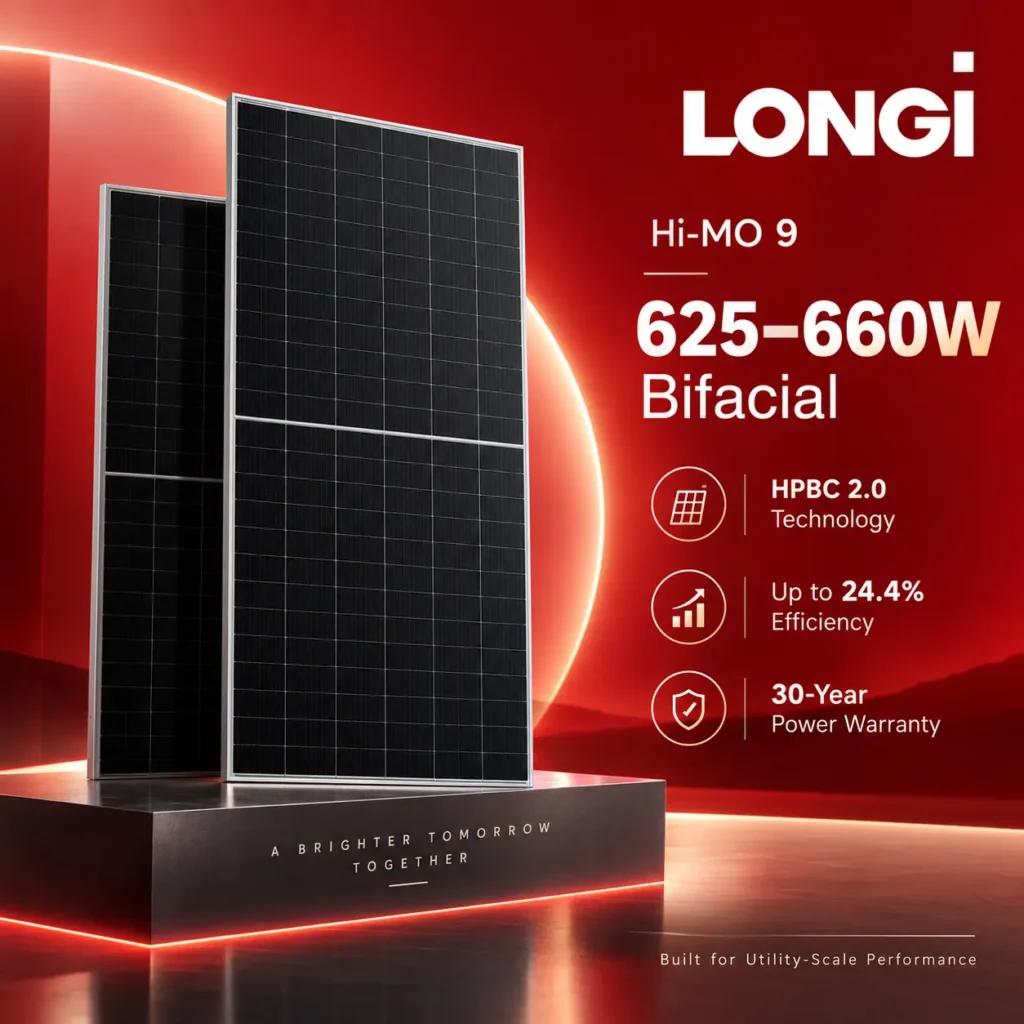
Best solar panels for UK homes compared
| Panel family | Current specification highlights | Best suited to |
|---|---|---|
| LONGi Hi-MO X10 Explorer | 475–490W, up to 24.0% efficiency and 30-year power warranty. | Limited roof space |
| AIKO Neostar 3S54 | 480–495W, up to 24.8% efficiency, with 30-year product and performance warranties on the current model. | High power density |
| REC Alpha Pure-RX | Up to 470W and 22.6% efficiency; 20-year product and 25-year performance warranty as standard. | Long-term power retention |
| Maxeon residential range | Current residential technical documents include 425–440W Maxeon 6 models with 40-year warranty cover. | Long-term ownership |
| Jinko Tiger Neo 3.0 | Residential versions reach up to 495W and the family reaches up to 24.8% efficiency, with a 30-year linear power warranty. | Strong modern n-type option |
| Trina Vertex S+ | Residential models reach up to 460W and 23.0% efficiency, with 25-year product and 30-year power warranties. | Mainstream performance and value |
Specifications vary by exact model and can change. Always check the current datasheet for the exact module shown on your quotation.
What actually makes a solar panel “best”?
Efficiency tells you how much sunlight a panel can turn into electricity for a given area. It matters most when roof space is limited.
However, efficiency is only one factor. Compare the product warranty, performance warranty, expected degradation, dimensions, temperature coefficient, construction, manufacturer support and installed cost.
Wattage also needs context. A physically larger 500W panel is not automatically better than a smaller 450W panel. What matters is how many modules actually fit and the total array capacity in kWp.
Be cautious with “Tier 1” marketing too. It is commonly used as a manufacturer-bankability classification rather than a product-quality certification. The exact module, warranty and proposed system design still require comparison.
Best solar panels for small UK roofs: LONGi and AIKO
Where every square metre matters, high-efficiency back-contact panels become particularly attractive.
The LONGi Hi-MO X10 Explorer datasheet lists residential modules from 475W to 490W with efficiency reaching 24.0%. That makes the range particularly interesting for terraced, semi-detached or dormer-heavy roofs where the installer cannot simply add more modules.
AIKO is another strong option. The AIKO Neostar 3S54 specification lists 480–495W output, up to 24.8% efficiency and a -0.26%/°C power temperature coefficient.
The important question is whether paying more creates enough additional system capacity on your roof. If a premium panel only increases the total array by a small amount, it may not improve the financial payback.
Best for long warranties and power retention: REC and Maxeon
The REC Alpha Pure-RX reaches 470W and up to 22.6% efficiency. REC warrants at least 92% of nameplate output in year 25. Its standard product warranty is 20 years, while qualifying REC ProTrust installations can receive enhanced cover.
Maxeon stands out for warranty length. Its current warranty documentation lists 40-year cover for Maxeon modules, although homeowners should always check which terms apply to the exact model and installation.
Do not compare warranty duration alone. Check whether registration is required, who deals with claims, whether labour is included and whether the warranty transfers to a future homeowner.
Best-value solar panels: Jinko, JA Solar and Trina
If you have enough usable, unshaded roof area, modern mainstream n-type panels can produce stronger financial value than an ultra-premium module.
Jinko’s Tiger Neo range and residential panels from JA Solar and Trina now offer efficiencies around or above 22%, depending on the exact model. Current Trina Vertex S+ models reach up to 23%, while Jinko’s latest Tiger Neo generation pushes considerably higher on selected modules.
Current independent UK comparisons also place JA Solar among the established mainstream choices alongside LONGi, Jinko and Trina.
This is why quotes should be compared at system level. A 4.5kWp mainstream array may offer a better return than a smaller premium array if both comfortably fit the roof and the premium alternative costs materially more.
How to choose the right solar panels for your home
Use this order rather than starting with a brand name.
- Measure usable roof space. Chimneys, valleys, roof windows and required clearances can reduce how many modules fit.
- Check orientation and shading. Energy Saving Trust says an unshaded south-facing roof is ideal. East- or west-facing systems can still work but typically generate around 15–20% less than a directly south-facing array.
- Compare total system size. Look at kWp, not just watts per panel.
- Check the generation estimate. Ask for annual kWh output and the assumptions used for orientation, pitch, shading and system losses.
- Read both warranties. The product warranty covers faults; the performance warranty concerns retained power output.
- Review the inverter design. Complex or shaded roofs may benefit from optimisers or microinverters. They are not automatically required on every roof.
- Allow for future electricity demand. An EV, heat pump or battery can substantially change your consumption pattern.
- Compare the complete installed price. Scaffolding, mounting equipment, electrical work, inverter choice and network requirements can outweigh a small panel-efficiency difference.
| Household priority | What to prioritise | Options worth comparing |
|---|---|---|
| Small roof | Maximum practical power density | LONGi Hi-MO X10, AIKO Neostar |
| Long ownership | Warranty and low degradation | REC Alpha Pure-RX, Maxeon |
| Value | Competitive installed £/kWp | Jinko, JA Solar, Trina |
| Mixed shading | Array layout and inverter/optimiser design | Compare complete designs |
| EV or future heat pump | Sensible maximum array size | Focus on total kWp and annual generation |
Planning to switch more of your home to electricity can change the ideal solar size. If an EV is likely, review home EV charger options as part of the same energy plan.
Likewise, households considering electric heating should understand whether an air source heat pump is worth it and model realistic air source heat pump running costs before assuming summer solar generation will cover winter heating demand.
How much do good solar panels cost in the UK?
The latest Energy Saving Trust solar-panel guidance gives around £7,600 as the typical cost of an average home solar installation. It describes an average system as roughly 4.5kWp, often around 12 panels requiring approximately 20–30m² of roof area.
Actual quotations vary with system size, scaffolding, roof access, mounting equipment, inverter specification, electrical work and battery storage. A property survey and itemised written proposal are therefore more useful than a national average.
In Great Britain, qualifying installer-supplied domestic solar currently benefits from 0% VAT. Northern Ireland has different eligibility rules. Check the current GOV.UK VAT rules for energy-saving products
Solar can also produce export income. Under Ofgem’s Smart Export Guarantee, participating electricity suppliers pay eligible small-scale generators for electricity exported to the grid. Suppliers set their own tariffs and contractual terms.
Energy Saving Trust currently puts solar payback at roughly 10–12 years in many circumstances. The actual result depends on location, installation price, electricity costs, export tariff and how much solar electricity you use yourself.
Is it worth paying more for premium solar panels?
Sometimes.
A premium panel makes the strongest case when it allows a constrained roof to carry meaningfully more kWp, when its warranty gives you additional value, or when aesthetics and long-term power retention are important.
It is harder to justify when the roof is large enough for mainstream panels to achieve the same target system size.
Ask installers to quote two technically suitable alternatives where possible: one mainstream and one premium. Compare total array capacity, predicted annual generation, warranty terms and the installed price difference.
A battery can increase solar self-consumption in some households. However, assess its cost, usable capacity, round-trip efficiency, warranty and tariff strategy separately rather than assuming battery storage automatically improves solar payback.
Get Your Free Air Source Heat Pump Quote
Find the right air source heat pump solution for your home. Tell us a few details and our team will help you explore suitable options at a competitive price.
Quick to complete. No obligation.
Get your quote
Enter your details below and one of our team will get back to you.
Frequently asked questions
Find clear answers to common questions comparing air source and ground source heat pumps, including efficiency, installation and running costs, winter performance, noise, land requirements and borehole depth.
There is no single best brand for every property. LONGi and AIKO are strong high-efficiency options, REC and Maxeon stand out for premium warranty considerations, while Jinko, JA Solar and Trina are worth comparing for mainstream value.
Current residential modules from AIKO, LONGi and Jinko can exceed 24% efficiency on selected models. Exact specifications vary by size and model, so compare current datasheets.
Yes. Solar PV generates electricity from daylight and continues producing power on cloudy days, although output is lower than under strong direct sunlight.
Energy Saving Trust describes an average 4.5kWp installation as typically using around 12 panels, but the correct number depends on panel wattage, roof space and household requirements.
Not automatically. Panel dimensions matter. The useful comparison is how much total kWp fits on the roof and how much electricity the complete array is expected to generate.
Modern n-type technologies such as TOPCon, HJT and back-contact designs can offer higher efficiency and lower degradation than many older p-type PERC products. Compare the exact modules rather than choosing solely by technology name.
Sometimes, but rear-side generation is limited when a panel sits close to an opaque pitched roof. Bifacial technology can offer more benefit where reflected light can reach the back surface.
Solar panels commonly have performance warranties lasting 25–30 years, while some premium products offer longer cover. Energy Saving Trust describes a typical system life of around 25 years.
No. Solar panels work without a battery. Storage can increase the amount of your own generation that you use later, but its financial value depends on battery price, tariffs, consumption and export rates.
It depends on the roof. Microinverters or optimisers can be useful with complicated layouts or shading. A straightforward unshaded array may work perfectly well with a conventional string inverter.
Energy Saving Trust recommends obtaining quotes from MCS-certified installers. MCS certification is also important in many export-tariff and consumer-protection arrangements. Check the current requirements before signing a contract.
Most house installations are treated as permitted development and do not normally need a planning application. Exceptions can apply to listed buildings, conservation areas and other restricted locations.
Qualifying installer-supplied energy-saving installations in Great Britain currently receive 0% VAT. Different rules apply in Northern Ireland.
Yes, if your installation meets the relevant conditions. The Smart Export Guarantee requires participating suppliers to pay eligible small-scale generators for exported electricity, although rates vary by supplier.
Energy Saving Trust says the current payback period is commonly around 10–12 years, but your result depends on installation cost, location, electricity usage, energy prices and export payments.
No. South-facing and unshaded is ideal, but east- and west-facing roofs can still be viable. Energy Saving Trust estimates their generation is typically around 15–20% lower than a directly south-facing system.
Often, but inverter capacity, roof space, electrical design and DNO limits may affect expansion. If future demand is likely to rise, ask the installer to consider this during the original design.
Potentially. Both can increase household electricity use. However, heat-pump demand is highest in winter when solar output is lower, so model annual and seasonal demand rather than simply matching headline consumption.
Final recommendation
For most UK homeowners, the best solar panel is the one that helps create the best complete system for the available roof and budget.
Start with LONGi Hi-MO X10 or AIKO Neostar if roof space is tight. Compare REC or Maxeon if warranty and retained output matter most. If value is the priority and roof space is generous, obtain quotations using current Jinko, JA Solar and Trina options as well.
Then compare the whole installation: system kWp, expected annual generation, shading assumptions, inverter, warranties and installed price.
That tells you far more than a “best solar panel” badge on its own.


