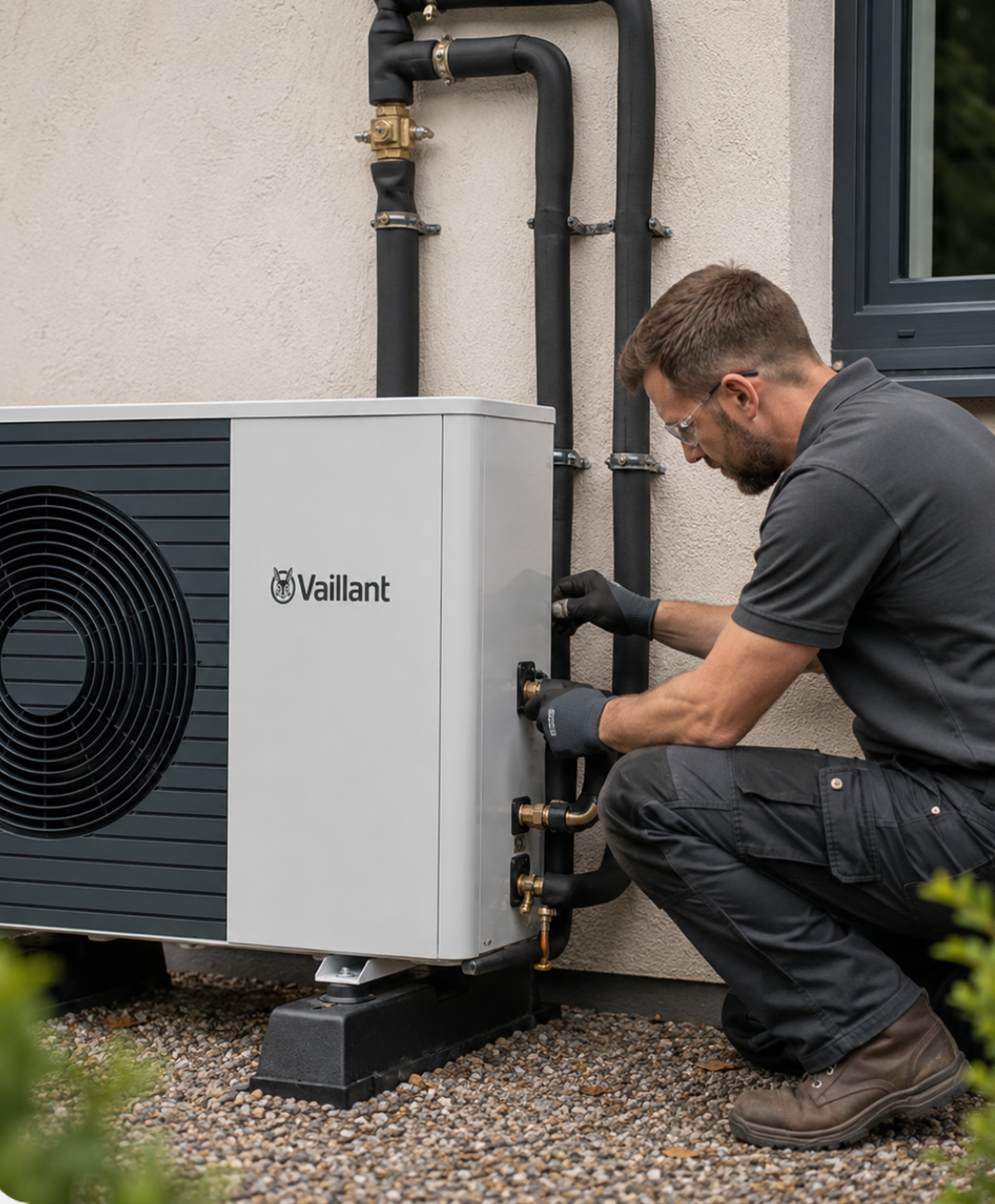
Oil Heating vs Heat Pump: UK Cost Comparison 2026
Check Your Eligibility for Boiler Upgrade Scheme (BUS)
Complete your details below to check your eligibility.
Thank you
We've received your details and will be in touch shortly.
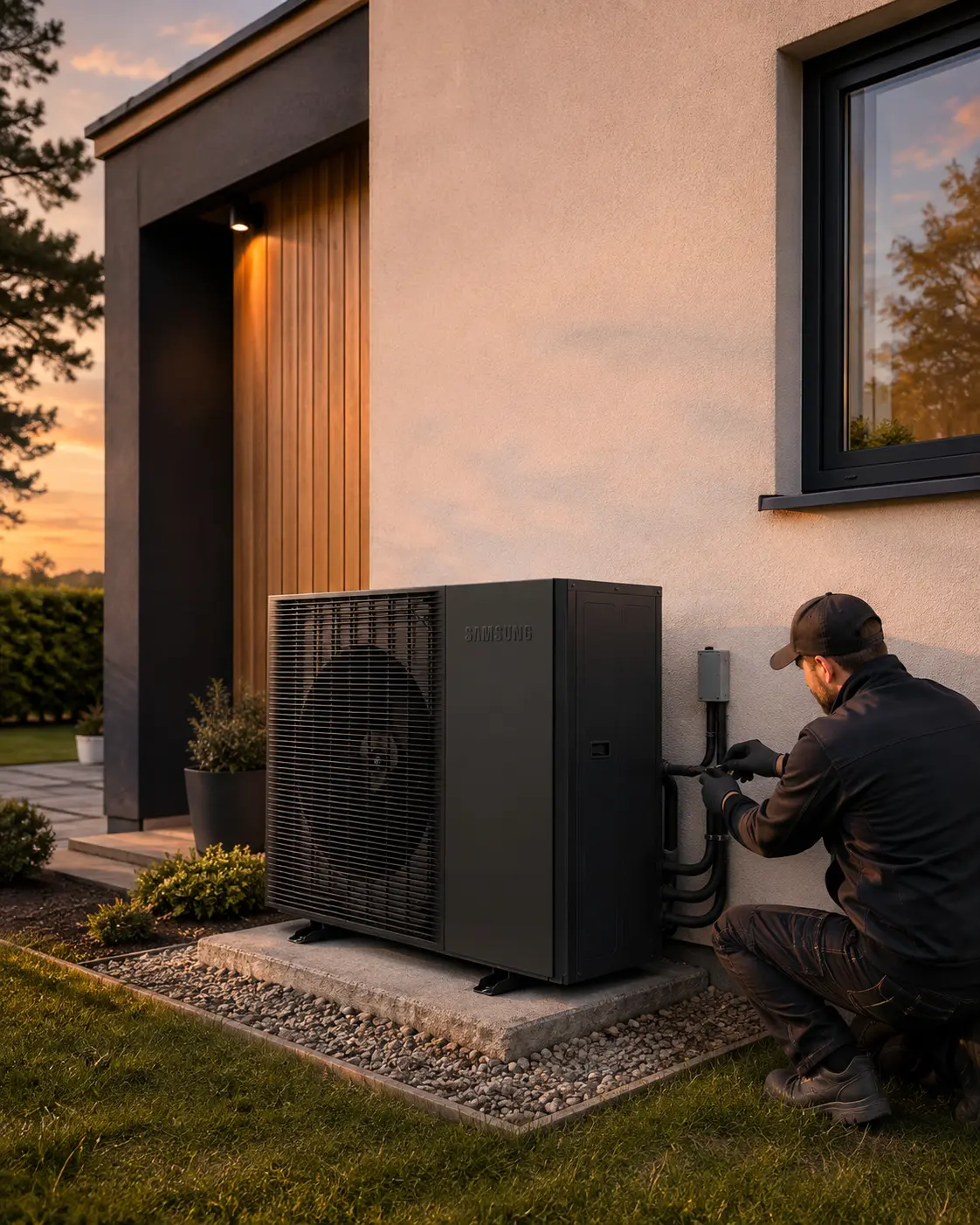
Quick Answer: Is Oil Heating or a Heat Pump Better?
For many off-gas-grid UK homes, an air source heat pump is now a strong alternative to oil heating, particularly when the oil boiler already needs replacing.
A modern oil boiler can exceed 90% efficiency and usually costs less to install without grants. However, it still depends on delivered heating oil, requires fuel storage and remains exposed to oil-price fluctuations.
A well-designed heat pump can deliver around three or more units of heat for each unit of electricity it consumes. Installation normally costs more, but government grants can change the comparison substantially.
The best choice depends on your home’s heat loss, radiators, hot-water requirements, available space, electricity tariff and the cost of the work required.
Oil Heating vs Heat Pump: Which Is Better for UK Homes in 2026?
For homes without mains gas, choosing between oil heating vs a heat pump has become a much bigger decision than simply comparing two heating appliances.
Oil boilers are familiar, produce high-temperature heat and can often replace an existing boiler with relatively little alteration. Air source heat pumps work differently. They use electricity to move heat from outside air into your home, usually operating for longer at lower water temperatures.
In 2026, the financial calculation has also changed. Heating oil prices have been unusually volatile, while eligible oil-heated homes in England and Wales can currently receive enhanced government support towards a heat pump.
This guide compares installation cost, running costs, efficiency, radiators, hot water, comfort and practical suitability so you can decide which system makes more sense for your property.
Considering replacing your current heating system? Compare free home-improvement quotes through Getfreequote.co.uk before committing to one technology.
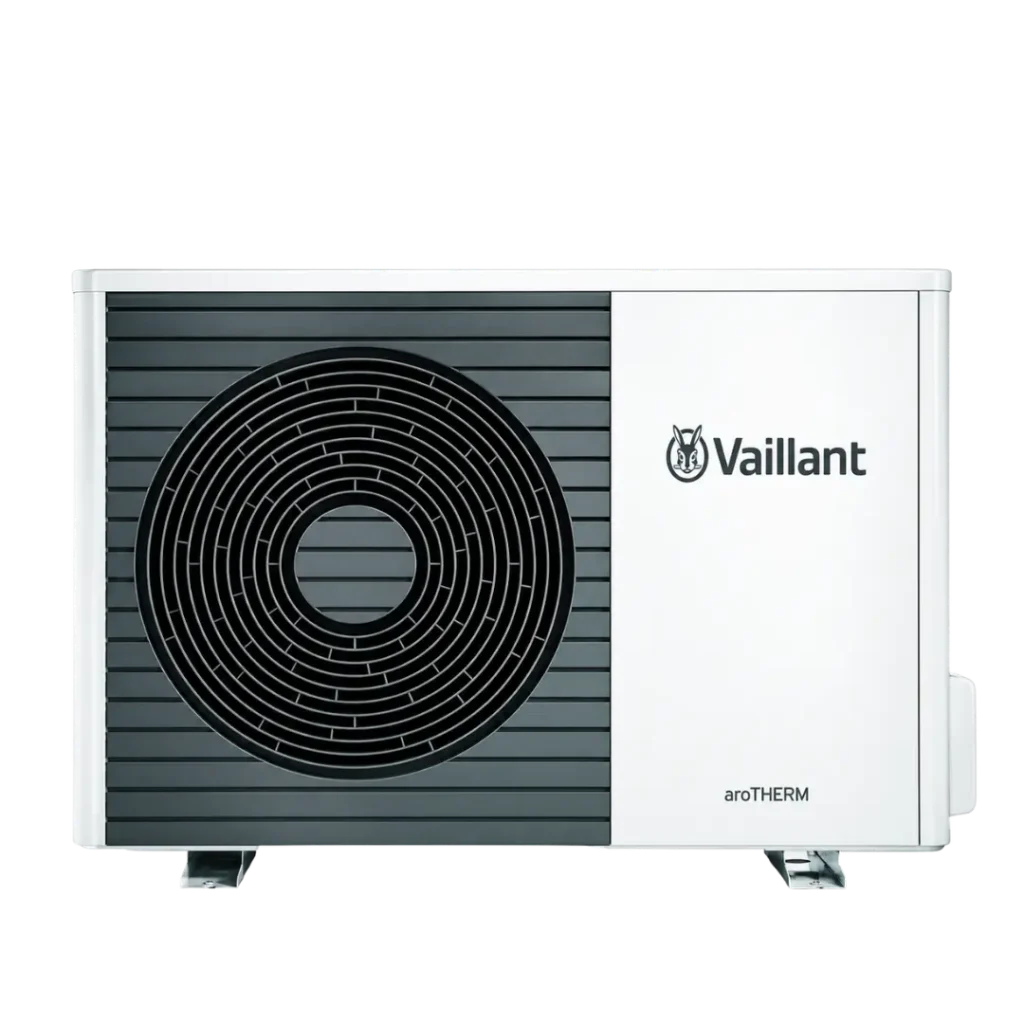
Oil Boiler vs Heat Pump at a Glance
| Factor | Oil Heating | Air Source Heat Pump |
|---|---|---|
| Energy source | Delivered kerosene | Electricity plus heat from outdoor air |
| Typical efficiency | Modern condensing boilers can exceed 90% | Often around 300%+ seasonal efficiency |
| Typical installation cost | Roughly £2,200–£5,500 depending on boiler and work | Around £12,000 before funding is a typical EST figure |
| Government support | Generally none for a replacement oil boiler | Up to £9,000 BUS support for qualifying oil-heated off-gas properties in England and Wales until 31 March 2027 |
| Heat delivery | Higher-temperature, shorter heating periods | Lower-temperature, longer operating periods |
| Fuel storage | Oil tank required | No fuel tank |
| Hot water | Boiler or cylinder depending on system | Usually requires stored hot water |
| Best fit | Simple replacement where heat-pump alterations would be extensive | Suitable homes where system design and grant economics work well |
Energy Saving Trust currently gives around £12,000 as a typical air source heat pump installation cost. Modern liquid-fuel condensing boilers can exceed 90% efficiency, according to OFTEC.
How Does Oil Heating Compare With a Heat Pump?
An oil boiler creates heat through combustion. Heating oil passes to a burner, where it burns and transfers heat through a heat exchanger into water circulating through your radiators and hot-water system.
Modern condensing oil boilers recover more heat from their exhaust gases than older appliances. However, they still need to burn fuel for every unit of heat produced.
A heat pump does something fundamentally different.
How an air source heat pump produces heat
The outdoor unit draws air across an evaporator containing refrigerant. Even cold outside air contains usable thermal energy.
The refrigerant absorbs that heat and evaporates. A compressor then increases the refrigerant’s pressure and temperature.
Next, a condenser transfers heat into the water circulating through your central-heating system. An expansion valve reduces the refrigerant pressure before the refrigeration cycle begins again.
Because most of the heat is moved rather than generated electrically, a heat pump can provide several kilowatt-hours of heat from each kilowatt-hour of electricity.
This is why CoP and SCOP matter. CoP describes performance under particular conditions. SCOP reflects seasonal performance across a heating season and is usually more useful when estimating bills.
Oil Heating vs Heat Pump Installation Cost
Upfront price has traditionally favoured oil.
Current 2026 market guides put straightforward oil-boiler replacements broadly around £2,200–£5,500, depending on boiler type and installation complexity. Oil-tank replacement, flue changes or system alterations can increase the price.
Energy Saving Trust estimates a typical air source heat pump installation at around £12,000, although property size, radiators and other work can change this considerably.
However, comparing headline installation prices without grants can be misleading.
The £9,000 Boiler Upgrade Scheme grant
In England and Wales, the Boiler Upgrade Scheme normally provides £7,500 towards an eligible air-to-water heat pump.
Until 31 March 2027, qualifying properties that have no mains-gas connection and replace oil or LPG heating can receive an additional £1,500, taking the potential support to £9,000.
Read the Getfreequote.co.uk guide to the 2026 Boiler Upgrade Scheme changes for the eligibility details.
Scotland and Northern Ireland operate different funding arrangements, so homeowners outside England and Wales should check the relevant national scheme.
Is a Heat Pump Cheaper to Run Than Oil Heating?
There is no permanent answer because oil and electricity prices change.
As of 22 October 2026, one UK heating-oil price comparator reported about 114.1p per litre before VAT for a 1,000-litre order. Ofgem’s average Direct Debit electricity rate for 1 October to 31 December 2026 is 26.32p/kWh.
The following calculation is an illustration, not a bill forecast.
| Example | Approximate Cost of Useful Heat |
|---|---|
| Oil at about 119.8p/litre including VAT, 10kWh/litre and 90% boiler efficiency | 13.3p/kWh |
| Heat pump at 26.32p/kWh electricity and SCOP 3.0 | 8.8p/kWh |
| Heat pump at SCOP 3.5 | 7.5p/kWh |
| Heat pump at SCOP 4.0 | 6.6p/kWh |
The oil calculation uses approximately 10kWh of energy per litre of heating oil, consistent with published fuel calorific-value data. Modern condensing oil boilers can exceed 90% efficiency.
This snapshot favours the heat pump because oil prices are currently high. It should not be treated as a guarantee of future savings.
Energy Saving Trust warns that on broader standard-tariff assumptions, a heat pump does not automatically cost less to run than a new oil boiler. Heat-pump tariffs can improve the position considerably.
For a property-specific calculation, see the air source heat pump running-cost guide.
Why Heating Oil Price Volatility Matters
Running cost is only one part of the comparison. Predictability also matters.
Heating-oil customers buy fuel on an open market rather than through Ofgem’s domestic energy price cap. Prices therefore respond quickly to wholesale oil markets, transport conditions and international events.
The Competition and Markets Authority reported that average UK heating-oil prices increased by about 64% between February and March 2026, illustrating how quickly rural heating costs can move.
A heat pump replaces this requirement with electricity. Electricity prices can also rise or fall, but households have more opportunities to use fixed, time-of-use and specialist heat-pump tariffs.
Will a Heat Pump Work With Your Existing Radiators?
Possibly. Replacing oil heating with a heat pump does not automatically mean replacing every radiator.
Oil boilers commonly operate at higher flow temperatures. Heat pumps generally become more efficient when heating water to lower temperatures.
Energy Saving Trust says heat pumps commonly supply radiators at around 35–45°C. A room-by-room heat-loss calculation determines whether your existing radiators can provide enough output at the proposed temperature.
Some radiators may already be large enough. Others may need double- or triple-panel replacements.
That assessment is more useful than assumptions based solely on a property’s age. An older house can use a heat pump successfully if heat loss and emitter output are understood and the system is designed accordingly.
Check whether your home is suitable for a heat pump before treating insulation level or house age as an automatic yes or no.
What About Hot Water?
Oil combi boilers can produce hot water without a storage cylinder.
Most domestic air-to-water heat pumps instead heat water stored in a cylinder. Energy Saving Trust says a typical cylinder may fit in a cupboard with roughly an 80cm by 80cm footprint, although the correct size depends on household hot-water demand.
For homes where indoor storage space is limited, this can be a meaningful design constraint.
Which Feels Warmer: Oil or a Heat Pump?
Both systems can maintain a comfortable home when designed correctly, but the experience can feel different.
Oil heating commonly delivers bursts of hotter water. Radiators become very hot, the property warms quickly and the boiler then switches off.
A heat pump generally works more steadily. Radiators may feel warm rather than hot, while the system maintains a more consistent indoor temperature for longer periods.
This operating pattern is normal. Trying to run a heat pump exactly like an oil boiler can reduce efficiency.
Do Heat Pumps Work in Winter?
Yes. Heat pumps continue extracting energy from outdoor air at low temperatures.
Their efficiency normally falls as the outdoor temperature drops because the compressor must work harder. Frost can also form on the outdoor heat exchanger.
The system periodically reverses its refrigeration cycle to perform a defrost cycle. This is expected behaviour rather than evidence that the unit cannot work in winter.
Correct sizing is important. MCS design guidance requires installers to calculate room-by-room heat loss and select equipment capable of meeting the property’s design heat demand under local winter conditions.
Oil Heating or Heat Pump: How to Decide
Use the following order rather than choosing from headline prices alone:
Check whether your oil boiler actually needs replacing. Switching becomes financially easier to justify when replacement expenditure is already unavoidable.
Get a room-by-room heat-loss calculation. This establishes the heat your property needs on a cold day.
Check radiator output at the proposed flow temperature. Ask which radiators genuinely need changing.
Confirm hot-water storage requirements. Make sure there is a practical location for the cylinder.
Compare complete installed prices after grants. Include electrical, cylinder, radiator and building work.
Ask for predicted seasonal performance. SCOP is more informative than the manufacturer’s best-case CoP.
Compare realistic energy prices. Test more than one oil and electricity-price scenario.
Consider convenience. Include oil deliveries, tank condition, outdoor heat-pump location and servicing.
Think long term. A low-cost oil replacement today can still leave you exposed to future fuel-price changes.
For more detail on what physically changes during conversion, read the guide to replacing an oil boiler with a heat pump.
Get Your Free Air Source Heat Pump Quote
Find the right air source heat pump solution for your home. Tell us a few details and our team will help you explore suitable options at a competitive price.
Quick to complete. No obligation.
Get your quote
Enter your details below and one of our team will get back to you.
Frequently asked questions
Find clear answers to common questions about replacing oil heating with a heat pump, including running costs, Boiler Upgrade Scheme grants, radiators, insulation, winter performance, hot-water cylinders, oil tanks, underfloor heating, solar panels, batteries and installer quotations.
It can be. Running costs depend on the heat pump's SCOP, electricity tariff and current oil price. At elevated oil prices a well-designed heat pump can have a clear advantage, but savings are not guaranteed permanently.
Yes, but it is not usually a simple appliance swap. Your installer should assess heat loss, radiators, pipework, hot-water storage, electrical supply and controls.
Eligible properties in England and Wales without a mains-gas connection can currently receive £9,000 towards qualifying air-to-water or ground-source heat pumps when replacing oil or LPG. The uplift runs until 31 March 2027.
No. Some existing radiators may already provide enough heat at lower flow temperatures. A room-by-room heat-loss and radiator-output calculation should determine which, if any, need changing.
Yes. Age alone does not make a property unsuitable. Heat loss, radiator capacity, insulation, pipework and system design are more important.
No. Better insulation reduces heat demand and can improve running costs, but a property does not need to meet a particular stereotype of a modern, highly insulated home.
A correctly sized heat pump should meet the home's design heating requirement during normal UK winter conditions. Performance falls in colder weather, so accurate sizing is essential.
Air source heat pumps contain fans and compressors, so they make some sound. Actual impact depends on equipment, operating conditions and where the outdoor unit is positioned.
Most domestic air-to-water heat-pump systems use stored hot water, so a cylinder or alternative storage solution is normally required.
Once the oil heating system is permanently removed, the tank can normally be professionally decommissioned and removed. Tank work should be handled safely because residual oil may remain.
Not necessarily. If it is safe, efficient and reliable, the financial case depends on the cost of conversion, grant availability and expected running-cost difference. It is still sensible to obtain heat-pump quotes before the boiler fails.
Without grants, generally yes. A straightforward oil-boiler replacement normally costs less than a complete air source heat-pump installation. BUS support can reduce or reverse that difference for eligible homes.
Modern condensing oil boilers can exceed 90% efficiency. Older oil boilers may operate considerably less efficiently.
A seasonal CoP of 3 means roughly three units of heat are delivered for every unit of electricity consumed. Actual performance depends on weather, flow temperature, system design and controls.
They can. Underfloor heating has a large heat-emitting area and can operate at low water temperatures, which suits heat pumps. Properly sized radiators can also work very well.
Yes. Solar PV can offset part of a heat pump's electricity consumption, although solar generation is lowest during much of the winter heating season.
Potentially. A battery can allow some electricity to be bought or stored at cheaper times and used later, particularly with a time-of-use tariff.
Not automatically. An oil boiler may be easier to use with an existing high-temperature radiator system, but improving excessive heat loss benefits either technology. A heat-loss calculation should come before the decision.
Oil boilers normally require regular servicing, including burner and combustion checks. Oil tanks and fuel lines also need monitoring for leaks, damage and contamination.
Ask for the room-by-room heat-loss calculation, design flow temperature, radiator schedule, predicted seasonal performance, annual electricity estimate, hot-water design and a complete breakdown of work included in the quotation.
Oil Heating vs Heat Pump: Final Verdict
For an off-gas-grid home with an oil boiler approaching replacement, 2026 is an unusually strong time to investigate a heat pump.
The temporary £9,000 support available to eligible oil-heated homes in England and Wales can significantly narrow the upfront-cost difference. Current high oil prices also make heat-pump running costs look attractive, although neither today’s oil price nor today’s electricity tariff should be assumed to last throughout the system’s life.
Keeping or replacing an oil boiler can still make sense where the existing system is efficient, the property would require extensive heat-pump alterations or hot-water and outdoor-space constraints cannot be solved economically.
The important question is therefore not whether heat pumps are universally better than oil.
It is whether a properly designed heat pump is better for your home.
A heat-loss survey, detailed system design and comparable quotations provide a far more reliable answer than national averages alone.
Compare Your Options
If your oil boiler is approaching replacement, compare the complete cost of both options rather than the appliance price alone. Get quotes that clearly show system design, radiator requirements, grant deductions and predicted energy use before making your decision.