
Solar Panel Cost Per kW UK 2026: Latest Prices Explained
Check Your Eligibility for Boiler Upgrade Scheme (BUS)
Complete your details below to check your eligibility.
Thank you
We've received your details and will be in touch shortly.

Quick Answer: How Much Do Solar Panels Cost Per kW in the UK?
For an existing UK home, a useful 2026 benchmark is approximately £1,650–£2,100 per installed kW, depending particularly on system size. Government-derived 2025/26 data puts domestic retrofit systems up to 4kW at around £2,109/kW on average, while systems between 4kW and 10kW average about £1,651/kW. Larger systems tend to have a lower cost per kW because expenses such as scaffolding, labour and paperwork are spread across more panels. These are benchmarks rather than quotations. Your actual cost depends on the property, equipment and installation requirements.
Solar Panel Cost Per kW UK (2026): What Should You Pay?
If you are comparing solar quotes, the total price does not tell you whether one installer offers better value than another. Comparing the solar panel cost per kW in the UK gives you a much more useful benchmark.
The latest UK Government solar PV statistics show an important pattern: smaller systems generally cost more for every kilowatt of capacity installed. For existing domestic properties in Great Britain, 2025/26 data puts the average at about £2,109 per kW for systems up to 4kW and £1,651 per kW for systems between 4kW and 10kW. The figures come from MCS installation records rather than advertised prices.
However, cost per kW should be treated as a comparison tool, not a fixed price list. Roof access, scaffolding, system size, panel specification, inverter choice and electrical work can all change your final quotation.
If you want prices based on your own property rather than national averages, you can compare solar quotes with Get Free Quote.
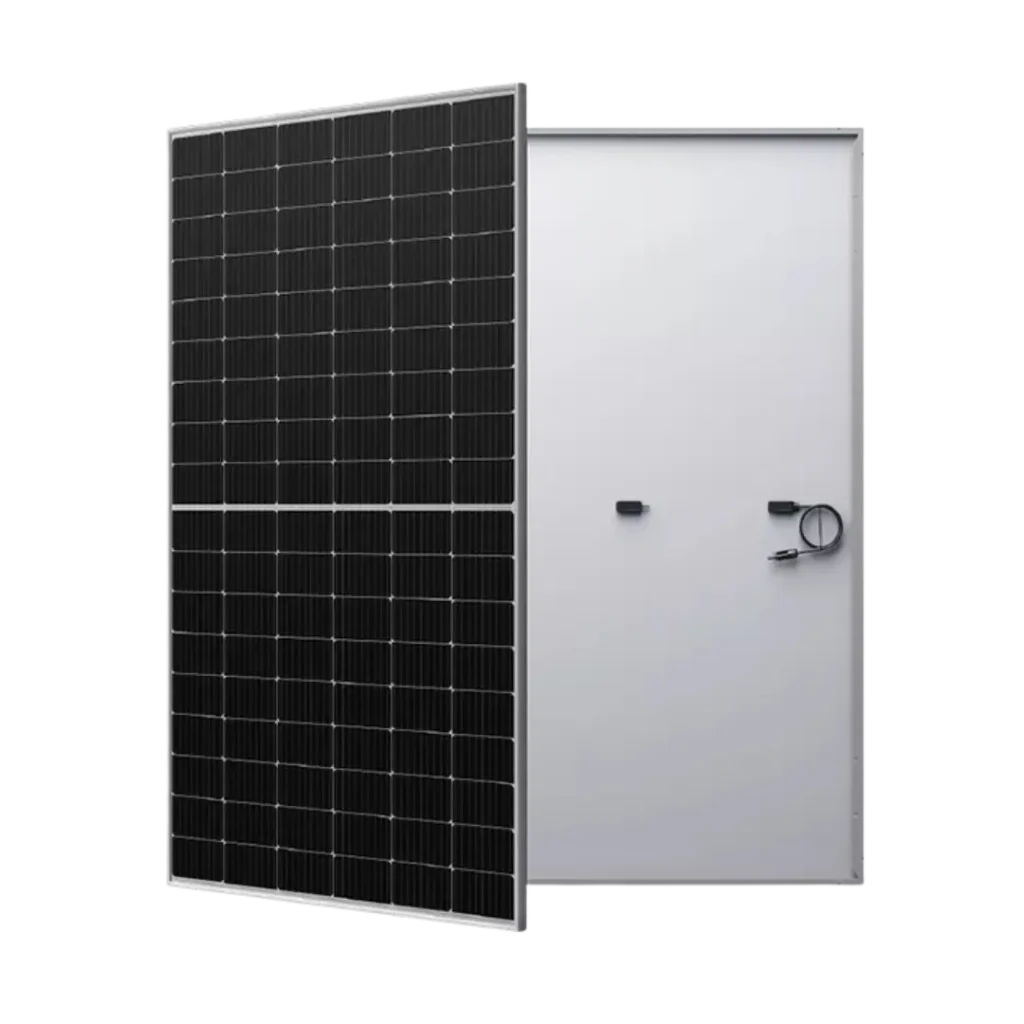
Solar Panel Cost Per kW UK: 2026 Benchmarks
The most useful national dataset comes from the Department for Energy Security and Net Zero. Its solar PV cost statistics use data from the MCS Installation Database. See the UK Government solar PV cost data
| System size | 2025/26 domestic retrofit average | Indicative calculation |
|---|---|---|
| Up to 4kW | About £2,109/kW | 3kWp ≈ £6,327; 4kWp ≈ £8,436 |
| 4–10kW | About £1,651/kW | 4.5kWp ≈ £7,430; 6kWp ≈ £9,906 |
These calculations apply the average price for each size band to an example system. They are not predictions of what an individual installer will charge.
As a separate comparison, the Energy Saving Trust currently estimates that an average 4.5kWp domestic system costs around £7,600, equivalent to approximately £1,689 per kWp. It describes 4.5kWp as a typical domestic system and says this generally uses about 12 panels and 20–30m² of roof space. Read the Energy Saving Trust solar panel guidance
What Does Solar Panel Cost Per kW Mean?
Solar systems are normally sized in kilowatt-peak, written as kWp.
This describes the combined rated maximum output of the solar panels under standard test conditions. It does not mean a 4kWp system will continuously generate 4kW throughout the day.
To calculate the price per kW, divide the solar-only installed price by the array capacity.
For example:
£7,500 ÷ 4.5kWp = £1,667 per kWp
This calculation allows you to compare quotations of different sizes on a more consistent basis.
However, make sure you compare the same scope of work. A quotation including a battery should not be compared directly with a solar-only quotation.
Once you have established the system size, consider its expected electricity production as well. Our guide to solar panel output in the UK explains why two systems with the same kWp rating can generate different amounts of electricity.
Why Do Larger Solar Systems Cost Less Per kW?
Adding more solar panels does not multiply every installation expense.
A contractor may still need one scaffold, one survey, one electrical installation and broadly the same administrative work whether they install eight panels or twelve.
As more panels are added, those fixed expenses are spread across additional generating capacity.
This explains why the latest government-derived figures show a significantly lower average £/kW for 4–10kW domestic retrofit systems than systems up to 4kW.
It also means homeowners should not automatically restrict a system to an arbitrary size such as 4kW. If your roof, electricity demand and network connection permit a larger array, ask the installer to price both options.
The extra panels may provide relatively inexpensive additional capacity.
What Affects Solar Panel Cost Per kW?
No national average can account for every property.
| Factor | Typical effect on £/kW | Why |
|---|---|---|
| Larger system | Often lowers it | Fixed costs are spread across more capacity |
| Difficult roof access | Raises it | More labour or scaffolding may be needed |
| Slate or complex roof | Can raise it | Installation can take longer |
| Premium equipment | Can raise it | Higher-spec panels, inverters or optimisers cost more |
| Simple installation | Often lowers it | Less labour and additional equipment |
| Existing roof/scaffolding work | May lower it | Some installation costs can be shared |
The Energy Saving Trust specifically identifies system size, roof access, panel or solar-tile choice, roof integration and possible roof-renewal work as factors affecting installation cost.
For homes where roof space is limited, higher-efficiency equipment can sometimes justify a higher initial £/kW because it allows more generating capacity within the available area. See our guide to the best-value solar panels in the UK before judging a system purely by price.
What Should a Solar Quote Include?
Cost per kW only works as a comparison when each quotation covers broadly the same work.
Check whether your proposed price includes:
Solar panels
Inverter
Roof mounting equipment
Scaffolding
Electrical components and cabling
Installation labour
System design
Commissioning
Monitoring equipment or software
Network notification or application work
Certification and documentation
Warranties
A cheap quotation can appear attractive simply because something has been excluded.
Ask installers to itemise major extras and clearly separate solar, batteries and other optional equipment. Our solar panel installation quote guide can help you compare proposals on an equivalent basis.
Should a Battery Be Included in Cost Per kW?
Usually, no.
When comparing solar installation prices against government solar PV cost benchmarks, separate battery storage from the solar array price.
Solar array capacity is measured in kWp, while batteries are normally compared using their usable storage capacity in kWh. Mixing the two makes £/kW comparisons misleading.
A battery may still make sense for your household. It can store surplus daytime generation for use later, but its financial value depends on electricity consumption, export tariffs, battery capacity and charging strategy.
Ask for solar-only and solar-plus-battery prices separately.
VAT on Solar Panels in 2026
Qualifying installations of solar panels in residential accommodation currently benefit from 0% VAT.
HMRC states that the temporary zero rate applies until 31 March 2027. Under current legislation, qualifying installations revert to the reduced 5% VAT rate from 1 April 2027. Check HMRC’s current VAT rules for energy-saving materials
This makes the date and VAT treatment of quotations worth checking, particularly if your proposed installation could take place after March 2027.
Are Solar Panel Grants Available?
There is no single universal solar-panel grant available to every UK homeowner.
However, some households can receive solar through wider energy-efficiency programmes.
For example, England’s Warm Homes: Local Grant can fund measures including solar panels for qualifying low-income households or qualifying homes. Eligibility includes property and household-income conditions, and funding depends on the local authority. Check Warm Homes: Local Grant eligibility
Schemes differ across England, Scotland, Wales and Northern Ireland, so check current government guidance rather than assuming a grant will be available.
What About Smart Export Guarantee Payments?
In Great Britain, eligible solar owners can receive payments for qualifying electricity exported to the grid through the Smart Export Guarantee (SEG).
There is no single national SEG payment rate. Suppliers offering SEG tariffs set their own rates, contract terms and conditions, although eligible SEG tariffs must pay more than zero. Read Ofgem’s Smart Export Guarantee guidance
Export income can therefore affect the long-term economics of solar, but it should not be treated as a guaranteed fixed return.
How to Compare Solar Quotes Using Cost Per kW
Use the following process when quotations arrive.
Confirm the array capacity.
Use the total panel capacity in kWp rather than simply counting panels.Remove battery costs.
Ask for the solar installation and battery to be priced separately.Calculate £/kWp.
Divide the solar-only installed price by the panel capacity.Compare equivalent specifications.
Check panel models, inverter, warranties, optimisers, scaffolding and electrical work.Compare expected generation.
The cheapest array is not necessarily better if its layout or design produces less useful electricity.Look at warranty and certification details.
Confirm exactly who provides each warranty and for how long. You can also read our guide to MCS-certified solar installers in the UK.Ask why an expensive quotation costs more.
A higher £/kW can be perfectly reasonable if the property needs complex scaffolding, additional electrical work or higher-spec equipment.
Is the Lowest Solar Panel Cost Per kW Always Best?
No.
Price per kW is best used as a screening tool, not as the final purchasing decision.
A quote far above a comparable benchmark deserves an explanation. Equally, an unusually cheap quote deserves scrutiny.
Look at what you receive for the money: expected generation, equipment specification, design quality, warranties, installation scope and aftercare.
For example, paying slightly more for a system that makes better use of limited roof space could provide better long-term value than selecting cheaper panels solely because their installed £/kW is lower.
How Long Can Solar Take to Pay Back?
Payback depends on what the system costs and what its electricity is worth to your household.
Important variables include:
How much solar electricity you use directly
Your electricity tariff
Your SEG export tariff
System output
Roof orientation and shading
Location
Future electricity prices
Energy Saving Trust examples updated using July 2026 fuel prices show solar-with-export-payment payback periods ranging roughly from 9 to 12 years across its London, Manchester, Aberystwyth and Stirling scenarios. Your result may be shorter or longer.
Get Your Free Air Source Heat Pump Quote
Find the right air source heat pump solution for your home. Tell us a few details and our team will help you explore suitable options at a competitive price.
Quick to complete. No obligation.
Get your quote
Enter your details below and one of our team will get back to you.
Frequently asked questions
Find clear answers to common questions comparing air source and ground source heat pumps, including efficiency, installation and running costs, winter performance, noise, land requirements and borehole depth.
For domestic retrofit installations, the latest 2025/26 data indicates about £2,109/kW for systems up to 4kW and £1,651/kW for systems between 4kW and 10kW.
Not exactly. Solar arrays are usually rated in kilowatt-peak, or kWp, which represents their maximum rated panel output under standard test conditions.
Divide the solar-only installed cost by the array capacity in kWp. A £7,500 installation divided by 4.5kWp equals about £1,667/kWp.
Applying the 2025/26 domestic-retrofit average for the up-to-4kW band gives about £8,436. Individual quotations can be materially higher or lower.
Using the average £1,651/kW benchmark for 4–10kW domestic retrofit systems gives approximately £8,255. Treat this as a comparison figure rather than a quotation.
Scaffolding, surveys, electrical work and administration do not increase proportionally with every additional panel, allowing fixed costs to be spread across more generating capacity.
Battery costs should normally be separated when comparing £/kWp. Batteries are measured in kWh of storage capacity rather than kWp of solar generation.
For a normal rooftop installation that requires scaffolding, check that it is included before comparing the quotation with another installer.
Qualifying residential solar installations currently have a 0% VAT rate until 31 March 2027. Current legislation then returns qualifying installations to 5%.
Yes. Labour, installer availability, access and other regional factors can affect prices, although individual property conditions may matter more than regional averages.
Yes. Slate roofs, difficult access, multiple roof sections and additional structural or roofing work can increase installation labour and equipment costs.
No. Higher efficiency or stronger warranties may justify a premium in some homes, particularly where roof space is limited, but equipment should be assessed alongside cost, output and warranty terms.
Rather than setting one universal target, compare your quote with the appropriate system-size benchmark and ask what explains any significant difference.
Some households can. England's Warm Homes: Local Grant can include solar panels for eligible households and qualifying properties, while support differs elsewhere in the UK.
Eligible systems in Great Britain can receive Smart Export Guarantee payments. Suppliers set their own tariff rates and conditions.
Conclusion: Use £/kW to Compare, Not to Choose Blindly
For an existing home, the latest available evidence suggests a practical solar panel cost-per-kW benchmark of roughly £1,650 to £2,100, with larger domestic systems generally costing less per installed kilowatt.
Use that figure to sense-check quotations rather than expecting every installer to match it.
A strong comparison looks at total system size, £/kWp, expected generation, equipment, installation requirements, warranties and optional batteries separately.
If you are ready to move from national averages to property-specific prices, compare several properly specified quotations before making your decision.
Compare Free Solar Quotes and see what an appropriately sized system could cost for your home.


