
Solar Panel Installation Timeline UK: Quote to Switch-On
Check Your Eligibility for Boiler Upgrade Scheme (BUS)
Complete your details below to check your eligibility.
Thank you
We've received your details and will be in touch shortly.

Quick answer: how long does solar panel installation take?
For many straightforward UK homes, it is sensible to allow roughly two to eight weeks from accepting a quote to final handover, although some projects are quicker and more complex installations can take longer. Current UK industry guides commonly place the complete process within a several-week window, while the physical installation itself is usually much shorter.
A standard domestic system is commonly fitted in one to two days. The remaining time covers surveying, design, DNO requirements, scaffolding, equipment scheduling, electrical work and paperwork. Roof repairs, special planning requirements or prior grid approval can extend the overall project.
Solar Panel Installation Timeline UK: From Quote to Switch-On
For a typical UK home, fitting the panels is often the quickest part of the project. The physical installation commonly takes around one or two days, while the full journey from quote to commissioning usually takes several weeks. Current UK guidance and installer timelines vary because every property, grid connection and installation schedule is different.
A solar panel installation timeline includes assessment, survey, system design, Distribution Network Operator (DNO) checks where required, scaffolding, installation, testing and handover. Roof repairs, planning constraints, electrical upgrades, batteries, grid approval and installer availability can all extend the schedule.
This guide focuses on elapsed project time rather than repeating every technical installation step. It explains what normally happens at each stage, what causes delays and how to keep the project moving.
Ready to compare installers? Start with the Get Free Quote home energy comparison service to compare suitable solar options before committing to a system.
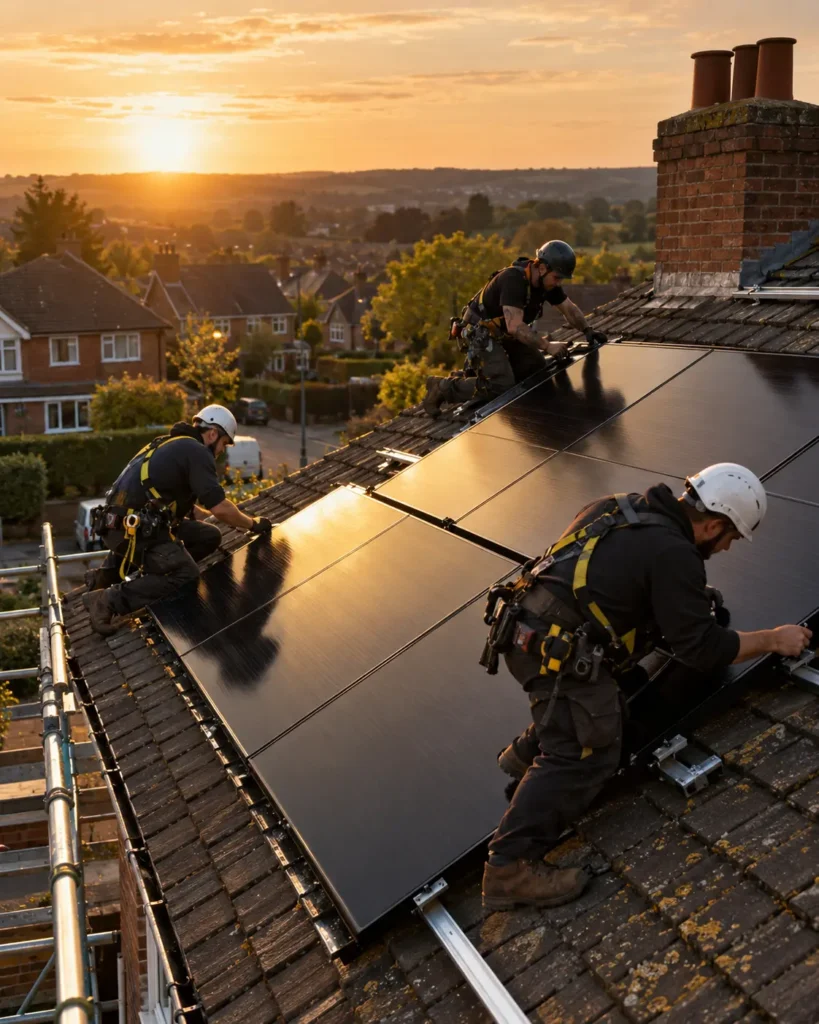
Solar panel installation timeline at a glance
| Stage | Typical timing | Main variable |
|---|---|---|
| Initial quote and assessment | A few days | Information supplied and installer response |
| Technical survey | Often within 1–2 weeks | Survey availability and roof access |
| Final design and grid checks | Several days to several weeks | G98/G99 route and electrical requirements |
| Scaffolding and scheduling | Before installation | Installer and scaffold availability |
| Physical installation | Commonly 1–2 days | Roof, system size, battery and electrics |
| Commissioning and handover | End of installation or shortly after | Snagging and paperwork |
| Export tariff setup | After commissioning | Metering, evidence and supplier processing |
These are planning estimates rather than guaranteed deadlines. Your installer should provide a property-specific schedule after completing the survey.
Week 1: quote, assessment and survey
The project normally starts with a desktop assessment followed by a technical site survey.
An installer may ask for your postcode, recent electricity use, roof photographs and information about future plans such as a battery or EV charger. The technical survey then checks roof dimensions, condition, shading, access, cable routes, inverter location, your consumer unit and the electricity supply.
This stage matters because late design changes can create avoidable delays. If the roof needs major repairs, it is usually better to complete them before the solar array is fitted.
For more detail on what should be checked, read the solar panel installation survey guide.
Weeks 1–3: final design, DNO checks and permissions
After the survey, the installer can finalise the panel layout, inverter specification, cable routes and any battery arrangement.
The grid-connection route can affect timing. Under the Energy Networks Association’s G98 requirements, qualifying microgeneration up to 16A per phase uses a connect-and-notify process. The DNO must be notified no later than 28 days after commissioning. On a single-phase supply, 16A corresponds to approximately 3.68kW.
Systems outside the simpler G98 route may need to follow G99 connection requirements. ENA documentation confirms that generators above the G98 threshold may need to use the G99 connection process, which involves information exchange and assessment by the DNO.
Ask your installer which connection procedure applies before agreeing a final installation date.
What about planning permission?
Planning can also affect the timeline.
Many conventional domestic rooftop systems in England can use permitted development rights, although limits and conditions apply. Importantly, domestic solar permitted-development rules changed on 27 August 2026, with transitional arrangements applying for 12 months. Listed buildings, protected locations, blocks of flats and unusual installations need particular care. Check the current Planning Portal guidance for domestic solar panels.
The useful question to ask is: what needs approval before work starts, and what can run in parallel?
Weeks 2–6: equipment, scaffolding and scheduling
Once the design is signed off, the project moves into scheduling.
Panels, inverter equipment and mounting hardware need to be available. Scaffolding must be booked where required, while roof and electrical teams need compatible dates. In busy periods, calendar availability can take longer than the technical work itself.
Ask when the scaffolding will go up, how long it should remain, when the electrical work will happen and what happens if weather prevents safe roof work.
If you want to understand what installers physically do rather than how long each stage takes, read the separate solar panel installation process guide.
Installation day: usually one to two days
Once the team arrives, progress is normally much faster.
The Energy Saving Trust rooftop solar installation guide explains the installation process from system design through fitting and post-installation support. Which? notes that, once scaffolding is in place, the panels themselves may sometimes be fitted in less than a day, although system size and complexity affect the final duration.
The team typically fits roof attachments and rails, mounts the panels, completes DC cabling, installs the inverter and protection equipment, connects the system to your electrical installation and configures monitoring.
A battery, difficult roof layout, long cable route or additional consumer-unit work can add time. Weather may also stop roof work.
Your electricity may need to be switched off briefly during final connection and testing, but a normal domestic installation should not mean days without power.
Commissioning, handover and MCS paperwork
The job is not complete when the final panel is fixed to the roof.
Commissioning checks that the system operates safely and according to its design. The installer should verify the electrical protection, inverter operation and monitoring before explaining the controls and basic shutdown procedure.
The MCS scheme rules cover the supply, design, installation, setting to work, commissioning and handover of solar PV systems. MCS-certified contractors must register relevant installations and raise an MCS certificate.
For a closer explanation of this final technical stage, see the solar PV commissioning process guide.
When can you start using solar electricity?
Once the system has been safely commissioned and any required grid-connection conditions have been satisfied, it can normally begin supplying electricity to your home.
Getting paid for exported electricity is a separate process.
Under the Smart Export Guarantee guidance from Ofgem, eligible small-scale generators can receive payments for electricity exported to the grid. Solar PV is covered by the scheme, and installations up to 50kW generally need an MCS certificate or equivalent evidence to demonstrate suitable certification.
Your panels may therefore already be generating while your export-tariff administration is still being completed.
Ask when you should expect your MCS certificate, DNO paperwork and any information required by your chosen SEG supplier.
Can the timeline be shorter?
Yes.
A straightforward property with a healthy roof, clear access, readily available equipment and a simple grid-connection route can move quickly if the installer has near-term capacity.
Several tasks may also run in parallel. Equipment ordering, scaffolding planning and some administrative checks do not necessarily have to happen one after another.
However, speed should not come at the expense of a proper survey, system design or commissioning. A useful project schedule should show which stages can overlap and which approvals genuinely need to finish before the next step begins.
What can delay a solar panel installation?
Common delays include:
Roof repairs: damaged tiles, structural concerns or an ageing roof covering may need attention first.
DNO requirements: a G99 or otherwise more complicated grid connection can add lead time.
Planning or property consent: listed properties, protected locations and landlord or freeholder permission can add extra stages.
Electrical upgrades: consumer-unit work or difficult cable routes take additional time.
Battery storage: batteries add design, equipment and commissioning requirements.
Weather and access: high winds, heavy rain or difficult scaffolding access can move roof-work dates.
Equipment availability: a specific panel, battery or inverter may have a longer lead time than alternatives.
How to keep your installation on schedule
Provide accurate electricity-use information early and make the loft, consumer unit and proposed equipment locations accessible for the survey.
Raise roof concerns before approving the final design. If you are a leaseholder, investigate landlord, freeholder or management-company permission early rather than waiting until scaffolding has already been booked.
Ask the installer to set out the main project dependencies in writing: survey, final design, DNO route, planning position, equipment availability, scaffolding date, installation date and expected handover documents.
Before installation day, use a solar panel installation checklist so access, parking and work areas are ready.
How disruptive is solar panel installation?
For most homeowners, disruption is concentrated around the scaffolding period and the one or two main installation days.
Installers may need access to your loft, consumer unit and inverter location. Expect roof noise, workers moving through agreed areas and normally a short electricity interruption while electrical connections are completed.
If you work from home, have pets, need regular driveway access or have mobility requirements, discuss these before the date is confirmed.
Get Your Free Air Source Heat Pump Quote
Find the right air source heat pump solution for your home. Tell us a few details and our team will help you explore suitable options at a competitive price.
Quick to complete. No obligation.
Get your quote
Enter your details below and one of our team will get back to you.
Frequently asked questions
Find clear answers to common questions comparing air source and ground source heat pumps, including efficiency, installation and running costs, winter performance, noise, land requirements and borehole depth.
For many straightforward UK homes, allow several weeks from accepting a quotation to commissioning and handover. The physical fitting usually takes only a small part of that period. Installer availability, DNO requirements and property complexity affect the total.
A typical domestic installation commonly takes around one to two days on site. Larger systems, complicated roof layouts and extra electrical work may take longer.
Yes. Straightforward domestic systems can sometimes be fitted and commissioned in one working day. However, that does not mean the entire project from quotation to handover takes one day.
The visit itself may only take part of a day, but booking availability varies. What matters most is that the survey checks the roof, electrical system, shading, access and proposed equipment locations properly.
Scaffolding is normally erected shortly before the roof installation. Exact timing depends on the installer and scaffolding contractor, so ask how long it is expected to remain at your property.
A qualifying G98 installation normally follows a connect-and-notify route rather than requiring prior connection approval. The installer must notify the DNO within 28 days of commissioning.
It can. Systems requiring a G99 connection procedure may need DNO assessment before they can be connected or energised, so the grid-connection stage can become a project dependency.
Many domestic installations can use permitted development rights, but conditions apply. The exact position depends on the property, installation and UK nation. England's domestic solar permitted-development rules changed in August 2026.
Potentially. Listed buildings and other protected properties can require additional planning or heritage checks, so investigate consent requirements before booking the installation.
It can. A battery adds equipment, electrical design and commissioning work. Whether this adds hours or significantly changes the project schedule depends on the system and grid-connection arrangement.
If significant roof repairs are already needed, completing them first is usually more practical. Otherwise, panels may later need removing and reinstalling to reach the roof.
Usually only for a limited period while the electrical connection and testing are completed. Ask your installer in advance if uninterrupted supply is particularly important in your home.
Normally you can use the system once commissioning has been completed and all relevant connection requirements have been satisfied.
For an MCS-certified installation, the installer registers the completed installation and raises the certificate. Ask the installer when you should expect it as part of the handover documentation.
No. Generation and an export-payment arrangement are separate issues. A qualifying system can generate electricity for your home once properly commissioned, while your SEG application is dealt with separately.
Final takeaway
The clearest way to understand a solar panel installation timeline is to separate elapsed project time from time actually spent working at your property.
The physical fitting commonly takes around one or two days. The complete project usually takes several weeks because the installer must survey the property, finalise the design, confirm the grid-connection route, organise equipment and scaffolding, commission the system and complete the handover.
Before signing a contract, ask for a stage-by-stage schedule and identify which parts rely on third parties. That gives you a more useful forecast than a single promised installation date.


