Solar Panel System Price UK 2026: Costs & Quotes
Check Your Eligibility for Boiler Upgrade Scheme (BUS)
Complete your details below to check your eligibility.
Thank you
We've received your details and will be in touch shortly.
Quick answer: how much does a solar panel system cost in the UK?
A typical UK home solar panel system costs about £7,600 for a 4.5 kWp installation, according to Energy Saving Trust. Government solar PV cost data for 2025/26 also shows that installed cost per kW generally falls as system size increases. Existing domestic installations averaged about £2,109 per kW for systems up to 4 kW and around £1,651 per kW for systems from 4–10 kW. Battery storage commonly costs another £5,000–£8,000. Qualifying installations in Great Britain currently receive 0% VAT until 31 March 2027. Your actual price depends on roof access, system size, equipment and electrical work.
Ready to see what solar could cost for your own property? Get a free quote and compare the proposed system size, equipment and installation scope rather than the headline price alone.
Solar Panel System Price UK 2026: What Does a Complete System Cost?
If you are searching for the solar panel system price UK homeowners should expect in 2026, the most useful figure is the total installed cost, not the price of individual panels.
Energy Saving Trust currently puts a typical 4.5 kWp domestic solar PV system at around £7,600 installed. That system typically uses around 12 panels and needs roughly 20–30m² of roof space. Battery storage can add about £5,000–£8,000, although package prices vary considerably. Energy Saving Trust solar panel guidance
This guide focuses on the complete system price: panels, inverter, mounting, scaffolding, electrical work, commissioning and the main extras that can change your quotation.
By the end, you should know what a realistic solar system costs, what should be included and how to tell whether a quote offers genuine value.
Solar panel system price benchmarks for 2026
Energy Saving Trust’s current guidance gives around £7,600 for a typical 4.5 kWp home system. This provides a useful national starting point rather than a guaranteed price.
The Department for Energy Security and Net Zero also publishes official solar PV cost statistics derived from the MCS Installation Database. The latest release covers 2025/26 installations in Great Britain and allows homeowners to compare costs using installed capacity rather than panel count alone.
| Benchmark | 2026 reference figure | What it tells you |
|---|---|---|
| Typical domestic system | Around £7,600 for 4.5 kWp | Energy Saving Trust benchmark |
| Domestic retrofit up to 4 kW | Around £2,109 per kW | Smaller systems can cost more per kW |
| Domestic retrofit 4–10 kW | Around £1,651 per kW | Larger arrays spread fixed costs across more capacity |
| Battery storage | Around £5,000–£8,000 | Indicative storage cost |
| Qualifying VAT rate in Great Britain | 0% until 31 March 2027 | Temporary VAT relief |
These figures are benchmarks rather than quotations. A simple roof may cost less. Difficult access, unusual scaffolding or substantial electrical work can move the final figure higher.
For another way to sense-check a quotation, read the solar panel cost per kW guide.
What does a complete solar system price include?
You are not simply buying solar panels. You are buying a complete electricity-generating system.
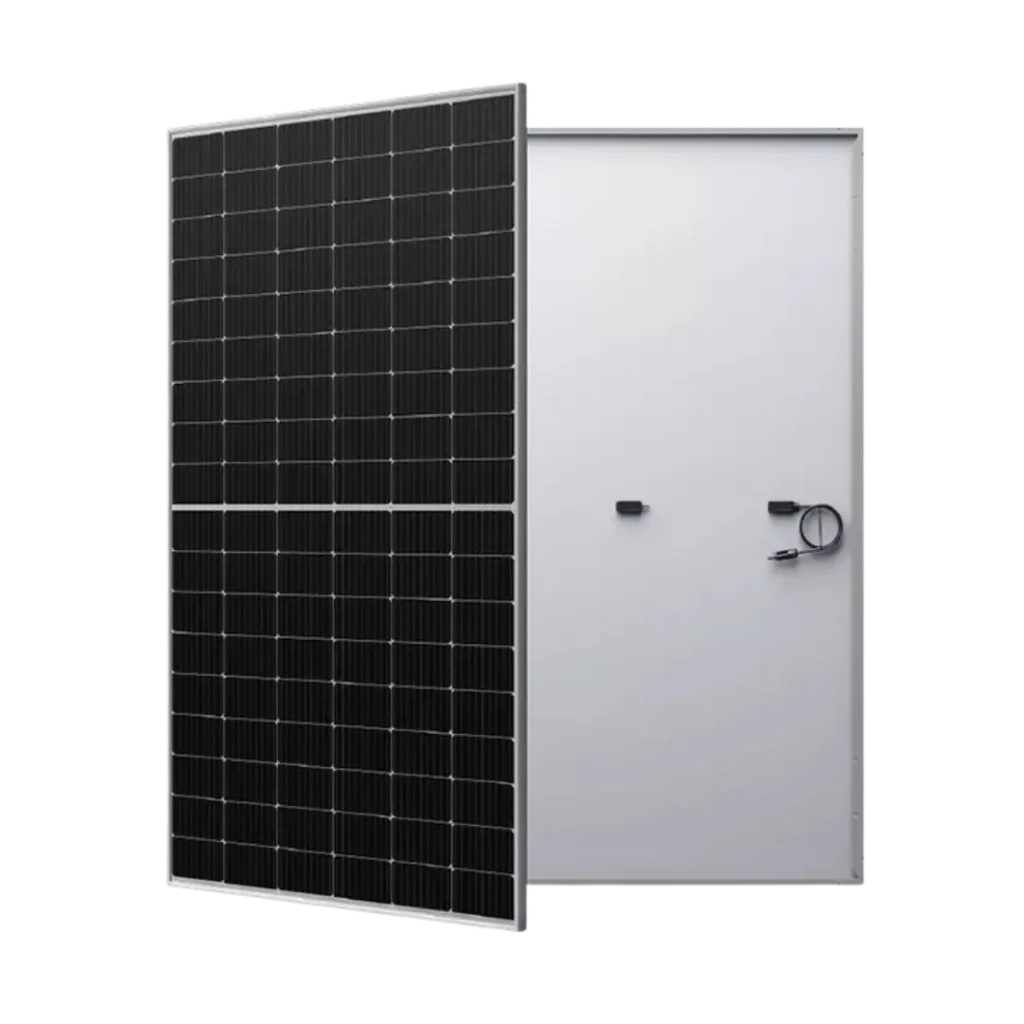
A normal installation will require the panels, an inverter, roof mounting equipment, cabling, electrical protection, isolators and monitoring equipment. Labour and access costs must also be included.
Most roof installations require scaffolding or another safe access method. The price may also cover design work, testing, commissioning and Distribution Network Operator paperwork.
This is why comparing systems using “price per panel” is misleading.
Ten 350W panels provide 3.5 kWp of capacity. Ten 450W panels provide 4.5 kWp. Both have ten panels, but they are substantially different systems.
Instead, compare the total capacity in kWp, estimated annual generation in kWh, equipment specification and complete installed price.
Why do solar panel system quotes vary so much?
System size
Installing more capacity normally increases the total price. However, larger systems often become cheaper per kWp.
Some expenses are relatively fixed. Scaffolding, design, administration and parts of the electrical installation may cost a similar amount whether you install seven panels or fourteen.
Roof design and access
A straightforward pitched roof on a two-storey property is usually cheaper to work on than several roof elevations around dormers, extensions or conservatories.
Flat roofs may require specialist mounting frames. Difficult access can also increase scaffolding and labour costs.
Roof condition matters too. Installing solar on a roof that will soon require major repairs can create unnecessary future removal and refitting costs.
Panels and inverter
Higher-efficiency panels can command a premium. They can make sense when usable roof area is restricted because more capacity can fit within the available space.
Inverter choices also affect price. A conventional string inverter is often the simplest option. Microinverters or power optimisers may add cost but can suit particular shading or roof-layout problems.
Electrical work
Consumer-unit upgrades, long cable routes, export-limitation equipment and other electrical requirements can increase the quotation.
A site survey should identify these issues before you sign a contract.
To understand how system size translates into electricity production, see the solar panel output UK guide.
How much does a solar battery add?
Energy Saving Trust says home battery storage tends to cost around £5,000–£8,000.
A battery stores electricity your solar panels generate but your household does not immediately need. You can then use that electricity later, including during the evening.
That can increase solar self-consumption. However, it does not automatically mean the battery provides the fastest financial return.
Ask for two calculations from an installer: the solar system without storage and exactly the same array with a battery.
You can then compare the additional battery cost with its estimated additional annual saving.
Battery capacity also deserves attention. Compare usable storage in kWh rather than simply choosing the largest battery available.
If you may add storage later, ask whether the proposed inverter and electrical design will make that practical.
How much could a solar panel system save?
Your financial return depends on how much electricity the array generates and what happens to each unit.
Solar electricity used directly in your home replaces electricity you would otherwise buy. Between 1 October and 31 December 2026, Ofgem’s average Direct Debit electricity unit rate for households on default tariffs in Great Britain is 26.32p per kWh. See Ofgem’s current electricity rates
Electricity you do not use can potentially earn export income.
The Smart Export Guarantee explained by Ofgem allows eligible small-scale generators in Great Britain to receive payments for electricity exported to the grid. Individual suppliers decide their tariff rates and terms.
Therefore, be cautious when a quotation presents one payback figure as certain.
Energy Saving Trust’s current examples suggest payback of roughly 9–12 years across several Great Britain locations when export payments are included. Location and electricity-use patterns alter the result.
Is the cheapest solar panel system the best value?
Not necessarily.
A lower quotation could represent a genuinely competitive price. It could also mean a smaller system, different equipment or important work being excluded.
Check whether every quotation states the total system capacity, exact panels, inverter, expected annual generation, scaffolding, electrical work, monitoring and warranties.
Battery storage should also be priced separately wherever possible.
Pay particular attention to predicted generation. Energy Saving Trust recommends obtaining quotes from at least three MCS-certified installers.
Use the solar panel installation quote guide to compare proposals on a like-for-like basis.
How to choose the right solar system for your budget
1. Start with electricity use
Look at your annual electricity consumption rather than choosing a system solely from the number of bedrooms in your home.
Also consider future demand. An EV, heat pump or increased home working could change how much solar electricity you can use.
2. Check usable roof space
Energy Saving Trust describes a typical 4.5 kWp installation as needing around 20–30m² of roof area.
Shading, chimneys, dormers and roof orientation can reduce the usable area.
3. Compare generation as well as capacity
Two identical-sized systems can produce different annual outputs because of orientation, pitch and shading.
Energy Saving Trust says east- or west-facing arrays tend to generate around 15–20% less electricity than an equivalent south-facing system.
4. Check warranties
Look separately at the panel product warranty, performance warranty, inverter warranty and installer workmanship cover.
A long headline warranty is useful only when you understand who provides it and what it covers.
5. Compare several complete quotations
Put the quotes beside each other and compare the same information.
The solar panel quote comparison service can help you explore suitable options rather than relying on one installer’s proposal.
VAT, finance and government support
Qualifying installed solar panels and electrical storage batteries in Great Britain currently benefit from 0% VAT until 31 March 2027. Under the current rules, the reduced 5% rate is scheduled to apply afterwards. Check current GOV.UK VAT guidance
Government support is also changing.
The 2026 Warm Homes Plan includes targeted support for lower-income households and plans for low- and zero-interest finance that can help households fund measures including solar panels and batteries. Eligibility and availability should always be checked against current scheme rules.
Do not rush into a poor-value system purely because a tax or finance deadline is approaching. The design still needs to suit your home and electricity use.
Get Your Free Air Source Heat Pump Quote
Find the right air source heat pump solution for your home. Tell us a few details and our team will help you explore suitable options at a competitive price.
Quick to complete. No obligation.
Get your quote
Enter your details below and one of our team will get back to you.
Frequently asked questions
Find clear answers to common questions about solar panel prices in the UK, including system costs, batteries, VAT, grants, roof direction, payback and export payments.
Energy Saving Trust currently gives around £7,600 for a typical 4.5 kWp domestic solar PV system. Your own quotation can be lower or higher depending on the property and specification.
There is no fixed national price. Government 2025/26 data shows that domestic retrofit systems up to 4 kW averaged about £2,109 per kW, although an individual 4 kW quotation may differ significantly.
Government data places domestic retrofits in the 4–10 kW band at an average of around £1,651 per kW. Applying that benchmark gives roughly £8,250 for 5 kWp, but it should not be treated as a quotation.
A typical 4.5 kWp solar system is around £7,600, while Energy Saving Trust says battery storage commonly costs around £5,000–£8,000. Package pricing can be different because some installation costs are shared.
Often, but never assume it does. Ask installers to state clearly whether scaffolding and other access equipment are included in the quoted total.
Usually not. Panels have different wattages. Compare the system's total kWp, annual generation estimate and fully installed cost instead.
Qualifying installed solar panels in Great Britain currently receive 0% VAT until 31 March 2027. Different rules can apply in Northern Ireland.
Under the rules currently published by the government, the temporary zero rate ends on 31 March 2027 and the reduced 5% rate is scheduled to apply afterwards.
There is no single universal solar grant automatically available to every UK homeowner. Support may be available through schemes aimed at eligible households, while the Warm Homes Plan also includes plans for low-cost finance.
Yes. A south-facing unshaded roof generally produces the most electricity. Energy Saving Trust says east- or west-facing arrays typically generate around 15–20% less than an equivalent south-facing system.
No. Premium high-efficiency panels may be worthwhile where roof space is restricted, but value also depends on installed cost, warranties, degradation and expected generation.
Energy Saving Trust recommends obtaining quotes from at least three MCS-certified installers.
Energy Saving Trust's current Great Britain examples indicate roughly 9–12 years when export payments are included. Your result depends on price, generation, consumption, location and tariffs.
Often, yes. Ask whether your inverter and electrical design will support future storage because this can affect the cost and complexity of adding a battery later.
Eligible generators in Great Britain can receive export payments through the Smart Export Guarantee. Suppliers decide their individual tariff rates and conditions.
Final recommendation: what is a fair solar panel system price?
For most UK homeowners researching prices in 2026, around £7,600 for a typical 4.5 kWp solar-only system is the clearest independent national reference point.
Battery storage can increase the budget substantially. Roof complexity, access, equipment specification and additional electrical work can also move your quotation above or below the average.
The best-value system is not automatically the cheapest or the largest.
It is the system that fits your roof, produces a credible amount of electricity, includes the necessary installation work and comes with clearly stated equipment, assumptions and warranties.
Use national figures to sense-check the price. Then compare the actual designs proposed for your property.
If you are ready to move from national averages to property-specific prices, compare written quotations and make sure every installer is pricing broadly the same job.